Connect with us

Feature/OPED

African Challenges to African Development

Published

on

By Ehiedu Iweriebor

The parlous story of African economic and social development since independence best expressed in the failure to achieve the autonomous capacity for self-actuated development and in particular to create conditions of national and continental modern mass production and prosperity is well known and need not be repeated.

It is enough to re-state that Africa’s development failure was because of the leaderships’ choice to retain, maintain and expand the inherited exocentric colonial system of development incapacitation, primary commodity export, import dependency and poverty generation.

The progressive efforts of some African states and leaders to change the system and create self-reliant economies were stymied by the leaderships’ ideological inadequacies and dependency, the balance of payment crises of the late 1970s and 1980s and the subsequent economic crises and decline.

This provided the avenue for Western multilateral imperialist agencies  the World Bank and the IMF – to successfully infiltrate into Africa, re-colonize African states and convert them into neo-colonial out-posts of the so-called neo-liberal consensus.

This framework embodied in the Structural Adjustment Programmes (SAP) with its destructives conditionalities: currency devaluation, trade liberalization, subsidy removal, deregulation and privatization, re-directed the African states to focus on expanded raw materials production and exports and to abandon industrialization and development capacitation.

The application of these anti-development SAP dogmas in the 1980s and 1990s ushered in two decades of deepening indebtedness, serious economic crises, de-industrialization, socio-economic decline, deepening impoverishment and political repression.

On the other hand, the period also saw the upsurge of popular democratisation struggles, civil rights campaigns, the restoration democracy, and the establishment of electoral democracy and the decline of military interventions in African politics.

In the economic sphere, there were innovative dependency-reducing responses. This was because among businesses there was an increased re-orientation toward local sourcing of well-known agricultural and mineral endowments to expand production.

This led to the emergence of new economic sectors and especially the expansion of cottage, small and medium scale consumer goods industries which were operationally autonomous due to the increased utilization of local resources for production and self-development.

In addition, there was relative political stability and policy and institutional the support for businesses through the creation of enabling environments for attracting investments.

It was partly because of these new domestic conditions and the economic self-activation, and the partly because of return of better commodity prices in the first decade of the 21st century that the Western media fabricated and propagated the new view of “Africa Rising”.

This became a very popular and re-assuring slogan among some African leaders, politicians and intelligentsia.

However, it was an insecure condition because a “Rising Africa” whose upsurge is generated by increased external demand for primary commodities is essentially insecure.

It does not represent genuine African development that is based on expansive domestic production and prosperity generation.

It merely reinforces African dependency on primary commodity export and its dependence on the importation of manufactured goods. It is evaporating with the speed with which it was proclaimed.

But there was a more consequential development story of this period that ushered in what this author describes as the Affirmative African Narrative phase of development. This is the progressive assumption by African businesses of the leadership role in promoting national and pan-African development.

This new trend of African self-development is captured by the new concept of “Africans Investing in Africa” This is the process by which African industrial, service, and commercial enterprises began to make large-scale investments in many different African countries.

The investments involve for example the expansion of Banks, telecommunication companies, trading companies and so on.

Examples of these include Nigerians Banks like UBA, Zenith, Access, First Bank; South African banks like Standard Bank and Moroccan Banks; Telecommunication companies such as MTN of South Africa, ECONET of Zimbabwe and GLOBACOM of Nigeria. Others are Shoprite, Coca cola and South African Breweries.

While Africans investing in Africa is becoming common and commendable, it is important to emphasize that NOT ALL African investments in Africa are of equal economic importance or strategic development value.

For example, African investments like Shoprite and similar companies which merely establish commercial or trading enterprises that do not add value to African economies are no different from traditional non-African FDI companies that are established to create captive markets for products from their home countries and thereby maximally exploit Africa.

On the other hand, African companies that make investments that are decisive and transformational are those that deliberately promote and advance African development capacitation, through local resource exploitation, mass industrialization, large scale industrial, agricultural and mineral production, and beneficiation for internal use.

In terms of investment for development capacitation through local resource utilization and valorization, the vanguard African company is the Dangote Group.

In order to ensure that Africa achieves self-sufficiency in the critically important infrastructure development requirement – CEMENT – Dangote embarked on a pan-African investment strategy to establish integrated plants, or grinding plants or cement terminals in African countries according to their resource endowments.

The Group’s ultimate objective is become the ascendant cement manufacturing company in Africa. There is no question that the Dangotean strategy of development capacitation through local resource exploitation, mass industrial production and domestic prosperity-generation is what Africa requires to become the self-actuated mover of its own development and to create a secure development upsurge and continental prosperity that does not depend on the vagaries of external demand for primary commodities.

This Dangotean transformational mission and project is now been threatened by what seems like the unwillingness of African countries to respect and maintain carefully crafted legal investment agreements as sacrosanct documents and binding commitments.

Within the past year, the Group has faced major challenges as a result of the failure of some African states to keep their sides of the bargain or agreements concluded with Dangote Group.

This happened late last year in Tanzania when the government seemed to renege on some elements within the agreements reached with the Dangote Group to give it concessions and incentives for the massive investments of over $500 million dollars that the Group made in the construction of the monumental cement plant in Mtwara, Tanzania.

This Dangote Cement plant with its 3 million metric tonnes per annum capacity is the largest cement plant in Eastern Africa. In addition to the cement plant, other associated Dangote development projects include the construction of a coal power plant and a jetty. While these are primarily beneficial to the Groups business, they also represent important investments and permanent additions to Tanzania’s power and sea transport sectors.

Together these projects have generated significant direct employment opportunities and as they mature and attain full production capacity the multiplier effects in various sub-sectors would be expansive and extensive, thereby creating prosperity and income in the community as well as revenues for the local, regional and national the governments.

But due to the problems Dangote had to temporarily shut down the plant; and after negotiations and assurances that restored the original terms, the plant resumed production.

This Dangotean Tanzanian experience of government infidelity to the sanctity of agreements can only create profound doubts among business people on the readiness of African states and leaders to move Africa forward.

But the Group’s challenges in Africa are not over. Just recently, in Ethiopia, the regional government of Oromo Regional State where Dangote’s new over $400 million dollar, 2.5 million metric tonnes per annum cement plant is located came up with new conditions that are bound to disrupt the operations of the Dangote plant.

In what it claimed is an attempt to provide employment for jobless Oromo youth it decided to withdraw all mining licences and agreements already concluded with Dangote and similar other companies with mining concessions.

In its place the regional government claimed that it would create youth owned companies that would now supply the minerals required by the cement and other plants.

This action of the Oromo regional government in illegally annulling legally approved mining agreements with the Dangote Group and other companies raise major questions on the genuine preparedness of African states, politicians, and bureaucrats to foster Africa’s self-development through Africans investing in Africa.

Without question the action of these governments represents major challenges to Africans assumption of responsibility for their development and the emergent Affirmative Africa Narrative.

In fact at its core, these anti-investment actions are a repudiation of the long-standing aspirations of Pan-Africanism and its advocates, and the practical commitment of the continental organizations like the former Organization of African Union (OAU) and the current African Union (AU) to promote African-led development through investments, intra-African trade and exchange, as instruments for creating secure African development and domestic prosperity-generation.

This is a good example of how some African leaderships’ represent serious obstacles to African development. Quite clearly any aspiration for Africa’s take off through self-actuated development as represented by the transformational efforts of Dangote and similar committed pan-African economic revolutionaries is weakened by such leadership unfaithfulness, irresponsibility and lack of serious commitments to African investors.

Despite these set-backs, it is important for African states and the continental and regional economic groups to reaffirm their commitment to African-led transformational industrial development as the basis for Africa’s capacitation for self-actuated development.

In this light, it is imperative for the AU and its various economic agencies to design Continental Investment Protection Agreements that would commit African states to respect and uphold already approved agreements and avoid arbitrary nullifications of legally binding instruments.

An additional guarantor is for each African state to negotiate investment protection treaties with each other. In fact this is especially indicated for countries such as Nigeria where investors are increasingly embarking on Pan-African development investments.

Finally, pan-African transformational investors like Dangote should remain committed and not be discouraged by these clearly disruptive actions of hapless, backward and anti-African development leaders.

The Dangotes’ of Africa as continental transformational vanguards should remain firmly committed to their chosen paths of legal profit making and simultaneous contribution to Africa’s transformation, economic development, prosperity-generation, psychological liberation, and the restoration of Africans dignity and equality with others in the world.

These are worthwhile and enduring ideals and challenges that transformational revolutionaries and societal game-changers are bound to encounter and overcome so as to create new worlds.

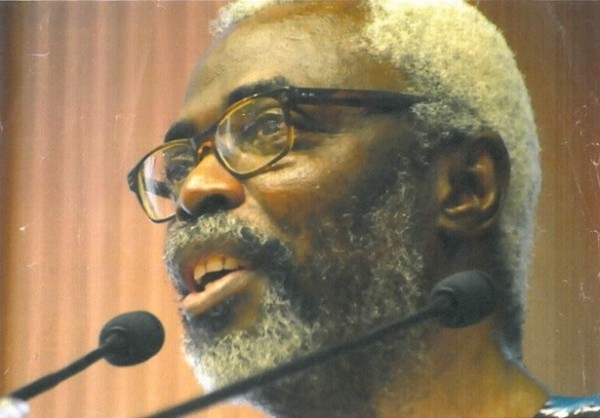
Ehiedu Iweriebor is a Professor and former Chair of the Department of Africana and Puerto Rican/Latino Studies, Hunter College, City University of New York, USA.


Modupe Gbadeyanka is a fast-rising journalist with Business Post Nigeria. Her passion for journalism is amazing. She is willing to learn more with a view to becoming one of the best pen-pushers in Nigeria. Her role models are the duo of CNN's Richard Quest and Christiane Amanpour.

Click to comment

Leave a Reply

Your email address will not be published. Required fields are marked *

Feature/OPED

Stocks vs Forex: Which is Better for Beginners in 2026?

Published

on

Stocks vs Forex

By Ishioma Adaeze

As a beginner, choosing between stocks and forex for your investment goals in 2026 can feel overwhelming. Before investing your hard-earned money, it is important to understand how both markets work.

While both markets present investors with opportunities to grow their wealth, they also differ in terms of volatility, liquidity, market hours, and leverage. Stocks involve owning portions of a company, while forex has to do with trading a base currency against a quote currency.

In this article, we will be going through the basics of stocks and forex, pointing out their differences, and helping you decide which asset better suits your investment journey in 2026.

What is Stock Trading?

When it comes to stock trading, you are buying shares of a company, which makes you a shareholder of that company. As a shareholder, you may be entitled to receive dividends whenever the company decides to pay dividends.

As for those companies that do not pay dividends, there are other benefits a shareholder may enjoy, like being called upon to attend shareholder meetings and having voting rights on certain company matters.

On a global scale, over $100 trillion worth of shares are traded annually. Also, the rising popularity of AI companies and technological innovations continues to drive investor participation and market growth.

If you’re an investor looking to buy and hold capital assets, then stock trading is definitely for you, as it allows for short-term, medium-term and long-term investment goals.

When you buy shares of a company and the company performs well, your shares increase in value. Another benefit of stock trading is access to index funds and ETFs.

These funds consist of companies that are grouped under an index. They are carefully selected and monitored under the fund, sparing the investor the stress of actively tracking the fund.

They can be a way of building a long-term, diversified portfolio, and some of these funds may pay dividends.

What is Forex Trading?

Forex trading has to do with buying one currency and selling another. With a pair like USD/JPY, USD is the base currency being bought against JPY, which is the quote currency.

In order to execute a trade in the forex market, you have to analyse and make predictions based on price movement, as well as pay attention to what’s going on in the global news scene.

The forex market runs twenty-four hours every weekday, with over $9 trillion traded in the market every day. Being the largest financial market in the world, there is very high liquidity.

Forex trading involves buying one currency against another, making predictions based on price movements on the forex charts. Price moves based on the activities of large institutions like hedge funds, big banks, the government, etc.

The forex market runs 24 hours a day, every weekday, with global forex turnover reaching $9 trillion per day in the BIS 2025 survey. Being the largest financial market in the world, there is very high volatility and price fluctuations.

At the same time, there is high liquidity in the market, which means that currency pairs can easily be bought and sold without hassle. Highly liquid instruments that are traded regularly include: EUR/USD, USD/JPY, GBP/USD, and gold (XAU/USD).

As a retail trader, knowing when to enter and exit the market is important. As easy as it is to make profits from price fluctuations, it is also very easy to lose money if the market moves against you. This is why it is important to set stop losses and take profits. This helps manage your trading capital.

Major Differences Between Stocks and Forex

While investing in stocks and forex can yield great capital gains, there are lots of ways in which they differ.

As a beginner, stock trading provides opportunities for long-term investments, ensuring slow but consistent returns for wealth building. But if you are looking for an active, short-term style of investment, then forex trading is for you, as it allows you to enter and exit the market within a shorter time frame.

Which is Better in 2026?

Choosing an asset to invest in all boils down to personal preference. At the same time, if you are not averse to risk, nor opposed to asset diversification, then it’s okay to invest in both.

For beginner investors in 2026, stock trading is easier to understand and get into, especially because of mutual funds, index funds and ETFs. With those funds, you don’t have to be an expert to start investing. You can just buy a fund that suits your needs and hold it over a long period of time.

If you are an investor who enjoys technical analysis, highly volatile and liquid markets, as well as trading under short time frames, then forex trading is the right pick for you.

Conclusion 

You do not need to put all your eggs in one basket. There are investors who invest in both stocks and forex simultaneously. When starting out, you can start investing in stocks while learning forex. Take calculated risks and do not invest above your means. Diversify your investments and remember, when starting out, you should prioritise acquiring knowledge over profits.

Continue Reading

Feature/OPED

Building 234 Solutions: A Response to Everyday Workforce Challenges

Published

on

Owoloye Emmanuel 234 Solutions

By Owoloye Emmanuel

Every business starts with a problem. For us, that problem was hiding in plain sight.

Across organisations, we kept seeing HR professionals, payroll teams, and business leaders spend significant time navigating processes that should be simpler. Employee records sat across multiple systems, payroll processes required manual intervention, and routine workforce tasks often became more complicated than they needed to be.

As businesses grow, workforce operations naturally become more complex. Yet many organisations still rely on disconnected tools and workflows that create unnecessary friction for both employers and employees.

The consequence is more than operational inefficiency. HR teams spend valuable time managing systems instead of supporting people. Business leaders struggle to access timely workforce insights, while employees experience delays in processes that should be seamless.

These weren’t isolated challenges. They were recurring realities across workplaces, regardless of industry or size.

That observation led us to a simple question: what if workforce management could be easier?

What if HR, payroll, and workforce operations could work together within a single, connected experience?

That question became the foundation for 234 Solutions.

We are building 234 Solutions with a clear belief that workplace technology should reduce complexity, not add to it. Our goal is to help organisations spend less time navigating processes and more time focusing on productivity, growth, and people.

As we prepare for launch, our focus remains simple: building practical solutions for real workplace challenges and helping organisations create better experiences for the people who power them every day.

Owoloye Emmanuel is the founder of 234 Solutions

Continue Reading

Feature/OPED

The Role of TV in Preserving African Stories and Identity

Published

on

Preserving African Stories

Scroll through social media today, and you will notice something interesting: everyone is either reacting to a series, quoting a movie line, or debating a character as though they personally know them. Beneath the memes and binge-watch culture, however, lies something deeper. Television remains one of the most powerful tools shaping how Africans see themselves, remember their history, and tell their own stories. In a continent as diverse and expressive as Africa, that matters more than ever.

TV as a Cultural Archive, Not Just Entertainment

Long before streaming algorithms began shaping our viewing habits, television was already preserving African identity. From Nollywood dramas that capture the rhythm of everyday Lagos life to documentaries exploring Maasai traditions and Ghanaian folklore, TV has served as a living archive of the continent’s stories.

It preserves more than entertainment; it preserves language, culture, humour, values, and shared experiences. Unlike fleeting social media content, television allows stories to unfold with depth, exploring the realities of family, tradition, ambition, and modern African life without reducing them to stereotypes. That is the power of TV: preserving not just stories, but perspective.

Why Representation on TV Still Matters

There is a subtle but important truth: if people do not see themselves on screen, they may begin to believe their stories are not worth telling. This is why African TV content is more than entertainment; it is affirmation.

Seeing a character who speaks like you, struggles like you, or celebrates like your community does something powerful. It validates identity and challenges outdated narratives that have historically defined Africa through external lenses.

This is where MultiChoice Group, through platforms such as DStv and GOtv, plays an important role. They do not simply broadcast content; they help distribute cultural memory at scale.

GOtv, DStv, and the Everyday African Viewer

Think about a typical evening in many African homes: the TV is on in the background, someone is laughing at a comedy show, another person is watching a local series, and someone else is catching up on the news. That shared viewing experience remains very real.

Through platforms such as DStv and GOtv, African households are exposed to a blend of local storytelling and global content. More importantly, they have helped amplify African-produced content by bringing Nollywood films, African reality shows, talk shows, and documentaries into mainstream rotation.

It is not just about access. It is about visibility.

A young filmmaker in Lagos today is more likely to believe their story matters because they have seen similar stories broadcast widely. A child in Accra grows up hearing familiar accents and seeing environments that look like their own on screen, not as exceptions, but as the norm.

TV Is Also Shaping Modern African Identity

African identity is not static; it is evolving. Television reflects that evolution in real time.

Today, audiences see:

  • Young Africans balancing tradition and modern dating culture

  • Stories tackling mental health in African households

  • Fashion and music influences spreading through TV series

  • Political satire shaping public conversation

Conversations that were once confined to homes are now being explored on screen, giving audiences the language to discuss issues that were previously unspoken.

In many ways, television is doing what oral tradition has always done: passing stories, values, humour, warnings, and history from one generation to the next. The difference is that today’s griots are writers, directors, and broadcasters.

The Future: From Watching to Owning Our Narratives

The next stage of African storytelling is not just about being seen; it is about ownership.

As more African creators produce content and platforms continue to invest in regional storytelling, television becomes more than a mirror. It becomes a tool for shaping how Africa is represented to itself and to the world.

While streaming continues to grow, television, particularly accessible platforms such as GOtv, remains one of the most effective ways to reach everyday audiences across different income levels and regions. After all, storytelling only matters if people can access it.

African stories are not new. They have always existed in families, on streets, in markets, in history books, and through oral traditions. What television has done, and continues to do, is give those stories a stage wide enough for millions to experience them at once.

The next time you watch a local series or documentary on DStv or GOtv, remember that you are not just being entertained. You are participating in the preservation of African identity itself.

Continue Reading

Trending