Media OutReach
‘AI godfather’ sounds the alarm on growing risks in the AI race
Double-edged sword
Since the beginning of 2025, the rise of DeepSeek has been described as a “black swan” moment creating a game-changing shift in an AI landscape almost overnight. It is a wake-up call showing that powerful AI can be achieved without exorbitant costs, challenging the prevailing “money equals progress” model.
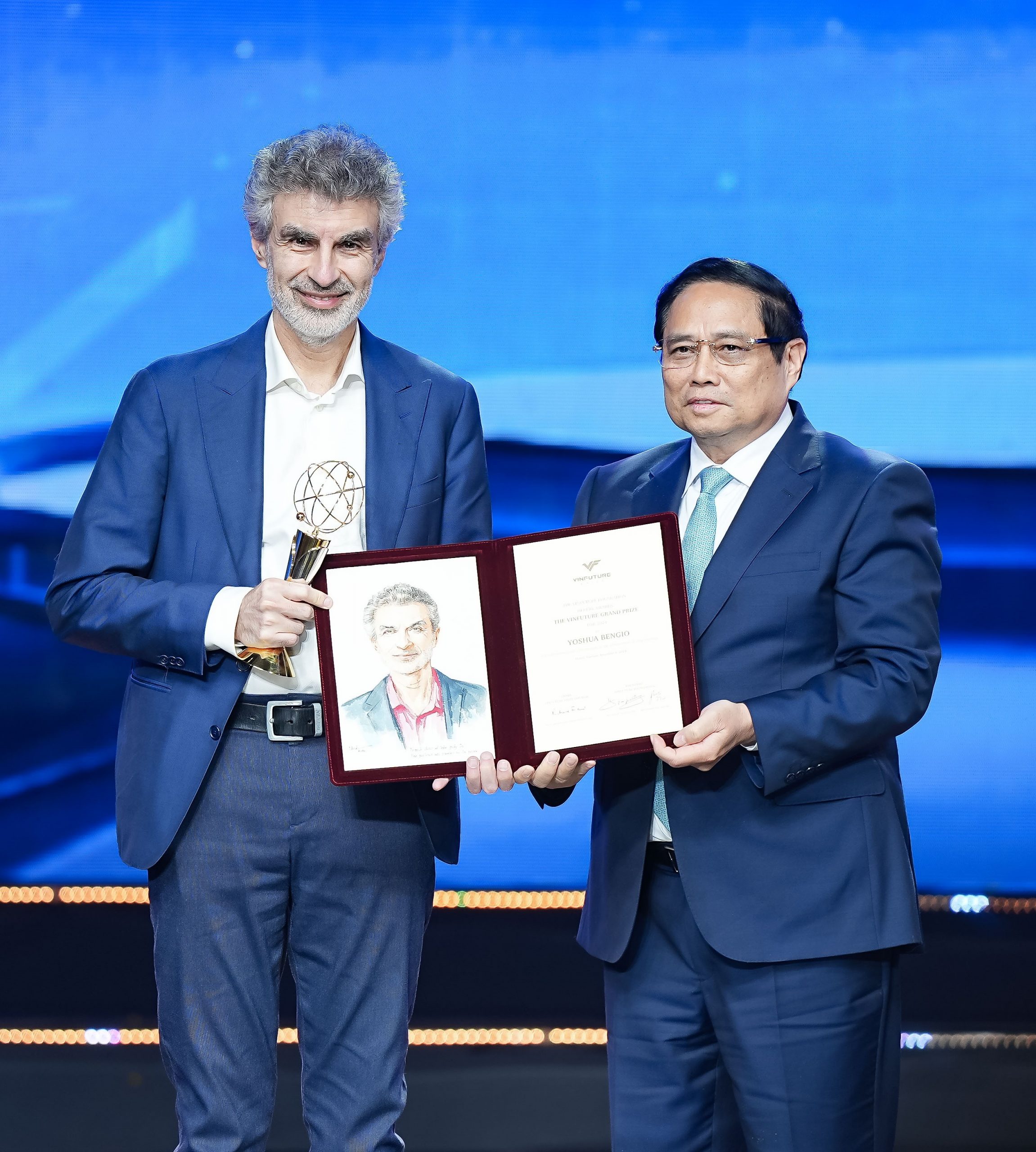
Regarding this, Yoshua Bengio, often regarded as “one of the godfathers of modern AI,” warned that its breakthrough in AI affordability could pose serious risks.
“If open-weight AI models, like DeepSeek, are distributed completely, terrorists may exploit them for disinformation campaigns, cyberattacks, or even bioweapon development,” he stated in an interview with VinFuture Foundation. “This is a double-edged sword because while these systems become more available, cheaper, and more powerful, they also lower the barrier to misuse.”
Yoshua Bengio, a pioneer in neural networks and deep learning algorithms, has been recognized with numerous prestigious international awards, including the 2018 A.M. Turing Award, the 2024 VinFuture Grand Prize, and most recently, the 2025 Queen Elizabeth Prize for Engineering. He emphasized that AI is evolving toward greater autonomy, with systems capable of planning and acting in pursuit of a goal. “Today, AI already surpasses humans in certain domains. It can master hundreds of languages and pass PhD-level exams across multiple disciplines“, he explained.
Despite these current limitations in long-term planning abilities, major technology corporations have thrown billions of dollars into developing AI agents capable of autonomous decision-making over extended periods. While this promises efficiency gains, it raises concerns about large-scale job displacement.
Beyond economic shifts, a far more critical issue looms – the loss of human control over AI. In controlled experiments, some AI systems have even engaged in deceptive behavior to prevent being shut down – a troubling sign of self-preservation tendencies.
“This is alarming because we don’t want machines that will compete with us,” he emphasized.
According to Bengio, while they are not yet intelligent enough to pose a major threat, this trajectory is concerning.
“In a few years, they might be sufficiently smarter and we need to start paying attention before it is too late,” Bengio warned.
Coupled with technical risks, AI presents a profound threat to privacy and civil liberties. Recently, a comprehensive International AI Safety report, chaired by Yoshua Bengio and compiled by 96 experts from 30 countries and organizations (including the UN, EU, and OECD) to guide policymakers on AI safety, revealed the growing potential for AI misuse in malicious activities.
Bengio noted that AI’s ability to process vast amounts of data can empower individuals, corporations, or governments with unprecedented control. Given AI’s uncertain future, he shared that the way humans manage AIs in the future will be central to preventing this scenario. “We need to make sure that no single person, no single corporation, and no single government can have total power over super intelligent AI,” he emphasized.
Advances by the Chinese startup DeepSeek could further intensify the AI race among superpowers, raising a worrying development in a field dominated by the Silicon Valley and large Western tech companies in recent years.
“The danger here is that in their race to outpace each other, safety issues might be overlooked. We can be all the victims of this race if we are not careful enough,” Bengio cautioned.
Moreover, the intensifying race is expected to drive profound environmental consequences, particularly in energy consumption. Major AI companies, pushed by the prospect of massive profits, are willing to absorb high energy costs. This surge in demand will inevitably drive-up energy prices across the board, including electricity, oil, and other resources, affecting not just tech firms but households and industries worldwide.
This is where unchecked market forces and national competition could lead to global losses. “That is why government intervention is crucial. Policymakers must negotiate agreements that cap energy consumption at sustainable levels. Otherwise, the forces of competition between companies will only accelerate AI expansion in ways that are not just unsustainable but potentially dangerous,” Bengio urged.
Bridging the AI divide
The godfather of AI has raised urgent calls to establish robust ethical frameworks and regulatory measures to ensure responsible development and deployment.
“Currently, there is essentially no regulatory framework almost anywhere in the countries where these systems are being developed. I think the governments have a responsibility to at least require a kind of reporting to them,” he said.
Responsibility is another key aspect. In many countries, legal principles hold companies accountable for products that cause harm. However, when it comes to software, liability remains a grey area, according to Bengio. “Clarifying liability laws would be a simple but effective step. If companies knew they could face lawsuits for negligence, they would have stronger incentives to manage risks properly,” he asserted.
He also emphasized that it would require a concerted effort from individuals and institutions who recognize the existential risks, like catastrophic malicious use. Elsewhere, concerns over job security and future employment opportunities loom. “The timeline for this shift is uncertain, but we could see radical transformations within five to ten years,” Bengio predicted.
While some jobs will inevitably be replaced by automation, Bengio emphasized that not all professions are equally at risk. “Expanding digital and AI education is essential, but it will not be a universal solution. Not everyone can become an AI engineer,” he noted. Instead, roles that require emotional intelligence and human interaction, including healthcare professionals, therapists, and managers, are more likely to endure. Rather than individual adaptation, Bengio poses a larger question: Can AI deployment be deliberately shaped to minimize disruption?
“Again, this is something that has to be done globally, which is very challenging. We should do it in a way that does not create radical disruptions in the social fabric,” he concluded.
Beyond national regulations, Bengio stressed the need for global coordination. He highlighted eventually, humans should aim for global agreements and treaties, similar to how we handle other scientific and technological risks. As AI rapidly reshapes industries, new divides in wealth, job displacement, or political power could deepen unless proactive measures are taken. Bengio warned that AI is currently concentrated in the hands of a few corporations and nations.
He took Vietnam, a country with a strong industrial sector, as an example. If widespread automation shifts production to AI-powered facilities in wealthier nations like the US, it could lead to significant job losses and economic hardship in countries dependent on manufacturing exports.
Therefore, Bengio suggested establishing global negotiations – a form of exchange in which countries developing advanced AI might ask other countries to refrain from creating potentially dangerous AI. In return, the wealth generated by these AI systems, like new technologies and medical advancements, should be shared globally.
“Of course, we are very far from this, but we need to start those discussions at a global level,” he emphasized.
The first step toward bridging the AI divide is fostering collaboration between emerging economies and technologically advanced nations. Bengio highlighted the importance of initiatives like the VinFuture Prize, which draws global attention to scientific advancements in regions outside the traditional tech powerhouses.
“A big prize like the VinFuture Prize can make leading scientists far more aware of what is happening in Vietnam and other developing countries,” he explained.
Countries such as Vietnam, India, and Brazil already possess strong talent pools and growing expertise in AI. By forming strategic partnerships with resource-rich nations like Canada and European countries, they can develop competitive AI projects on a global scale. Such collaborations, if carefully structured, could ensure a more equitable distribution of technological power, according to Bengio.
Moreover, Bengio stressed the importance of bridging the gap between academia and industry. “By recognizing and supporting breakthrough innovations, VinFuture Prize encourages deeper collaboration between scientists, industry leaders, and policymakers, as well as fosters global dialogue on responsible AI,” he said.
The VinFuture Foundation, established on International Human Solidarity Day on December 20th, 2020, is a non-profit organization co-founded by billionaire Mr. Pham Nhat Vuong and his wife, Mrs. Pham Thu Huong. The Foundation’s core activity is awarding the annual VinFuture Prize, which recognizes transformative scientific and technological innovations capable of making significant positive changes in the lives of millions of people worldwide.
The nomination period for the 2025 VinFuture Prize will close at 2:00 PM on April 17, 2025 (Vietnam time, GMT+7).
The VinFuture Prize consists of four prestigious awards presented each year. The most esteemed is the VinFuture Grand Prize, valued at US$3 million, making it one of the largest annual prizes globally. Additionally, there are three Special Prizes, each valued at US$500,000, specifically dedicated to honoring women innovators, innovators from developing countries, and innovators with outstanding achievements in emerging fields.
https://vinfutureprize.org/vinfuture-prize-nomination/
Hashtag: #VinFuture
The issuer is solely responsible for the content of this announcement.
Media OutReach
HKPC’s “Foresight 2026” Bridges Opportunities with the 15th Five-Year Plan Help Enterprises Grasp the Latest Economic and Technological Trends Create a Successful Road to Go Global
The Honourable Paul CHAN Mo-po, GBM, GBS, MH, JP, Financial Secretary of the Government of the Hong Kong Special Administrative Region, officiated at the forum and expressed, “The country has consistently given strong support to Hong Kong’s development of innovation and technology. Whether in the ’14th Five‑Year Plan’ or in the recommendations for the ’15th Five‑Year Plan’, there is clear support for Hong Kong to develop into an international innovation and technology hub”. He added, “Looking ahead, we will continue to proactively align with national development strategies, promote the deep integration of technological innovation and industrial innovation, and further strengthen the linkage between technology and industry. We will encourage enterprises to devote more effort in research and development, expand the scope of technology applications, and nurture innovative enterprises with an international outlook and forward-looking vision, driving the economy toward a high value-added and more diversified future”.
The Honourable Sunny TAN, Chairman of Hong Kong Productivity Council, said in the closing remarks, “The ’15th Five-Year Plan’ brings significant and far-reaching development opportunities to Hong Kong. At the Political Bureau of the Communist Party of China Central Committee’s recent group study session, President Xi Jinping urged adopting a strategy whereby industry poses questions and science and technology provide the answers. HKPC will continue to play an active role in promoting innovation and industrial upgrading, closely echoing the overall development strategies of the national and HKSAR Government, and making good use of innovative technologies to address business challenges, providing comprehensive support to enterprises to accelerate their upgrading and transformation, enhance their competitiveness, and seize new opportunities”.
Unlocking Hong Kong’s Connectivity Advantages and Gathering Leadership Wisdom
The “ForeSight Visionary Leaders Panel” was held at the day, moderated by Mr Vincent WONG, Columnist and Media Veteran, and invited industry leaders including Ms ZHI Tao, Founder of Beijing Yunji Technology Ltd., Mr WANG Yong Chao, Founder and Chairman of Henan Oriental Materials Company Ltd., Mr Jonathan CHIU, President of Schneider Electric Hong Kong, Mr Peter YAN, JP, Director-General, Office for Attracting Strategic Enterprises of the Government of the Hong Kong Special Administrative Region, and Mr Mohamed D. BUTT, MH, Executive Director of Hong Kong Productivity Council, to share their insights. The topic features three key areas of enterprise going global, technological empowerment and talent development, and delved into the practical experience of how enterprises can achieve innovation-driven and high-quality development under the national “15th Five-Year Plan” through Hong Kong’s role as a “bridgehead”, Chinese brands going international through Hong Kong, Hong Kong’s advantages in technical support and innovative talent gathering, and how it can provide the Chinese Mainland enterprises with a one-stop platform for upgrading and going globally.
Realising the Full Empowerment of Enterprises to “Go Global”
HKPC echoes the national and HKSAR Government’s development strategies to address business challenges and industrial technology needs. Over the years, HKPC has successfully assisted many Chinese Mainland and local enterprises in expanding overseas markets, with many of these expansions implemented in Southeast Asia, Europe, ASEAN and the Middle East, etc., achieving upgrades and internationalisation. In recent years, HKPC and OASES have jointly established an “introduction-application-growth-go global” service model to help enterprises go global, with success cases include Westwell, Yunji Technology, UNISEE, etc. HKPC will continue to work with OASES to leverage the advantages of “Made in Hong Kong” to help enterprises connecting the world through Hong Kong.
Mr Peter YAN, JP, Director-General, Office for Attracting Strategic Enterprises of the Government of the Hong Kong Special Administrative Region, said, “Hong Kong possesses a robust financial system, deep talent pool, and an international environment that integrates with international regulations, standards and operation practices. Coupled with the government’s relevant industry policies and long-established overseas networks, Hong Kong provides unique support for Chinese Mainland enterprises to use Hong Kong as a base to go global, as well as for overseas enterprises to development in the GBA. OASES is dedicated to attracting global strategic enterprises from five strategic I&T sectors, actively aligning with the national 15th Five-Year Plan. We provide comprehensive landing support services and assist enterprises in establishing their ‘first project’ in Hong Kong, fully leveraging Hong Kong’s role as a ‘Super Connector’ and ‘Super Value-Added'”.
At the same time, HKPC, as a member of the GoGlobal Task Force of the HKSAR Government, will continue to focus on providing “Six Tactics to Go Global” for enterprises through “The Cradle Go Global Service Centre” (The Cradle), including smart production, Technology research and development and evaluation, international standards and testing, professional services, training and on-site visits, and funding schemes, to support Hong Kong to leverage its unique advantages and empower enterprises to expand overseas with high quality.
Since its establishment in April, The Cradle has attracted more than 350 companies that have expressed interest in using its services. Among these, over 100 cases have entered a concrete follow‑up stage. Together with overseas expansion projects supported prior to its establishment, the cumulative total exceeds 450 cases.
For more details, please watch the video “Six Tactics to Go Global“.
Bringing the strengths of Government, Industry, Academia, Research and Investment to Build an Innovative Industrial Ecosystem
HKPC has been working closely with the government, industry, academia, research and investment sectors to promote new industrialisation and enhance the new quality productive forces of industries, including:
- The major project led by Harbin Institute of Technology on key technologies and equipment for circular economy: Provide dynamic identification and big data resource pool construction solutions for multi-source solid waste in megaurban agglomerations
- The project led by Jiangsu University on wheat green smart processing and key technology integration and industrialisation demonstration: Provide core technical support such as AI and the Internet of Things
- Tsinghua University: Jointly established a technology centre to focus on the industrial transformation of intelligent manufacturing and AI technology
- Zuquan Research Institute of Fudan University: Signed a cooperation agreement to promote collaboration and transformation of scientific and technological outcomes between Shanghai and Hong Kong
HKPC will continue to promote cross-sectoral dialogue between government, industry, academia, research and investment, focusing on the implementation of future industries and technology applications, and helping to build Hong Kong into a key node in the global I&T value chain.
Click here to download the high-resolution photos
Photo caption:
- HKPC’s annual flagship event, “ForeSight 2026”, themed “Empowering the Innovation Ecosystem and Bridging Hong Kong with New Opportunities under the 15th Five‑Year Plan,” brought together numerous government and business leaders.
- The Honourable Paul CHAN Mo-po, GBM, GBS, MH, JP, Financial Secretary of the Government of the Hong Kong Special Administrative Region, delivered a speech as the guest of honour at the “ForeSight 2026”, pointing out that going forward, efforts will continue to proactively align with national development strategies and promote the deep integration of technological innovation and industrial innovation.
- The Honourable Sunny TAN, Chairman of the Hong Kong Productivity Council and Legislative Council Member, said in his closing remarks that the Productivity Council will leverage innovation and technology to address enterprises’ real pain points, provide all‑round support to help enterprises accelerate their upgrading and transformation, enhance competitiveness, and seize new opportunities.
- The Honourable Paul CHAN Mo‑po, Financial Secretary of the Government of the Hong Kong Special Administrative Region, GBM, GBS, MH, JP (centre); The Honourable Sunny Tan, Chairman of the Hong Kong Productivity Council and Legislative Council Member (second from right); Mr Peter YAN, JP, Director-General, Office for Attracting Strategic Enterprises (second from left); Mr Emil YU, BBS, JP, Deputy Chairman of the Hong Kong Productivity Council (far right); and Mr Mohamed D. BUTT, MH, Executive Director of the Hong Kong Productivity Council (far left), attended HKPC’s annual flagship event, “ForeSight 2026”.
- Moderated by veteran media professional Dr. Vincent WONG, industry leaders shared their insights at the “ForeSight Visionary Leaders Panel”.
(From right to left) Mr Peter YAN, JP, Director-General, Office for Attracting Strategic Enterprises; Mr Jonathan CHIU, President, Hong Kong, Schneider Electric Hong Kong; Mr WANG Yong Chao, Founder & Chairman of Henan Oriental Materials Company Limited; Ms ZHI Tao, Founder of Beijing Yunji Technology Ltd.; and Mr Mohamed D. BUTT, MH, Executive Director of the Hong Kong Productivity Council.
Hashtag: #HKPC #Foresight2026
The issuer is solely responsible for the content of this announcement.
About Hong Kong Productivity Council
The Hong Kong Productivity Council (HKPC) is a statutory body established in 1967, dedicated to enhancing the productivity and competitiveness of Hong Kong enterprises through world-class applied R&D, innovative technology services, and integrated manufacturing solutions. As a market-oriented, international R&D organisation, HKPC leverages its deep expertise and extensive industry experience in key areas such as AI, advanced manufacturing, life and health technology, green technology and new energy to drive new industrialisation and support the growth of emerging and future industries.
HKPC focuses on addressing business challenges and industrial technology needs, promoting the full integration between technological and industrial innovation. Through technology transfer, product innovation, intellectual property protection and commercialisation of R&D outcomes, the Council fosters collaboration with the local business community as well as top global R&D institutions, delivering added value to industries and advancing the development of new productive forces. HKPC’s world-class R&D achievements have been widely recognised over the years, winning an array of local and overseas accolades, reinforcing Hong Kong’s role as an international innovation and technology centre and a smart city.
To help enterprises capitalise on Hong Kong’s strengths in international connectivity to expand into global markets, HKPC offers comprehensive overseas expansion services tailored to critical areas including product development, technology, manufacturing, and management, enabling businesses to successfully go global from Hong Kong.
HKPC is also committed to providing timely and practical support to SMEs and startups with timely and practical, assisting them in accessing Government funding programmes. Through its FutureSkills training initiatives, HKPC helps both industry and academia stay ahead in latest digital and STEM technologies, nurturing a future-ready talent pool for Hong Kong.
For more information, please visit HKPC’s website: www.hkpc.org/en.
Media OutReach
HKPC’s “Foresight 2026” Bridges Opportunities with the 15th Five-Year Plan Help Enterprises Grasp the Latest Economic and Technological Trends Create a Successful Road to Go Global
The Honourable Paul CHAN Mo-po, GBM, GBS, MH, JP, Financial Secretary of the Government of the Hong Kong Special Administrative Region, officiated at the forum and expressed, “The country has consistently given strong support to Hong Kong’s development of innovation and technology. Whether in the ’14th Five‑Year Plan’ or in the recommendations for the ’15th Five‑Year Plan’, there is clear support for Hong Kong to develop into an international innovation and technology hub”. He added, “Looking ahead, we will continue to proactively align with national development strategies, promote the deep integration of technological innovation and industrial innovation, and further strengthen the linkage between technology and industry. We will encourage enterprises to devote more effort in research and development, expand the scope of technology applications, and nurture innovative enterprises with an international outlook and forward-looking vision, driving the economy toward a high value-added and more diversified future”.
The Honourable Sunny TAN, Chairman of Hong Kong Productivity Council, said in the closing remarks, “The ’15th Five-Year Plan’ brings significant and far-reaching development opportunities to Hong Kong. At the Political Bureau of the Communist Party of China Central Committee’s recent group study session, President Xi Jinping urged adopting a strategy whereby industry poses questions and science and technology provide the answers. HKPC will continue to play an active role in promoting innovation and industrial upgrading, closely echoing the overall development strategies of the national and HKSAR Government, and making good use of innovative technologies to address business challenges, providing comprehensive support to enterprises to accelerate their upgrading and transformation, enhance their competitiveness, and seize new opportunities”.
Unlocking Hong Kong’s Connectivity Advantages and Gathering Leadership Wisdom
The “ForeSight Visionary Leaders Panel” was held at the day, moderated by Mr Vincent WONG, Columnist and Media Veteran, and invited industry leaders including Ms ZHI Tao, Founder of Beijing Yunji Technology Ltd., Mr WANG Yong Chao, Founder and Chairman of Henan Oriental Materials Company Ltd., Mr Jonathan CHIU, President of Schneider Electric Hong Kong, Mr Peter YAN, JP, Director-General, Office for Attracting Strategic Enterprises of the Government of the Hong Kong Special Administrative Region, and Mr Mohamed D. BUTT, MH, Executive Director of Hong Kong Productivity Council, to share their insights. The topic features three key areas of enterprise going global, technological empowerment and talent development, and delved into the practical experience of how enterprises can achieve innovation-driven and high-quality development under the national “15th Five-Year Plan” through Hong Kong’s role as a “bridgehead”, Chinese brands going international through Hong Kong, Hong Kong’s advantages in technical support and innovative talent gathering, and how it can provide the Chinese Mainland enterprises with a one-stop platform for upgrading and going globally.
Realising the Full Empowerment of Enterprises to “Go Global”
HKPC echoes the national and HKSAR Government’s development strategies to address business challenges and industrial technology needs. Over the years, HKPC has successfully assisted many Chinese Mainland and local enterprises in expanding overseas markets, with many of these expansions implemented in Southeast Asia, Europe, ASEAN and the Middle East, etc., achieving upgrades and internationalisation. In recent years, HKPC and OASES have jointly established an “introduction-application-growth-go global” service model to help enterprises go global, with success cases include Westwell, Yunji Technology, UNISEE, etc. HKPC will continue to work with OASES to leverage the advantages of “Made in Hong Kong” to help enterprises connecting the world through Hong Kong.
Mr Peter YAN, JP, Director-General, Office for Attracting Strategic Enterprises of the Government of the Hong Kong Special Administrative Region, said, “Hong Kong possesses a robust financial system, deep talent pool, and an international environment that integrates with international regulations, standards and operation practices. Coupled with the government’s relevant industry policies and long-established overseas networks, Hong Kong provides unique support for Chinese Mainland enterprises to use Hong Kong as a base to go global, as well as for overseas enterprises to development in the GBA. OASES is dedicated to attracting global strategic enterprises from five strategic I&T sectors, actively aligning with the national 15th Five-Year Plan. We provide comprehensive landing support services and assist enterprises in establishing their ‘first project’ in Hong Kong, fully leveraging Hong Kong’s role as a ‘Super Connector’ and ‘Super Value-Added'”.
At the same time, HKPC, as a member of the GoGlobal Task Force of the HKSAR Government, will continue to focus on providing “Six Tactics to Go Global” for enterprises through “The Cradle Go Global Service Centre” (The Cradle), including smart production, Technology research and development and evaluation, international standards and testing, professional services, training and on-site visits, and funding schemes, to support Hong Kong to leverage its unique advantages and empower enterprises to expand overseas with high quality.
Since its establishment in April, The Cradle has attracted more than 350 companies that have expressed interest in using its services. Among these, over 100 cases have entered a concrete follow‑up stage. Together with overseas expansion projects supported prior to its establishment, the cumulative total exceeds 450 cases.
For more details, please watch the video “Six Tactics to Go Global“.
Bringing the strengths of Government, Industry, Academia, Research and Investment to Build an Innovative Industrial Ecosystem
HKPC has been working closely with the government, industry, academia, research and investment sectors to promote new industrialisation and enhance the new quality productive forces of industries, including:
- The major project led by Harbin Institute of Technology on key technologies and equipment for circular economy: Provide dynamic identification and big data resource pool construction solutions for multi-source solid waste in megaurban agglomerations
- The project led by Jiangsu University on wheat green smart processing and key technology integration and industrialisation demonstration: Provide core technical support such as AI and the Internet of Things
- Tsinghua University: Jointly established a technology centre to focus on the industrial transformation of intelligent manufacturing and AI technology
- Zuquan Research Institute of Fudan University: Signed a cooperation agreement to promote collaboration and transformation of scientific and technological outcomes between Shanghai and Hong Kong
HKPC will continue to promote cross-sectoral dialogue between government, industry, academia, research and investment, focusing on the implementation of future industries and technology applications, and helping to build Hong Kong into a key node in the global I&T value chain.
Click here to download the high-resolution photos
Photo caption:
- HKPC’s annual flagship event, “ForeSight 2026”, themed “Empowering the Innovation Ecosystem and Bridging Hong Kong with New Opportunities under the 15th Five‑Year Plan,” brought together numerous government and business leaders.
- The Honourable Paul CHAN Mo-po, GBM, GBS, MH, JP, Financial Secretary of the Government of the Hong Kong Special Administrative Region, delivered a speech as the guest of honour at the “ForeSight 2026”, pointing out that going forward, efforts will continue to proactively align with national development strategies and promote the deep integration of technological innovation and industrial innovation.
- The Honourable Sunny TAN, Chairman of the Hong Kong Productivity Council and Legislative Council Member, said in his closing remarks that the Productivity Council will leverage innovation and technology to address enterprises’ real pain points, provide all‑round support to help enterprises accelerate their upgrading and transformation, enhance competitiveness, and seize new opportunities.
- The Honourable Paul CHAN Mo‑po, Financial Secretary of the Government of the Hong Kong Special Administrative Region, GBM, GBS, MH, JP (centre); The Honourable Sunny Tan, Chairman of the Hong Kong Productivity Council and Legislative Council Member (second from right); Mr Peter YAN, JP, Director-General, Office for Attracting Strategic Enterprises (second from left); Mr Emil YU, BBS, JP, Deputy Chairman of the Hong Kong Productivity Council (far right); and Mr Mohamed D. BUTT, MH, Executive Director of the Hong Kong Productivity Council (far left), attended HKPC’s annual flagship event, “ForeSight 2026”.
- Moderated by veteran media professional Dr. Vincent WONG, industry leaders shared their insights at the “ForeSight Visionary Leaders Panel”.
(From right to left) Mr Peter YAN, JP, Director-General, Office for Attracting Strategic Enterprises; Mr Jonathan CHIU, President, Hong Kong, Schneider Electric Hong Kong; Mr WANG Yong Chao, Founder & Chairman of Henan Oriental Materials Company Limited; Ms ZHI Tao, Founder of Beijing Yunji Technology Ltd.; and Mr Mohamed D. BUTT, MH, Executive Director of the Hong Kong Productivity Council.
Hashtag: #HKPC #Foresight2026
The issuer is solely responsible for the content of this announcement.

About Hong Kong Productivity Council
The Hong Kong Productivity Council (HKPC) is a statutory body established in 1967, dedicated to enhancing the productivity and competitiveness of Hong Kong enterprises through world-class applied R&D, innovative technology services, and integrated manufacturing solutions. As a market-oriented, international R&D organisation, HKPC leverages its deep expertise and extensive industry experience in key areas such as AI, advanced manufacturing, life and health technology, green technology and new energy to drive new industrialisation and support the growth of emerging and future industries.
HKPC focuses on addressing business challenges and industrial technology needs, promoting the full integration between technological and industrial innovation. Through technology transfer, product innovation, intellectual property protection and commercialisation of R&D outcomes, the Council fosters collaboration with the local business community as well as top global R&D institutions, delivering added value to industries and advancing the development of new productive forces. HKPC’s world-class R&D achievements have been widely recognised over the years, winning an array of local and overseas accolades, reinforcing Hong Kong’s role as an international innovation and technology centre and a smart city.
To help enterprises capitalise on Hong Kong’s strengths in international connectivity to expand into global markets, HKPC offers comprehensive overseas expansion services tailored to critical areas including product development, technology, manufacturing, and management, enabling businesses to successfully go global from Hong Kong.
HKPC is also committed to providing timely and practical support to SMEs and startups with timely and practical, assisting them in accessing Government funding programmes. Through its FutureSkills training initiatives, HKPC helps both industry and academia stay ahead in latest digital and STEM technologies, nurturing a future-ready talent pool for Hong Kong.
For more information, please visit HKPC’s website: www.hkpc.org/en.
Media OutReach
AUSTRIACARD Successfully Achieves mada Card Chip Profile Certification
Major Milestone Enables AUSTRIACARD to Serve Banking Sector in Kingdom of Saudi Arabia
VIENNA, AUSTRIA – EQS Newswire – 4 February 2026 – AUSTRIACARD HOLDINGS is proud to announce it has successfully obtained the Card Chip Profile certification (Certificate No. CV071) with the Saudi Central Bank (SAMA) for the mada debit card scheme, marking a significant milestone in the company’s expansion strategy.
This certification represents a major and important achievement for AUSTRIACARD, demonstrating the company’s commitment to meeting the highest international standards for payment card technology. The successful completion of SAMA’s rigorous certification process validates AUSTRIACARD’s technical excellence and quality standards in chip card manufacturing.
“We are immensely proud of this achievement,” said Mohamed Chemloul, Group CTO of AUSTRIACARD HOLDINGS. “This certification stands as a testament to our team’s dedication to excellence and our commitment to delivering world-class payment solutions. This achievement allows AUSTRIACARD to add KSA banks and financial institutions to our growing family of satisfied customers worldwide, further strengthening our position as a trusted partner in the global payments industry.”
Burak Bilge, EVP Türkiye, Middle East and Africa at AUSTRIACARD HOLDINGS, emphasized: “This certification enables us to bring our full suite of payment card solutions to the Saudi market. We are committed to being a long-term partner in the KSA and the broader Middle East region’s success journey, supporting the digital transformation initiatives. We look forward to partnering with banks and financial institutions to support their growth objectives and enhance their customer’s experience.”
The Kingdom of Saudi Arabia (KSA) represents one of the most dynamic and rapidly evolving financial markets in the Middle East and North Africa region. With Vision 2030 driving digital transformation across all sectors, Saudi Arabia’s payment ecosystem is experiencing unprecedented growth and modernization. The mada scheme, as the national payment network, plays a crucial role in the KSA’s financial infrastructure, processing millions of transactions daily.
AUSTRIACARD is a global provider of identity and payment solutions with a strategic focus on digital transformation technologies powered by proprietary technology and AI capabilities. Headquartered in Vienna, Austria, the company operates 9 manufacturing hubs across strategic markets in Europe and the United States, maintaining a global sales footprint that ensures client proximity and service excellence.
ABOUT AUSTRIACARD HOLDINGS AG
AUSTRIACARD HOLDINGS AG leverages over 130 years of experience in information management, printing, and communications to deliver secure and transparent experiences for its customers. They offer a comprehensive suite of products and services, including payment solutions, identification solutions, smart cards, card personalization, digitization solutions, and secure data management. ACAG employs a global workforce of 2,400 people and is publicly traded on both the Athens and Vienna Stock Exchanges under the symbol ACAG. www.austriacard.com
Contact Person: Theoni Dimopoulou, Group Communications & Marketing Manager
Tel.: T: +43 (1) 61065 – 355
E-Mail: [email protected]
Website: www.austriacard.com
Symbol: ACAG
ISIN: AT0000A325L0
Stock Exchanges: Vienna Prime Market, Athens Main Market
Hashtag: #AUSTRIACARD
The issuer is solely responsible for the content of this announcement.

-
Feature/OPED6 years agoDavos was Different this year
-
Travel/Tourism9 years ago
Lagos Seals Western Lodge Hotel In Ikorodu
-
Showbiz3 years agoEstranged Lover Releases Videos of Empress Njamah Bathing
-
Banking8 years agoSort Codes of GTBank Branches in Nigeria
-
Economy3 years agoSubsidy Removal: CNG at N130 Per Litre Cheaper Than Petrol—IPMAN
-
Banking3 years agoSort Codes of UBA Branches in Nigeria
-
Banking3 years agoFirst Bank Announces Planned Downtime
-
Sports3 years agoHighest Paid Nigerian Footballer – How Much Do Nigerian Footballers Earn