World
Trump’s Tariffs, Russia and Africa Trade Cooperation in Emerging Multipolar World
By Kestér Kenn Klomegâh
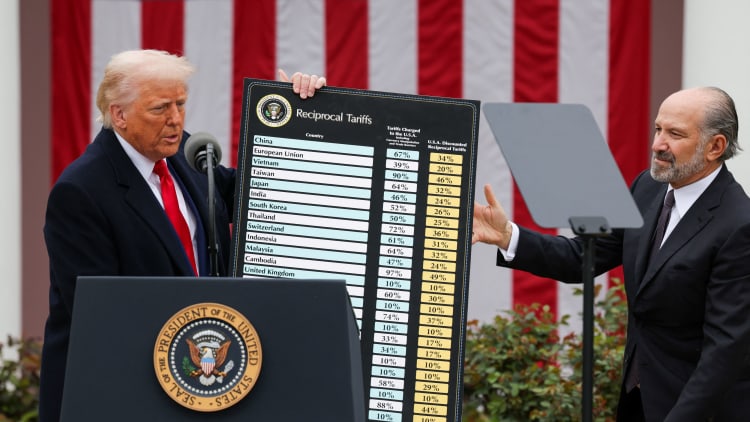
With geopolitical situation heightening, trade wars are also becoming increasingly prominent. The 47th United States President Donald Trump has introduced trade tariffs, splashed it over the world. China, an Asian trade giant and an emerging economic superpower, has its highest shared.
South Africa, struggling with its fragile foreign alliances, is seriously navigating the new United States economic policy and trade measures, at least to maintain its membership in the African Growth and Opportunities Act (AGOA) which is going to expire in September 2025.
It is a well-known fact that AGOA waived duties on most commodities from Africa in order to boost trade in American market. The AGOA also offers many African countries trade preferences in the American market, earning huge revenues for their budgets. Financial remittances back to Africa also play mighty roles across the continent from the United States.
That however, the shifting geopolitical situation combined with Trump’s new trade policies and Russia’s rising interest in Africa, the overarching message for African leaders and business corporate executives is to review the level of degree how to appreciably approach and strengthen trade partnership between Africa and Russia.
The notion of a new global order and frequently phrased multipolar world, indicating the construction of a fairer architecture of interaction, in practical terms, has become like a relic and just as a monumental pillar. Even as we watch the full-blown recalibration of power, the geopolitical reshuffling undoubtedly creates the conditions for new forms of cooperation.
In this current era of contradictions and complexities we are witnessing today, we must rather reshape and redefine rules and regulations to facilitate bilateral and multilateral relations between African countries and Russia, if really Russia seeks to forge post-Soviet strategic economic cooperation with Africa.
In fact, post-Soviet in the sense that trade is not concentrate on state-to-state but also private – including, at least, medium scale businesses. The new policy dealing with realities of the geopolitical world, distinctively different from Soviet-era slogans and rhetorics of ‘international friendship and solidarity’ of those days.
Bridging Africa and Russia, at least in the literal sense of the word, necessitates partial departure from theoretical approach to implementing several bilateral and multilateral decisions, better still agreements reached at previous summits and conferences during the past decade.
Understandably Africa has a stage, Russia termed ‘the struggle against neo-colonial tendencies’ and mounting the metal walls against the ‘scrambling of resources’ across Africa. Some experts argued that Africa, at the current stage, has to develop its regions, modernize most the post-independence-era industries to produce exportable goods, not only for domestic consumption. Now the emphasis is on pushing for prospects of a single continental market, the African Continental Free Trade Agreement (AfCFTA).
This initiative, however, must be strategically and well-coordinated well, and here I suggest integration and cooperation starting at country-wide basis to regional level before it broadly goes to the entire continent, consisting 54 independent states.
These are coordinated together as African Union (AU), which in January 2021 initiated the African Continental Free Trade Agreement (AfCFTA). With this trading goals in mind, Africa as a continent has to integrate, promote trade and economic cooperation, engage in investment and development. In that direction, genuine foreign partners are indiscriminately required, foreign investment capital in essential for collaboration as well as their entrepreneurial skills and technical expertise.
For instance, developing relations with Asian giants such China and India, the European Union and the United States. A number of African countries are shifting to the BRICS orbit, in search for feasible alternative opportunities, for the theatrical trade drama. In the Eurasian region and the former Soviet space, Kazakhstan and Russia stand out, as potential partners, for Africa.
Foreign Affairs Minister Sergey Lavrov has said, at the podium before the staff and students at Moscow State Institute of International Affairs in September, that trade between Russia and Africa would grow further as more and more African partners continued to show interest in having Russians in the economic sectors in Africa. This provides greater competition between the companies from Western countries, China, and Russia. With competition for developing mineral resources in Africa, it is easier and cheaper for African colleagues to choose partners.
As far back in October 2010, Russian Foreign Affairs Ministry posted an official report on its website that traditional products from least developed countries (including Africa) would be exempted from import tariffs. The legislation stipulated that the traditional goods are eligible for preferential customs and tariffs treatment.
Thereafter, Minister Sergey Lavrov has reiterated, in speeches, trade preferences for African exporters, but terribly failed to honour these thunderous promises. Notwithstanding the above granting trade preferences, there prevailing multitude of questions relating to the pathways of improving trade transactions, and removing obstacles including those Soviet-era rules and regulations.
Logistics is another torny hurdle. Further to this, Russian financial institutions can offer credit support that will allow to localize Russian production in Africa’s industrial zones, especially southern and eastern African regions that show some stability and have good investment and business incentives.
In order to operate more effectively, Russians have to risk by investing, recognize the importance of cooperation on key investment issues and to work closely on the challenges and opportunities on the continent. On one hand, analyzing the present landscape of Africa, Russia can export its technology and compete on equal terms with China, India and other prominent players. On the other hand, Russia lacks the competitive advantage in terms of finished industrial (manufactured) products that African consumers obtain from Asian countries such as China, India, Japan and South Korea.
Compared to the United States and Europe, Russia did very little after the Cold War and it is doing little even today in Africa. On 27th–28th July 2023, St Petersburg hosted the second Russia-Africa summit. At the plenary session, President Vladimir Putin underscored the fact that there was, prior to the collapse of the Soviet, there were over 330 large infrastructure and industrial facilities in Africa, but most were lost. Regarding trade, Putin, regrettably, noted Russia’s trade turnover with the African countries increased in 2022 and reached almost US$18 billion, (of course, that was 2022).
Arguably, Russia’s economic presence is invisible across Africa. It currently has insignificant trade statistics. Until the end of the first quarter of 2025, Russia still has a little over $20 billion trade volume with Africa. Statistics on Africa’s trade with foreign countries vary largely.
For example, the total United States two-way trade in Africa has actually fallen off in recent years, to about $60 billion, far eclipsed by the European Union with over $240 billion, and China more than $280 billion, according to a website post by the Brookings Institution.
According to the African Development Bank, Africa’s economy is growing faster than those of any other regions. Nearly half of Africa is now classified as middle income countries, the numbers of Africans living below the poverty line fell to 39 percent as compared to 51 percent in 2023, and around 380 million of Africa’s 1.4 billion people are now earning good incomes – rising consumerism – that makes trade profitable.
Nevertheless, there is great potential, as African leaders and entrepreneurial community are turing to Russia for multifaceted cooperation due to the imperialist approach of the United States and its hegemonic stand triggered over the years, and now with Trump new trade tariffs and Washington’s entire African policy.
China has done its part, Russia has to change and adopt new rules and regulations, pragmatic approach devoid of mere frequent rhetorics. It is important discussing these points, and to shamelessly repeat that both Russia and Africa have to make consistent efforts to look for new ways, practical efforts at removing existing obstacles that have impeded trade over the years.
Sprawling from the Baltic Sea to the Pacific Ocean, Russia is a major great power and has the potential to become a superpower. Russia can regain part of its Soviet-era economic power and political influence in present-day Africa.
Certainly, the expected superpower status has to be attained by practical multifaceted sustainable development and by maintaining an appreciably positive relations with Africa. We have come a long way, especially after the resonating first summit (2019 and high-praised second summit (2023), several bilateral agreements are yet to be implemented. The forthcoming Russia – Africa Partnership summit is slated for 2026, inside Africa and preferably in Addis Ababa, Ethiopia.
Kestér Kenn Klomegâh is a frequent and passionate contributor. During his professional career as a researcher specialising in Russia-Africa policy, which spans nearly two decades, he has been detained and questioned several times by Russian federal security services for reporting facts. Most of his well-resourced articles are reprinted in a number of reputable foreign media.
World
AfBD, AU Renew Call for Visa-Free Travel to Boost African Economic Growth
By Adedapo Adesanya
The African Development Bank (AfDB) and the African Union have renewed their push for visa-free travel to accelerate Africa’s economic transformation.
The call was reinforced at a High-Level Symposium on Advancing a Visa-Free Africa for Economic Prosperity, where African policymakers, business leaders, and development institutions examined the need for visa-free travel across the continent.
The consensus described the free movement of people as essential to unlocking Africa’s economic transformation under the African Continental Free Trade Area (AfCFTA).
The symposium was co-convened by AfDB and the African Union Commission on the margins of the 39th African Union Summit of Heads of State and Government in Addis Ababa.
The participants framed mobility as the missing link in Africa’s integration agenda, arguing that while tariffs are falling under AfCFTA, restrictive visa regimes continue to limit trade in services, investment flows, tourism, and labour mobility.
On his part, Mr Alex Mubiru, Director General for Eastern Africa at the African Development Bank Group, said that visa-free travel, interoperable digital systems, and integrated markets are practical enablers of enterprise, innovation, and regional value chains to translate policy ambitions into economic activity.
“The evidence is clear. The economics support openness. The human story demands it,” he told participants, urging countries to move from incremental reforms to “transformative change.”
Ms Amma A. Twum-Amoah, Commissioner for Health, Humanitarian Affairs and Social Development at the African Union Commission, called for faster implementation of existing continental frameworks.
She described visa openness as a strategic lever for deepening regional markets and enhancing collective responses to economic and humanitarian crises.
Former AU Commission Chairperson, Ms Nkosazana Dlamini-Zuma, reiterated that free movement is central to the African Union’s long-term development blueprint, Agenda 2063.
“If we accept that we are Africans, then we must be able to move freely across our continent,” she said, urging member states to operationalise initiatives such as the African Passport and the Free Movement of Persons Protocol.
Ghana’s Trade and Industry Minister, Mrs Elizabeth Ofosu-Adjare, shared her country’s experience as an early adopter of open visa policies for African travellers, citing increased business travel, tourism, and investor interest as early dividends of greater openness.
The symposium also reviewed findings from the latest Africa Visa Openness Index, which shows that more than half of intra-African travel still requires visas before departure – seen by participants as a significant drag on intra-continental commerce.
Mr Mesfin Bekele, Chief Executive Officer of Ethiopian Airlines, called for full implementation of the Single African Air Transport Market (SAATM), saying aviation connectivity and visa liberalisation must advance together to enable seamless travel.
Regional representatives, including Mr Elias Magosi, Executive Secretary of the Southern Africa Development Community, emphasised the importance of building trust through border management and digital information-sharing systems.
Ms Gabby Otchere Darko, Executive Chairman of the Africa Prosperity Network, urged governments to support the “Make Africa Borderless Now” campaign, while tourism campaigner Ras Mubarak called for more ratifications of the AU Free Movement of Persons protocol.
Participants concluded that achieving a visa-free Africa will require aligning migration policies, digital identity systems, and border infrastructure, alongside sustained political commitment.
World
Nigeria Exploring Economic Potential in South America, Particularly Brazil
By Kestér Kenn Klomegâh
In this interview, Uche Uzoigwe, Secretary-General of NIDOA-Brazil, discusses the economic potential in South America, particularly Brazil, and investment incentives for Brazilian corporate partners for the Federal Republic of Nigeria (FRN). Follow the discussion here:
How would you assess the economic potential in the South American region, particularly Brazil, for the Federal Republic of Nigeria? What investment incentives does Nigeria have for potential corporate partners from Brazil?
As the Secretary of NIDOA Brazil, my response to the questions regarding the economic potentials in South America, particularly Brazil, and investment incentives for Brazilian corporate partners would be as follows:
Brazil, as the largest economy in South America, presents significant opportunities for the Federal Republic of Nigeria. The country’s diverse economy is characterised by key sectors such as agriculture, mining, energy, and technology. Here are some factors to consider:
- Natural Resources: Brazil is rich in natural resources like iron ore, soybeans, and biofuels, which can be beneficial to Nigeria in terms of trade and resource exchange.
- Growing Agricultural Sector: With a well-established agricultural sector, Brazil offers potential collaboration in agri-tech and food security initiatives, which align with Nigeria’s goals for agricultural development.
- Market Size: Brazil boasts a large consumer market with a growing middle class. This represents opportunities for Nigerian businesses looking to export goods and services to new markets.
- Investment in Infrastructure: Brazil has made significant investments in infrastructure, which could create opportunities for Nigerian firms in construction, engineering, and technology sectors.
- Cultural and Economic Ties: There are historical and cultural ties between Nigeria and Brazil, especially considering the African diaspora in Brazil. This can facilitate easier business partnerships and collaborations.
In terms of investment incentives for potential corporate partners from Brazil, Nigeria offers several attractive incentives for Brazilian corporate partners, including:
- Tax Incentives: Various tax holidays and concessions are available under the Nigerian government’s investment promotion laws, particularly in key sectors like agriculture, manufacturing, and technology.
- Repatriation of Profits: Brazil-based companies investing in Nigeria can repatriate profits without restrictions, thus enhancing their financial viability.
- Access to the African Market: Investment in Nigeria allows Brazilian companies to access the broader African market, benefiting from Nigeria’s membership in regional trade agreements such as ECOWAS.
- Free Trade Zones: Nigeria has established free trade zones that offer companies the chance to operate with reduced tariffs and fewer regulatory burdens.
- Support for Innovation: The Nigerian government encourages innovation and technology transfer, making it attractive for Brazilian firms in the tech sector to collaborate, particularly in fintech and agriculture technology.
- Collaborative Ventures: Opportunities exist for joint ventures with local firms, leveraging local knowledge and networks to navigate the business landscape effectively.
In conclusion, fostering a collaborative relationship between Nigeria and Brazil can unlock numerous economic opportunities, leading to mutual growth and development in various sectors. We welcome potential Brazilian investors to explore these opportunities and contribute to our shared economic goals.
In terms of this economic cooperation and trade, what would you say are the current practical achievements, with supporting strategies and systemic engagement from NIDOA?
As the Secretary of NIDOA Brazil, I would highlight the current practical achievements in economic cooperation and trade between Nigeria and Brazil, alongside the supporting strategies and systemic engagement from NIDOA.
Here are some key points:
Current Practical Achievements
- Increased Bilateral Trade: There has been a notable increase in bilateral trade volume between Nigeria and Brazil, particularly in sectors such as agriculture, textiles, and technology. Recent trade agreements and discussions have facilitated smoother trade relations.
- Joint Ventures and Partnerships: Successful joint ventures have been established between Brazilian and Nigerian companies, particularly in agriculture (e.g., collaboration in soybean production and agricultural technology) and energy (renewables, oil, and gas), demonstrating commitment to mutual development.
- Investment in Infrastructure Development: Brazilian construction firms have been involved in key infrastructure projects in Nigeria, contributing to building roads, bridges, and facilities that enhance connectivity and economic activity.
- Cultural and Educational Exchange Programs: Programs facilitating educational exchange and cultural cooperation have led to strengthened ties. Brazilian universities have partnered with Nigerian institutions to promote knowledge transfer in various fields, including science, technology, and arts.
Supporting Strategies
- Strategic Trade Dialogue: NIDOA has initiated regular dialogues between trade ministries of both nations to discuss trade barriers, potential markets, and cooperative opportunities, ensuring both countries are aligned in their economic goals.
- Investment Promotion Initiatives: Targeted initiatives have been established to promote Brazil as an investment destination for Nigerian businesses and vice versa. This includes showcasing success stories at international trade fairs and business forums.
- Capacity Building and Technical Assistance: NIDOA has offered capacity-building programs focused on enhancing Nigeria’s capabilities in agriculture and technology, leveraging Brazil’s expertise and sustainable practices.
- Policy Advocacy: Continuous advocacy for favourable trade policies has been a key focus for NIDOA, working to reduce tariffs and promote economic reforms that facilitate investment and trade flows.
Systemic Engagement
- Public-Private Partnerships (PPPs): Engaging the private sector through PPPs has been essential in mobilising resources for development projects. NIDOA has actively facilitated partnerships that leverage both public and private investments.
- Trade Missions and Business Delegations: Organised trade missions to Brazil for Nigerian businesses and vice versa, allowing for direct engagement with potential partners, fostering trust and opening new channels for trade.
- Monitoring and Evaluation: NIDOA implements a rigorous monitoring and evaluation framework to assess the impact of various initiatives and make necessary adjustments to strategies, ensuring effectiveness in achieving economic cooperation goals.
Through these practical achievements, supporting strategies, and systemic engagement, NIDOA continues to play a pivotal role in enhancing economic cooperation and trade between Nigeria and Brazil. By fostering collaboration and leveraging shared resources, we aim to create a sustainable and mutually beneficial economic environment that promotes growth for both nations.
Do you think the changing geopolitical situation poses a number of challenges to connecting businesses in the region with Nigeria, and how do you overcome them in the activities of NIDOA?
The changing geopolitical situation indeed poses several challenges for connecting businesses in the South American region, particularly Brazil, with Nigeria. These challenges include trade tensions, shifting alliances, currency fluctuations, and varying regulatory environments. Below, I will outline some of the specific challenges and how NIDOA works to overcome them:
Current Challenges
- No Direct Flights: This challenge is obviously explicit. Once direct flights between Brazil and Nigeria become active, and hopefully this year, a much better understanding and engagement will follow suit.
- Trade Restrictions and Tariffs: Increasing trade protectionism in various regions can lead to higher tariffs and trade barriers that hinder the movement of goods between Brazil and Nigeria.
- Currency Volatility: Fluctuations in the value of currencies can complicate trade agreements, pricing strategies, and overall financial planning for businesses operating in both Brazil and Nigeria.
- Different regulatory frameworks and compliance requirements in both countries can create challenges for businesses aiming to navigate these systems efficiently.
- Supply Chain Disruptions: Changes in global supply chains due to geopolitical factors may disrupt established networks, impacting businesses relying on imports and exports between the two nations.
Overcoming Challenges through NIDOA.
NIDOA actively engages in discussions with both the Brazilian and Nigerian governments to advocate for favourable trade policies and agreements that reduce tariffs and improve trade conditions. This year in October, NIDOA BRAZIL holds its TRADE FAIR in São Paulo, Brazil.
What are the popular sentiments among the Nigerians in the South American diaspora? As the Secretary-General of the NIDOA, what are your suggestions relating to assimilation and integration, and of course, future perspectives for the Nigerian diaspora?
As the Secretary-General of NIDOA, I recognise the importance of understanding the sentiments among Nigerians in the South American diaspora, particularly in Brazil.
Many Nigerians in the diaspora take pride in their cultural roots, celebrating their heritage through festivals, music, dance, and culinary traditions. This cultural expression fosters a sense of community and belonging.
While many individuals embrace their new environments, they often face challenges related to cultural differences, language barriers, and social integration, which can lead to feelings of isolation.
Many express optimism about opportunities in education, business, and cultural exchange, viewing their presence in South America as a chance to expand their horizons and contribute to economic activities both locally and back in Nigeria.
Sentiments regarding acceptance vary; while some Nigerians experience warmth and hospitality, others encounter prejudice or discrimination, which can impact their overall experience in the host country. NIDOA BRAZIL has encouraged the formation of community organisations that promote networking, cultural exchange, and social events to foster a sense of belonging and support among Nigerians in the diaspora. There are currently two forums with over a thousand Nigerian members.
Cultural Education and Awareness Programs: NIDOA BRAZIL organises cultural education programs that showcase Nigerian heritage to local communities, promoting mutual understanding and appreciation that can facilitate smoother integration.
Language and Skills Training: NIDOA BRAZIL provides language courses and skills training programs to help Nigerians, especially students in tertiary institutions, adapt to their new environment, enhancing communication and employability within the host country.
Engaging in Entrepreneurship: NIDOA BRAZIL supports the entrepreneurial spirit among Nigerians in the diaspora by facilitating access to resources, mentorship, and networks that can help them start businesses and create economic opportunities.
Through its AMBASSADOR’S CUP COMPETITION, NIDOA Brazil has engaged students of tertiary institutions in Brazil to promote business projects and initiatives that can be implemented in Nigeria.
NIDOA BRAZIL also pushes for increased tourism to Brazil since Brazil is set to become a global tourism leader in 2026, with a projected 10 million international visitors, driven by a post-pandemic rebound, enhanced air connectivity, and targeted marketing strategies.
Brazil’s tourism sector is poised for a remarkable milestone in 2026, as the country expects to welcome over 10 million international visitors—surpassing the previous record of 9.3 million in 2025. This expected surge represents an ambitious leap, nearly doubling the country’s foreign-arrival numbers within just four years, a feat driven by a combination of pent-up global demand, strategic air connectivity improvements, and a highly targeted marketing campaign.
World
African Visual Art is Distinguished by Colour Expression, Dynamic Form—Kalalb
By Kestér Kenn Klomegâh
In this insightful interview, Natali Kalalb, founder of NAtali KAlalb Art Gallery, discusses her practical experiences of handling Africa’s contemporary arts, her professional journey into the creative industry and entrepreneurship, and also strategies of building cultural partnership as a foundation for Russian-African bilateral relations. Here are the interview excerpts:
Given your experience working with Africa, particularly in promoting contemporary art, how would you assess its impact on Russian-African relations?
Interestingly, my professional journey in Africa began with the work “Afroprima.” It depicted a dark-skinned ballerina, combining African dance and the Russian academic ballet tradition. This painting became a symbol of cultural synthesis—not opposition, but dialogue.
Contemporary African art is rapidly strengthening its place in the world. By 2017, the market was growing so rapidly that Sotheby launched its first separate African auction, bringing together 100 lots from 60 artists from 14 foreign countries, including Algeria, Ghana, Mali, Nigeria, Senegal, and others. That same year during the Autumn season, Louis Vuitton Foundation in Paris hosted a major exhibition dedicated to African art. According to Artnet, sales of contemporary African artists reached $40 million by 2021, a 434% increase in just two years. Today, Sotheby holds African auctions twice a year, and in October 2023, they raised $2.8 million.
In Russia, this process manifests itself through cultural dialogue: exhibitions, studios, and educational initiatives create a space of trust and mutual respect, shaping the understanding of contemporary African art at the local level.
Do you think geopolitical changes are affecting your professional work? What prompted you to create an African art studio?
The international context certainly influences cultural processes. However, my decision to work with African themes was not situational. I was drawn to the expressiveness of African visual language—colour, rhythm, and plastic energy. This theme is practically not represented systematically and professionally in the Russian art scene.
The creation of the studio was a step toward establishing a sustainable platform for cultural exchange and artistic dialogue, where the works of African artists are perceived as a full-fledged part of the global cultural process, rather than an exotic one.
To what extent does African art influence Russian perceptions?
Contemporary African art is gradually changing the perception of the continent. While previously viewed superficially or stereotypically, today viewers are confronted with the depth of artistic expression and the intellectual and aesthetic level of contemporary artists.
Portraits are particularly impactful: they allow us to see not just an abstract image of a “continent,” but a concrete personality, character, and inner dignity. Global market growth data and regular auctions create additional trust in African contemporary art and contribute to its perception as a mature and valuable movement.
Does African art reflect lifestyle and fashion? How does it differ from Russian art?
African art, in my opinion, is at its peak in everyday culture—textiles, ornamentation, bodily movement, rhythm. It interacts organically with fashion, music, interior design, and the urban environment. The Russian artistic tradition is historically more academic and philosophical. African visual art is distinguished by greater colour expression and dynamic form. Nevertheless, both cultures are united by a profound symbolic and spiritual component.
What feedback do you receive on social media?
Audience reactions are generally constructive and engaging. Viewers ask questions about cultural codes, symbolism, and the choice of subjects. The digital environment allows for a diversity of opinions, but a conscious interest and a willingness to engage in cultural dialogue are emerging.
What are the key challenges and achievements of recent years?
Key challenges:
- Limited expert base on African contemporary art in Russia;
- Need for systematic educational outreach;
- Overcoming the perception of African art as exclusively decorative or ethnic.
Key achievements:
- Building a sustainable audience;
- Implementing exhibition and studio projects;
- Strengthening professional cultural interaction and trust in African
contemporary art as a serious artistic movement.
What are your future prospects in the context of cultural diplomacy?
Looking forward, I see the development of joint exhibitions, educational programs, and creative residencies. Cultural diplomacy is a long-term process based on respect and professionalism. If an artistic image is capable of uniting different cultural traditions in a single visual space, it becomes a tool for mutual understanding.
-
Feature/OPED6 years agoDavos was Different this year
-
Travel/Tourism10 years ago
Lagos Seals Western Lodge Hotel In Ikorodu
-
Showbiz3 years agoEstranged Lover Releases Videos of Empress Njamah Bathing
-
Banking8 years agoSort Codes of GTBank Branches in Nigeria
-
Economy3 years agoSubsidy Removal: CNG at N130 Per Litre Cheaper Than Petrol—IPMAN
-
Banking3 years agoSort Codes of UBA Branches in Nigeria
-
Banking3 years agoFirst Bank Announces Planned Downtime
-
Sports3 years agoHighest Paid Nigerian Footballer – How Much Do Nigerian Footballers Earn