Feature/OPED
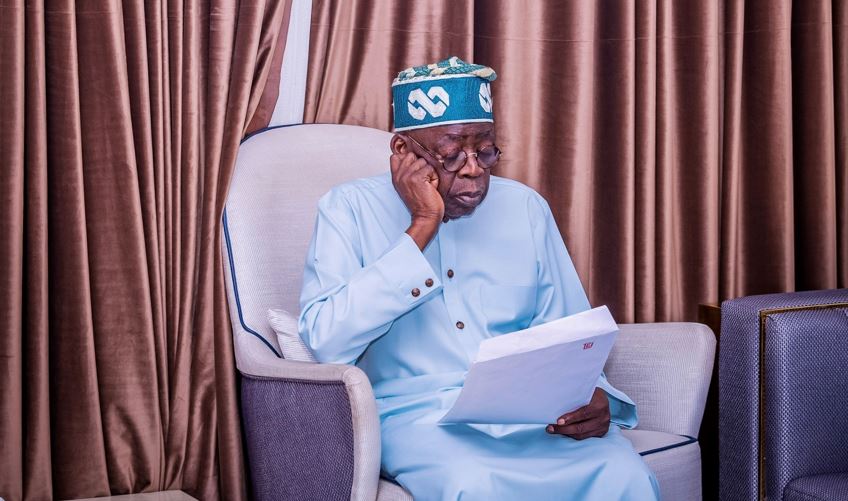
A Healthier Future: President Tinubu’s Drive to Improve Nigerian Healthcare
By Victor Benjamin
Health is wealth,” a common adage echoing through Nigerian communities, encapsulates the fundamental importance of well-being. President Bola Tinubu’s administration appears to have taken this sentiment to heart, demonstrating a bold commitment to revolutionising Nigeria’s health sector.
Through a multi-pronged approach focused on strengthening infrastructure, upskilling manpower, and ensuring efficient healthcare delivery, the administration is signaling a new era for healthcare in Nigeria. This ambitious agenda, backed by tangible initiatives and achievements, holds the promise of a healthier and more prosperous nation.
President Bola Ahmed Tinubu’s administration has launched a comprehensive and ambitious agenda to transform Nigeria’s healthcare sector, signaling a new era of progress and commitment to the well-being of the Nigerian people. This multi-pronged approach focuses on strengthening infrastructure, upskilling the healthcare workforce, enhancing system efficiency, and addressing critical public health challenges. The administration’s actions are demonstrably moving towards a more robust and accessible healthcare system.
A cornerstone of this transformation is the aggressive expansion and upgrade of healthcare infrastructure. The federal government’s decisive action to convert the General Hospital Kumo in Gombe State into a Federal Medical Centre (FMC) is a prime example. This strategic upgrade, the second federal medical institution in Gombe, will significantly improve healthcare delivery in the Northeast region. Moreover, the upgraded Kumo FMC will serve as a teaching hospital for the Federal University of Kashere and Lincoln University, Kumo, contributing to the crucial training of future medical practitioners.
Furthermore, the administration is committed to dramatically increasing the number of functional Primary Healthcare Centres (PHCs) from 8,809 to over 17,600 by 2027. This expansion aims to bring quality healthcare closer to communities, particularly in underserved areas. To support this, the Basic Health Care Provision Fund (BHCPF) is being redesigned to provide more Direct Facility Funding to healthcare facilities, increasing from N300,000 to N600,000-N800,000 per quarter. The federal government has also identified 577 primary healthcare centres for immediate revitalization, indicating a focused and actionable plan.
Recognising that a strong healthcare system relies on a skilled workforce, President Tinubu has prioritised investment in human resources for health. The approval of 774 National Health Fellows, selected from each local council, aims to foster sustained improvements and cultivate future healthcare leaders. The administration has also set out to train 120,000 frontline health workers over 16 months, with 40,240 already trained, addressing critical manpower gaps in PHCs.
Additionally, the enrolment capacity of accredited nursing and midwifery institutions is being increased to meet the growing demand for healthcare professionals. A community health programme is being redesigned to create 126,000 jobs for community health workers, extending essential health services to remote and underserved communities.
Strengthening healthcare systems and efficiency is another critical aspect of the administration’s agenda. The Nigeria Health Sector Renewal Investment Initiative (NHSRII), launched in December 2023, serves as a strategic blueprint to improve population health outcomes through primary healthcare and enhance reproductive, maternal, and child health services.
The National Primary Health Care Development Agency (NPHCDA) is developing a three-year digitalisation agenda, encompassing facility functionality, supply chain management, financial management, and the community health information system.
This initiative promises improved efficiency and data-driven decision-making. Nigeria’s active participation in the Collaborative Active Strategy (CAS) further streamlines health campaigns and strengthens the overall health system.
Addressing critical health challenges is also a priority. First Lady Senator Oluremi Tinubu’s strong advocacy campaign against tuberculosis (TB), declaring it a health emergency and committing an additional N1 billion through the Renewed Hope Initiative, highlights the administration’s focus on tackling significant public health issues. The nationwide rollout of HPV vaccination, with over 12 million girls vaccinated, demonstrates a proactive approach to preventive healthcare.
The international community has recognised the administration’s commitment. The World Bank has approved $1.57 billion to support the health sector in Nigeria, focusing on strengthening human capital through better health for women, children, and adolescents. This significant financial support underscores the global confidence in the administration’s vision and execution.
President Tinubu’s comprehensive health agenda promises substantial benefits for the Nigerian populace. Foremost, it aims to drastically improve access to quality healthcare, particularly at the primary level, ensuring that even remote communities receive essential medical services.
This is complemented by a concerted effort to build a more robust and better-trained healthcare workforce, effectively addressing critical manpower shortages and ensuring adequate staffing across facilities. Simultaneously, the administration is focusing on strengthening healthcare infrastructure and equipment, upgrading existing facilities and constructing new ones to provide healthcare providers with necessary resources.
Furthermore, the agenda prioritises the creation of more efficient and transparent healthcare systems through digitalisation and improved financial management, streamlining processes and optimising resource allocation. Crucially, it demonstrates a strong commitment to tackling critical public health issues, such as tuberculosis and immunisation, through focused attention and targeted interventions. These multifaceted efforts collectively pave the way for a healthier nation, enhancing the overall well-being of the Nigerian people.
This comprehensive approach underscores President Tinubu’s understanding of the critical role of a strong healthcare system in national development. By prioritizing infrastructure, workforce development, system efficiency, and targeted interventions, the administration is laying the foundation for a healthier and more prosperous Nigeria. This narrative presents a compelling story of progress and commitment in the Nigerian health sector, marking a significant step towards a brighter future for the nation’s healthcare.
Victor Benjamin is the West/South South Director for Young Professionals for Tinubu (YP4T)
Feature/OPED
Revived Argungu International Fishing Festival Shines as Access Bank Backs Culture, Tourism Growth
The successful hosting of the 2026 Argungu International Fishing Festival has spotlighted the growing impact of strategic public-private partnerships, with Access Bank and Kebbi State jointly reinforcing efforts to promote cultural heritage, tourism development, and local economic growth following the globally attended celebration in Argungu.
At the grand finale, Special Guest of Honour, Mr Bola Tinubu, praised the festival’s enduring national significance, describing it as a powerful expression of unity, resilience, and peaceful coexistence.
“This festival represents a remarkable history and remains a powerful symbol of unity, resilience, and peaceful coexistence among Nigerians. It reflects the richness of our culture, the strength of our traditions, and the opportunities that lie in harnessing our natural resources for national development. The organisation, security arrangements, and outlook demonstrate what is possible when leadership is purposeful and inclusive.”
State authorities noted that renewed institutional backing has strengthened the festival’s global appeal and positioned it once again as a major tourism and cultural platform capable of attracting international visitors and investors.
“Argungu has always been an iconic international event that drew visitors from across the world. With renewed partnerships and stronger institutional support, we are confident it will return to that global stage and expand opportunities for our people through tourism, culture, and enterprise.”
Speaking on behalf of Access Bank, Executive Director, Commercial Banking Division, Hadiza Ambursa, emphasised the institution’s long-standing commitment to supporting initiatives that preserve heritage and create economic opportunities.
“We actively support cultural development through initiatives like this festival and collaborations such as our partnership with the National Theatre to promote Nigerian arts and heritage. Across states, especially within the public sector space where we do quite a lot, we work with governments on priorities that matter to them. Tourism holds enormous potential, and while we have supported several hotels with expansion financing, we remain open to working with partners interested in developing the sector further.”
Reports from the News Agency of Nigeria indicated that more than 50,000 fishermen entered the historic Matan Fada River during the competition. The overall winner, Abubakar Usman from Maiyama Local Government Area, secured victory with a 59-kilogram catch, earning vehicles donated by Sokoto State and a cash prize. Other top contestants from Argungu and Jega also received vehicles, motorcycles and monetary rewards, including sponsorship support from WACOT Rice Limited.
Recognised by UNESCO as an Intangible Cultural Heritage of Humanity, the festival blends traditional fishing contests with boat regattas, durbar processions, performances, and international competitions, drawing visitors from across Nigeria and beyond.
With the 2026 edition concluded successfully, stakeholders say the strengthened collaboration between government and private-sector partners signals a renewed era for Argungu as a flagship cultural tourism destination capable of driving inclusive growth, preserving tradition, and projecting Nigeria’s heritage on the world stage.
Feature/OPED
$214Bn Missing, Institutions Silent: Is Accountability Dead in Nigeria?
By Blaise Udunze
Between 2010 and 2026, a staggering $214 billion, approximately N300 trillion in public funds, has been reported as missing, unaccounted for, diverted, unrecovered, irregularly spent, or trapped in non-transparent fiscal structures across Nigeria’s public institutions.
That figure is not speculative but a conservative estimate of unaccounted funds. It is drawn from audit reports, legislative probes, civil society litigation, executive directives, and investigative findings spanning more than a decade. If it is to go by the accurate figure, the true national loss is likely higher but difficult to quantify precisely due to data gaps, overlapping figures, and incomplete audits.
The challenge is that in many of the most prominent cases, prosecutions have stalled, hearings have dragged without resolution, investigations have gone cold, and no defining jail terms have etched accountability into Nigeria’s institutional memory. The irony is that the number is historic, the silence is louder. And the economic damage is cumulative.
The pattern stretches from the oil sector to social investment programmes, from the Nigeria Central Bank of Nigeria (CBN) interventions to ministry-level expenditures. In 2014, between $10.8 billion and $20 billion in unremitted oil revenues linked to the Nigerian National Petroleum Corporation triggered national outrage. Under the then CBN governor, Lamido Sanusi, who warned that persistent oil revenue leakages were making exchange rate stability “extremely difficult.” He cautioned that without full remittances, the alternative would be currency devaluation and financial instability. This concern spans the 2010 to 2013 oil revenue period. That warning proved prophetic.
This is because, years later, the lack of transparency in the oil industry did not disappear, but rather it festered like cancer. It further led to the elongated audit queries, which have continued to trail the Nigerian National Petroleum Company Limited, including unremitted revenues, questioned deductions, and management fee structures under the Petroleum Industry Act. With an extraordinary move aimed at blocking revenue leakages at source, President Bola Ahmed Tinubu has recently issued an Executive Order suspending certain deductions and directing direct remittance of taxes, royalties, and profit oil into the Federation Account, which involves the reassessment of NNPC’s 30 per cent management fee and 30 per cent frontier exploration deduction under the Petroleum Industry Act.
Such presidential intervention underscores the scale of concern, which means that Nigeria cannot afford a structural lack of transparency in its most strategic revenue sector. But oil is only one chapter.
The Central Bank of Nigeria has faced some of the most far-reaching audit alarms in recent years. In suit number FHC/ABJ/CS/250/2026, the Socio-Economic Rights and Accountability Project (SERAP) is asking the Federal High Court to compel the CBN to account for N3 trillion in allegedly missing or diverted public funds. The Auditor-General’s 2025 report cited failures to remit over N1.44 trillion in operating surplus to the Consolidated Revenue Fund, over N629 billion paid to “unknown beneficiaries” under the Anchor Borrowers’ Programme, and more than N784 billion in overdue, unrecovered intervention loans.
There were also N125 billion in questioned intervention expenditures, irregular contract variations exceeding N9 billion, and procurement gaps running into hundreds of billions. The Auditor-General repeatedly recommended recovery and remittance. No date has been fixed for the hearing. Meanwhile, Nigeria continues to borrow.
Elsewhere, the House of Representatives has launched a probe into over N30 billion recovered during investigations into the National Social Investment Programme Agency (NSIPA). The funds, reportedly frozen during investigation, have not been remitted back into the Treasury Single Account, stalling poverty-alleviation schemes like TraderMoni and FarmerMoni. Millions of vulnerable Nigerians remain exposed while lawmakers search for money already “recovered.” The irony is staggering as funds are found, but programmes remain frozen.
A top discovery recently that put the nation on red alert was made by the Senate committee, which claimed to have found N210 trillion in financial irregularities in NNPC accounts between 2017 and 2023, including unaccounted receivables and accrued expenses. A critical concern is that, as of early 2026, this has sparked commentary but no clear prosecutions.
Only recently, in the power sector, SERAP has urged the President to probe alleged missing or unaccounted N128 billion at the Federal Ministry of Power and the Nigerian Bulk Electricity Trading Plc. Of concern is that despite the enormous funds channelled in this sector, Nigeria’s chronic electricity instability persists, even as billions meant to stabilise the grid face audit scrutiny.
Across MDAs, audit reports between 2017 and 2022 flagged trillions in unsupported expenditures, unremitted taxes, unauthorised payments, and statutory liabilities never recovered. These sums are dizzying and are also alarming; N300 billion here, N149 billion there, N3.403 trillion across agencies, N30 trillion-plus Treasury discrepancies raised at the Senate level.
Individually, they shock. Collectively, they define a structural pattern. And patterns shape economies.
Nigeria operates with structural fiscal deficits and also lives with them routinely and comfortably. Expenditure persistently exceeds revenue. When public funds disappear, fail to be remitted, or are trapped outside constitutional channels, the deficit widens. The government must borrow to fill gaps created not only by low revenue, but by revenue leakage.
Debt servicing now consumes a disproportionate share of federal revenue. Borrowing meant for capital projects increasingly finances recurrent obligations. The country shifts from borrowing to build to borrowing to survive. Every missing naira compounds tomorrow’s liability.
The Treasury Single Account (TSA) was designed to plug such leakages. It consolidated government revenues under Section 80 of the Constitution into a unified framework. International financial institutions commended it as a landmark reform. Yet even today, the Minister of Finance, Wale Edun, has admitted that substantial government funds remain outside the TSA and outside the CBN’s consolidated visibility. Until August 1, 2024, he revealed, the federal government could not fully see its own balance sheet at the apex bank. That admission should alarm any serious economy.
Fiscal lack of transparency constrains planning. It undermines monetary coordination. It weakens debt sustainability projections. It distorts policy responses. And when systems are in flux, money vanishes more easily.
Changing or weakening the TSA in such an environment would be catastrophic. Transitions create windows of vulnerability. Old accounts close. New accounts open. Reconciliation’s lag. Ghost contractors reappear. Double payments slip through.
Albeit, the government must learn to tread with caution as Nigeria’s institutional bandwidth is already strained by simultaneous tax reforms, exchange-rate adjustments, subsidy removal, and fiscal restructuring. One truth that cannot be argued is that layering additional structural upheaval onto fragile systems risks revenue loss that the country cannot afford. Investors are watching.
Credit markets evaluate not just numbers but institutional consistency. A nation that abandons or weakens its most credible fiscal reform sends a destabilising signal. Stability lowers borrowing costs. Institutional drift raises them. But beyond markets lies the human cost.
N300 trillion represents roads not built, power plants not completed, irrigation systems not funded, schools not modernised, and hospitals not equipped. It represents jobs not created and industries not catalysed. It represents stalled productivity and deferred growth.
When intervention loans remain unrecovered, agricultural output suffers. When power sector funds are unaccounted for, electricity remains unstable. When social investment funds are frozen, poverty deepens.
Inflation then compounds the pain. Revenue gaps push borrowing. Borrowing pressures, interest rates and by extension, liquidity misalignment fuel price instability. Citizens pay through higher food costs, transport fares, and rent. The poor pay first. The middle class erodes quietly.
Perhaps most corrosive is the trust deficit. When audit queries fade without visible accountability, tax morale weakens. Compliance declines. Cynicism hardens. A nation cannot modernise where trust in fiscal integrity is fragile.
Section 15(5) of the Constitution requires the abolition of corrupt practices. Financial Regulations mandate a surcharge and referral to anti-corruption agencies where public officers fail to account for funds. The Fiscal Responsibility Act empowers citizens to enforce compliance to ensure that government officials follow fiscal rules. But enforcement defines seriousness.
Nigeria’s problem is not a lack of audit findings. It is the distance between findings and finality.
Nations do not collapse overnight due to a lack of funds. They drift. Infrastructure decays incrementally. Debt rises gradually. Growth slows subtly. Confidence erodes quietly. Then one day, stagnation feels permanent. $214 billion (N300 trillion), sixteen years of recurring audit alarms. Few conclusive accountability outcomes are proportionate to the scale. Truly, the consequences have been less strong. For the same reason, the country witnessed President Tinubu nominating ex-NIA boss Ayodele Oke as ambassador despite a $43 million loot in an Ikoyi apartment.
See the research breakdown of some of the audit figures that reveal staggering sums as enumerated above:
– $10.8 billion and separately $20 billion in unaccounted oil revenues at the NNPC in 2014
– $1.1 billion controversial Malabu Oil and Gas oil deal in 2015
– $2.2 billion arms procurement irregularities in 2015
– N3.4 billion from IMF COVID-19 financing flagged in a 2020 audit.
– N149.36 billion, N37.2 billion, and multiple irregular MDA expenditures in 2020 alone.
– N300 billion cited in public audit concerns in 2017.
– N210 trillion in financial irregularities uncovered, N103 trillion in ‘accrued expenses’, and another N107 trillion in unaccounted ‘receivables’ (2017 -2023).
– N57 billion Ministry of Humanitarian Affairs – (2021)
– N3 trillion and N1.44 trillion flagged in 2022 audit issues involving the Central Bank of Nigeria.
– Nearly N630 billion under the Anchor Borrowers Programme is reportedly unrecovered.
– N784 billion in overdue intervention loans flagged.
– Over N3.403 trillion unaccounted for across federal MDAs between 2019 and 2021.
– Roughly 30 trillion+ in Treasury Single Account and Consolidated Revenue Fund discrepancies raised at the Senate level.
– N500 billion in unremitted oil revenues between 2019 and 2024.
– N80 billion tied to alleged fictitious contracts in the Accountant-General’s office.
– N69.9 billion in uncollected statutory tax liabilities.
– Billions more in unauthorised or undocumented expenditures across ministries.
The institutions differ. The years differ. The audit language differs. The pattern does not.
Nigeria’s economic future will not be determined solely by how much oil it produces, how many reforms it announces, or how many executive orders it signs. It will be determined by whether every naira earned enters the Federation Account transparently, whether every intervention loan is tracked and recovered, whether every surplus is remitted constitutionally, and whether every diversion carries consequences. Revenue generation matters. Revenue protection is destiny. Because when government funds go missing, nations do not stand still. They move backwards.
Blaise, a journalist and PR professional, writes from Lagos and can be reached via: bl***********@***il.com
Feature/OPED
The Hidden Workforce of the 2026 Access Bank Lagos City Marathon
When the final runner crossed the finish line at the 11th edition of the Access Bank Lagos City Marathon (ABLCM), the applause began to fade. But for hundreds of workers across Lagos, the real work was just beginning.
Major highways had been closed to facilitate the event. Tens of thousands of runners moved through the city in a coordinated surge of athletic endurance. Thousands of bottles of water and energy drinks were distributed, alongside sachets containing essential medical supplies and medication. The race route itself was meticulously prepared, lined with banners, barricades, medical tents and precision timing systems that ensured safety, organisation and accurate performance tracking from start to finish.
What followed was the part that a few cameras lingered on, yet it remains one of the clearest indicators of institutional progress.
Within minutes of the race conclusion, coordinated sanitation teams fanned out across the marathon corridor. Their work went beyond sweeping. Waste was systematically sorted. Plastic bottles were separated from general refuse. Sachets were gathered in bulk. Collection trucks moved along predefined routes, ensuring rapid evacuation of waste. Temporary race infrastructure was dismantled with quiet precision.
In a megacity like Lagos, speed is a necessity. Urban momentum cannot pause for long. The ability to restore order quickly after an event of this magnitude reflects operational discipline across interconnected systems, municipal authorities, environmental agencies, private waste management partners and event coordinators.
Globally, large-scale sporting events are no longer evaluated solely by participation numbers or prize purses. Sustainability has emerged as a defining metric. Environmental responsiveness is now a core measure of credibility. Cities seeking tourism growth, foreign investment and international partnerships must demonstrate that scale does not compromise responsibility. The 2026 marathon provided a compelling case study in this evolution.
The clean-up operation itself generated meaningful economic activity. Temporary employment opportunities emerged for sanitation workers and logistics personnel. Recycling partners engaged in material recovery, reinforcing circular economy value chains. What was once viewed as routine waste disposal has evolved into a structured ecosystem of environmental services, a sector of increasing importance in modern urban economies.
This level of sustainability was the result of deliberate planning. Effective post-event recovery requires route mapping, waste volume projections, coordination between sponsors such as Access Bank Plc and municipal bodies, contingency planning for congestion points and clear communication protocols.
Each edition of the marathon has built on lessons from the last. International participation has expanded. Accreditation standards have strengthened. Media visibility has grown. Most importantly, environmental management has become embedded in the marathon’s operational framework rather than treated as an afterthought.
Progress rarely arrives in dramatic leaps, it advances through incremental improvements, refined systems and institutional learning. Just as elite runners close performance gaps through disciplined training, cities strengthen their global standing through consistent operational excellence.
The 2026 marathon, therefore, tells a story that extends far beyond athletic achievement. It is a story of coordination, sustainability as strategy rather than slogan, and the often unseen workforce, sanitation workers, planners, volunteers, security officials and environmental partners, whose discipline sustains the spectacle.
Because in the end, global cities are judged by how well they host and how responsibly they restore. On the marathon day in Lagos, it was the runners who demonstrated endurance and the systems, and the people behind them, who ensured that when the cheering stopped, the city kept moving.
-
Feature/OPED6 years agoDavos was Different this year
-
Travel/Tourism10 years ago
Lagos Seals Western Lodge Hotel In Ikorodu
-
Showbiz3 years agoEstranged Lover Releases Videos of Empress Njamah Bathing
-
Banking8 years agoSort Codes of GTBank Branches in Nigeria
-
Economy3 years agoSubsidy Removal: CNG at N130 Per Litre Cheaper Than Petrol—IPMAN
-
Banking3 years agoSort Codes of UBA Branches in Nigeria
-
Banking3 years agoFirst Bank Announces Planned Downtime
-
Sports3 years agoHighest Paid Nigerian Footballer – How Much Do Nigerian Footballers Earn