Connect with us

General

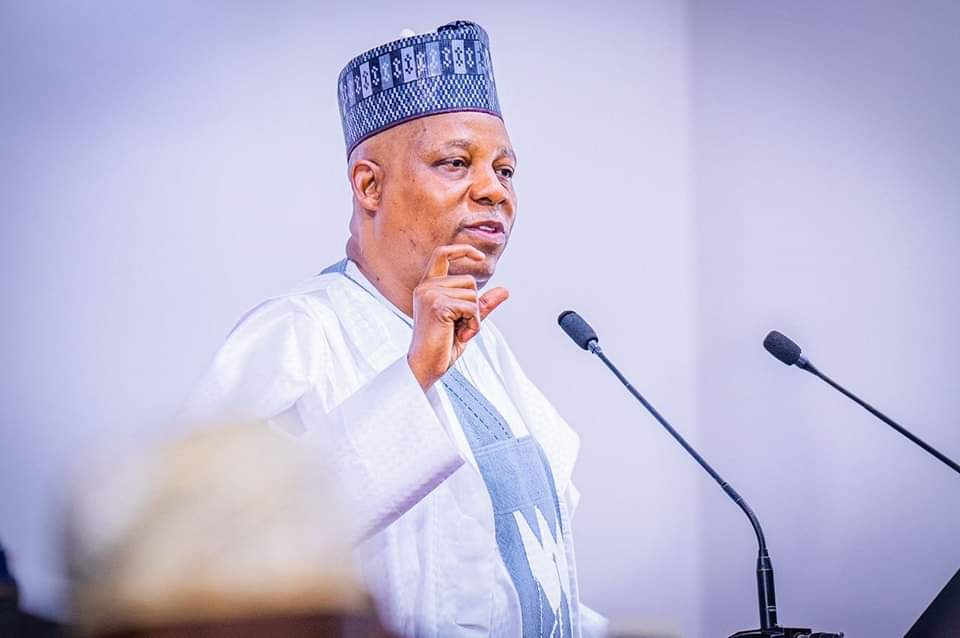
2027 Elections: Vice President Shettima’s Critics and Political Detractors

Published

on

Kashim Shettima

By Abba Dukawa 

President Bola Tinubu and Vice President Kashim Shettima are indeed on the same ticket, representing the All Progressives Congress (APC). They ran together in the 2023 presidential election. However, there’s speculation about whether Shettima will remain Tinubu’s running mate in 2027 general elections.

According to reports, there are discussions about potential changes to the ticket for the 2027 presidential election, with some suggesting other northern minority christian or  a  politician from  north West  could replace Shettima. Despite this, there’s no official confirmation on the status of their joint ticket beyond the current term.

Clearly, his role diverges significantly from that of his predecessors, including Atiku Abubakar, Prof. Yemi Osinbajo, and Goodluck Jonathan. Despite being afforded some opportunities since the government’s inception, they haven’t been substantial enough to generate significant support or recognition.

“I struggle to understand why Shettima hasn’t been utilized to his full potential in this administration. For too long, he’s been consigned to ceremonial duties, only being acknowledged during high-profile events. Why isn’t he permitted to function similarly to his predecessors, given his vast experience? Is it due to external factors constrained his role? Furthermore, why does the economic team, led by the Vice President, appear to have a limited impact on shaping national economic policies?”

Shettima is indeed an exceptional politician, renowned for his astute understanding of politics and leadership. His ability to navigate complex political landscapes and build consensus has earned him respect from various quarters.

He has achieved remarkable success, winning elections three times and serving as Governor of Borno State for two terms, spanning eight years. He later became a Senator and eventually, the running mate to President Tinubu.

Notably, Shettima demonstrated exceptional leadership in rebuilding Borno after the devastating impact of terrorism. His experience, political acumen, and administrative expertise are unparalleled, setting him apart from others vying for the Vice Presidency.

As a seasoned politician with a deep understanding of the corridors of power, Shettima has consistently displayed high emotional intelligence, remaining composed amidst attempts to create tension between him and the President. Observations of his daily schedule reveal a demanding workload, yet he navigates it with ease, a testament to his work ethic honed during his time in Borno.

He has represented the President at prestigious forums like the World Economic Forum contributing to the influx of Foreign Direct Investments (FDIs) into the country. Also at the United Nations General Assembly showcasing his intellectual prowess.

Those vying for his position will likely be overshadowed once again by Shettima’s exceptional qualities. Despite their efforts to create tension by spreading rumours of rifts between him and the President, they seem unaware that in the realm of politics, loyalty and close alliances often take precedence when power dynamics are at play.

Amidst the negative narratives, Shettima has demonstrated remarkable emotional intelligence, showcasing his understanding of power dynamics and adapting seamlessly to various situations. His ability to navigate complex political landscapes is a testament to his experience and skill.

His detractors want him to challenge his boss, contest against him, and force him to plead not to run. They’d also have him prioritize cronyism, privatize national assets at throwaway prices, and perpetuate economic policies that benefit a select few at the expense of the many, exacerbating poverty and economic hardship.

Sometimes in early April, there was a publication by some blogs alleging that armed military units have barricaded the vice president from accessing the presidential villa. Nigeria’s VP has denied reports and said the claim is far-fetched and detached from reality.

His team attributed such misinformation to a lack of understanding of the Nigerian government’s inner workings, urging the public to disregard the malicious publication and advised the media to rely on credible sources, approaching sensational claims with caution.

With his exceptional ability to navigate complex situations and build strong relationships, Shettima has consistently demonstrated a high emotional intelligence quotient. His calm demeanor and thoughtful approach have earned him respect and admiration, setting him apart as a leader who truly understands the intricacies of power dynamics.

In another surprising twist in the political landscape, President Tinubu’s posters and billboards are currently displayed in various parts of Abuja, including Airport Road and the Central Business District. Campaign posters featuring his image have been circulating widely in Abuja, noticeably without Shettima’s picture. The President emphasized that until the Independent National Electoral Commission (INEC) sets the 2027 election timetable, he has not endorsed or authorized any campaign activities through any media channel.

However, the Presidency has dismissed rumors of a rift between the two leaders, attributing the false narratives to individuals seeking to create unnecessary tension. President asked his supporters to halt their re-election campaign efforts to avoid breaching INEC’s rules.

Naturally, the corridors of power often harbor mischief-makers. The relationship between Presidents and Vice Presidents in Nigerian politics has always been delicate, partly because the constitution doesn’t outline any independent responsibilities for the office of Vice President or Deputy Governor.

Under the 1999 Constitution, the Nigerian President wields significant power, akin to a constitutional monarch. As the Head of State, Chief Executive of the Federation, and Commander-in-Chief (Section 130(2)), the President serves as the country’s chief economic manager. Notably, while the Constitution vests legislative powers in institutions (Section 4) and judicial powers in institutions (Section 6), executive powers are vested directly in the President (Section 5).

In my humble opinion, attempts by certain political interests to reignite religious tensions ahead of the 2027 general elections are likely to fail. The opposition to Muslim-Muslim tickets was more intense in 2023 than it is now. Those who seek to vilify such tickets or imply that they’re an attempt to Islamize the country will be disappointed, as neither the President nor the Vice President has ever called on Christians to convert to Islam.

I’m confident that these tactics will backfire again in 2027, as the election will pit pragmatic, inclusive politics against the narrow, divisive agendas of some politicians. I hold Shettima in high esteem; he’s an exceptional politician with a deep understanding of politics and leadership.

Despite detractors’ efforts to drive a wedge between the President and the Vice President, he remains steadfast in promoting the administration’s agenda on every platform. Through his local and international engagements, he has successfully positioned Nigeria as a proactive contributor to global development and security initiatives, attracting foreign investment and fostering economic cooperation. His insights are truly transformative and a valuable asset to the administration.


Dukawa wrote in from Kano can be reached at [email protected]

General

Bill Seeking Creation of Unified Emergency Number Passes Second Reading

Published

on

Unified Emergency Number

By Adedapo Adesanya

Nigeria’s crisis-response bill seeking to establish a single, toll-free, three-digit emergency number for nationwide use passed for second reading in the Senate this week.

Sponsored by Mr Abdulaziz Musa Yar’adua, the proposed legislation aims to replace the country’s chaotic patchwork of emergency lines with a unified code—112—that citizens can dial for police, fire, medical, rescue and other life-threatening situations.

Lawmakers said the reform is urgently needed to address delays, miscommunication and avoidable deaths linked to Nigeria’s fragmented response system amid rising insecurity.

Leading debate, Mr Yar’adua said Nigeria has outgrown the “operational disorder” caused by multiple emergency numbers in Lagos, Abuja, Ogun and other states for ambulance services, police intervention, fire incidents, domestic violence, child abuse and other crises.

He said, “This bill seeks to provide for a nationwide toll-free emergency number that will aid the implementation of a national system of reporting emergencies.

“The presence of multiple emergency numbers in Nigeria has been identified as an impediment to getting accelerated emergency response.”

Mr Yar’adua noted that the reform would bring Nigeria in line with global best practices, citing the United States, United Kingdom and India, countries where a single emergency line has improved coordination, enhanced location tracking and strengthened first responders’ efficiency.

With an estimated 90 per cent of Nigerians owning mobile phones, he said the unified number would significantly widen public access to emergency services.

Under the bill, all calls and text messages would be routed to the nearest public safety answering point or control room.

He urged the Senate to fast-track the bill’s passage, stressing the need for close collaboration with the Nigerian Communications Commission (NCC), relevant agencies and telecom operators to ensure nationwide coverage.

Senator Ali Ndume described the reform as “timely and very, very important,” warning that the absence of a reliable reporting channel has worsened Nigeria’s security vulnerabilities.

“One of the challenges we are having during this heightened insecurity is lack of proper or effective communication with the affected agencies,” Ndume said.

“If we do this, we are enhancing and contributing to solving the security challenges and other related criminalities we are facing,” he added.

Also speaking in support, Senator Mohammed Tahir Monguno said a centralised emergency number would remove barriers to citizen reporting and strengthen public involvement in security management.

He said, “Our security community is always calling on the general public to report what they see.

“There is a need for government to create an avenue where the public can report what they see without any hindrance. The bill would give strength and muscular expression to national calls for vigilance.”

The bill was referred to the Senate Committee on Communications for further legislative work and is expected to be returned for final consideration within four weeks.

Continue Reading

General

Tinubu Swears-in Ex-CDS Christopher Musa as Defence Minister

Published

on

ex-cds christopher musa

By Modupe Gbadeyanka

The former chief of defence staff (CDS), Mr Christopher Musa, has been sworn-in as the new Minister of Defence.

The retired General of the Nigerian Army took the oath of office for his new position on Thursday in Abuja.

The Special Adviser to the President on Information and Strategy, Mr Bayo Onanuga, confirmed this development in a post shared on X, formerly Twitter, today.

“General Christopher Musa takes oath of office as Nigeria’s new defence minister,” he wrote on the social media platform this afternoon.

Earlier, President Bola Tinubu thanked the Senate for confirming Mr Musa when he was screened for the post on Wednesday.

“Two days ago, I transmitted the name of General Christopher G. Musa, our immediate past Chief of Defence Staff and a fine gentleman, to the Nigerian Senate for confirmation as the Federal Minister of Defence.

“I want to commend the Nigerian Senate for its expedited confirmation of General Musa yesterday. His appointment comes at a critical juncture in our lives as a Nation,” he also posted on his personal page X on Thursday.

The former military officer is taking over from Mr Badaru Abubakar, who resigned on Sunday on health grounds.

Continue Reading

General

Presidential Directives Helping to Remove Energy Bottlenecks—Verheijen

Published

on

Cut Energy Costs

By Adedapo Adesanya

The Special Adviser to President Bola Tinubu on Energy, Mrs Olu Verheijen, says Presidential Directives 41 and 42 have emerged as the most transformative policy tools reshaping Nigeria’s oil and gas investment landscape in more than a decade, by helping eliminate bottlenecks.

Mrs Verheijen made this assertion while speaking at the Practical Nigerian Content Forum 2025, noting that the directives issued by her principal in May 2025, are specifically designed to eliminate rent-seeking, slash project timelines, reduce contracting costs, and restore investor confidence in the Nigerian upstream sector.

“These directives are not just policy documents; they are enforceable commitments to make Nigeria competitive again,” she declared.

She noted that before the directives were issued, Nigeria faced chronic delays in contracting cycles, which discouraged capital inflows and stalled major upstream projects.

“For years, investment stagnated because our processes were too slow and too expensive. Presidential Directives 41 and 42 are removing those bottlenecks once and for all,” she said.

According to her, the directives have already begun to shift investor sentiment, unlocking billions of dollars in new commitments from international oil companies.

“We are seeing unprecedented investment inflows. Shell, Chevron and others are returning with confidence because they can now see credible timelines and competitive project economics,” Verheijen said.

Speaking on the link between streamlined contracting and local content development, she stressed that the directives were crafted to reinforce, not weaken, Nigerian participation.

“Local content is not an obstacle; it is a catalyst. It helps us meet national objectives, contain costs, and deliver projects faster when applied correctly,” she explained.

Mrs Verheijen highlighted that the directives complement the government’s data-driven approach to refining local content requirements while ensuring Nigerian talent and enterprises remain central to new investments.

“Our goal is to empower Nigerian companies with opportunities that are commercially sound and globally competitive,” she said.

She pointed to the current spike in industry activity, over 60 active drilling rigs, as evidence that the directives are driving real operational change.

“We have moved from rhetoric to results. These directives have triggered a new cycle of upstream development,” she said.

The energy expert added that the reforms are critical to achieving Nigeria’s production ambition of 3 million barrels of oil and 10 billion standard cubic feet (bscf) of gas per day by 2030.

“To meet these targets, we need speed, efficiency, and collaboration across the value chain. The directives are the foundation for that,” she noted.

She also linked the directives to Nigeria’s broader regional ambitions, including its leadership role in the African Energy Bank.

“With a $100 million facility now launched, we are ensuring that investment translates into jobs, technology transfer, and long-term value for Nigeria,” she said.

Mrs Verheijen concluded by urging the industry to uphold the spirit and letter of the presidential instructions.

“These directives are a collective responsibility. Government, operators, financiers, and host communities must work together to deliver the Nigeria we envision,” she said. “We remain committed to ensuring Nigeria remains Africa’s premier investment destination,” she said.

Continue Reading

Trending