Connect with us

General

What Sapele Must do to Enjoy Steady Electricity—Igbuya

Published

on

By Dipo Olowookere

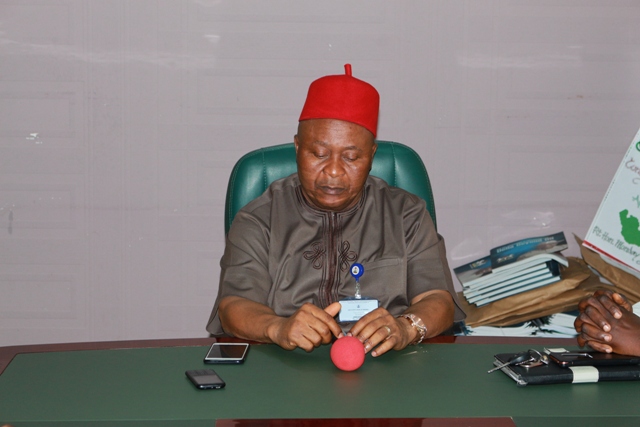
Speaker of the Delta State House of Assembly, Mr Monday Igbuya, has highlighted steps that must be taken to enjoy steady power supply.

Mr Igbuya said this during a radio programme in Oghara, Delta State, on Thursday.

He also urged management of Benin Electricity Distribution Company (BEDC) to work towards providing uninterrupted power supply to residents of Sapele.

The lawmaker expressed concerns over the epileptic power supply in the town, lashing out at those he said constituted themselves into cogs in the wheel of progress in Sapele.

Mr Igbuya stressed that the problem of inadequate power supply to residents of Sapele has continued to be a source of worry to him.

“For Sapele to have steady electricity, the emphasis should not be on individuals who are not key players in the power sector, who did or did nothing but asking the service provider to sit up and calling on the federal government to further liberalize the sector to bring in new competitors, as it is in the telecommunication industry. Once that is done, consumers will then be at liberty to choose their service providers. Energies should be channelled in this direction,” the Speaker opined.

“I have done my best to leave worthwhile achievements behind in all my public endeavours. As council chairman, I observed then that Sapele was and is still known for its timber business.

“Of course you know the famous Africa Timber and Plywood and a cluster of Saw Mills, which was the economic main stay of the town. Electricity was a major problem to the saw millers and they were losing patronage. I am not a saw miller but I took it as a challenge, knowing the adverse economic effect of the perennial power outage,” Mr Igbuya said on the show.

Driven by an abiding concern for the well-being of the good people of Sapele, the Speaker said he marched in the streets.

“Sapele then was using 6.6 transformer while other areas were already on 11.5. I led the protest and that was what led to the changing of the 6.6 to 11.5 transformers. I also led the protest which gave rise to the step down in Amukpe.

“I did all of that and I was arrested by the Federal Government for leading a protest and kept in Abuja. It was Chief James Ibori who secured my release from the Directorate of State Security Service. He supported us and we got the contract awarded. That is what is in Amukpe today,” he added.

Using the opportunity to point out certain aspects of electricity agreements in Sapele, Mr Igbuya said those who signed the Ogorode Power Station agreement didn’t take into cognizance the need to step down the power for everybody.

“NEPA Estate, Sapele is enjoying electricity from the Ogorode Power Station,” he said.

The lawmaker, who looked at the realities in the country’s power sector, said electricity supply was no longer a social responsibility but a commercial venture.

“Where there is no competition in commercial services, there is bound to be a monopoly and where there is a monopoly, efficient service is at the mercy of the monopolist. This is simple economics,” he submitted.

Apparently angry, Mr Igbuya said that he suspected ulterior motives in the recent protest.

“I am representing Sapele State Constituency in the Delta State House of Assembly and I can say that I operate a 33 line. There is no doubt about that. I am not the only person on 33 KVA in Sapele and I am not the first to use it. It is an industrial line. My people should not suffer because I am on 33 line. Being on 33 is an enormous cost to my finances. The tariff is higher. I would have loved to be on 11.5 and payless like every electricity consumer in Sapele. Electricity is now a private concern and Investors want returns on their investment,” he said.

The presiding officer of the Delta State House of Assembly pointed out the short comings of the Benin Distribution Company (BEDC).

“Reverend Father Christopher Ekibo, a priest of St. Patrick’s Catholic Church, Sapele, said there was going to be a protest. I was in London when he called and I expressed excitement about the protest. Sapele used to get only 2 hours electricity supply from BEDC daily.

“I held meetings with the managing director of BEDC in Benin. And she told me that my people can get more power if they so desire but they have to pay their electricity bills. When I met Father Ekibo in Sapele, I appealed to him to encourage our people to pay bills. If they pay bills, we will get more hours of electricity supply,” he disclosed.

He charged BEDC to leave no stone unturned to ensure uninterrupted power supply to Sapele.

“BEDC is a private concern. This is the issue. BEDC is not giving metres to houses. What it brings majorly is estimated bills,” he said.


Dipo Olowookere is a journalist based in Nigeria that has passion for reporting business news stories. At his leisure time, he watches football and supports 3SC of Ibadan. Mr Olowookere can be reached via [email protected]

General

Church Confirms Release Of 151 Abducted Members in Kaduna

Published

on

Cherubim and Seraphim Movement Church Worldwide

By Adedapo Adesanya

The Cherubim and Seraphim Movement Church Worldwide, Ayo Ni O, has confirmed the release and safe return of 151 of its members abducted from Iburu community in Kajuru Local Government Area of Kaduna State.

The abduction, which affected about 177 people, occurred on January 18, 2026. It was initially denied by the Nigeria Police Force and other government agencies, but was later confirmed.

In a statement issued by the Conference Secretary General of the church, Mr Anthony Olusesan Samaiye, it was disclosed that the release of the abducted persons was confirmed through reports from its liaison officers in Kaduna.

According to the statement, Mr Emmanuel Abiodun Adewale Alogbo (JP), described the release as a victory for faith, prayer and dialogue, noting that the breakthrough followed an emergency visit to Kaduna by its leadership and a series of high-level engagements aimed at securing the freedom of the abducted worshippers.

The Cherubim and Seraphim Church expressed gratitude to the Kaduna State government, particularly Governor Uba Sani, for what it described as his commitment to dialogue and the coordination of state resources that contributed to the successful outcome.

Special appreciation was also extended to the Governor’s Chief of Staff, Mr Sani Liman Kila, and the Senior Special Assistant on Religious Affairs (Christian Matters), Mr Ishaya Jangado, for facilitating engagement between the church and the state government.

The church noted that the incident demonstrated the importance of cooperation between religious leaders and government authorities in addressing security challenges and protecting citizens.

It also acknowledged prayers and support from the Christian Association of Nigeria (CAN), the Organisation of African Instituted Churches (OAIC), the international community and Christians worldwide.

While celebrating the release, the church said it was mindful of the trauma experienced by the victims and disclosed that its welfare and medical teams had been mobilised to provide psychosocial support and care to the affected members and their families.

The church called for sustained peace in Kaduna State and across Nigeria, urging authorities to continue efforts to ensure the safety of all citizens, regardless of religious affiliation.

Continue Reading

General

2027 Elections: I Won’t be Vice Presidential Candidate—Peter Obi Insists

Published

on

peter obi tax system

By Adedapo Adesanya

As activities for the 2027 general elections begin to take shape, the former presidential candidate of the Labour Party in the 2023 presidential poll, Mr Peter Obi, has again ruled out the possibility of contesting as a vice presidential candidate next year, saying he is contesting to be on the ballot.

Speaking ahead of the Abuja Municipal Area Council (AMAC) election in the Federal Capital Territory, he said, “You see this coming election, support us in AMAC; it will help me. Your support in AMAC is critical to our journey. I am involved and contesting the coming election as number one. When I come back, you will see. I assure you.”

Mr Obi vied for the 2023 presidency on the LP platform, emerging third overall behind Mr Atiku Abubakar and President Bola Tinubu.

In December 2025, he defected to the African Democratic Congress (ADC), where his teeming supporters popularly known as Obidients have urged him to only pursue the presidential ticket.

Mr Abubakar, who chose Mr Obi as his vice presidential candidate in the 2019 polls, is also a member of the ADC. The men finished in second and third places, respectively in the last presidential election, which President Tinubu won with 37 per cent of the votes.

Speaking at the campaign venue, Mr Obi emphasised to his supporters the importance of backing the ADC candidate in the AMAC election, noting that their support at the grassroots would go a long way in bolstering his national political journey.

The ADC coalition includes many former allies of Mr Tinubu, including Mr Nasir El Rufai, the former governor of Kaduna State; Mr David Mark, a former Senate President who is serving as the National Chairman of the party, and Mr Rauf Aregbesola, a former Osun Governor and currently the National Secretary of ADC.

The party will be hoping to emulate the success of the ruling All Progressives Congress (APC), which was formed by an alliance of opposition politicians (including Mr Abubakar) in 2013 and caused the ouster of former President Goodluck Jonathan, the first-ever defeat of an incumbent Nigerian president in 2015.

Continue Reading

General

CPPE Urges FG to Create Farm Price Stabilisation Plan for Food Security

Published

on

Price of Food

By Adedapo Adesanya

The Centre for the Promotion of Private Enterprise (CPPE) has called on the federal government to urgently establish a National Farm Price Stabilisation and Farmer Income Protection Framework to safeguard Nigeria’s long-term food security.

This was contained in a policy brief signed by the chief executive of the think tank, Mr Muda Yusuf, on Sunday.

The group warned that while recent import surges have lowered food prices to the delight of consumers, they have simultaneously inflicted severe financial losses on farmers and agricultural investors, creating what it described as “troubling trade-offs and unintended consequences.”

He advised that Nigeria cannot afford a policy regime that undermines confidence in agriculture, one of the country’s most strategic sectors and largest employers of labour.

“The welfare gains from cheaper food have been profound and should be acknowledged. However, the cost to farmers and other investors across the agricultural value chain is equally high and cannot be ignored,” Mr Yusuf stated.

The CPPE boss emphasised the urgent need to strike a sustainable balance between keeping food affordable for consumers and protecting farmers’ incomes, while safeguarding agricultural investment.

According to the policy document, recent import surges of staples such as rice, maize and soybeans have caused serious dislocations in the agricultural investment ecosystem, inflicting severe hardship on farmers and weakening production incentives.

“Although consumers have welcomed the decline in food prices, the long-term consequences are adverse: farmer incomes fall, production declines over time, investment confidence weakens, and the country risks returning to cycles of scarcity and higher prices,” the document warned.

The CPPE identified several structural factors driving recurring farm price collapses in Nigeria, beyond the immediate impact of food imports.

The think tank warned that harvest glut remains a major challenge, with many farmers harvesting the same crops within the same period, causing sudden oversupply. This is compounded by the limited availability of storage facilities, drying centres and cold-chain systems, which forces farmers to sell immediately regardless of market conditions.

The organisation said this is also affected by weak rural logistics, characterised by poor roads, insecurity, high transport costs, and limited aggregation hubs, which make it difficult to move produce efficiently from production zones to high-demand markets.

Continue Reading

Trending