Connect with us

General

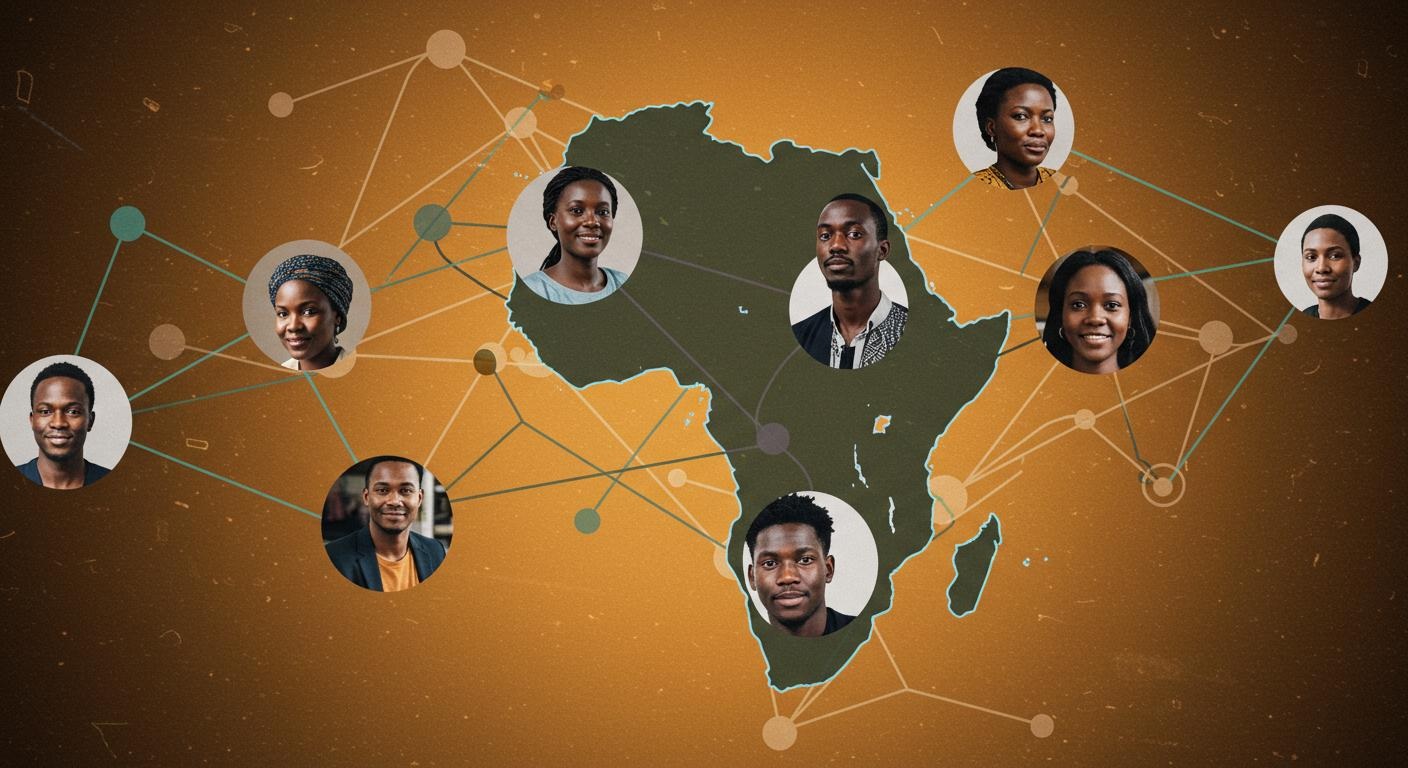
The Coming of Age of the African Startup Ecosystem

Published

on

African Startup Ecosystem

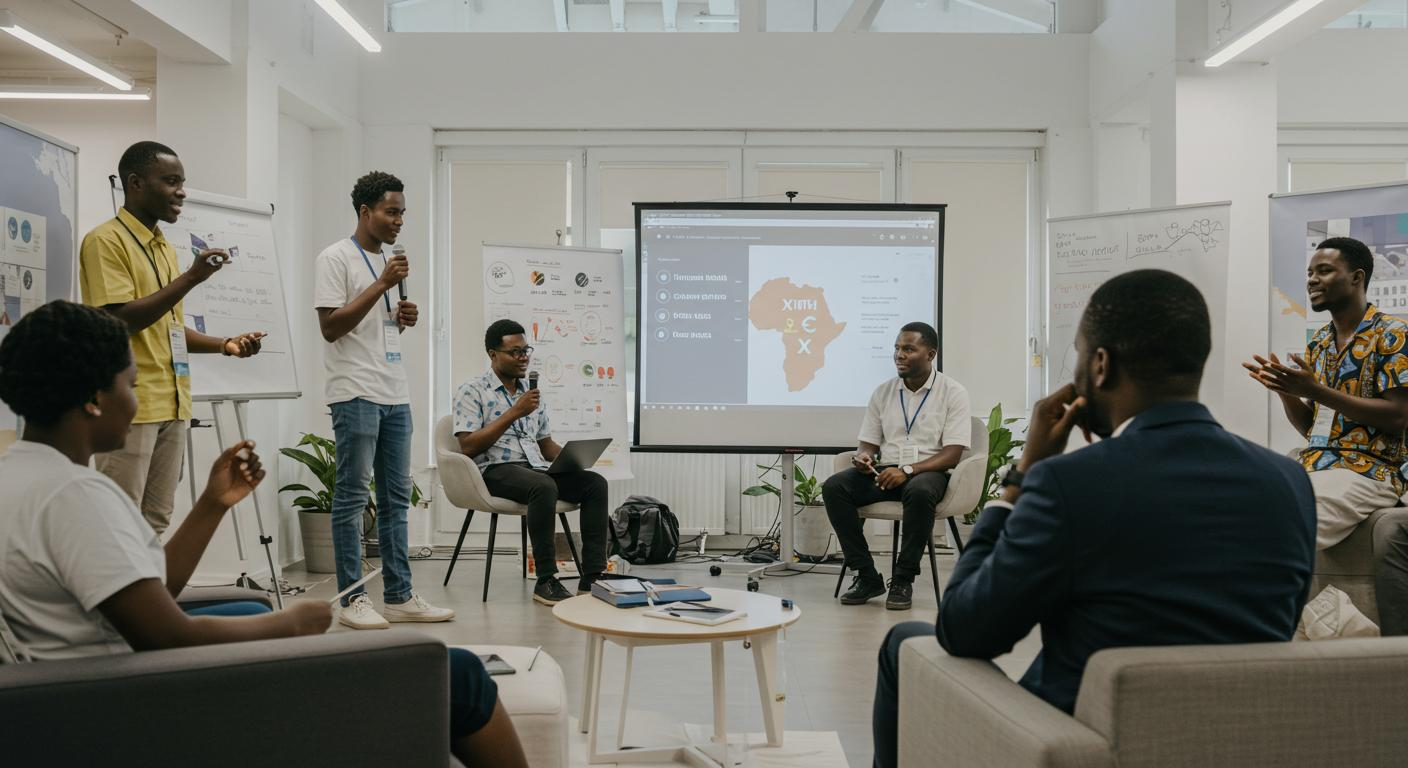
While total disclosed funding fell to $2.2 billion – down 25% from the $2.9 billion raised in 2023 – the numbers alone don’t tell the full story. Beneath the slowdown lies a deeper transformation: a shift from chasing valuation milestones to building operationally resilient businesses that solve fundamental problems.

The funding contraction mirrored global trends, as higher interest rates and tighter capital allocation reshaped venture capital markets. Yet Africa’s downturn was not purely negative. In the second half of 2024, the ecosystem saw renewed momentum from large-scale rounds, notably from Moniepoint (Nigeria) and TymeBank (South Africa). Unlike earlier unicorns that focused on aggressive user acquisition, these companies built their success on hybrid business models, blending digital technology with physical infrastructure.

They were not alone. Fintech players like OPay (Nigeria), Wave Mobile Money (Senegal), and MNT-Halan (Egypt) have also demonstrated that control of both the digital layer and key offline touchpoints (agent networks, payment terminals, or physical kiosks) creates defensible advantages in African markets.
African startups

Why Operational-First Wins in Africa

The African market’s structural realities (fragmented infrastructure, cash-heavy economies, and regulatory complexity) make purely digital solutions difficult to scale sustainably.

In Kenya, Buupass tackled bus and rail ticketing by first digitising operators’ backend systems, eliminating paper-based inefficiencies and cash leakages before rolling out consumer-facing booking options.

To tackle this, they developed a Bus Management System (BMS) that digitised inventory, sales, and fleet tracking, enabling operators to modernize their backend systems. They also dealt with fragmented, offline-heavy travel ecosystems by forming partnerships with major players like Safaricom and M-Pesa, providing access to reliable hosting, digital payments, and trust validation, key to onboarding high-value clients like Kenya Railways.

Today, BuuPass processes approximately 12,000 transactions daily and has established partnerships with major transportation providers across Kenya, Uganda, Tanzania, Rwanda, and South Africa. Their growth came not from viral marketing or user acquisition funnels, but from solving fundamental operational challenges for transport operators.

In West Africa, Logidoo approached cross-border trade by introducing consolidated cargo solutions through their relationship, cutting average transit times by roughly 40% along key China–West Africa and Europe–West Africa corridors.

This improvement in shipping speed and cost-efficiency for clients demonstrated how operational excellence and better physical logistics design can unlock scale across cross-border trade.

Similar strategies are emerging in other sectors. These companies prove that solving operational bottlenecks can be more powerful than just building flashy products.

Funding Shifts by Sector and Geography

According to Africa: The Big Deal, fintech remained dominant in 2024, attracting about 47% of total startup funding, but the fastest-growing slices of investment went to logistics, mobility, and healthtech. Logistics startups, for instance, secured over $400 million across disclosed equity and debt rounds, reflecting investor appetite for infrastructure-heavy models.

Geographically, Nigeria maintained its lead in funding volume, followed by Kenya, Egypt, and South Africa. However, emerging hotspots like Morocco, Senegal, and Tanzania posted year-on-year increases despite the continent-wide slowdown, most of these driven by targeted sector plays in logistics, mobility, and energy.

The market correction exposed common weaknesses. Startups that scaled aggressively without building sustainable revenue streams struggled to survive the funding winter. A recurring failure pattern emerged: expanding to multiple markets before achieving operational stability in one, burning through capital on marketing rather than infrastructure, and relying on vanity metrics (downloads, active users) over unit economics.

According to Hiruy Amanuel, Managing Director at Gullit VC, the ecosystem has developed its own success indicators, “I’ve learnt to be wary when early-stage startups rush to scale without focus or financial discipline. That kind of premature expansion, often without the infrastructure to support it, can be fatal. We’ve seen too many founders chase growth metrics or investor hype, only to fall apart because the fundamentals weren’t there.”

Beyond Fintech

Transport and logistics players are building their own fleets. Healthcare startups are embedding themselves into pharmacy and clinic networks. Agri-tech companies are setting up physical aggregation centers to secure supply chains. Even e-commerce platforms are moving into warehousing and last-mile delivery.

This evolution signals something deeper: in African markets, technology works best when it complements, not replaces, the physical systems people already use.

Looking Ahead…

If 2015–2020 was Africa’s “unicorn era,” 2024–2027 is shaping up to be its “infrastructure era.” The next wave of winners will be companies that master operational execution while using technology to enhance reliability, transparency, and scale.

The result is an ecosystem that’s becoming less dependent on external validation and more focused on creating lasting value within African markets. These trends indicate a maturing landscape that prioritizes solving real problems over chasing global tech trends.

The success of companies like BuuPass, Logidoo, Moniepoint, and TymeBank provides a blueprint for the next generation of African startups. The winning formula combines technological sophistication with deep operational expertise, creating businesses that are both scalable and defensible.

For founders, this means longer timelines to profitability but stronger defensibility once scale is achieved. For investors, it means assessing physical assets, partnerships, and local execution capabilities with as much rigor as product and code.

Africa’s startup ecosystem is no longer solely defined by valuation milestones. Its coming of age is marked by companies that solve real problems, create lasting economic value, and build the scaffolding for future innovation.

And that, more than any unicorn headline, may prove to be the measure that matters most.

General

Rivers Speaker, 15 Other Lawmakers Leave PDP for APC

Published

on

rivers speaker Martin Amaewhule defect

By Modupe Gbadeyanka

The Speaker of the Rivers State House of Assembly, Mr Martin Amaewhule, has defected to the All Progressives Congress (APC).

At the plenary on Friday, Mr Amaewhule joined the ruling party from the opposition Peoples Democratic Party (PDP), along with 15 other members of the state parliament.

This development comes some months after they had earlier declared their support for the APC in the wake of a crisis with the state governor, Mr Sim Fubura.

The lawmakers had an issue with Mr Fubura, which led to a state of emergency declared on the oil-rich state by President Bola Tinubu in March 2025.

This embargo was only lift in September 2025 after the duration of the six-month emergency rule in the state.

A few days ago, members of the Rivers Assembly passed a vote of confidence on President Tinubu, backing him to remain in office till 2031, when he would have spent eight years in office if re-elected in 2027.

Announcing their defection today, the lawmakers pinned their decision on the crisis rocking the PDP at the national level.

It is not certain if their political godfather, Mr Nyesom Wike, who is the current Minister of the Federal Capital Territory (FCT), will join them in APC.

Mr Wike, who governed Rivers State from 2015 to 2023, has been accused of instigating the crisis in the opposition PDP. He was expelled from the party last month at a national convention held in Ibadan, Oyo State.

Continue Reading

General

Nigeria Risks Brain Drain in Energy Sector—PENGASSAN

Published

on

energy sector

By Adedapo Adesanya

The Petroleum and Natural Gas Senior Staff Association of Nigeria (PENGASSAN) has warned that Nigeria risks massive brain drain in the oil and gas sector due to poor remuneration.

The president of PENGASSAN, Mr Festus Osifo, said at the end of the National Executive Council (NEC) meeting of the union on Thursday in Abuja that the industry was facing challenges arising from Naira devaluation and inflation, noting that, oil and gas skills remained globally competitive.

Painting an example, he said, “A drilling engineer in Nigeria does the same job as one in the US or Abu Dhabi,” noting that the union must take steps to bridge the wage gap to prevent members from leaving the country for better opportunities abroad.

“If we don’t act, the brain drain seen in other sectors will be child’s play,” he said.

According to him, PENGASSAN has recorded significant gains through collective bargaining across oil and gas branches.

“We signed numerous agreements across government agencies, IOCs, service and marketing sectors,” he said.

He said the agreements brought relief to members facing rising costs of living, adding that, the association’s duty is to protect members’ jobs and enhance their pay.

Mr Osifo urged companies delaying salary reviews and those foot-dragging as a result of the prevailing economic realities, to do the needful.

He said the industry employed some of the nation’s best talents, making competitive pay critical to retaining skilled workers.

“This industry recruits the best. Companies must provide the best conditions,” he said.

On insecurity, Mr Osifo urged government to take decisive action against terrorism and kidnappings across the country.

“We are tired of condemnations. government must expose sponsors and protect citizens,” he said.

He urged government at all levels to prioritise tackling insecurity through better funding and equipment for security agencies.

Mr Osifo said PENGASSAN supported calls for state police to improve local security response, adding that decentralising policing will protect citizens better than rhetoric.

He also said economic indicators meant little, if food prices remained high and farmers could not return to farms due to insecurity.

“Nigerians want to see food on the table, not macroeconomic figures,” he said, urging the government to coordinate fiscal and monetary policies to ensure economic gains reach households.

Continue Reading

General

Bill Seeking Creation of Unified Emergency Number Passes Second Reading

Published

on

Unified Emergency Number

By Adedapo Adesanya

Nigeria’s crisis-response bill seeking to establish a single, toll-free, three-digit emergency number for nationwide use passed for second reading in the Senate this week.

Sponsored by Mr Abdulaziz Musa Yar’adua, the proposed legislation aims to replace the country’s chaotic patchwork of emergency lines with a unified code—112—that citizens can dial for police, fire, medical, rescue and other life-threatening situations.

Lawmakers said the reform is urgently needed to address delays, miscommunication and avoidable deaths linked to Nigeria’s fragmented response system amid rising insecurity.

Leading debate, Mr Yar’adua said Nigeria has outgrown the “operational disorder” caused by multiple emergency numbers in Lagos, Abuja, Ogun and other states for ambulance services, police intervention, fire incidents, domestic violence, child abuse and other crises.

He said, “This bill seeks to provide for a nationwide toll-free emergency number that will aid the implementation of a national system of reporting emergencies.

“The presence of multiple emergency numbers in Nigeria has been identified as an impediment to getting accelerated emergency response.”

Mr Yar’adua noted that the reform would bring Nigeria in line with global best practices, citing the United States, United Kingdom and India, countries where a single emergency line has improved coordination, enhanced location tracking and strengthened first responders’ efficiency.

With an estimated 90 per cent of Nigerians owning mobile phones, he said the unified number would significantly widen public access to emergency services.

Under the bill, all calls and text messages would be routed to the nearest public safety answering point or control room.

He urged the Senate to fast-track the bill’s passage, stressing the need for close collaboration with the Nigerian Communications Commission (NCC), relevant agencies and telecom operators to ensure nationwide coverage.

Senator Ali Ndume described the reform as “timely and very, very important,” warning that the absence of a reliable reporting channel has worsened Nigeria’s security vulnerabilities.

“One of the challenges we are having during this heightened insecurity is lack of proper or effective communication with the affected agencies,” Ndume said.

“If we do this, we are enhancing and contributing to solving the security challenges and other related criminalities we are facing,” he added.

Also speaking in support, Senator Mohammed Tahir Monguno said a centralised emergency number would remove barriers to citizen reporting and strengthen public involvement in security management.

He said, “Our security community is always calling on the general public to report what they see.

“There is a need for government to create an avenue where the public can report what they see without any hindrance. The bill would give strength and muscular expression to national calls for vigilance.”

The bill was referred to the Senate Committee on Communications for further legislative work and is expected to be returned for final consideration within four weeks.

Continue Reading

Trending