

Connect with us

Economy

Entertainment as Payments Stress-Test: What High-Volume Microtransactions Teach Nigerian Fintechs

Published

on

Payments Stress-Test

Nigeria’s payment rails are being shaped in places many bankers rarely look. Music livestreams, casual games, creator tips, and fan tokens create dense bursts of tiny transactions that look chaotic at first glance yet are ideal for testing scale, speed, and reliability. When a live event or a tournament peaks, thousands of payments try to clear at once. That is exactly when systems reveal their true limits.

For Nigerian fintechs (which are not always satisfactory), entertainment offers a natural lab where volumes are high, values are small, and user tolerance for friction is low. The lessons are very practical: Reduce steps, cut latency, and design for retries that do not double charge.

Why slots-led crypto play became the template for frictionless micro-payments

The best way to see how entertainment pushed payment design forward is to look at online games which are a significant part of modern entertainment. Now, digital gaming is massive, but one particular category (and we’re talking about online gambling games) includes probably the most amount of payments and transactions.

Today’s slot games live on a rhythm of quick spins and small stakes, so they need payments that feel invisible. A player tops up a wallet, scans a QR code, or approves a push request, and credit lands almost at once. Because games refresh results every few seconds, payment confirmation has to keep pace. Operators solve this with clear balances, instant authorisations against pre-funded value, and near-real-time settlement. The experience is simple, predictable, and always on.

Online Bitcoin slots stand out within crypto games for two practical reasons. First is scale. Slots attract broad, casual audiences that play in short sessions, which creates heavy streams of tiny transactions. Second is repeatability. Every spin has the same shape, so systems can optimize for the same call pattern again and again. That repeatable flow makes it easier to tune idempotency keys, queue priorities, and timeouts without confusing users.

The design choices that emerged here in digital casino games are now widely copied. Wallet connections avoid forms. QR prompts cut typing errors. Clear balance indicators remove doubt about what has been paid and what remains. Fast receipts build trust for the next spin or tip. Because settlement is digital wallet to digital wallet, there is less breakage, fewer hops, and fewer points of failure. The lesson for any Nigerian fintech working with microtransactions is straightforward. Keep the path short, show state clearly, and make each payment feel as fast as a screen tap. Do that, and you meet user expectations shaped by slots, streams, and other always-on entertainment.

What entertainment volumes reveal about Nigeria’s payments stack

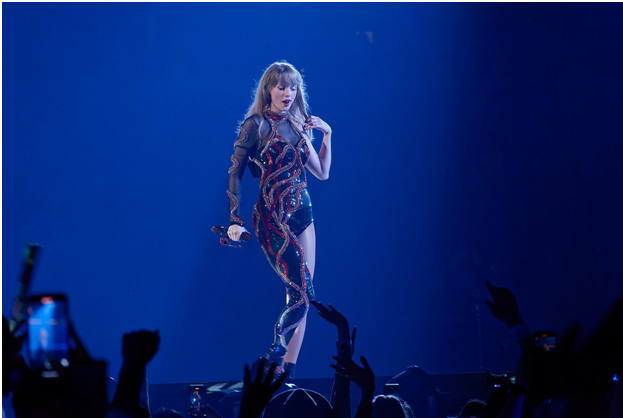
High-volume streams of tiny payments expose weak links in seconds. That is why entertainment data is so useful for Nigerian providers planning peak loads, instant reversals, and real-time risk checks.ALT: Taylor Swift during a concert.
Teach Nigerian Fintechs

Taylor Swift’s Eras Tour presale in November 2022 turned into a payments flashpoint. Millions tried to buy at once, the site queued and crashed, and many customers saw failed checkouts and authorization holds before Ticketmaster cancelled the general on-sale. Image: Here

The country’s rails are ready for this kind of tempo. Real-time payments already account for a growing share of digital transactions, and overall e-payments have hit record value. At the same time, mobile reach is wide, which helps front-end reliability at the moments that matter most.

Metric Nigeria figure Period
Instant money transfers completed Over 12 billion 2024
Share of all transactions that were real-time 27.7 percent 2023
Forecast share of transactions that will be real-time 50.1 percent 2028
Total e-payment value N1.07 quadrillion 2024
Active telecom subscriptions 169.3 million July 2025
Broadband penetration 48 percent July 2025

Data is taken from the following sources: NIBSS, ACI Worldwide, Telecom Review Africa

For builders, these numbers translate into clear tasks. Plan for short spikes that mimic a popular stream or in-game tournament. Use asynchronous confirmation with clear on-screen states so users keep playing while the ledger finalises. Design retries and reconciliation around idempotency to avoid duplicates during bursts. Split risk checks so most payments clear in milliseconds, while a small fraction routes to deeper review without blocking the rest. Finally, treat receipts as a product. Users will keep paying when receipts are instant, readable, and stored.

Design cues fintechs can borrow from always-on entertainment

The reliability bar in entertainment is high because the session is the product. If a payment screen feels heavy, the user leaves. Nigeria’s real-time growth shows that consumers already expect taps to turn into balances almost at once, and providers are racing to match that feel across use cases. It is worth noting that smartphone access still shapes what is possible, so lightweight, data-thrifty flows help close the gap and grow volumes. As the GSMA puts it, “Handset affordability is often recognised as the most significant barrier to get people online.” That single constraint makes clean, low-bandwidth payment screens a competitive edge.

Two practical patterns stand out. First, event-driven architecture. Queue every request, give each one a unique key, and make the UI reflect real states like pending, paid, or refunded. This removes confusion during spikes and prevents user double taps from creating duplicates. Second, graceful degradation. When network conditions dip, fall back to cached balances, offer a timed retry, and display a short countdown that reassures the user. These small touches came from entertainment because sessions cannot pause.

The macro trends support this direction. Real-time’s share of transactions in Nigeria is set to rise strongly through 2028, and overall e-payment value is already at historic highs. That momentum encourages merchants to accept more tiny payments, which in turn rewards providers that can clear thousands of them in a few seconds without noise or errors. Entertainment has shown the path. Build for speed that users can feel, and make every confirmation instant and obvious.


Dipo Olowookere is a journalist based in Nigeria that has passion for reporting business news stories. At his leisure time, he watches football and supports 3SC of Ibadan. Mr Olowookere can be reached via [email protected]

Economy

Food Concepts Return NASD OTC Exchange to Danger Zone

Published

on

NASD OTC exchange

By Adedapo Adesanya

Food Concepts Plc neutralized the gains recorded by three securities, returning the NASD Over-the-Counter (OTC) Securities Exchange into the negative territory with a 0.27 per cent loss on Thursday, December 4.

Yesterday, the share price of the parent company of Chicken Republic and PieXpress declined by 34 Kobo to sell at N3.15 per unit compared with the previous day’s N3.49 per unit.

This shrank the market capitalisation of the OTC bourse by N5.72 billion to N2.136 billion from N2.142 trillion and weakened the NASD Unlisted Security Index (NSI) by 9.57 points to 3,571.53 points from 3,581.10 points.

Business Post reports that Central Securities Clearing System (CSCS) Plc went down by 50 Kobo to N38.50 per share from N38.00 per share, FrieslandCampina Wamco Nigeria Plc gained 29 Kobo to sell at N55.79 per unit versus N55.50 per unit, and Geo-Fluids Plc added 5 Kobo to close at N4.60 per share compared with Wednesday’s closing price of N4.55 per share.

Trading data indicated that the volume of securities recorded at the session surged by 6,885.3 per cent to 4.3 million units from the 61,570 units posted a day earlier, the value of securities increased by 10,301.7 per cent to N947.2 million from N3.3 million, and the number of deals went up by 146.7 per cent to 37 deals from the 15 deals achieved in the previous trading session.

At the close of business, Infrastructure Credit Guarantee Company (InfraCredit) Plc was the most traded stock by value on a year-to-date basis with the sale of 5.8 billion units for N16.4 billion, trailed by Okitipupa Plc with 170.4 million units worth N8.0 billion, and Air Liquide Plc with 507.5 million units valued at N4.2 billion.

InfraCredit Plc also finished the session as the most traded stock by volume on a year-to-date basis with 5.8 billion units transacted for N16.4 billion, followed by Industrial and General Insurance (IGI) Plc with 1.2 billion units sold for N420.2 million, and Impresit Bakolori Plc with 536.9 million units traded for N524.9 million.

Continue Reading

Economy

Investors Gain N97bn from Local Equity Market

Published

on

Nigerian equity market

By Dipo Olowookere

The upward trend witnessed at the Nigerian Exchange (NGX) Limited in recent sessions continued on Thursday as it further improved by 0.10 per cent.

This was despite investor sentiment turning bearish after the local equity market ended with 23 price gainers and 28 price gainers, indicating a negative market breadth index.

UAC Nigeria gained 10.00 per cent to finish at N88.00, Morison Industries appreciated by 9.94 per cent to N3.54, Ecobank rose by 8.53 per cent to N36.90, and Coronation Insurance grew by 8.47 per cent to N2.56.

On the flip side, Ellah Lakes depreciated by 10.00 per cent to N13.14, Eunisell Nigeria also shed 10.00 per cent to finish at N72.90, Transcorp Hotels slipped by 9.95 per cent to N157.50, Omatek shrank by 9.23 per cent to N1.18, and Guinea Insurance dipped by 8.46 per cent to N1.19.

Yesterday, the All-Share Index (ASI) went up by 152.28 points to 145,476.15 points from 145,323.87 points and the market capitalisation chalked up N97 billion to finish at N92.726 trillion compared with the previous day’s N92.629 trillion.

Customs Street was bubbling with activities on Thursday, though the trading volume and value slightly went down, according to data.

A total of 1.9 billion stocks worth N19.2 billion exchanged hands in 23,369 deals during the session versus the N2.3 billion valued at N21.0 billion traded in 21,513 deals a day earlier.

This showed that the number of deals increased by 8.63 per cent, the volume of transactions depleted by 17.39 per cent, and the value of trades decreased by 8.57 per cent.

For another trading day, eTranzact led the activity chart with 1.6 billion units sold for N6.4 billion, Fidelity Bank traded 31.0 million units worth N589.3 million, GTCO exchanged 28.3 million units valued at N2.5 billion, Zenith Bank transacted 27.1 million units for N1.6 billion, and Ecobank traded 21.9 million units worth N744.3 million.

Continue Reading

Economy

Naira Loses 18 Kobo Against Dollar at Official Market, N5 at Black Market

Published

on

forex Black Market

By Adedapo Adesanya

The Naira marginally depreciated against the United States Dollar in the Nigerian Autonomous Foreign Exchange Market (NAFEM) on Thursday, December 4 amid renewed forex pressure associated with December.

At the official market yesterday, the Nigerian currency lost 0.01 per cent or 18 Kobo against the Dollar to close at N1,447.83/$1 compared with the previous day’s N1,447.65/$1.

It was not a different scenario with the local currency in the same market segment against the Pound Sterling as it further shed N15.43 to sell for N1,930.97/£1 versus Wednesday’s closing price of N1,925.08/£1 and declined against the Euro by 20 Kobo to finish at N1,688.74/€1 compared with the preceding session’s N1,688.54/€1.

Similarly, the Nigerian Naira lost N5 against the greenback in the black market to quote at N1,465/$1 compared with the previous day’s value of N1,460/$1 but closed flat against the Dollar at the GTBank FX counter at N1,453/$1.

Fluctuations in trading range is expected to continue during the festive season as traders expect the Nigerian currency to be stable, supported by intervention s by to the Central Bank of Nigeria (CBN)in the face of steady dollar demand.

Support is also expected in coming weeks as seasonal activities, particularly the stylised “Detty December” festivities, will see inflows that will give the Naira a boost after it depreciated mildly last month, according to a new report.

“As the festive Detty December season intensifies, inbound travel, tourism spending, and diaspora inflows are expected to provide moderate support for FX liquidity,” analysts at the research unit of FMDA said in its latest monthly report for November.

Traders cited by Reuters expect that the Naira will trade within a band of N1,443-N1,450 next week, buoyed by improved FX interventions by the apex bank.

Meanwhile, the crypto market was down as the US Federal Reserve’s preferred inflation gauge, core PCE, likely rose in September—moving in the wrong direction. However, volatility indices show no signs of major turbulence.

If the actual figure matches estimates, it would mark 55 straight months of inflation above the US central bank’s 2 per cent target. The sticky inflation would strengthen the hawkish policymakers, who are in favour of slower rate cuts.

Ripple (XRP) depreciated by 4.5 per cent to $2.08, Solana (SOL) went down by 3.8 per cent to $138.11, Litecoin (LTC) shrank by 3.1 per cent to $83.23, Dogecoin (DOGE) slid by 2.5 per cent to $0.1463, Cardano (ADA) declined by 2.1 per cent to $0.4368, Bitcoin (BTC) fell by 0.9 per cent to $91,975.45, Binance Coin (BNB) crumbled by 0.9 per cent to $899.41, and Ethereum (ETH) dropped by 0.7 per cent to $3,156.44, while the US Dollar Tether (USDT) and the US Dollar Coin (USDC) closed flat at $1.00 apiece.

Continue Reading

Trending
