Connect with us

Feature/OPED

Banks’ Funding Failure: The Shocking Rot In Nigeria’s Intervention Programmes

Published

on

Banks Funding Failure NDIC, CBN

By Blaise Udunze

For over a decade, the Nigerian government and its financial institutions have launched a flurry of intervention funds, all with the promise to empower industries, revive the manufacturing sector, and lift millions of micro, small, and medium enterprises (MSMEs) out of financial drought. From agriculture to aviation, from creative industries to export promotion, these funds were designed as catalysts for inclusive growth and job creation.

But today, the story reads like a tragic irony. Trillions of naira later, there is little impact to show. Factories remain underutilized, MSMEs struggle to survive, and unemployment continues to soar. The rot runs deeply entrenched corruption, politicization, poor monitoring, and widespread loan defaults have turned what should have been Nigeria’s economic lifeline into a cautionary tale of mismanagement and missed opportunities.

The Central Bank of Nigeria (CBN) and the Bank of Industry (BOI) have, over the years, spearheaded multiple intervention programmes. In 2013, the N220 billion MSME Development Fund (MSMEDF) was launched to empower small businesses, with a special 60 percent allocation for women. Yet, more than a decade later, thousands of genuine entrepreneurs say they never accessed the fund, while others question the transparency of disbursement. The Anchor Borrowers’ Programme (ABP), launched in 2015, aimed to link smallholder farmers to processors and was hailed as a masterstroke for agricultural self-sufficiency. Over N1 trillion reportedly flowed into the scheme. But the dream soon dimmed with ghost beneficiaries, political interference, and poor loan recovery exposed a programme riddled with abuse.

Similarly, the Agri-Business/Small and Medium Enterprises Investment Scheme (AGSMEIS), a CBN-backed initiative pooling five percent of banks’ profit after tax, began as a noble effort to stimulate SMEs. However, its later years were marred by disbursement bottlenecks and allegations of insider favoritism. Commercial banks and some designated financial institutions, instead of acting as facilitators, became gatekeepers of corruption. Bribes, favoritism, and endless paperwork became the norm. Funds meant for productive ventures were sometimes redirected to political allies or misapplied by the very institutions entrusted with disbursement.

Rather than empowering Nigeria’s real economy, intervention loans too often empowered a network of insiders who saw the programmes as avenues for rent-seeking. The impenetrability of these schemes made them convenient channels for political reward and institutional looting. Once the funds leave government coffers, tracking them becomes an exercise in futility. There are no reliable public databases showing who got what, how much was repaid, or what impact was achieved.

The rot is not confined to agriculture. The Creative Industry Financing Initiative (CIFI), launched in 2019 to nurture Nigeria’s entertainment and digital sectors, became mired in controversy over opaque selection and limited reach. The Real Sector Support Facility (RSSF) and the Textile Sector Intervention Fund, meant to boost manufacturing and revive the textile industry, also suffered from weak monitoring and low repayment discipline. During the pandemic, the N400 billion COVID-19 Targeted Credit Facility (TCF) was touted as a lifeline for households and small firms. Administered by NIRSAL Microfinance Bank, it sparked hope among struggling entrepreneurs, but soon, the familiar patterns emerged as connected elites got the funds, while genuine applicants were locked out.

Official data reveals that the CBN has disbursed over N10.3 trillion across various interventions in less than a decade with an unprecedented scale of funding. When combined with BOI-managed programmes such as the Government Enterprise and Empowerment Programme (GEEP) and the Export Expansion Facility Programme (EEFP), total earmarked intervention funds likely exceed N12 trillion. Yet, Nigeria’s industrial contribution to GDP remains below 10 percent, and MSMEs with the supposed beneficiaries continue to struggle with high costs, poor infrastructure, and limited credit access.

Over the years, numerous intervention funds have been launched to support industries and MSMEs from the N220 billion MSME Development Fund and N300 billion Real Sector Support Facility to the N200 billion SME Restructuring and Refinancing Fund. However, poor administration, corruption, and diversion have undermined these initiatives. A 2023 report by the Auditor-General revealed that billions of naira from these schemes were either unaccounted for or misapplied, with funds channeled through commercial banks that prioritized profit over impact.

For instance, the CBN’s N220 billion MSME Development Fund has only seen about N83 billion disbursed over seven years. The Survival Fund, though lauded in principle, has delivered roughly N67.5 billion to over 1.25 million beneficiaries, including cases where mobilisation fees were collected but goods or services never followed. An N5 billion SME loan fund through SMEDAN and Sterling Bank saw only N250 million actually reach business owners. Even in interventions like BOI’s N75 billion Manufacturing Sector Fund, less than a third had been disbursed to manufacturers, with many applications still awaiting approval. These examples speak not to scarcity of funds, but to failures in administration, accountability, and access.

The cost of Nigeria’s failed intervention programmes goes beyond wasted billions; it has crippled the very sectors they were designed to rescue. Thousands of promising small businesses are left stranded without access to affordable credit, while manufacturers continue to struggle with obsolete equipment, erratic power supply, and prohibitive interest rates. Instead of catalyzing growth, these funds have deepened dependency, encouraged corruption, and distorted the credit market.

The result is a stunted industrial base, where innovation and expansion are sacrificed on the altar of bureaucracy and greed. Many entrepreneurs who could have scaled production or entered export markets have shut down under the weight of unmet promises. Jobs that could have been created remain mere statistics in policy documents, while Nigeria’s ambition to diversify its economy beyond oil continues to falter.

In the ongoing investigation into the Central Bank of Nigeria’s activities, news reports have uncovered that scrutiny may extend to Chief Executive Officers and senior management personnel of various banks. The investigation seeks to examine potential discrepancies related to the management of intervention funds by deposit money banks. This revelation follows reports that the CBN might be compelled to withdraw its released audited annual financial reports after investigators uncovered irregularities and inconsistencies.

This unfolding probe, led by Special Investigator Jim Obazee, who was appointed by President Bola Tinubu in July 2023 as this mark one of the most comprehensive financial examinations in Nigeria’s history. Obazee’s mandate extends beyond the CBN to include other Government Business Entities (GBEs), with the goal of plugging financial leaks and holding corrupt individuals accountable. According to the Secretary to the Government of the Federation, George Akume, the forthcoming audit report will shed light on governance failures that have long crippled Nigeria’s financial system.

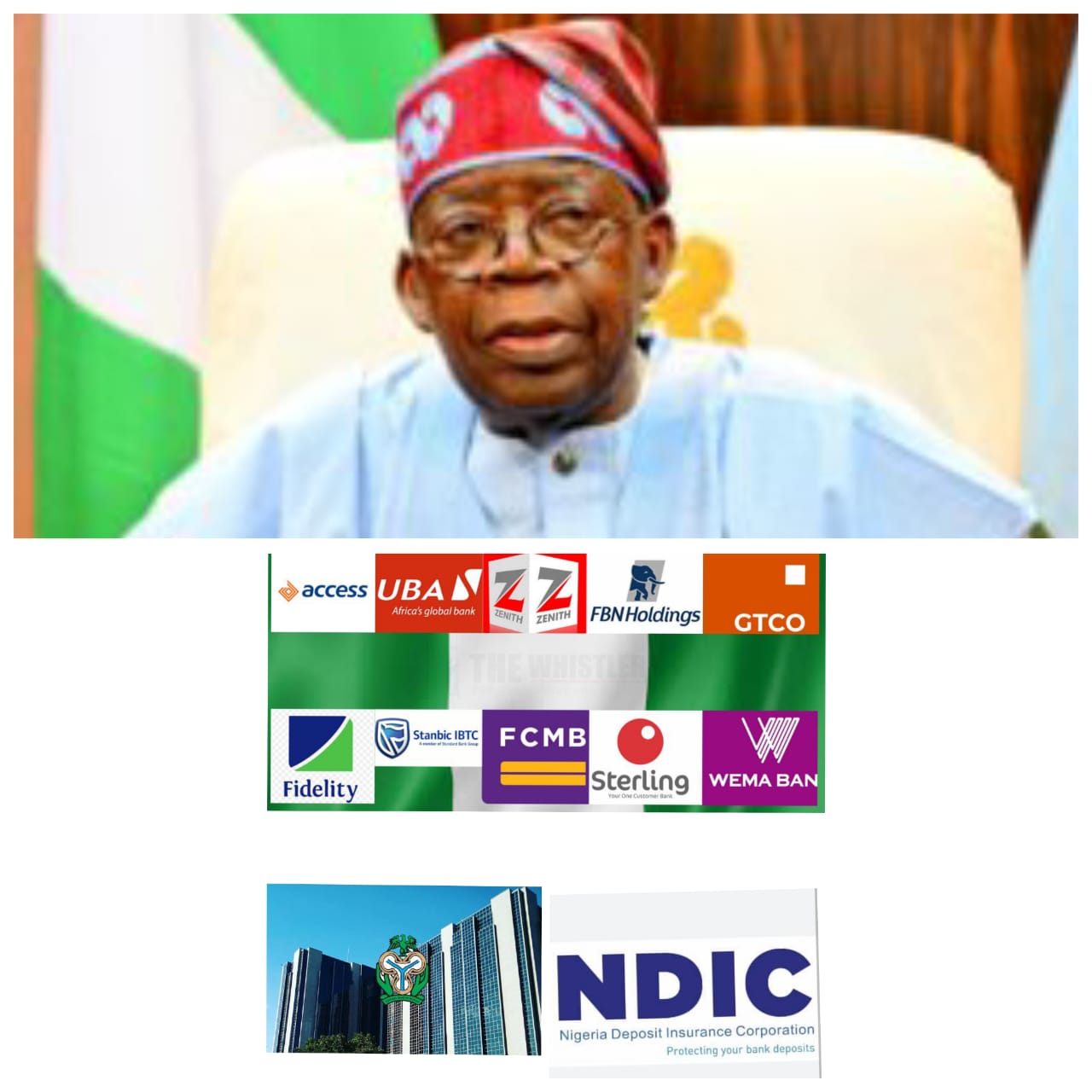
One key revelation involves intervention funds totaling N1.27 trillion reportedly held in the accounts of five major banks: Access Bank, Fidelity Bank, Guaranty Trust Bank, United Bank for Africa, and Zenith Bank. These funds cover various CBN lending schemes, including the Commercial Agriculture Credit Scheme, Real Sector Support Facility, and state bailouts. Access Bank alone held about N530 billion in intervention funds, while Fidelity Bank retained roughly N310 billion.

Several banks have also been found to hold undisbursed funds from the CBN earmarked for programmes like the Anchor Borrowers’ Scheme and the Commercial Agriculture Credit Scheme. As of June 2023, Guaranty Trust Holding Company, Wema Bank, and Sterling Financial Holdings collectively held N114 billion in Anchor Borrowers’ funds, while seven banks, including UBA, Access, Zenith, and Fidelity, retained N94 billion from the agriculture credit scheme.

As the investigation progresses, bank executives were expected to be summoned for questioning. The revelations underscore the depth of systemic dysfunction, where funds meant for development sit idle or are diverted, while small businesses gasp for credit.

Amid the turbulence, the newly appointed CBN Governor Olayemi Cardoso called for a radical shift in the bank’s role. During his Senate screening, he emphasized the need to refocus the CBN on its core mandate of monetary stability rather than direct development finance. Cardoso warned that the CBN’s historical foray into fiscal interventions had blurred institutional boundaries and undermined credibility. His plan is to transition the bank toward a more limited advisory role, one that supports economic growth without entangling itself in politically driven lending.

This reorientation is timely. As of October 2022, nearly 10 trillion had already been disbursed as intervention funds, much of it tied to agriculture and small business support. Yet controversies over beneficiary selection, repayment defaults, and limited impact persist. Experts have urged a full-scale audit and restructuring of these programmes, recommending that future interventions be channeled through relevant ministries and agencies, not the CBN to ensure proper oversight and impact measurement.

Before the next bailout or recovery initiative is launched, both the CBN and BOI must clean house. This means full public disclosure of all beneficiaries, proper audits of past disbursements, and the recovery of misapplied or stolen funds. The impenetrability that has shielded corruption for years must give way to transparency, backed by digital tracking systems and citizen oversight.

Beyond cleansing their books, these institutions must also rethink their approach. Development finance should no longer be routed through rent-seeking commercial banks that profit without producing impact. Instead, direct digital lending platforms, strict eligibility verification, and measurable impact tracking should define the new model.

Nigeria’s intervention programmes must undergo radical reform anchored on transparency, technology, and traceability. Every fund should have a publicly accessible portal listing disbursements, beneficiaries, and repayment status. Periodic audits that are independently verified must be mandatory, not optional. Beyond financial engineering, Nigeria must fix the enabling environment for consistent power supply, logistics, security, and regulatory stability that makes business growth possible.

The shocking rot in Nigeria’s intervention programmes is not just a financial scandal; it is a betrayal of national trust. Trillions have been poured into schemes that promised jobs and prosperity, yet delivered little beyond paperwork and propaganda. Unless Nigeria cleans up the system, enforcing accountability and rewarding genuine productivity, its intervention funds will continue to fund failure, not progress.

Blaise, a journalist and PR professional writes from Lagos, can be reached via: bl***********@***il.com

Click to comment

Leave a Reply

Your email address will not be published. Required fields are marked *

Feature/OPED

$40bn Net Reserves, Record Wealth, Relentless Poverty: Who Is Nigeria’s Economy Serving Today?

Published

on

Nigeria $40bn Net Reserves

By Blaise Udunze

No doubt, it was a welcome announcement that Nigeria’s net foreign exchange (FX) reserves have surged by an astonishing 1,233 per cent from about $3 billion to over $40 billion. This would ordinarily be the kind of economic milestone that inspires optimism, coupled with gross external reserves of about $52.52 billion, which are sufficient to finance roughly 11 months of imports of goods and services. Penultimate week, the Governor of the Central Bank of Nigeria (CBN), Olayemi Cardoso, presented the development at the end of the 306th meeting of the apex bank’s Monetary Policy Committee (MPC) as evidence that its reforms are working.

It is no surprise that around the same period, one would say that another important economic event occurred with the government sharing more money than ever before with the federal, state, and local governments, as the Federation Account Allocation Committee (FAAC) distributed a record N2.55 trillion, representing an increase of N250 billion over the N2.3 trillion shared in the preceding month.

Of course, the official figures are impressive numbers. Yes, anyone would conclude that the economy is becoming stronger, more stable and better positioned for growth. While this suggests stronger public finances, it also raises the question of whether these larger allocations are producing tangible improvements in the lives of ordinary Nigerians. More interesting is that another set of figures tells a completely different story.

According to the World Bank’s newly approved Country Partnership Framework for Nigeria, 61 per cent of Nigerians now live below the poverty line, while about 79 per cent are either poor or vulnerable to falling into poverty. More than 139 million Nigerians live below the poverty line. Over 86 million people lack access to electricity, while millions of young Nigerians enter the labour market every year with little prospect of decent employment.

The contradiction could not be starker. If reserves are rising, government revenues are increasing, and governments at all levels are receiving record allocations, why are the lives of ordinary Nigerians becoming more difficult?

This is the question policymakers must answer not with statistics, but with tangible improvements in the lives of citizens. If government agencies engineering these figures must know, these are not merely economic statistics; they are the lived realities by which citizens judge any government.

Foreign exchange reserves are not an economic trophy. They are a means to an end. Strong reserves are expected to stabilise the currency, reassure investors, strengthen the country’s ability to withstand external shocks and create an enabling environment for investment, production and employment.

But reserves alone do not feed families nor would they reduce their housing rents. They do not lower transport fares. They do not reduce school fees. They do not make healthcare affordable. Nor do they automatically create jobs.

Ultimately, this is to say that the success of macroeconomic reforms must be measured not by the strength of the CBN’s balance sheet but by the wellbeing of the Nigerian people.

Historically, unlike our dear country, countries that consistently build substantial foreign exchange reserves do so on the back of strong economic fundamentals. The fact is that they maintain sustained trade surpluses, export diversified products, attract large volumes of long-term foreign direct investment (FDI), develop globally competitive manufacturing industries and continuously improve productivity.

Nigeria, unfortunately, still struggles on nearly all these fronts. The country’s export earnings remain overwhelmingly dependent on crude oil. Non-oil exports remain relatively insignificant. Value-added manufacturing exports are weak. Another area that raises concern is agriculture, which continues to export mostly raw commodities rather than higher-value processed products despite being known previously as the country’s mainstay. With all these so-called developments, Nigeria still imports refined petroleum products, machinery, pharmaceuticals, industrial inputs and even food that could be produced locally.

This naturally raises an uncomfortable but legitimate question that requires an answer. Yes, it would be necessary to ask: How exactly has Nigeria grown and accumulated over $40 billion in net foreign exchange reserves without the structural fundamentals that typically support such reserve growth?

The apex bank has continued to credit exchange-rate reforms, improved transparency, stronger investor confidence and increased diaspora remittances. Well, it would be said that these achievements deserve recognition.

However, they do not completely explain the scale or, more importantly, the sustainability of the reserve accumulation.

Nigeria has not consistently recorded the large trade surpluses associated with countries that rapidly accumulate reserves. Oil production remains below historical capacity. Export diversification remains limited. Ease of doing business continues to be constrained by multiple taxation, infrastructure deficits, insecurity, policy uncertainty, logistics bottlenecks and unreliable electricity.

Without addressing these structural deficiencies, reserve accumulation risks becoming more financial than productive.

Equally important is the question of foreign direct investment. Governor Cardoso has argued that improved macroeconomic stability is attracting foreign investors. That may well be true. But confidence alone does not build factories.

The real question is how much fresh FDI has actually entered Nigeria’s productive sectors? How much has gone into manufacturing? How much into agro-processing? How much into export-oriented industries capable of generating sustainable foreign exchange earnings and creating jobs?

If reserve growth is being driven largely by short-term portfolio investments attracted by high interest rates rather than long-term productive investment, then Nigeria remains vulnerable. Portfolio investors can exit as quickly as they entered whenever global financial conditions change.

The unarguable fact is that foreign direct investment, by contrast, creates factories, expands production, develops supply chains and creates lasting employment. Nigeria desperately needs more of the latter.

The CBN also points to diaspora remittances as a growing source of reserve accumulation, projecting inflows of approximately $1 billion every month before the end of the year. Again, this is encouraging.

Again, the country will not be tired of asking questions because several of these questions deserve closer examination. How much of these remittances represent genuinely new inflows rather than funds previously routed through informal channels? Come to think of it, how much of these remittances finance productive investments instead of household consumption? Can diaspora remittances realistically become a permanent substitute for export competitiveness?

No economy has ever industrialised on remittances alone. A nation cannot sustainably depend on the sacrifices of its citizens abroad while failing to create opportunities for them at home.

Beyond the reserve figures lies another troubling contradiction. This is more disturbing because every month, FAAC distributes unprecedented sums to governments across Nigeria. Yet again, with daily regret, the average Nigerian struggles with deteriorating public services.

Honestly speaking, it has become so frustrating that the majority of the people who yearn for pleasant or attractive experiences are struggling as roads remain poor, public hospitals remain overstretched, schools continue to decline, electricity remains unreliable, water infrastructure remains inadequate, and youth unemployment remains widespread. Worst still, think of the cases as the nation continues to grapple with rising inflation, worsening poverty, declining purchasing power, struggling businesses and persistent insecurity.

One major contradiction is that if revenues continue rising while poverty deepens, then one unavoidable question must be asked: Where is the money going? Another pertinent question: How can the citizens be surrounded by water and still suffer from thirst or soap lather in their eyes?

This has been the predominant worry in the minds of many even as the World Bank itself acknowledges this disconnect. While praising recent macroeconomic reforms for improving fiscal stability, strengthening foreign reserves and restoring investor confidence, it concludes emphatically that the gains have not translated into meaningful improvements in living standards.

Ironically, despite the claims of declining inflation, it continues to erode purchasing power. Social protection remains weak. Most Nigerians remain trapped in low-productivity informal employment.

One contradicting and astonishing step taken recently is nowhere more evident than in the Central Bank’s monetary policy. Consider this: despite a marginal decline in headline inflation to 15.91 per cent in June 2026, the Monetary Policy Committee retained the benchmark Monetary Policy Rate (MPR) at 26.5 per cent, alongside a 45 per cent Cash Reserve Ratio (CRR) for commercial banks.

The decision reflects understandable caution. The CBN remains concerned that escalating geopolitical tensions in the Middle East could increase global energy prices, worsen imported inflation and reverse recent gains in price stability.

From a monetary policy perspective, this caution is defensible. But from the standpoint of businesses and households, the consequences are profound. An interest rate of 26.5 per cent inevitably translates into prohibitively expensive bank lending.

The ripple and adverse effects have led to manufacturers struggling to finance expansion. Another tough aspect is seeing the small and medium-sized enterprises, the backbone of employment generation, find access to affordable credit increasingly difficult. Entrepreneurs postpone investments. Factories delay expansion. Potential employers reduce hiring. Economic growth slows.

Ironically, while it is understandable that high interest rates may help stabilise inflation and attract foreign portfolio inflows that support reserves, it should be made known that they simultaneously suppress domestic investment, production and job creation.

In other words, the same policies helping strengthen the country’s macroeconomic indicators may also be constraining the real economy. Even the celebrated decline in inflation deserves closer scrutiny.

The national inflation rate may have eased marginally to 15.91 per cent, but this national average masks severe hardship across much of the country, which continues to create perpetual pain.

How best can this be figured out if data from the National Bureau of Statistics show that 19 states and the Federal Capital Territory recorded inflation rates exceeding 30 per cent, with Niger State above 42 percent and Kogi State exceeding 41 per cent?

Food inflation continues to rise, driven by increases in the prices of tomatoes, pepper, beef, yams, garri and other staple foods.

Businesses themselves remain unconvinced. The Organised Private Sector has welcomed the marginal moderation in inflation but insists that prices remain painfully high for both consumers and businesses.

Leaders of small business associations argue that market realities tell a different story from headline statistics. For millions of Nigerians, inflation is not measured by percentages. It is measured by empty shopping baskets. By reduced meal portions. By businesses shutting their doors. By families withdrawing children from school. By postponed medical treatments.

From a theoretical standpoint, macroeconomic stability is undoubtedly necessary. Without it, sustainable development is impossible. But it would also be agreed that macroeconomic stability alone is not sufficient. It can be argued further that economic reforms must eventually improve household incomes, reduce poverty, expand productive employment and raise living standards.

Otherwise, they risk becoming reforms that look impressive in economic reports but remain invisible in everyday life.

The truth remains that with the current situation, Nigeria therefore stands at a critical pivotal moment and the decisions taken now will determine its future.

The current reserve position should not become a destination for celebration but a foundation for deeper structural transformation. The country must diversify exports beyond crude oil. Strengthen manufacturing. Promote value-added agricultural exports. Improve electricity supply. Reduce the cost of doing business. Expand logistics infrastructure. Attract long-term productive investment.

In addition, support local industries with affordable financing. Strengthen institutions. Improve governance and ensure greater accountability for public spending. Only then will rising reserves translate into rising prosperity. Only then will record FAAC allocations produce visible development. Only then will macroeconomic stability become household stability.

The ultimate measure of economic success is not the number of dollars held in the Central Bank’s vaults. It is whether parents can afford school fees and housing rent. Whether young graduates can find decent jobs. Whether businesses can borrow, produce and expand. Whether families can afford food without sacrificing nutrition. Whether citizens feel that economic growth includes them.

Until those questions receive positive answers, one uncomfortable question will continue to linger. Who Is Nigeria’s Economy Serving Today?

Blaise, a journalist and PR professional, writes from Lagos and can be reached via: bl***********@***il.com  

Continue Reading

Feature/OPED

How Nigeria’s Banking Sector Can Maximise the Benefits of Recapitalisation

Published

on

Henry Obiekea FairMoney

By Henry Obiekea

Nigeria’s banking industry is entering one of the most significant transformation periods since the 2005 banking consolidation exercise. The Central Bank of Nigeria’s (CBN) ongoing recapitalisation programme is more than a regulatory requirement—it is a strategic investment in the country’s financial future. If implemented successfully, it has the potential to strengthen financial stability, deepen credit access, improve investor confidence, and support a more inclusive and resilient economy.

In March 2024, the CBN announced new minimum capital requirements for commercial, merchant and non-interest banks. Under the new framework, international commercial banks are required to maintain a minimum paid-up capital of ₦500 billion, national commercial banks ₦200 billion, and regional commercial banks ₦50 billion. Merchant banks are required to hold ₦50 billion, while national and regional non-interest banks are required to maintain ₦20 billion and ₦10 billion respectively. The policy reflects the realities of today’s economy, where inflation, currency depreciation and expanding financial demands have significantly altered the capital required to support sustainable banking operations.

Many institutions have responded through rights issues, public offers, private placements, mergers and acquisitions in pursuit of the revised capital requirements. Beyond regulatory compliance, the exercise is already encouraging stronger governance, better capital planning and increased investor participation within Nigeria’s financial markets.

The recapitalisation conversation, however, extends beyond deposit money banks. The CBN has also introduced revised capital requirements for microfinance banks, recognising the critical role they play in extending financial services to underserved individuals, nano businesses and small enterprises. As the financial landscape becomes increasingly digital, stronger capital bases will enable these institutions to invest in technology, cybersecurity, risk management and product innovation while maintaining public confidence.

For Nigeria’s rapidly growing fintech ecosystem, although they are subject to different licensing frameworks depending on their operations, the broader regulatory direction is equally clear. Institutions that facilitate payments, tech-enabled banking, lending and savings are expected to maintain governance, capital and consumer protection standards appropriate to their respective licensing frameworks. This evolution is essential as fintechs continue to account for a growing share of financial transactions and provide services to millions of previously underserved Nigerians. Collectively, these reforms present a unique opportunity to reshape Nigeria’s financial ecosystem.

A stronger banking sector creates stronger economic outcomes. Well-capitalised financial institutions are better positioned to finance infrastructure, manufacturing, agriculture, housing and technology. They possess greater capacity to absorb economic shocks, support long-term lending and withstand periods of market volatility. More importantly, they can extend larger volumes of prudently underwritten credit to businesses that create jobs and stimulate economic growth.

For small and medium-sized enterprises, which contribute significantly to Nigeria’s GDP and employment, improved access to financing remains one of the greatest growth enablers. Recapitalisation should not be assessed solely by stronger balance sheets, but also by the extent to which additional capital supports productive economic activity.

Despite remarkable progress over the last decade, millions of Nigerians remain underserved by formal financial institutions. Expanding financial inclusion requires complementary approaches across commercial banks, microfinance banks, fintechs and other regulated financial institutions. Achieving meaningful inclusion requires collaboration across commercial banks, microfinance banks, fintech companies and regulators. Each institution serves different customer segments, yet all contribute towards a common objective: bringing more Nigerians into the formal financial system.

At FairMoney Microfinance Bank, recapitalisation aligns with our continued investment in responsible lending, digital banking capabilities, sound risk management and financial inclusion. We believe technology can complement prudent credit assessment and help extend access to financial services for eligible individuals and businesses.

As the recapitalisation programme progresses, success should ultimately be measured by broader outcomes: stronger institutions, deeper financial inclusion, increased SME financing, enhanced consumer confidence and sustained economic growth. Capital itself does not transform economies; how that capital is deployed does.

The Federal Government and the Central Bank of Nigeria have introduced reforms aimed at strengthening the long-term resilience of the financial sector. Continued implementation of these reforms will be important in supporting financial stability and sustainable sector growth. These decisions require vision, consistency and regulatory discipline. While the adjustment process may present short-term challenges for some institutions, the long-term benefits for financial stability, investor confidence and economic development far outweigh the costs.

Nigeria possesses one of Africa’s most dynamic financial services sectors. With stronger capital foundations, responsible innovation and continued collaboration between regulators and financial institutions, the country is well positioned to build a banking ecosystem capable of supporting its development ambitions, empowering millions more individuals and businesses, and supporting inclusive economic development over the long term.

Henry Obiekea is the Managing Director of FairMoney Microfinance Bank

Continue Reading

Feature/OPED

The Choice Before Kaduna

Published

on

kaduna city

By Sani Abdulrazak, PhD

People go through watershed moments sometimes when the cacophony of politics attempts to drown the cadence of progress; it becomes more serious when chimaera masquerades as certainty, but it is a known fact after all that the loudest voices are most times not necessarily the wisest.

Kaduna seems to have arrived at one of those moments. The propagandist opposition within the state is trying very hard to burnish manifestoes and criticisms wrapped in hyperbole and rehearsed until it begins to mistake itself for truth.

Yet, history has always been an unforgiving arbiter. It has an uncanny habit of stripping rhetoric naked, leaving only the vestiges of deeds. It is against that backdrop that one is compelled to reflect, not on who shouts the loudest, especially on social media, but on who has quietly altered the landscape of the beautiful crocodile state. That, conceivably, is the choice before Kaduna State.

Education hewn the destiny of a society, long before it is announced in boardrooms. Governor Uba Sani of Kaduna State appears to appreciate this axiom. As if constructing hundreds of classrooms, renovating neglected schools, expanding access to education and reviving projects abandoned to bureaucratic torpor is not remarkably astral, his administration has gone further to make tertiary education more affordable through the reduction of tuition fees in state-owned institutions. That single decision has become a bulwark against hopelessness for thousands of families. Parents breathe easier, students remain in school instead of abandoning their dreams, enrolment has received fresh impetus, and human capital has become a little less hostage to economic adversity.

Even the reconstruction of roads within Ahmadu Bello University, despite its federal status, speaks of governance that refuses to hide behind jurisdictional caveats. Curiously, while lecture halls become fuller, some critics remain engrossed in composing jeremiads, as though hashtags now award degrees and social media threads have replaced convocation ceremonies. If this does not deserve another term, then perhaps Kaduna should entrust its classrooms to keyboard warriors instead?

A sector that defies drama, yet consequentially integral in Kaduna State is healthcare. Primary Healthcare Centres have continued to receive upgrades, sixteen general hospitals have witnessed rehabilitation, the once-abandoned 300-bed Specialist Hospital has emerged from years of limbo, health insurance coverage has expanded considerably, and investments in personnel and equipment continue with assiduity. Yet, one occasionally encounters the strange absurdity wrapped as opposition, that government should be judged not by functioning hospitals but by the virulence of online criticism. It is almost as though some believe ailments or surgeries retreat before social media posts. Should we now replace stethoscopes with microphones or social media posts and call it healthcare?

If there is any sector that more clearly illustrates the difference between governance and grandstanding in Kaduna State, it is agriculture. Mechanisation, dry-season farming, free fertiliser distribution, value addition, the Special Agro-Industrial Processing Zone and renewed support for farmers all point towards a carefully crafted paradigm rather than an accidental policy.

There is a metamorphosis taking place in rural communities indeed. While genuine farmers harvest maize, ginger and tomatoes, critics harvest conspiracy theories with astonishing alacrity. One group tills the soil and produces food; the other tills public resentment. Since when did viral posts become a substitute for fertile fields?

They wouldn’t want to take their ballyhoo to infrastructure for sure, because infrastructure refuses to remain invisible no matter how determined propaganda may be. Roads snake through communities once forgotten, bridges reconnect places long separated, water projects restore hope where scarcity once seemed ineluctable, and abandoned projects have gradually returned from institutional comatose. Yet there exists a peculiar group of disgruntled politicians that notices every pothole repaired only long enough to ask why another one still exists somewhere else. It is a curious predilection, almost quixotic, to dismiss completed projects because perfection has not yet arrived. Must development now apologise for not occurring overnight?

Security remains man’s most delicate labyrinth, and perhaps the easiest subject upon which to score political points. No responsible leader claims absolute victory against insecurity, yet few can deny that many communities once deserted have gradually witnessed the return of farming, commerce and social interaction. Such progress may not satisfy those addicted to political apoplexy, but it certainly matters to the farmer returning to his land after years of displacement. Or should insecurity be preserved simply because it offers better campaign material?

Economic governance, that complex yet rarely glamorous aspect of governance, is not left out. Increased internally generated revenue, prudent expenditure, strategic partnerships, capital investments and fiscal discipline have gradually strengthened Kaduna’s financial architecture. International partners investing in Kaduna State seldom do so because of slogans, but because of credibility. Sadly, the numbers don’t lie as data is a very stubborn thing. Are spreadsheets now expected to consult political parties before balancing their figures, or should economic data also join the opposition?

Youth empowerment deserves equal reflection. With a skills acquisition centre in each of the three senatorial zones of the state, entrepreneurship support, digital innovation and targeted interventions for small businesses, an attempt is being made to replace dependency with productivity. The apotheosis of governance is not the endless distribution of charity but the deliberate creation of opportunity. Young people increasingly seek tools and training against tokenism and expectancy. Still, some measure empowerment only by the number of campaign T-shirts distributed during election season. Have branded caps suddenly become the highest form of economic policy?

The choice before Kaduna State is simpler than it first appears. Shall we exchange reduced tuition fees for recycled promises? Shall rehabilitated hospitals be traded for rehearsed indignation? Shall roads surrender to rhetoric, farms to social media debates, security gains to sensationalism, and fiscal prudence to flamboyant bombast? Shall tangible progress bow before political charlatanry merely because criticism aims to be louder than construction?

For our democracy to grow further, we must come to a non-negotiable conclusion that the ballot is not an instrument for rewarding the most eloquent critic, but for judging the most effective steward. How promising can stewardship be when classrooms are expanding, hospitals are reopening, roads are stretching farther, farmers are receiving greater support, communities are gradually becoming safer, and opportunities are multiplying.

The evidence before us is not ephemerally ethereal, but enduringly concrete. And so, the lingering questions refuse to disappear: if this is not the direction Kaduna should continue, then what is? If these are not the footprints of purposeful leadership, whose are? If measurable progress has become insufficient, what miracle remains outstanding? And if the answer lies somewhere beyond Governor Uba Sani, then who, exactly, has presented Kaduna with a more convincing testament than the one already written across its schools, hospitals, farms, roads and communities?

Sani Abdulrazak, PhD, is a writer, researcher and a public affairs analyst based in Zaria, Kaduna State.

Continue Reading