Connect with us

Feature/OPED

The Complete Guide to Tax Preparation for Small Businesses in Nigeria (2026 Edition)

Published

on

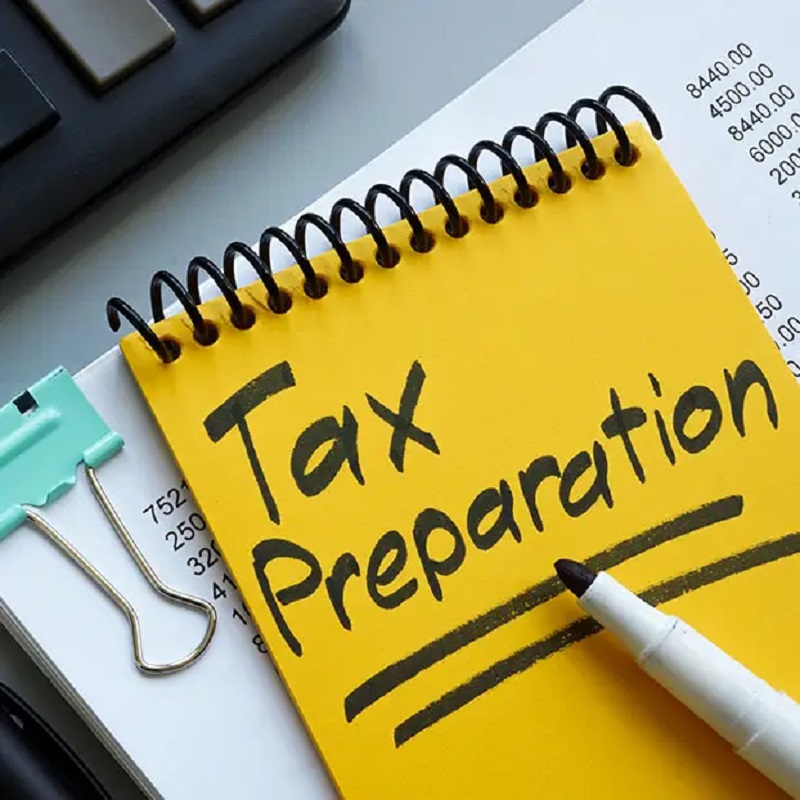
Tax Preparation

Let’s be honest… tax preparation in Nigeria can feel like navigating a maze blindfolded. If you’re a small business owner, you’ve probably spent sleepless nights wondering if you’re doing everything right, or worse, overpaying just to stay on the safe side.

The truth is, tax preparation for small businesses in Nigeria doesn’t have to be this complicated. Whether you’re filing for the first time or you’ve been doing it for years, understanding the system, knowing what tools are available, and getting your processes right can save you time, money, and a whole lot of stress.

With Nigeria’s 2025 Tax Reform Acts coming into full effect by January 2026, this is the time to get your house in order. From how to file your company tax to calculating VAT and using technology to automate compliance, this guide walks you through everything you need to know as a Nigerian SME owner.

Understanding the Nigerian Tax Landscape (for SMEs)

Here’s the thing about taxes in Nigeria: the system wasn’t exactly designed with small businesses in mind. At least, that’s how it’s felt for a long time. But the new tax reforms are changing things—finally tilting the table a bit in favor of small and growing businesses.

The Main Taxes Your Small Business Needs to Know About

Company Income Tax (CIT)
This is the big one. Tax on your business profits, collected by the Federal Inland Revenue Service (FIRS).
Under the new tax classification:

  • Small companies (turnover up to ₦100 million) are exempt from CIT.
  • Medium companies (₦100 million to ₦500 million turnover) pay 20%.
  • Large companies (above ₦500 million) pay the full 30%.

This 3-tier structure replaces the older “simplified tax regime” that was capped at ₦25 million. It’s more inclusive, giving more Nigerian SMEs breathing room.

Value Added Tax (VAT)Currently 7.5%, and yes, you’re required to collect it from your customers and remit it to FIRS. VAT applies to most goods and services, except for specific exempt categories (we’ll get into that shortly).

Withholding Tax (WHT)A portion deducted at source from payments like contracts, rent, or professional services. You or your clients remit this to FIRS, and it counts as advance tax credit.

Personal Income Tax (PAYE)If you have employees, you’re responsible for deducting PAYE monthly. Rates are progressive, up to 24%, but the new reform gives relief to low-income earners—anyone earning under ₦800,000 annually is exempt.

Development Levy (New)This is one of the new elements of the 2025 reform. Medium and large companies will now pay a 4% Development Levy on assessable profits. It replaces a mix of older levies like the Education Tax, IT Levy, and NASENI Levy, consolidating them into one cleaner charge.

Common Compliance Challenges

Even with all these changes, the real struggle for many Nigerian SMEs isn’t the tax rates—it’s compliance.

Here’s what still trips people up:

  • Poor record-keeping that leads to inaccurate filings
  • Missing legitimate deductions and allowances
  • Navigating both FIRS and state tax authorities
  • Keeping up with policy updates and new forms
  • Losing productive time trying to manually reconcile tax data

If that list feels familiar, you’re not alone.

How to File Company Tax in Nigeria

Alright, let’s get practical. How do you actually file company tax in Nigeria?

Step 1: Get Your Tax Identification Number (TIN)

If you don’t already have one, start here. Your TIN is your business’s fingerprint in the tax system. You’ll need it for every transaction with FIRS.

You can register online via the FIRS website or walk into a local tax office. Required documents include:

  • Certificate of Incorporation
  • Memorandum and Articles of Association
  • Valid IDs of company directors
  • Proof of business address

Step 2: Keep Proper Financial Records

This one’s non-negotiable. Tossing receipts in a drawer isn’t record-keeping. You need:

  • Income statement
  • Balance sheet
  • Cash flow statement
  • Supporting documents (receipts, invoices, bank statements)

Many businesses now use accounting software to make this easier. Tools like TaxAnchor360 are built for Nigerian tax laws, automating calculations and record management.

Step 3: Prepare Your Tax Returns

Once your books are tidy, it’s time to compute your taxable income. You’ll need:

  • Self-Assessment Form (for CIT)
  • Audited Financial Statements (for turnover above ₦100 million)
  • Computation of Tax Liability
  • Evidence of any previous payments

Step 4: File Your Returns

You can do this manually at FIRS offices (brace yourself for long queues) or the smarter way e-filing.
Nigeria’s Integrated Tax Administration System (ITAS) lets you submit returns, upload documents, and track your filing status online. It’s faster, cleaner, and saves you at least a day of back-and-forth.

Step 5: Pay Your Taxes

Once you get your assessment notice, pay promptly via:

  • Bank transfer to designated FIRS accounts
  • Online payment on the FIRS portal
  • Authorized remittance platforms

Keep proof of every payment—receipts, screenshots, bank alerts. They’re your best friend if FIRS ever comes knocking.

Important Deadlines You Can’t Miss

  • CIT filing: Within 6 months after your financial year ends
  • PAYE remittance: By the 10th of the following month
  • VAT filing: Monthly, by the 21st of the following month
  • WHT remittance: Within 21 days after deduction

Miss these and you’re looking at penalties—₦25,000 for the first month and ₦5,000 for each subsequent month, plus interest.

Why Small Businesses Overpay Taxes

Let’s talk about something painful.
Many Nigerian SMEs overpay taxes—not because they’re trying to be saints, but because they don’t know better.

Common mistakes include:

  • Not claiming allowable deductions. Expenses like staff training, utilities, R&D, and depreciation are often ignored.
  • Poor documentation. If you can’t prove an expense, FIRS won’t recognize it.
  • Ignoring capital allowances. These can dramatically reduce your taxable income.
  • Not applying small-company exemptions. Paying 30% CIT when you qualify for 0% is like throwing money away.

The solution isn’t to overpay “just to be safe.” It’s to stay informed and use tools that calculate accurately.

  • E-filing integration. Submit directly to FIRS from within the platform.
  • Smart record-keeping. Auto-store receipts, invoices, and proof of payments.Tax Preparation Tools for Small Businesses

Handling tax manually in 2025 is like using a typewriter when everyone else is on laptops.

Why You Need Tax Software

Every hour spent tinkering with spreadsheets is time you could spend growing your business. Beyond saving time, good tax software offers:

  • Accuracy – Fewer errors, cleaner records
  • Compliance – Automatically updated for new reforms
  • Documentation – Digital trail for audits
  • Insights – Real-time visibility into your tax position

What to Look For

  • Local compliance. The software must handle Nigerian-specific taxes—CIT, VAT, PAYE, WHT—and integrate with FIRS.
  • Automated calculations. No manual math.

The Best Options for Nigerian SMEs

TaxAnchor360 stands out as a Nigerian-built, AI-powered tax compliance tool designed specifically for local businesses. It automates CIT, VAT, and PAYE calculations, connects with FIRS for direct filing, and flags potential errors before they become penalties.

You could use global platforms like QuickBooks or Xero for accounting, but they often miss Nigerian-specific compliance features. That’s why a localized solution like TaxAnchor360 makes more sense for SMEs here.

How to Calculate VAT in Nigeria (with Example)

VAT tends to confuse people, but it’s simpler than it looks once you understand the logic.

What’s VAT?
 Value Added Tax is a consumption tax. You collect it from your customers on behalf of FIRS.

Current rate: 7.5%
Threshold: Businesses with turnover above ₦25 million must register for VAT.

What’s Taxable and What’s Not

VAT applies to:

  • Most goods and services
  • Imported goods
  • Digital services

VAT-exempt items include:

  • Basic food items
  • Educational materials
  • Medical and pharmaceutical products
  • Agricultural products and equipment
  • Export goods and services

Example Calculation

Let’s say you invoice a client ₦500,000 for consulting.

  • VAT = 7.5% of ₦500,000 = ₦37,500
  • Total invoice = ₦537,500

If you also bought office equipment for ₦100,000 + ₦7,500 VAT, you can deduct that ₦7,500 input VAT from your ₦37,500 collected.

Your net VAT payable is ₦30,000.

Practical Example: Retail

Sales: ₦2,000,000
Output VAT: ₦150,000
Purchases VAT: ₦93,750
Net VAT Payable: ₦56,250

That ₦56,250 is due by the 21st of the following month.

Common VAT mistakes to avoid:

  • Not registering for VAT when required
  • Charging VAT on exempt items
  • Missing filing deadlines
  • Keeping incomplete VAT registers

How Software Helps

Modern tax tools like TaxAnchor360 automatically track your VAT, match input and output transactions, generate reports in FIRS-approved format, and remind you before deadlines.

The Rise of AI and Automation in Tax Compliance

Something big is happening in tax compliance, and AI is right at the center of it.

Traditional tax software is reactive. It waits for you to enter numbers. AI-powered tools actually think about your situation.

Here’s how AI changes the game:

  • Predictive compliance: Flags potential errors before filing.
  • Intelligent deduction recognition: Identifies deductions you might miss.
  • Real-time updates: Automatically adjusts to new tax laws.
  • Natural language queries: You can literally ask, “What’s my estimated tax if I hire two new staff?” and get an answer.

Real-world impact:

A Lagos-based logistics company reduced overpayment by 12% after switching to AI-powered tax automation. The system spotted misclassified transactions and unclaimed deductions. Savings in the first year? Over ₦600,000.

Modern tax automation features include:

  • Continuous transaction monitoring
  • Smart document management (just snap a receipt)
  • Real-time tax dashboards
  • Multi-tax integration (CIT, VAT, PAYE, WHT)
  • Predictive cash flow analysis for tax planning

If you’re spending hours every month juggling tax tasks, or you’re unsure of your current compliance status, AI automation is your next step.

TaxAnchor360 uses AI to categorize transactions, track rule changes, and generate audit-ready reports automatically. Built for Nigerian businesses, it understands our tax environment down to the last form.

Ready to simplify your tax filing? Try TaxAnchor360 — Nigeria’s AI-powered tax compliance tool.

Conclusion: Taking Control of Your Tax Compliance in 2025

Let’s face it. You didn’t start a business to spend nights staring at spreadsheets. But tax compliance isn’t optional, and getting it wrong can cost you dearly.

The good news? It’s 2025, and things are changing. Online filing actually works. AI-powered compliance tools exist. And the 2025 Tax Reform Acts make life a little easier for small business owners—if you know how to use them.

Your Action Plan

  1. Get organized.
    Keep your financial records clean and up to date. Every transaction matters.
  2. Understand your obligations.
    Learn what taxes apply, when they’re due, and what reliefs you qualify for.
  3. Use the right tools.
    Whether it’s TaxAnchor360 or another trusted platform, automation is your best ally for accuracy and peace of mind.

The Nigerian tax landscape isn’t getting simpler, but the tools to handle it? They’re getting smarter every day.

You’ve got this. And if you need help, that’s why TaxAnchor360 exists—to help Nigerian business owners simplify taxes, stay compliant, and avoid costly mistakes.

Save hours on tax preparation and compliance. Automate with TaxAnchor360. Your future self will thank you.

Demilade Tiwo is an SEO Strategist at TaxAnchor360 

Feature/OPED

Why Africa Requires Homegrown Trade Finance to Boost Economic Integration

Published

on

Cyprian Rono Ecobank Kenya

By Cyprian Rono

Africa’s quest to trade with itself has never been more urgent. With the African Continental Free Trade Area (AfCFTA) gaining momentum, governments are working to deepen intra-African commerce. The idea of “One African Market” is no longer aspirational; it is emerging as a strategic pathway for economic growth, job creation, and industrial competitiveness. Yet even as infrastructure and regulatory reforms advance, one fundamental question remains; how will Africa finance its cross-border trade, across markets with diverse currencies, regulations, and standards?

Today, only 15 to 18 percent of Africa’s internal trade happens within the continent, compared to 68 percent in Europe and 59 percent in Asia. Closing this gap is essential if AfCFTA is to deliver prosperity to Africa’s 1.3 billion people.

A major constraint is the continent’s huge trade finance deficit, which exceeds USD 81 billion annually, according to the African Development Bank. Small and medium-sized enterprises (SMEs), which provide more than 80 percent of the continent’s jobs, are the most affected. Many struggle with insufficient collateral, stringent risk profiling and compliance requirements that mirror international banking standards rather than the realities of African business.

To build integrated value chains, exporters and importers must operate within trusted, predictable, and interconnected financial systems. This requires strong pan-African financial institutions with both local knowledge and continental reach.

Homegrown trade finance is therefore indispensable. Pan-African banks combine deep domestic roots with extensive regional reach, making them the most credible engines for financing trade integration. By retaining financial activity within the continent, homegrown lenders reduce exposure to external shocks and keep liquidity circulating locally. They also strengthen existing regional payment infrastructure such as the Pan-African Payment and Settlement System (PAPSS), developed by the Africa Export-Import Bank (Afreximbank) and backed by the African Continental Free Trade Area (AfCFTA) Secretariat, enabling faster, cheaper and seamless cross-border payments across the continent.

Digital transformation amplifies this advantage. Real-time payments, seamless Know-Your-Customer (KYC) verification, automated credit scoring and consistent service delivery across markets are essential for intra-African trade. Institutions such as Ecobank, operating in 34 African countries with integrated core banking systems, demonstrate how such digital ecosystems can enable continent-wide commerce.

Platforms such as Ecobank’s Omni, Rapidtransfer and RapidCollect, together with digital account-opening services, make it much easier for traders to operate across borders. Rapidtransfer enables instant, secure payments across Ecobank’s 34-country network, reducing delays in regional trade, while RapidCollect gives cross-border enterprises the ability to receive payments from multiple African countries into a single account with real-time confirmation and automated reconciliation. Together, these solutions create an integrated digital ecosystem that lowers friction, accelerates payments, and strengthens intra-African commerce.

Trust, however, remains a significant barrier. Cross-border commerce depends on the confidence that partners will honour contracts, deliver goods as promised, pay on time, and present authentic documentation. Traders often lack reliable information on potential partners, operate under different regulatory regimes, and exchange documents that are difficult to verify across borders. This heightens the risk of fraud, non-payment, and contractual disputes, discouraging businesss from expanding beyond familiar markets.

Technology is closing this trust gap. Artificial Intelligence enables lenders to assess risk using alternative data for SMEs without formal credit histories. Distributed ledger tools make shipping documents, certificates of origin, and inspection reports tamper-proof. In addition, supply-chain visibility platforms enable real-time tracking of goods and cross-border digital KYC ensures that both buyers and sellers are verified before any transaction occurs.

Ecobank’s Single Trade Hub embodies this trust infrastructure by offering a secure digital marketplace where buyers and sellers can trade with confidence, even in markets where no prior relationships exist. The platform’s Trade Intelligence suite provides customers instant access to market data from customs information and product classification tools across 133 countries.

Through its unique features such as the classification of best import/export markets, over 25,000 market and industry reports, customs duty calculators, and local and universal customs classification codes, businesses can accurately assess market opportunities, anticipate trends, reduce compliance risks, and optimise supply chains, ultimately helping them compete and grow in regional and global markets.

SMEs need more than financing. Many operate in cash-heavy cycles where suppliers and logistics providers require upfront payment. Lenders can support these businesses with advisory services, business intelligence, compliance guidance, and platforms for secure partner verification, contract negotiation, and secure settlement of payments. Trade fairs, industry forums, and partnerships with chambers of commerce further build the trust networks needed for cross-border trade.

Ultimately, Africa’s path toward meaningful trade integration begins with financial integration. AfCFTA’s promise will only be realised when enterprises can trade with confidence, knowing that payments will be honoured, partners verified, and disputes resolved. This requires collaboration between banks, regulators, and trade institutions, alongside harmonised financial regulations, interoperable payment systems, and continent-wide verification networks.

Africa can no longer rely on external actors to finance its trade. Its economic transformation depends on strong, trusted, and digitally enabled African financial institutions that understand Africa’s unique risks and opportunities. By building an African-led trade finance ecosystem, the continent can unlock liquidity, reduce dependence on external currencies, empower SMEs, and retain more value locally. Africa’s trade revolution will accelerate when its financing is driven by African institutions, African systems, and African ambition.

Cyprian Rono is the Director of Corporate and Investment Banking for Kenya and EAC at Ecobank Kenya

Continue Reading

Feature/OPED

Tax Reform or Financial Exclusion? The Trouble with Mandatory TINs

Published

on

Tax Reform or Financial Exclusion

By Blaise Udunze

It is not only questionable but an aberration that a nation where over 38million Nigerians remain financially excluded, where trust in institutions is fragile, and where citizens are pressured under the weight of rising living costs, the use of Tax Identification Number (TIN) has been specified as the only option for their bank accounts operation from January 1, 2026 by the Federal Government of Nigeria.

In practice, the policy spearheaded by Taiwo Oyedele, Chairman of the Presidential Committee on Fiscal Policy and Tax Reforms, is rooted in the Nigerian Tax Administration Act (NTAA), and the intention can be understood in the areas of improving tax compliance, widening the tax net, and formalizing economic activities. But in practice, the directive risks becoming yet another well-meaning reform that punishes the wrong people, disrupts financial inclusiveness, and potentially destabilises an already stressed economy.

Yes, Nigeria needs tax reforms. Yes, the country must broaden its tax base. And yes, public revenues must increase to address fiscal pressures.

But compelling citizens to obtain TINs as a condition for operating bank accounts is the wrong tool for the right objective.

Below are five core arguments against the directive, and sustainable alternatives that actually strengthen tax compliance without endangering banking access or punishing informal earners.

The Directive Risks Deepening Financial Exclusion

Nigeria still struggles with financial inclusion. According to several official assessments, over 38 million adults remain outside the formal financial system. Many of them operate small, irregular businesses, survive through subsistence earnings, or depend on cash-based livelihoods.

The Federal Government’s compulsory TIN-for-bank-accounts policy is built on the assumption that every banked Nigerian is structured, organised, and tax-ready. This is false.

For instance, the rural market woman with N30,000 in rotating savings, the okada rider who deposits cash once a week, the petty trader using a mobile POS agent account, the retiring pensioner managing a small monthly income, and the migrant worker sends small remittances to their family. These are not tax evaders; they are survivalists.

Most operate bank accounts not because they run formal businesses, but because those accounts are essential to modern financial life: receiving transfers, accessing loans, participating in digital commerce, saving against emergencies, and avoiding the risks of moving cash in insecure environments.

By creating an additional bureaucratic barrier, the directive risks pushing millions back into a cash-dominant shadow economy, precisely the opposite outcome of what Nigeria’s financial-sector reforms are trying to achieve.

Bank Accounts Are Not Proof of Taxable Income

The NTAA clarifies that the TIN requirement applies only to taxable persons, individuals engaged in trade, employment, or income-generating activities.

But herein lies the problem: banks cannot determine who is “taxable” and who is not. Banks only see deposits and withdrawals. They do not audit the source or consistency of income. They are not tax authorities.

A student may run a small online clothing resale gig. A retiree may occasionally rent out farmland.

A dependent may receive cash support from a relative abroad. A job seeker may get intermittent gifts from family.

Who decides which of these scenarios qualifies as taxable? Banks? FIRS? Or will citizens be expected to self-declare under threat of account restrictions?

The result will be confusion, over-compliance, and mass panic with banks indiscriminately demanding TINs from everyone to avoid regulatory penalties.

This not only contradicts the spirit of the law but also exposes ordinary Nigerians to harassment and arbitrary compliance requirements.

The Policy Could Trigger Disruption, Panic Withdrawals, and Cash Hoarding

Whenever Nigerians perceive threats to their access to funds, the natural reaction is withdrawal and hoarding. We saw it during:

–       the 2023 Naira redesign crisis,

–       the 2016 TSA-bank consolidation tightening, and multiple periods of financial instability.

Telling citizens that bank accounts may face “operational restrictions” if they do not obtain a TIN creates a predictable behavioural response: people will rush to withdraw money.

This would be disastrous for a banking system already pressured by:

–       high interest rates,

–       inflation eroding deposits,

–       rising loan defaults, and

–       declining public trust.

Any government policy that unintentionally creates an incentive for citizens to flee the formal banking system is counterproductive.

The TIN Requirement Will Become a Bureaucratic Nightmare

Even if millions of Nigerians want to comply, the system is not ready. Nigeria’s administrative infrastructure does not have the capacity to process tens of millions of TIN registrations within months without:

–       long queues,

–       delays,

–       data mismatches,

–       duplicate records, and

–       systemic errors.

The National Identity Number (NIN)-SIM registration experience is a painful reminder of what happens when ambitious policy meets weak execution capacity.

–       Citizens spent months in overcrowded enrolment centres.

–       Millions were blocked from services.

–       Data inconsistencies persisted.

–       The economy suffered productivity losses.

If Nigeria could not seamlessly synchronise NIN and SIM data, how will it synchronise NIN, BVN, and TIN at a national scale without dislocation?

Forcing TIN Adoption Ignores the Real Problem: Nigeria’s Broken Tax Culture

The Federal Government’s real challenge is not that citizens lack TINs, but that they lack trust in how taxes are used.

A government cannot widen the tax net when:

–       tax leakages remain widespread,

–       citizens feel services do not match taxation,

–       corruption perceptions are high,

–       government spending lacks transparency, and

–       taxpayers do not feel seen, heard, or valued.

Coercion does not build a tax culture. Engagement does. Policy does not create legitimacy. Accountability does.

If the Federal Government wants Nigerians to freely participate in the tax system, it must earn legitimacy first, not mandate compliance through financial restrictions.

What the Government Should Do Instead: A Smarter Path to Tax Reform

Instead of enforcing a policy that may backfire economically and socially, the Federal Government can adopt four smarter, people-centred alternatives.

–       Automatic TIN Issuance Linked to NIN and BVN

Rather than forcing Nigerians to apply manually, the government should:

  • auto-generate TINs for all existing BVN/NIN holders,
  • send the TINs via SMS, email, and bank alerts,
  • allow self-activation only when needed for tax obligations.

This eliminates queues, delays, and confusion.

–       Build a Voluntary Tax Compliance Culture Through Transparency and Incentives

Tax morale improves when citizens see value. Government should:

  • publish annual audited reports of tax revenue use,
  • incentivise compliant taxpayers with benefits (priority access to government grants, credit scoring, etc.),
  • simplify tax filings for small businesses.

People comply more when they feel respected, not coerced.

–       Target High-Value Tax Evaders, Not Low-Income Account Holders

Nigeria’s real tax leakages come from:

  • large corporations shifting profits,
  • politically exposed persons,
  • illicit financial flows,
  • multinational tax avoidance strategies,
  • the informal “big money” class operating outside the banking system.

Instead of threatening small depositors, the government should strengthen:

  • FIRS intelligence and investigation units,
  • inter-agency data integration (CAC, Customs, Immigration),
  • beneficial ownership transparency enforcement.

The fight against tax evasion should focus on those hiding billions, not those depositing thousands.

–       Strengthen Digital Tax Platforms for Easy Self-Registration and Compliance

If tax registration becomes as easy as opening a social media account, compliance will rise naturally. The government should build:

  • a mobile-first tax app,
  • simplified online TIN retrieval,
  • one-click tax filing for gig workers and small traders.

Digital convenience can achieve what regulatory coercion cannot.

Reform Should Not Punish the Public

No doubt, tax reforms are needed urgently, but they must come with a human face, an intelligent, equitable, and aligned with the realities of ordinary Nigerians.

The TIN-for-bank-accounts policy, while well-intentioned, risks undermining financial inclusion, triggering economic instability, and imposing unnecessary burdens on millions who are not tax evaders but survival-based earners.

Good tax policy is built on trust, not fear. On transparency, not threats. On civic legitimacy, not administrative compulsion.

If the Federal Government truly wants to modernise Nigeria’s tax system, it must focus not on restricting citizens’ access to their own money, but on:

  • repairing tax trust,
  • digitising compliance,
  • targeting the real evaders, and
  • making participation easier, not harder.

Financial inclusion took Nigeria decades to build. We cannot afford a policy that carelessly reverses these gains.

A better tax system is possible, but it must start with the people, not with their bank accounts.

Blaise, a journalist and PR professional, writes from Lagos, can be reached via: [email protected]

Continue Reading

Feature/OPED

Dangote and Farouk: The Distance Between Capital and Conscience

Published

on

Dangote and Farouk

By Abiodun Alade

Within the space of 48 hours, Aliko Dangote offered Nigeria a rare demonstration of what leadership looks like when power is exercised with responsibility and consequence.

First came the announcement of a N100 billion annual education support programme — a decade-long N1 trillion commitment projected to keep more than 1.3 million Nigerian children in school. Its architecture was intentional, not ornamental: girls’ education, STEM disciplines, technical skills, and those children most likely to disappear quietly into the margins of poverty were placed at the centre, not the footnotes.

Then, almost immediately, his refinery reduced the price of Premium Motor Spirit by over N100 per litre. This was not achieved through government fiat, subsidy or public funds, but through internal cost absorption, aimed at easing the pressure of inflation on households, transport operators and small businesses already stretched thin.

Two decisive interventions. One individual. Forty-eight hours.

In a country where scarcity has been normalised and excuses institutionalised; these actions stand out precisely because they are uncommon. Nigeria does not lack wealth. It lacks the nerve to use it responsibly.

Dangote’s interventions were not symbolic gestures designed for applause. They were structural acts. Education secures the future. Affordable energy steadies the present. Together, they form the foundation of any serious development strategy.

Now set this against the performance of Nigeria’s downstream petroleum regulation.

Engr Farouk Ahmed, Chief Executive of the Nigerian Midstream and Downstream Petroleum Regulatory Authority (NMDPRA), presides over a sector whose policy objectives are clearly stated: support domestic refining, reduce imports, conserve foreign exchange and strengthen energy security. These goals are enshrined in the Petroleum Industry Act and reinforced by the Federal Government’s Nigeria First policy.

Yet in practice, the downstream market remains crowded with import licences, uneven enforcement and regulatory decisions that continue to weaken local refining. Even with Africa’s largest refinery operating on Nigerian soil, import dependence persists — not because capacity is lacking, but because incentives remain misaligned.

This is where comparison ends.

Dangote and Farouk Ahmed do not operate on the same economic or moral plane. One commits private capital to solve national problems. The other leads a public institution whose outcomes are increasingly questioned by industry players, economists and the public alike.

One expands supply.

The other presides over a system where scarcity recurs.

One cuts prices.

The other manages a framework in which price instability has become familiar.

One reinvests personal wealth into Nigerian children.

The other reportedly expends questionable millions of dollars on secondary education abroad, while in his home state, Sokoto, thousands of children drop out of school over tuition fees as low as N10,000.

Only in Nigeria does the arithmetic of public life so often defy reason. Where official incomes are modest, lifestyles sometimes appear imperial. Where the books are thin, the living is lavish. And where questions should naturally arise, silence frequently answers instead.

It is a country where some who labour in the open marketplace live with studied moderation, while others, known only to the payroll of the state, move with a splendour their salaries cannot reasonably sustain. Children are educated across distant borders, fees quoted in foreign currencies that mock the modest figures attached to public service, yet accountability remains elusive.

When regulators falter, it is rarely for lack of laws or mandates. More often, authority is softened by comfort, dulled by compromise, and entangled in interests it was meant to police. A regulator burdened by unanswered questions cannot stand upright; oversight weakens when conscience is clouded.

In such moments, one does not need a forensic accountant to sense disorder. A soothsayer is hardly required to see where lines have blurred, where vigilance has yielded to indulgence, and where public trust has quietly been mortgaged.

This is how institutions lose their moral centre — not always through spectacular scandal, but through a series of small indulgences that mature, unnoticed, into systemic decay.

The fuel price reduction alone deserves careful attention. In Nigeria, petrol is not merely a commodity; it is the bloodstream of the economy. When prices rise, transport fares rise. Food prices rise. School attendance drops. Small businesses shut early. Families cancel travel or risk storing petrol in jerry cans — turning highways into mobile fire hazards during festive seasons.

By reducing PMS prices by over N100 per litre, the Dangote Refinery accomplished what years of policy meetings failed to deliver. It restored breathing space. It returned dignity to commuters. It reduced pressure on traders. It saved millions of productive man-hours otherwise lost to queues, panic buying and logistical paralysis.

That this occurred alongside a historic education commitment is not accidental. It reflects an understanding that energy without education builds nothing, and education without economic stability cannot thrive.

Meanwhile, regulatory bottlenecks remain. Local refiners cite delays in approvals, vessel clearances and inconsistent enforcement. Importers continue to flourish. Arbitrage adapts. Rent-seeking survives. The system continues to reward trading over production.

This is not accidental. Systems behave exactly as they are designed to behave.

Nigeria does not suffer from a shortage of ideas. It suffers from a shortage of alignment. When private citizens act more decisively in the national interest than institutions legally mandated to do so, something fundamental is broken.

No country industrialises by frustrating its producers. No economy grows by privileging imports over domestic value creation. No regulator earns legitimacy by operating in tension with stated national objectives.

Dangote’s actions within 48 hours expose an uncomfortable truth: Nigeria’s most binding constraint is no longer capital, technology or scale. It is governance culture.

Leadership is revealed not by speeches, but by choices. In two days, one Nigerian chose to educate the future and ease the present. Others continue to curate systems that profit from delay, opacity and dependence.

History is rarely neutral.

It remembers who built.

And it remembers who stood in the way.

Abiodun, a communications specialist, writes from Lagos

Continue Reading

Trending