Connect with us

Feature/OPED

CBN’s $1trn Mirage: Why Nigeria’s Real Sector Holds the Missing Key

Published

on

CBN’s $1trn Mirage

By Blaise Udunze

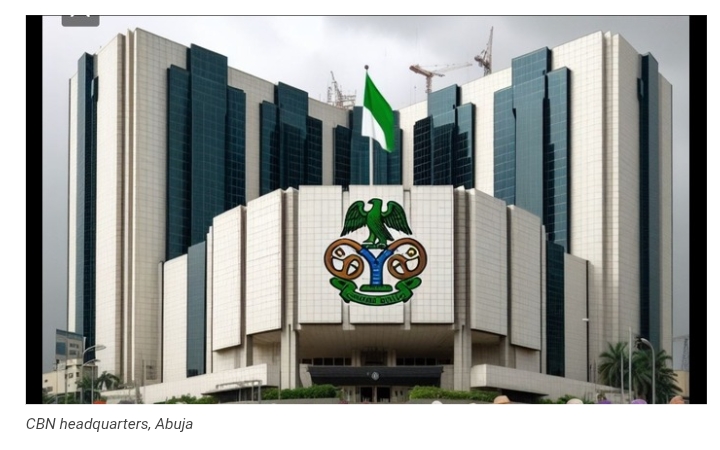
When the Central Bank of Nigeria (CBN) recently declared that the country was on course to becoming a $1 trillion economy through ongoing banking reforms, the statement was met with cautious optimism. To many, it sounded like a long-awaited promise of prosperity as a declaration that Nigeria’s economic renewal is finally underway. But behind the projection lies a critical question, if banking reforms alone drive the kind of broad-based, sustainable growth required to make Nigeria a trillion-dollar economy?

The truth, according to several experts and economic data, is that banking reforms though necessary are insufficient. The structure of the Nigerian economy is still too fragile, the real sector too weak, and the policy framework too inconsistent to sustain such lofty growth. Without targeted reforms that strengthen production, industry, and exports, the trillion-dollar dream risks remaining what one economist aptly described as a “mirage.”

Tilewa Adebajo, Chief Executive Officer of CFG Advisory, did not mince words when he addressed the subject on ARISE NEWS earlier this year. “We said Nigeria already has the potential of a $1 trillion economy. But $1 trillion economy is a mirage. We shouldn’t go there again,” he said. “If you do not have your policies in place, you cannot reach that $1 trillion economy.”

Adebajo’s caution strikes at the heart of the matter, saying potential is not performance. Nigeria has abundant human and natural resources, but poor policy implementation, weak governance, and persistent inflation continue to choke productivity and investment.

According to Adebajo, reforms alone cannot drive growth. “Reforms on themselves cannot be the solution or answer to growing the economy,” he explained. For him, the CBN’s focus on financial sector restructuring must be complemented by microeconomic solutions such as job creation, poverty alleviation, and social intervention policies that ease the hardship of ordinary Nigerians.

“There has to now be a human face,” he emphasized. Economic transformation, he argues, must not only be about GDP numbers but about improving the quality of life for millions trapped in poverty.

While the CBN’s recapitalisation directive aims to strengthen the banking system and attract foreign capital, many industry players insist that banking strength is meaningless without productive outlets for credit. The Group Managing Director of UBA Plc, Oliver Alawuba, made this clear at the Annual Conference of the Finance Correspondents Association of Nigeria (FICAN).

He stated that achieving the $1 trillion economy target “requires not just incremental growth, but structural shifts in how we approach banking, financial innovation, and sectoral development.”

For Alawuba, the real sector in agriculture, manufacturing, and services must become the true engine of growth.

“A vibrant real sector will drive employment, foster innovation, and strengthen the overall economy by reducing dependency on the oil sector,” he said.

Recapitalization alone, he noted, “is not enough; it must be followed by focused lending to strategic areas that promise the highest economic returns.”

This sentiment reflects a broader consensus among economists that credit must flow to where value is created. Yet, Nigerian banks often prefer the comfort of investing in risk-free government securities over financing industrial or agricultural expansion. The result is a financial system that thrives on paper profits but contributes little to real economic output.

Indeed, Nigeria’s real sector has remained under pressure for years. Manufacturing’s share of GDP still hovers around 10 to 12 percent, hampered by erratic power supply, high logistics costs, and dependence on imported inputs. Agriculture, employing over one-third of the population, remains largely subsistence-based and technologically backward. Small and Medium Enterprises (SMEs), which make up 90 percent of businesses and contribute 48 percent of GDP, continue to struggle with limited access to affordable, long-term credit.

Alawuba suggests that this is where the banking recapitalisation drive must meet fintech innovation. By creating products specifically tailored to SMEs such as flexible loan packages, digital lending tools, and market access platforms which banks can unlock exponential growth. He argues that the future of Nigeria’s economy depends on “the strategic alignment of policy, investment, technology, and, most importantly, our collective will to innovate and grow.”

However, achieving this alignment requires more than monetary engineering; it demands a complete rethink of fiscal and industrial policy. As Isa Omagu of the Bank of Industry (BoI) explained during the same forum, “The economy stands on both the monetary and fiscal sides; we need both sides to work together.” While the monetary side stabilizes prices, fiscal authorities must “come in on the issue of governance.” Nigeria’s biggest economic problem, he said, is simple: “We are not producing enough, and we cannot continue to consume imported goods and expect the economy to be robust.”

Omagu’s statement underscores the country’s most pressing contradiction as a consumption-driven economy that produces little of what it consumes. He called for deeper investment in agriculture, infrastructure, and services to minimize importation and reduce pressure on the foreign exchange market. “We cannot achieve a $1 trillion economy without focusing or boosting our production capacity,” he warned.

The Deputy Director of the Banking Examination Department at the Nigeria Deposit Insurance Corporation (NDIC), Emeka Udechukwu, echoed a similar concern. He warned that “without a vibrant real sector, the economy might not grow fast enough to hit the $1 trillion target.” He argued that while the CBN’s loan-to-deposit ratio policy was designed to compel banks to lend more to the productive sector, “fundamental infrastructural deficits” and policy inconsistencies have undermined its impact. “If there is challenge in the real sector of any economy, that economy is already challenged,” he said. “We have to go back to the real sector and do what we are supposed to do.”

This diagnosis aligns with what many analysts have long argued that Nigeria’s economic problem is not lack of money but lack of production. Trillions of naira circulate within the financial system, yet they rarely translate into new factories, expanded farms, or exportable goods. A $1 trillion GDP projection, therefore, may reflect currency devaluation or statistical rebasing more than genuine productivity gains.

The country’s overreliance on oil further complicates the path to sustainable growth. Data from the National Bureau of Statistics (NBS) shows that in the last quarter of 2023, crude oil accounted for over 81 percent of total exports, while non-oil exports amounted to just around N1 trillion. Even though non-oil exports grew by 38.5 percent in early 2024, their value remains meagre for an economy seeking diversification.

Nigeria’s non-oil export base including manufactured goods, agricultural products, and services remains underdeveloped. Experts argue that to escape this trap, Nigeria must learn from Asian success stories like Singapore and Vietnam, where industrialization, export-oriented manufacturing, and human capital investment transformed poor economies into global competitors.

Singapore, for instance, transitioned from high unemployment and poor infrastructure in the 1960s to one of the world’s richest nations through massive investment in education, manufacturing, and technology. Its top exports today include integrated circuits and machinery products that drive global industries. Similarly, Vietnam evolved from an agrarian, war-torn economy to a manufacturing hub exporting electronics, textiles, and footwear worth over $370 billion in 2022. Nigeria, by contrast, has watched its GDP fall from $400 billion in 2013 to around $250 billion by 2023.

Both countries demonstrate that industrialization, not financial speculation, drives long-term growth. As Uchenna Uzo, a marketing professor at Lagos Business School, put it, “Manufacturing and local production are the key things that can set Nigeria apart.” He added that Nigeria can also attract diaspora investment if it builds the right infrastructure and policy stability.

The lesson is clear; a trillion-dollar economy cannot be decreed from monetary policy statements or achieved through banking reforms alone. It must be earned through production, value addition, and innovation. Nigeria’s manufacturing base must expand, its agricultural productivity must rise, and its infrastructure such as power, transport, and logistics must be modernized.

Banking reforms should therefore serve as an enabler, not a substitute, for real sector development. The CBN’s recapitalization drive, while commendable, must be tied to sectoral targets. Banks that expand credit to manufacturing, agriculture, or export-oriented businesses should enjoy regulatory incentives, while speculative investments in non-productive assets should be discouraged.

Equally important is the need to tame inflation and stabilize the currency. As Adebajo noted, Nigeria can only sustain GDP growth of 8-10 percent if inflation is kept below 12 percent. Persistent inflation erodes purchasing power, deters investment, and undermines long-term planning. Without macroeconomic stability, even the best-intentioned reforms will falter.

Furthermore, there must be a coordinated industrial policy that aligns monetary, fiscal, and trade objectives. For instance, while the CBN seeks to strengthen the naira, the fiscal authorities must simultaneously support local manufacturers through tax incentives, infrastructure investment, and export facilitation. Import restrictions, when necessary, should be strategically designed to protect emerging industries without stifling competition.

Nigeria’s SME ecosystem also deserves targeted support. As the Bank of Industry’s Omagu and UBA’s Alawuba both emphasized, SMEs are the backbone of employment and innovation. Yet, they are often the most credit-starved. Government-backed credit guarantees, venture funds, and fintech-driven micro-lending could bridge this gap, helping small enterprises become the foundation of Nigeria’s industrial base.

Equally, agricultural transformation must move beyond subsistence farming to agro-industrialisation such as processing, packaging, and exporting value-added products rather than raw materials. This approach will not only increase farmers’ incomes but also create jobs and reduce pressure on foreign exchange demand. A focus on value chain development from farm to factory to market will ensure that the benefits of growth reach ordinary citizens.

At a time when 133 million Nigerians are multidimensionally poor, according to NBS data, the urgency for real sector reforms cannot be overstated. An economy that depends overwhelmingly on oil exports, consumes more than it produces, and imports most of its essential goods cannot claim to be on the path to a trillion dollars in any meaningful sense.

The government’s projection of achieving a $1 trillion economy by 2030 could still be attainable but only if the country embarks on deep structural reforms. These include ensuring reliable power supply, revamping transport infrastructure, tackling corruption that inflates project costs, and improving governance and policy consistency.

Nigeria must also invest aggressively in education and skills development, following the example of countries like Singapore, which turned human capital into its greatest economic asset. A young, skilled population can drive innovation, entrepreneurship, and technological adoption which is the real levers of modern economic power.

The road to a trillion-dollar economy will not be paved by balance sheets and banking reforms alone. It will be built by factories, farms, and entrepreneurs. It will depend on a nation’s ability to produce, innovate, and trade competitively. It will require a deliberate shift from policy announcements to policy execution, where government actions translate into measurable outcomes for citizens.

Nigeria’s trillion-dollar dream is achievable, but not on the current trajectory. Without revitalizing the real sector, ensuring macroeconomic stability, and investing in people and production, the CBN’s optimism risks sounding like rhetoric detached from reality. Banking reforms may stabilize the system, but only real sector reforms can sustain growth.

In the end, Nigeria’s economic destiny will not be determined in banking halls but in the fields, factories, and workshops where real value is created. The trillion-dollar economy will not come from financial statements, it will come from the sweat of productive Nigerians who, if properly empowered, can transform potential into prosperity.

Blaise, a journalist and PR professional writes from Lagos, can be reached via: [email protected]

Feature/OPED

AU Must Reform into an Institution Africa Needs

Published

on

African Union AU Active Collaboration

By Mike Omuodo

From an online post, a commentator asked an intriguing question: “If the African Union (AU) cannot create a single currency, a unified military, or a common passport, then what exactly is this union about?”.

The comment section went wild, with some commentators saying that AU no longer serves the interest of the African people, but rather the interests of the West and individual nations with greedy interests in Africa’s resources. Some even said jokingly that it should be renamed “Western Union”.

But seriously, how has a country like France managed to maintain an economic leverage over 14 African states through its CFA Franc system, yet the continent is unable to create its own single currency regime? Why does the continent seem to be comfortable with global powers establishing their military bases throughout its territories yet doesn’t seem interested in establishing its own unified military? Why does the idea of an open borders freak out our leaders, driving them to hide under sovereignty?

These questions interrogate AU’s relevance in the ensuing geopolitics. No doubt, the AU is still relevant as it still speaks on behalf of Africa on global platforms as a symbol of the continent’s unity. But the unease surrounding it is justified because symbolism is no longer enough.

In a continent grappling with persistent conflict, economic fragmentation, and democratic reversals, institutions are judged not by their presence, but by their impact.

From the chat, and several other discussion groups on social media, most Africans are unhappy with the performance of the African Union so far. To many, the organization is out of touch with reality and they are now calling for an immediate reset.

To them, AU is a club of cabals, whose main achievements have been safeguarding fellow felons.

One commentator said, “AU’s main job is to congratulate dictators who kill their citizens to retain power through rigged elections.” Another said, “AU is a bunch of atrophied rulers dancing on the graves of their citizens, looting resources from their people to stash in foreign countries.”

These views may sound harsh, but are a good measure of how people perceive the organization across the continent.

Blurring vision

The African Union, which was established in July 2002 to succeed the OAU, was born out of an ambitious vision of uniting the continent toward self-reliance by driving economic Integration, enhancing peace and security, prompting good governance and, representing the continent on the global stage – following the end of colonialism.

Over time, however, the gap between this vision and the reality on the ground has widened. AU appears helpless to address the growing conflicts across the continent – from unrelenting coups to shambolic elections to external aggression.

This chronic weakness has slowly eroded public confidence in the organization and as such, AU is being seen as a forum for speeches rather than solutions – just as one commentator puts it, “AU has turned into a farce talk shop that cannot back or bite.”

Call for a new body

The general feeling on the ground is that AU is stagnant and has nothing much to show for the 60+ years of its existence (from the times of OAU). It’s also viewed as toothless and subservient to the whims of its ‘masters’.  Some commentators even called for its dissolution and the formation of a new body that would serve the interests of the continent and its people.

This sounds like a no-confidence vote. To regain favour and remain a force for continental good, AU must undertake critical reforms, enhance accountability, and show political courage as a matter of urgency. Without these, it may endure in form while fading in substance.

The question is not whether Africa needs the AU, but whether the AU is willing and ready to become the institution Africa needs – one that is bold enough to initiate a daring move towards a common market, a single currency, a unified military, and a common passport regime. It is possible!

Mr Omuodo is a pan-African Public Relations and Communications expert based in Nairobi, Kenya. He can be reached on [email protected]

Continue Reading

Feature/OPED

Recapitalisation: Silent Layoffs, Infrastructure Deficit Threat to $1trn Economy

Published

on

cbn gov. banks recapitalisation

By Blaise Udunze

The Central Bank of Nigeria’s recapitalisation exercise, which is scheduled for a March 31, 2026, deadline, has continued to reignite optimism across financial markets and is designed to build stronger, more resilient banks capable of financing a $1 trillion economy. With the ongoing exercise, the industry has been witnessing bank valuations rising, investors are enthusiastic, and balance sheets are swelling. However, beneath these encouraging headline numbers, unbeknownst to many, or perhaps some troubling aspects that the industry players have chosen not to talk about, are the human cost of consolidation and the infrastructure deficit.

Recapitalisation often leads to mergers and acquisitions. Mergers, in turn, almost always lead to job rationalisation. In Nigeria’s case, this process is unfolding against an already fragile labour structure in the banking industry, one where casualisation has become the dominant employment model.

One alarming fact in the Nigerian banking sector is the age-old workforce structure raised by the Association of Senior Staff of Banks, Insurance and Financial Institutions (ASSBIFI), which says that an estimated 60 percent of operational bank workers today are contract staff. This reality raises profound questions about the sustainability of Nigeria’s banking reforms and the credibility of its economic ambitions.

A $1 trillion economy cannot be built on insecure labour, shrinking institutional knowledge, and an overstretched financial workforce.

Recapitalisation and the Hidden Merger Trap

History is instructive. Referencing Nigeria’s 2004-2005 banking consolidation exercise, which reduced the number of banks from 89 to 25, and no doubt, it produced larger institutions, while it also triggered widespread job losses, branch closures, and a wave of outsourcing that permanently altered employment relations in the sector. The current recapitalisation push risks repeating that cycle, only this time within a far more complex economic environment marked by inflation, currency volatility, and rising unemployment.

Mergers promise efficiency, but efficiency often comes at the expense of people. Speaking of this, duplicate roles are eliminated, technology replaces frontline staff, and non-core functions are outsourced. The troubling part of it is that this is already a system reliant on contract labour; mergers could accelerate workforce instability, turning banks into balance-sheet-heavy institutions with shallow human capital depth.

ASSBIFI’s warning is therefore not a labour agitation; it is a macroeconomic red flag.

Casualisation as Structural Weakness, Not a Cost Strategy

It has been postulated by proponents of job casualisation that it is a cost-control mechanism necessary for competitiveness. Contrary to this argument, evidence increasingly shows that it is a false economy. In reaction to this, ASSBIFI President Olusoji Oluwole, who kicked against this structural weakness, asserted that excessive reliance on contract workers undermines job security, suppresses wages, limits access to benefits and blocks career progression while affirming that over time, this erodes morale, loyalty, and productivity.

More troubling are the systemic risks. Casualisation creates operational vulnerabilities, higher fraud exposure, weaker compliance culture, and lower institutional memory.

One of the banking regulators, the Nigeria Deposit Insurance Corporation (NDIC), has not desisted from repeatedly cautioning that excessive outsourcing and short-term staffing models increase security risks within banks. On the negative implications, when employees feel disposable, ethical commitment weakens, and reputational risk grows.

Banking is not a factory floor. It is a trust business. And trust does not thrive in insecurity.

Inside Outsourcing Web of Conflict of Interest

Beyond cost efficiency, Nigeria’s casualisation crisis is also fuelled by a deeper governance problem, conflicts of interest embedded within the outsourcing ecosystem.

In many cases, bank chief executives and executive directors are reported to own, control, or have beneficial interests in outsourcing companies that provide services to their own banks. Invariably, it is the same firms supplying contract staff, cleaners, security personnel, call-centre agents, and even IT support. Structurally, this arrangement allows senior executives to profit directly from the same outsourcing model that strips workers of job security and benefits.

The incentive is clear. Outsourcing enables banks to maintain lean payrolls, bypass strict labour protections associated with permanent employment, and reduce long-term obligations such as pensions and healthcare. But when those designing outsourcing strategies are also financially benefiting from them, the line between efficiency and exploitation disappears.

This model entrenches casualisation not as a temporary adjustment tool, but as a permanent business strategy, one that externalises social costs while internalising private gains.

Exploitation and Its Systemic Consequences

The human impact is severe because the contract staff employed through executive-linked outsourcing firms often face poor working conditions, low wages, limited or no health insurance, and zero job security, which is demotivating. Many perform the same functions as permanent staff but without benefits, voice, or career prospects.

ASSBIFI has warned that prolonged exposure to such insecurity leads to psychological stress, declining morale, and reduced productive life years. Studies on Nigeria’s banking sector confirm that casualisation weakens employee commitment and heightens anxiety, conditions that directly undermine service quality and operational integrity.

From a systemic standpoint, exploitation feeds fragility. High staff turnover erodes institutional memory. Disengaged workers weaken internal controls. Meanwhile, this should be a sector where trust, confidentiality, and compliance are paramount; this is a dangerous trade-off if it must be acknowledged for what it is.

Why Workforce Numbers Tell a Deeper Story

It is in record that as of 2025, Nigeria’s banking sector employs an estimated 90,500 workers, up from roughly 80,000 in 2021. The top five banks today, such as Zenith, Access Holdings, UBA, GTCO, and Stanbic IBTC, account for about 39,900 employees, reflecting moderate growth driven by digital expansion and regional operations.

At face value, truly, these figures suggest resilience. But when viewed alongside the 60 percent casualisation rate, they paint a different picture, revealing that employment growth is without employment quality. A workforce dominated by contract staff lacks the stability required to support long-term credit expansion, infrastructure financing, and industrial transformation.

This matters because banks are expected to be the engine room of Nigeria’s $1 trillion economy, funding roads, power plants, refineries, manufacturing hubs, and digital infrastructure. Weak labour foundations will eventually translate into weak execution capacity.

Nigeria’s Infrastructure Financing Contradiction

Nigeria’s infrastructure deficit is estimated in the hundreds of billions of dollars. Power, transport, housing, and broadband require long-term financing structures, sophisticated risk management, and deep sectoral expertise. Yet recapitalisation-induced mergers often lead to talent loss in precisely these areas.

As banks consolidate, specialist teams are downsized, project finance units are merged, and experienced professionals exit the system, either voluntarily or through redundancy. Casual staff, by design, are rarely trained for complex, long-term infrastructure deals. The result is a contradiction, revealing that larger banks have bigger capital bases but thinner technical capacity.

Without deliberate workforce protection and skills development, recapitalisation may produce banks that are too big to fail, but too hollow to build.

South Africa Offers a Useful Contrast

South Africa offers a revealing counterpoint. As of 2025, the country’s “big five” banks, such as Standard Bank, FNB, ABSA, Nedbank, and Capitec, employ approximately 136,600 workers within South Africa and about 184,000 globally. This is significantly higher than Nigeria’s banking workforce, despite South Africa having a smaller population.

More importantly, South African banks maintain a far higher proportion of permanent staff. While outsourcing exists, core banking operations remain firmly institutionalized compared to the Nigerian banking system. For this reason, South Africa’s career progression pathways are clearer, labour regulations are more robustly enforced, and unions play a more structured role in workforce negotiations.

The result is evident in outcomes. South Africa’s top six banks are collectively valued at over $70 billion, with Standard Bank alone boasting a market capitalisation of approximately $30 billion and total assets nearing $192 billion. Nigeria’s top 10 banks, by contrast, held combined assets of about $142 billion as of early 2025, even with a much larger population and economy, and its 13 listed banks reached a combined market capitalisation of about N17 trillion ($11.76 billion at an exchange rate of N1,445) in 2026.

Though this gap is not just about capital. It is about institutional depth, workforce stability, and governance maturity.

Bigger Valuations, But a Weaker Foundations?

Nigeria’s 13 listed banks reached a combined market capitalisation of about N17 trillion in 2026. It is no surprise, as it is buoyed by investor anticipation of recapitalisation and higher capital thresholds. Yet market value does not automatically translate into economic impact. Without parallel investment in people, systems, and long-term skills, valuation gains remain fragile.

South Africa’s experience shows that strong banks are built not only on capital adequacy, but on human capital adequacy. Skilled, secure workers are better risk managers, better innovators, and better custodians of public trust.

Labour Law and its Regulatory Blind Spots

ASSBIFI’s call for a review of Nigeria’s Labour Act is timely, and this is because the current framework lags modern employment realities, particularly in sectors like banking, where technology and outsourcing have blurred traditional employment lines. Regulatory silence has effectively legitimised casualisation as a default model rather than an exception.

The Central Bank of Nigeria cannot afford to treat workforce issues as outside its mandate. Prudential stability is inseparable from labour stability. Regulators must begin to view excessive casualisation as a risk factor, just like liquidity mismatches or weak capital quality.

Recapitalisation Without Inclusion Is Incomplete

If recapitalisation is to succeed, it must be inclusive; therefore, the industry must witness the enforcement of career path frameworks for contract staff, limiting the proportion of outsourced core banking roles, and aligning capital reforms with employment protection. It also means recognising that labour insecurity ultimately feeds systemic fragility.

South Africa’s banking sector did not avoid consolidation, but it managed it alongside workforce safeguards and institutional continuity. Nigeria must do the same or risk building banks that look strong on paper but crack under economic pressure.

True Measure of Reform

Judging by the past reform in 2004-2005, it has shown that Nigeria’s banking recapitalisation will be judged not by the size of balance sheets, but by the resilience of the institutions it produces. As part of the recapitalisation target for more resilient banks capable of financing a $1 trillion economy, it demands banks that can think long-term, absorb shocks, finance infrastructure, and uphold trust. None of these goals is compatible with a workforce trapped in perpetual insecurity.

Casualisation is no longer a labour issue; it is a national economic risk. If mergers proceed without deliberate workforce stabilisation, Nigeria may end up with fewer banks, fewer jobs, weaker institutions, and a slower path to prosperity.

The lesson from South Africa is clear, as it shows that strong banks are built by strong people. Until Nigeria’s banking reforms fully embrace that truth and the missing pieces are addressed, recapitalisation will remain an unfinished project. and the $1 trillion economy, an elusive promise.

Blaise, a journalist and PR professional, writes from Lagos, can be reached via: [email protected]

Continue Reading

Feature/OPED

In Nigeria… One Day Monkey Go Go Market

Published

on

Monkey Go Go Market

By Prince Charles Dickson PhD

In Nigeria, the road has become a stage where power performs its most absurd theatre. The siren—once a tool of emergency—now plays the soundtrack of ego. The convoys, longer than a bride’s procession, louder than a market quarrel, move through our streets like small invading armies. And every time that blaring, violent sound slices through the air, a simple truth echoes behind it: one day monkey go go market… and e no go return.

Because power, especially Nigerian power, has a short memory. And even shorter patience.

These leaders who move as though the sun itself must pause when they pass were once ordinary Nigerians. They once queued at bus stops, once waited under the rain for taxis, once navigated potholed streets with the same caution as every other citizen trying not to die by negligence. But somewhere between election and inauguration, ambition and arrogance, something snapped. Their feet left the ground. Their humanity blurred. And their ears, now accustomed to sirens; forgot how silence feels.

The bizarre culture of convoys in Nigeria has metastasized into something theatrical, violent, and deeply offensive. What began as protocol has become performance. Sirens scream not just to clear the road, but to announce hierarchy. Vehicles speed not just to meet schedules but to demonstrate superiority. And the citizens, the people in whose name this power is supposedly held, scatter like startled chickens. Or worse, end up dead under tires that never brake.

The irony is painful. The same leaders who demand absolute obedience from citizens once walked among those same citizens unnoticed. Once upon a time they lived without outriders, without black-tinted SUVs, without pickup vans carrying heavily armed security men who point guns at commuters as though Lagos traffic is a battlefield. They were once people. Now they behave like a species apart.

But the road remembers. The people remember. And power always forgets that it is a tenant, never a landlord.

Escorts in Nigeria don’t just move with urgency; they move with intimidation. They shove, push, threaten, and roar through roads where ordinary Nigerians are merely trying to survive the day. The siren becomes a weapon, the convoy a declaration of dominance. The message is clear: “Your life must move aside. My importance is passing.”

In what country should this be normal?

Even emergency vehicles; ambulances carrying dying patients, fire trucks racing to burning buildings, sometimes cannot pass because a government official’s convoy has occupied the road with the entitlement of royalty.

This isn’t governance; it’s theater of the absurd.

And the casualties are not metaphorical. Nigerians have died—pregnant women hit by convoys, okada riders knocked off the road, children flung away like debris. Drivers in these convoys behave like warhorses let loose, sworn not to slow down regardless of what or who is ahead.

But who will hold them accountable? Who dares question power that sees questions as disrespect and disrespect as rebellion?

The institutions meant to regulate these excesses are the same institutions that created them. Protocol offices treat speed like divinity. Security details mistake aggression for duty. Schedules are treated as holy commandments. Every meeting becomes urgent. Every movement becomes life-or-death. Every road must clear.

But the truth sits quietly behind all this noise: no meeting is that important, no leader is that indispensable, and no road should require blood to make way.

Somewhere, a child grows up believing public office means public intimidation. A young man sees the behavior of convoys and dreams not of service but of dominance. A young woman imagines that leadership means never waiting in traffic like the rest of society. And so, the cycle of arrogance reproduces itself. A country becomes a laboratory where entitlement multiplies.

In Nigeria, the convoy culture reveals a deeper sickness: a leadership class that has disconnected from the lived realities of the people they claim to govern.

When did proximity to power become justification for violence?

When did schedules become more sacred than lives?

When did we normalize leaders who move like emperors, not elected representatives?

But more importantly: how do these leaders forget so quickly where they came from?

Many of them grew up in the same chaos their convoys now worsen. They once asked why leaders were insensitive. Now they have inherited the same insensitivity and advanced it.

The convoy is more than metal and noise. It is a metaphor. It illustrates how Nigerian governance often operates: pushing the people aside, demanding unquestioned obedience, prioritizing position over responsibility.

And yet, the proverb whispers:

One day monkey go go market… e no go return.

Not because we wish harm on anyone, but because history has its own logic. Power that forgets compassion eventually forgets itself. Leadership that drives recklessly, morally, politically, and literally—will one day crash against the boundaries of public patience.

This metaphor is a quiet mirror for every leader who believes their current status is divine permanence. One day, the sirens will go silent. The tinted windows will roll down. The outriders will be reassigned. The road will no longer clear itself. Reality will return like harmattan dust.

And then the question will confront them plainly:

When your power fades, what remains of your humanity?

The tragedy of Nigeria’s convoy culture is that it makes leadership look like tyranny and renders citizens powerless in their own country. It fosters a climate where ordinary people live in perpetual startle. It deepens distrust. It fuels resentment. It reinforces the perception that leadership is designed to intimidate rather than serve.

And what does it say about us as a nation that we accept this?

We accept the absurdity because we assume it cannot be overturned. We accept arrogance because we assume it is the price of power. We step aside because we assume there is no alternative.

But nations are not built on assumptions. They are built on accountability.

The temporary nature of political power should humble leaders, not inflate them. Four or eight years or whatever time they spend clinging to office cannot compare to the lifetime they will spend as private citizens once the convoys disappear.

When the noise stops, will they walk among us head high or with their face hidden?

When the sirens lose their voice, will they find their own?

What if true leadership was measured not by how loudly you move through society but by how gently you walk among the people?

Imagine a Nigeria where power travels quietly. Where convoys move with the dignity of service, not the violence of entitlement. Where leaders move with humility, not hysteria. Where the streets do not tremble at the approach of authority. Where citizens do not shrink to the roadside, waiting to survive the thunder of tinted SUVs.

It is possible. It is necessary. It begins with leaders remembering that every journey through Nigeria’s roads is a reminder of their accountability, not their dominion.

Because one day, and it will come—monkey go go market.

The convoy will stop.

The siren will fade.

The power will dissolve into yesterday.

And the road will ask the only question that matters:

While you passed through, did you honor the people… or terrorize them?

History will remember the answer.

And so will we—May Nigeria win!

Continue Reading

Trending