Connect with us

Economy

Nigeria to Open 2025 Oil Licensing Round December 1

Published

on

Oil Licensing Round

By Adedapo Adesanya

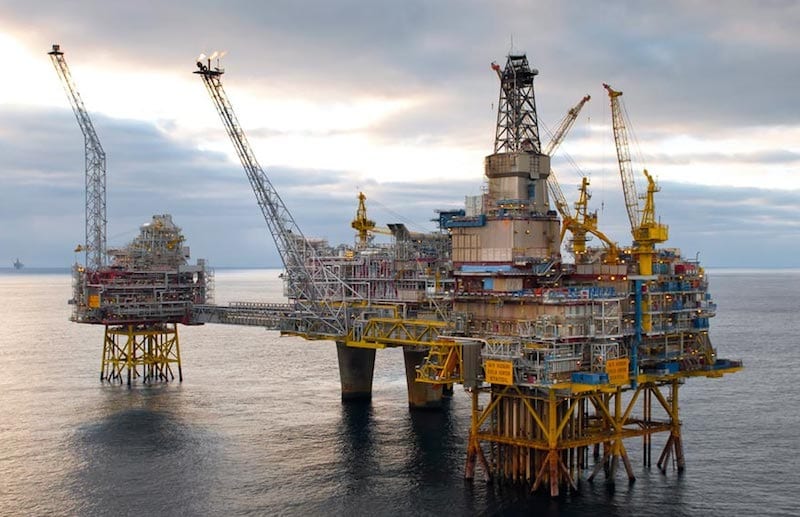
The Nigerian Upstream Petroleum Regulatory Commission (NUPRC) has announced the commencement of the 2025 Licensing Round, effective December 1.

The commission’s chief executive, Mr Gbenga Komolafe, made the announcement at the NUPRC’s Project 1MMBOPD Additional Production Investment Forum in London on Tuesday.

In a statement issued today, the NUPRC Head of Media and Strategic Communication, Mr Eniola Akinkuotu, quoted Mr Komolafe as saying the announcement followed the approval of President Bola Tinubu, who also serves as the Minister of Petroleum Resources, in accordance with the Petroleum Industry Act.

“We are announcing that we are ready, following the approval of the Minister of Petroleum Resources in line with the Petroleum Industry Act, to commence the 2025 Licensing Round beginning from December 1, 2025,” he said.

The 2025 Licensing Round is aimed at unlocking Nigeria’s undeveloped and fallow oil and gas fields, with a particular focus on gas assets.

Earlier, Business Post reported that there were expectations that fresh licensing would add 1.7 million barrels and 7.7 trillion cubic feet of gas from 43 Field Development Plans (FDPs).

According to Mr Komolafe, the initiative seeks to accelerate upstream production and bring previously discovered but unexploited fields into commercial operation.

Licensing rounds have been a key feature of Nigeria’s upstream sector for decades. Major rounds were conducted in 2000, 2005 and 2007, while the 2010s saw smaller, targeted rounds for marginal fields and deepwater assets.

These exercises were designed to attract investors and stimulate production, although some blocks awarded in earlier rounds stalled due to technical, financial or regulatory challenges.

The NUPRC is expected to publish detailed guidelines, including the list of blocks on offer, pre-qualification requirements, and submission timelines, ahead of the licensing round to ensure transparency and clarity for all prospective investors.


Adedapo Adesanya is a journalist, polymath, and connoisseur of everything art. When he is not writing, he has his nose buried in one of the many books or articles he has bookmarked or simply listening to good music with a bottle of beer or wine. He supports the greatest club in the world, Manchester United F.C.

Advertisement
Click to comment

Leave a Reply

Your email address will not be published. Required fields are marked *

Economy

NASD Unlisted Securities Index Falls 0.23% to 4,100.11 Points

Published

on

unlisted securities index

By Adedapo Adesanya

The NASD Over-the-Counter (OTC) Securities Exchange further declined by 0.23 per cent, with the Unlisted Security Index (NSI) down by 9.63 points on Tuesday, March 31, to 4,100.11 points from 4,109.74 points.

In the same vein, the market capitalisation went down by N5.76 billion to finish at N2.453 trillion from the N2.458 trillion it closed a day earlier.

The mood of the market was flat yesterday as there were three price losers and three price gainers, led by Central Securities Clearing System (CSCS) Plc, which gained N1.51 to sell at N78.68 per unit compared with the previous day’s N77.17 per unit. UBN Property Plc appreciated by 15 Kobo to N2.20 per share from N2.05 per share, and Geo-Fluids Plc improved by 3 Kobo to N3.25 per unit from N3.22 per unit.

On the flip side, 11 Plc lost N31.05 to close at N285.00 per share versus Monday’s closing price of N316.50 per share, FrieslandCampina Wamco Nigeria Plc dropped 95 Kobo to trade at N98.05 per unit versus N99.00 per unit, and Industrial and General Insurance (IGI) Plc went down by 2 Kobo to 52 Kobo per share from 57 Kobo per share.

During the trading day, the volume of securities jumped by 137.9 per cent to 50.8 million units from 21.3 million units, the number of deals rose 28.9 per cent to 49 deals from the preceding session’s 38 deals, while the value of securities went down by 65.2 per cent to N226.9 million from N651.1 million.

CSCS Plc remained the most traded stock by value (year-to-date) with 56.8 million units worth N3.8 billion, followed by Okitipupa Plc with 27.5 million units valued at N1.8 billion, and Infrastructure Guarantee Credit Plc with 400 million units traded for N1.2 billion.

Resourcery Plc was the most traded stock by volume (year-to-date) with 1.1 billion units sold for N415.7 million, followed by Infrastructure Guarantee Credit Plc with 400 million units transacted for N1.2 billion, and Geo-Fluids Plc with 183.0 million units exchanged for N673.8 million.

Continue Reading

Economy

Naira Weakens 0.23% to N1,386/$1 at Official Market

Published

on

old Naira notes

By Adedapo Adesanya

The Naira weakened against the US Dollar in the Nigerian Autonomous Foreign Exchange Market (NAFEX) on Tuesday, March 31, by 0.23 per cent or N3.14 to N1,386.72/$1 from the N1,383.58/$1 it was traded on Monday.

Similarly, the Nigerian currency depreciated against the Pound Sterling in the same market window by N14.40 to close at N1,839.34/£1 compared with the previous day’s N1,824.94/£1, and against the Euro, it lost N12.88 to settle at N1,599.16/€1 versus N1,586.28/€1.

In the same vein, the Naira stumbled against the Dollar yesterday by N1 to quote at N1,395/$1 versus N1,394/$1, and in the black market, it remained unchanged at N1,410/$1.

The Naira remains under pressure as FX liquidity shrank, as evidenced by the number of interbank FX deals published by the Central Bank of Nigeria (CBN).

Last week, forex intervention operations saw the apex bank inject $95 million into the supply side, but as high demand for the Dollar as a safe-haven asset continues, it strengthened the Dollar index, while the Euro, British Pound and other major trading partners weakened.

The country’s external reserves recorded a marginal decline, falling by 0.7 per cent to $49.48 billion, reflecting a depletion of about $350 million and signalling continued pressure on Nigeria’s FX buffer.

In the cryptocurrency market, reports of comments by Iran’s President Masoud Pezeshkian hinted at eased geopolitical tensions, which triggered gains across some assets.

Mr Pezeshkian reportedly signalled Iran would be willing to end the conflict in exchange for security guarantees, raising hopes for a diplomatic off-ramp and reducing fears of a wider regional war.

Ethereum (ETH) gained 4.4 per cent to trade at $2,150.11, Ripple (XRP) jumped 2.8 per cent to $1.36, Bitcoin (BTC) added 2.5 per cent to sell at $69,079.14, Cardano (ADA) which also rose by 2.5 per cent to $0.2518, Dogecoin (DOGE) improved by 2.4 per cent to $0.0941, Solana (SOL) grew by 1.3 per cent to $84.43, and Binance Coin (BNB) increased by 1.2 per cent to $618.86, while TRON (TRX) dipped 1.8 per cent to $0.3153, with the US Dollar Tether (USDT) and the US Dollar Coin (USDC) flat at $1.00 apiece.

Continue Reading

Economy

Oil Market Dips 3% on Signals Iran Ready to End War

Published

on

global oil market

By Adedapo Adesanya

The oil market was down more than $3 on Tuesday following reports that Iran’s president said the country was ready to end the war that has affected the global markets.

Brent crude depreciated by $3.42 to $103.97 per barrel, while the US West Texas Intermediate (WTI) crude lost $1.50 or 1.46 per cent to trade at $101.38 per barrel.

For Brent, it has steadily risen over the ​last four weeks as the Iran war has escalated, with attacks across energy infrastructure throughout the Gulf that have resulted in the worst-ever oil-and-gas supply disruption.

However, on Tuesday, Iran’s president, Mr Masoud Pezeshkian, suggested the Islamic Republic is open to ending the war if certain conditions are met.

“We possess the necessary will to end this conflict, provided that essential conditions are met, especially the guarantees required to prevent repetition of the aggression,” Mr Pezeshkian said in a phone conversation with the president of the European Council, according to a statement from his office.

The comments followed that of US Secretary of Defence Pete Hegseth, who said that the next days of the Iran war will be “decisive” while refusing to rule out US ground forces playing a role in the conflict.

In March, the market moved up and down each time US President Donald Trump ​suggested the military operation may be de-escalated – only to resume its upward path due to the supply impairment caused by Iran’s threats against vessels transiting the key Strait of Hormuz, the artery used to ​ship one-fifth of the world’s oil and gas.

Iran’s Islamic Revolutionary Guard Corps (IRGC) is only allowing vessels flying flags of “friendly” countries to transit, as traffic through the Strait of Hormuz has collapsed from more than 100 ships transiting every day to fewer than 10 per day, most of which are with critical supplies bound for China, India, and Pakistan.

President Trump has suggested other countries should intervene to open the strait, a move European nations have not wanted to take until hostilities cease.

Meanwhile, the US has removed sanctions on barrels from Russia and pledged reserve ‌releases with ⁠a group of other nations, but those measures will only offset the supply loss for a limited period of time.

The American Petroleum Institute (API) estimated that crude oil inventories in the US rose by a staggering 10.263 million barrels in the week ending March 27. Official data from the US Energy Information Administration (EIA) will be released later on Wednesday.

Continue Reading

Trending