Connect with us

Feature/OPED

The Saraki Led Senate: A Midterm Assessment

Published

on

By Omoshola Deji

The Nigerian legislative arm of government, comprising the Senate and the House of Representatives, is rarely in the good books of the public. No congregation of legislators in Nigeria has arguably suffered public condemnation like the 8th Senate. Some learned figures and media commentators at a point moved beyond reproach to demand the scrap of the Senate. They question the significance of debated bills, the running costs of bicameralism, the motives behind oversight functions and brand legislative summons as vendetta. Right on time, this trending doubt on the necessity and the credibility of the Senate amplifies the need for an assessment of its accomplishments and shortcomings.

The Nigerian Senate is largely a gathering of prominent, but inefficient persons. Majority of the legislators are ex-occupiers of vital public positions, but virtually none of them has a distinct record of public service. The Senate seems to be the most preferred retiring ground for power-addicted ex-governors, ex-military officers, ex-party chairmen, political juggernauts, industrialists and the stupendously wealthy. Aside that these bigwigs have done almost nothing to better the lot of the have-nots in their communities, not to mention constituency, most of them are enmeshed in controversies, scandals and allegations of monumental corruption.

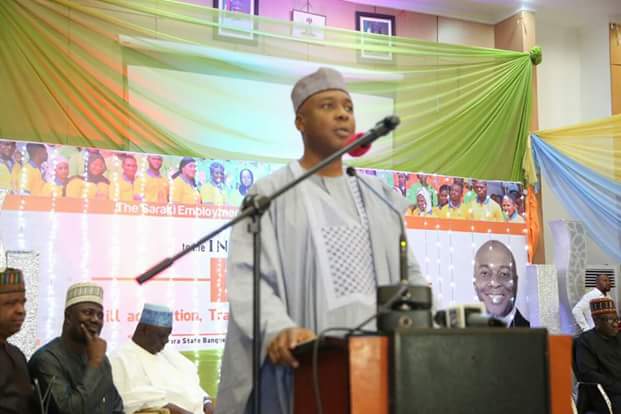
The Senate President is standing trial for false asset declaration at the Code of Conduct Tribunal. Change is indeed here! A foremost figure of the ruling party and chief lawmaker is facing the law. Apparently, Saraki’s ordeal is twisted in twists. Only a member of the ruling inner caucus can affirm whether Saraki prosecution is genuinely based on alleged infractions or he is being persecuted for orchestrating a political coup against his party to emerge Senate President. Either ways, Saraki’s integrity to hold public office has been badly tainted; he is broadly considered a symbol of corruption.

Undeterred, Saraki has resolutely fought to remain the Senate president. The unalloyed support of a substantial number of the senators remains his shield and armor. The pro-Saraki senators have ruthlessly relegated their anti-Saraki counterparts to benchwarmer. Since the presidency is unwilling to smokescreen corrupt conducts, the pro-Saraki senators have played a no-friend no-foe game in the discharge of their oversight duties. They swiftly draw attention to the flaws of the Presidency and publicize investigation findings.

One of such findings that remains a key accomplishment of the Senate is that of her committee on the Mounting Humanitarian Crisis in the North East. The Shehu Sani led committee unraveled the alleged corrupt practices of Babachir Lawal, the suspended Secretary to the Government of the Federation (SGF). Babachir was indicted of awarding N233million invasive-plant-species (grass) clearing contract to firms he has strong stakes in. Presenting a temporary report at plenary, Shehu Sani throw up mindboggling evidences that Babachir received kickbacks of over N200 million into the account of Rholavision Nigeria Limited – a firm he co-founded and remains an account signatory. Upon concluding the investigation, Sani lamented during plenary that Babachir actually misappropriated over N500 million. Impenitently, Babachir’s arrogance and pronouncement that the senators are “talking balderdash” triggered the Senate’s determination that justice must take its course. Their persistence largely led to the suspension and ongoing investigation of Babachir.

Anyone proclaiming there’s nothing good about the Senate is merely tendering a malicious criticism. The 8th Senate just passed the first out of the three-part Petroleum Industry Bill. The Senate is worth commending for passing a 17year old bill that outlived the 5th, 6th and 7th Senate. Aside that, the Senate has shown commitment towards ensuring transparency and equality in the operations of government agencies. The Senate has mandated its committee to investigate the lopsided DSS recruitment that mainly favored some northern states. Instead of the allocated five slot per state, 51 persons were recruited from Katsina, the home state of President Buhari and the DSS Director-General, Lawal Daura.

It could also be recalled that the Senate compelled the Customs Comptroller General, Hameed Ali, to stay action on the plan to collect import duties from vehicle users across the country. Worth commending, you and I would have been paying for customs inefficiency, if the Senate didn’t condemn Ali’s obnoxious policy. Nonetheless, customs officers are using the policy to extort the public without authorization. The Senate is also challenging the electricity distribution companies over high electricity tariffs and inefficient service delivery. Efforts are being made to ensure metering determines actual consumption. When this is fully effected, the astronomical monthly billing termed ‘cost reflective tariff’ would be abolished.

On financial issues, it would be flattery to label the senators prudent, but their rejection of Buhari’s request to borrow $29.960 billion abroad is worthy of applaud. Although the loan is supposedly meant to finance the provision of key infrastructures across the country, it is ludicrous to borrow for infrastructures that cannot generate enough funds to repay the debt. Besides, Buhari’s health challenges would have paved way for his aides to squander and embezzle a significant portion of the loan. If not for the resistance of the Senate, our unborn generation would have been plunged into slavery. The burden of the soft-looking, but hard to fulfill loan conditions would force them to follow the dependency economic dictates of the western nations. Not again! Nigeria is yet to recover from the afflictions of Ibrahim Babangida’s Structural Adjustment Program (SAP).

Startlingly, the senators shielding Nigeria from the bondage of foreign loans are enchaining Nigerians with their insatiable greed and unscrupulousness. They earn humongous salary and allowances to deprive the masses comfort. Their prodigal pay is nearly 200 times the nation’s GDP per capita and 10,000 times the minimum wage. While many Nigerians sleep hungry, the legislatures allotted themselves a whopping N13 billion for refreshment, travels and welfare in the 2017 budget. Still not contended, they corruptly enrich themselves via constituency project allocations and budget padding. Sadly, the amenities in their constituencies are either dilapidated, unmanaged or non-existing. In a time of recession when the price of commodities has doubled, the Senate’s budget increased while the minimum wage remains unchanged.

Resigning to fate cannot bring us change! If relentless protest can force the legislators to publish their hidden budget, then we all must remonstrate till the senator’s lack of conscience seize to fuel our inconvenience. Despite been sufficiently remunerated, most of the senators don’t attend sittings regularly. Many just attend as observers – nothing to contribute. In fact, the contributions of the vocal lawmakers are often below what is expected of a senator. Unfortunately, the below-average intelligence quotient of most of the senators affects the thinking of the chamber and the quality of motions presented.

Be that as it may, the Senate has protected democracy by condemning coup intents and embracing electoral reforms. The lawmakers ensured no state is denied representation by compelling the Independent National Electoral Commission (INEC) to conclude the legislative elections in Rivers state. A day after the senators threatened to suspend sittings till every state is properly represented, INEC swiftly scheduled dates for the conclusion of virtually all non-concluded elections. While the senators must be commended for entrenching democracy, they have ceased to walk the talk.

The same cabal of senators that condemned Rivers de-representation are currently denying Borno South representation via the suspension of Ali Ndume – an estranged ally of Saraki. Ndume bagged a six month suspension for bringing unproved allegations of certificate forgery against Dino Melaye and the avenging of seized bulletproof Range Rover against Saraki. Despite pleas from the Borno state governor, elders and traditional rulers, the Senate has refused to lift Ndume’s suspension. Evidently, the suspension of Ndume is to wholly dissipate the mutinous moves of the anti-Saraki senators.

The Saraki cabal has also proven to be proficient in facilitating the rejection of any bill or nomination they interpret as a threat to their interest. This made many predict the rejection of Ibrahim Magu as the chairman of the Economic and Financial Crimes Commission (EFCC). Magu’s rejection is a tale of many tails. President Muhammadu Buhari (PMB) crushed Magu by allowing him act for too long. Unfortunately, the DSS – an agency under PMB – helped the Senate nail Magu by submitting and resubmitting damning reports against him. To be candid, the Senate would have ridiculed itself if Magu was confirmed the EFCC chairman with such an indicting report.

Even if the DSS had cleared Magu, the rejection or confirmation of nominations is absolutely the discretion of the Senate. No law says anyone presented to the Senate must be confirmed. Nevertheless, it was quite obvious that the senators used their constitutional power to avert the imminent imprisonment of their corrupt colleagues. In truth, most individuals castigating the senators wouldn’t have scored a ruinous own-goal in such circumstance.

Nigerians insistence on Magu shows our level of retrograde. In a nation of over 150million population, it is depressing to see people fuming as if all that is needed to end corruption is Magu. In an ideal world, a hundred of better Magu should be readily available to replace a rejected Magu. Sadly, Nigeria has been – and still prefers to be – building strong individuals rather than building strong institutions.

The Senate is as guilty as the Presidency. Deliberations on the passage of the 2017 budget ceased upon Senator Dajuma Goje’s outburst that police raid his home and confiscated budget documents. In a show of legislative infamy, the Senate backed Goje by insisting that budget scrutiny can’t proceed until the police release his belongings. What a strategic way of blackmailing the police! Are other members of the Appropriation Committee not having copies of the documents in Goje’s possession? Could the institutional arrangements in the Senate be so weak that Goje-is-budget and budget-is-Goje? Apparently, shielding Goje from criminal investigation appears more important to Saraki than national welfare.

Dilemma is when the undesirable becomes the unavoidable. The executive and the ruling party are ostensibly not comfortable with Saraki, but the Senate he leads is pivotal to the success of this administration. The presidency and the legislature must work together on policies that can move Nigeria forward. Any am-not-wanted feeling will further make Saraki a friendly serpent. In plain sight, the commendable efforts of the Senate has been largely misinterpreted or unappreciated due to a public perception that the legislators are not progressives.

Nevertheless, the senators are always anti-people whenever their interest collides with public interest. Saraki is helpless in this regard. He must align with the majority, else he would be uprooted. It is obvious Saraki cannot afford to lose. He would rather associate with any available protective force than face mutiny or conviction at the Code of Conduct Tribunal. If he loses in court, unlike Obasanjo, his own episode would be from power to prison.

Omoshola Deji is a political and public affairs analyst. He wrote in via [email protected]

Modupe Gbadeyanka is a fast-rising journalist with Business Post Nigeria. Her passion for journalism is amazing. She is willing to learn more with a view to becoming one of the best pen-pushers in Nigeria. Her role models are the duo of CNN's Richard Quest and Christiane Amanpour.

Feature/OPED

AU Must Reform into an Institution Africa Needs

Published

on

African Union AU Active Collaboration

By Mike Omuodo

From an online post, a commentator asked an intriguing question: “If the African Union (AU) cannot create a single currency, a unified military, or a common passport, then what exactly is this union about?”.

The comment section went wild, with some commentators saying that AU no longer serves the interest of the African people, but rather the interests of the West and individual nations with greedy interests in Africa’s resources. Some even said jokingly that it should be renamed “Western Union”.

But seriously, how has a country like France managed to maintain an economic leverage over 14 African states through its CFA Franc system, yet the continent is unable to create its own single currency regime? Why does the continent seem to be comfortable with global powers establishing their military bases throughout its territories yet doesn’t seem interested in establishing its own unified military? Why does the idea of an open borders freak out our leaders, driving them to hide under sovereignty?

These questions interrogate AU’s relevance in the ensuing geopolitics. No doubt, the AU is still relevant as it still speaks on behalf of Africa on global platforms as a symbol of the continent’s unity. But the unease surrounding it is justified because symbolism is no longer enough.

In a continent grappling with persistent conflict, economic fragmentation, and democratic reversals, institutions are judged not by their presence, but by their impact.

From the chat, and several other discussion groups on social media, most Africans are unhappy with the performance of the African Union so far. To many, the organization is out of touch with reality and they are now calling for an immediate reset.

To them, AU is a club of cabals, whose main achievements have been safeguarding fellow felons.

One commentator said, “AU’s main job is to congratulate dictators who kill their citizens to retain power through rigged elections.” Another said, “AU is a bunch of atrophied rulers dancing on the graves of their citizens, looting resources from their people to stash in foreign countries.”

These views may sound harsh, but are a good measure of how people perceive the organization across the continent.

Blurring vision

The African Union, which was established in July 2002 to succeed the OAU, was born out of an ambitious vision of uniting the continent toward self-reliance by driving economic Integration, enhancing peace and security, prompting good governance and, representing the continent on the global stage – following the end of colonialism.

Over time, however, the gap between this vision and the reality on the ground has widened. AU appears helpless to address the growing conflicts across the continent – from unrelenting coups to shambolic elections to external aggression.

This chronic weakness has slowly eroded public confidence in the organization and as such, AU is being seen as a forum for speeches rather than solutions – just as one commentator puts it, “AU has turned into a farce talk shop that cannot back or bite.”

Call for a new body

The general feeling on the ground is that AU is stagnant and has nothing much to show for the 60+ years of its existence (from the times of OAU). It’s also viewed as toothless and subservient to the whims of its ‘masters’.  Some commentators even called for its dissolution and the formation of a new body that would serve the interests of the continent and its people.

This sounds like a no-confidence vote. To regain favour and remain a force for continental good, AU must undertake critical reforms, enhance accountability, and show political courage as a matter of urgency. Without these, it may endure in form while fading in substance.

The question is not whether Africa needs the AU, but whether the AU is willing and ready to become the institution Africa needs – one that is bold enough to initiate a daring move towards a common market, a single currency, a unified military, and a common passport regime. It is possible!

Mr Omuodo is a pan-African Public Relations and Communications expert based in Nairobi, Kenya. He can be reached on [email protected]

Continue Reading

Feature/OPED

Recapitalisation: Silent Layoffs, Infrastructure Deficit Threat to $1trn Economy

Published

on

cbn gov. banks recapitalisation

By Blaise Udunze

The Central Bank of Nigeria’s recapitalisation exercise, which is scheduled for a March 31, 2026, deadline, has continued to reignite optimism across financial markets and is designed to build stronger, more resilient banks capable of financing a $1 trillion economy. With the ongoing exercise, the industry has been witnessing bank valuations rising, investors are enthusiastic, and balance sheets are swelling. However, beneath these encouraging headline numbers, unbeknownst to many, or perhaps some troubling aspects that the industry players have chosen not to talk about, are the human cost of consolidation and the infrastructure deficit.

Recapitalisation often leads to mergers and acquisitions. Mergers, in turn, almost always lead to job rationalisation. In Nigeria’s case, this process is unfolding against an already fragile labour structure in the banking industry, one where casualisation has become the dominant employment model.

One alarming fact in the Nigerian banking sector is the age-old workforce structure raised by the Association of Senior Staff of Banks, Insurance and Financial Institutions (ASSBIFI), which says that an estimated 60 percent of operational bank workers today are contract staff. This reality raises profound questions about the sustainability of Nigeria’s banking reforms and the credibility of its economic ambitions.

A $1 trillion economy cannot be built on insecure labour, shrinking institutional knowledge, and an overstretched financial workforce.

Recapitalisation and the Hidden Merger Trap

History is instructive. Referencing Nigeria’s 2004-2005 banking consolidation exercise, which reduced the number of banks from 89 to 25, and no doubt, it produced larger institutions, while it also triggered widespread job losses, branch closures, and a wave of outsourcing that permanently altered employment relations in the sector. The current recapitalisation push risks repeating that cycle, only this time within a far more complex economic environment marked by inflation, currency volatility, and rising unemployment.

Mergers promise efficiency, but efficiency often comes at the expense of people. Speaking of this, duplicate roles are eliminated, technology replaces frontline staff, and non-core functions are outsourced. The troubling part of it is that this is already a system reliant on contract labour; mergers could accelerate workforce instability, turning banks into balance-sheet-heavy institutions with shallow human capital depth.

ASSBIFI’s warning is therefore not a labour agitation; it is a macroeconomic red flag.

Casualisation as Structural Weakness, Not a Cost Strategy

It has been postulated by proponents of job casualisation that it is a cost-control mechanism necessary for competitiveness. Contrary to this argument, evidence increasingly shows that it is a false economy. In reaction to this, ASSBIFI President Olusoji Oluwole, who kicked against this structural weakness, asserted that excessive reliance on contract workers undermines job security, suppresses wages, limits access to benefits and blocks career progression while affirming that over time, this erodes morale, loyalty, and productivity.

More troubling are the systemic risks. Casualisation creates operational vulnerabilities, higher fraud exposure, weaker compliance culture, and lower institutional memory.

One of the banking regulators, the Nigeria Deposit Insurance Corporation (NDIC), has not desisted from repeatedly cautioning that excessive outsourcing and short-term staffing models increase security risks within banks. On the negative implications, when employees feel disposable, ethical commitment weakens, and reputational risk grows.

Banking is not a factory floor. It is a trust business. And trust does not thrive in insecurity.

Inside Outsourcing Web of Conflict of Interest

Beyond cost efficiency, Nigeria’s casualisation crisis is also fuelled by a deeper governance problem, conflicts of interest embedded within the outsourcing ecosystem.

In many cases, bank chief executives and executive directors are reported to own, control, or have beneficial interests in outsourcing companies that provide services to their own banks. Invariably, it is the same firms supplying contract staff, cleaners, security personnel, call-centre agents, and even IT support. Structurally, this arrangement allows senior executives to profit directly from the same outsourcing model that strips workers of job security and benefits.

The incentive is clear. Outsourcing enables banks to maintain lean payrolls, bypass strict labour protections associated with permanent employment, and reduce long-term obligations such as pensions and healthcare. But when those designing outsourcing strategies are also financially benefiting from them, the line between efficiency and exploitation disappears.

This model entrenches casualisation not as a temporary adjustment tool, but as a permanent business strategy, one that externalises social costs while internalising private gains.

Exploitation and Its Systemic Consequences

The human impact is severe because the contract staff employed through executive-linked outsourcing firms often face poor working conditions, low wages, limited or no health insurance, and zero job security, which is demotivating. Many perform the same functions as permanent staff but without benefits, voice, or career prospects.

ASSBIFI has warned that prolonged exposure to such insecurity leads to psychological stress, declining morale, and reduced productive life years. Studies on Nigeria’s banking sector confirm that casualisation weakens employee commitment and heightens anxiety, conditions that directly undermine service quality and operational integrity.

From a systemic standpoint, exploitation feeds fragility. High staff turnover erodes institutional memory. Disengaged workers weaken internal controls. Meanwhile, this should be a sector where trust, confidentiality, and compliance are paramount; this is a dangerous trade-off if it must be acknowledged for what it is.

Why Workforce Numbers Tell a Deeper Story

It is in record that as of 2025, Nigeria’s banking sector employs an estimated 90,500 workers, up from roughly 80,000 in 2021. The top five banks today, such as Zenith, Access Holdings, UBA, GTCO, and Stanbic IBTC, account for about 39,900 employees, reflecting moderate growth driven by digital expansion and regional operations.

At face value, truly, these figures suggest resilience. But when viewed alongside the 60 percent casualisation rate, they paint a different picture, revealing that employment growth is without employment quality. A workforce dominated by contract staff lacks the stability required to support long-term credit expansion, infrastructure financing, and industrial transformation.

This matters because banks are expected to be the engine room of Nigeria’s $1 trillion economy, funding roads, power plants, refineries, manufacturing hubs, and digital infrastructure. Weak labour foundations will eventually translate into weak execution capacity.

Nigeria’s Infrastructure Financing Contradiction

Nigeria’s infrastructure deficit is estimated in the hundreds of billions of dollars. Power, transport, housing, and broadband require long-term financing structures, sophisticated risk management, and deep sectoral expertise. Yet recapitalisation-induced mergers often lead to talent loss in precisely these areas.

As banks consolidate, specialist teams are downsized, project finance units are merged, and experienced professionals exit the system, either voluntarily or through redundancy. Casual staff, by design, are rarely trained for complex, long-term infrastructure deals. The result is a contradiction, revealing that larger banks have bigger capital bases but thinner technical capacity.

Without deliberate workforce protection and skills development, recapitalisation may produce banks that are too big to fail, but too hollow to build.

South Africa Offers a Useful Contrast

South Africa offers a revealing counterpoint. As of 2025, the country’s “big five” banks, such as Standard Bank, FNB, ABSA, Nedbank, and Capitec, employ approximately 136,600 workers within South Africa and about 184,000 globally. This is significantly higher than Nigeria’s banking workforce, despite South Africa having a smaller population.

More importantly, South African banks maintain a far higher proportion of permanent staff. While outsourcing exists, core banking operations remain firmly institutionalized compared to the Nigerian banking system. For this reason, South Africa’s career progression pathways are clearer, labour regulations are more robustly enforced, and unions play a more structured role in workforce negotiations.

The result is evident in outcomes. South Africa’s top six banks are collectively valued at over $70 billion, with Standard Bank alone boasting a market capitalisation of approximately $30 billion and total assets nearing $192 billion. Nigeria’s top 10 banks, by contrast, held combined assets of about $142 billion as of early 2025, even with a much larger population and economy, and its 13 listed banks reached a combined market capitalisation of about N17 trillion ($11.76 billion at an exchange rate of N1,445) in 2026.

Though this gap is not just about capital. It is about institutional depth, workforce stability, and governance maturity.

Bigger Valuations, But a Weaker Foundations?

Nigeria’s 13 listed banks reached a combined market capitalisation of about N17 trillion in 2026. It is no surprise, as it is buoyed by investor anticipation of recapitalisation and higher capital thresholds. Yet market value does not automatically translate into economic impact. Without parallel investment in people, systems, and long-term skills, valuation gains remain fragile.

South Africa’s experience shows that strong banks are built not only on capital adequacy, but on human capital adequacy. Skilled, secure workers are better risk managers, better innovators, and better custodians of public trust.

Labour Law and its Regulatory Blind Spots

ASSBIFI’s call for a review of Nigeria’s Labour Act is timely, and this is because the current framework lags modern employment realities, particularly in sectors like banking, where technology and outsourcing have blurred traditional employment lines. Regulatory silence has effectively legitimised casualisation as a default model rather than an exception.

The Central Bank of Nigeria cannot afford to treat workforce issues as outside its mandate. Prudential stability is inseparable from labour stability. Regulators must begin to view excessive casualisation as a risk factor, just like liquidity mismatches or weak capital quality.

Recapitalisation Without Inclusion Is Incomplete

If recapitalisation is to succeed, it must be inclusive; therefore, the industry must witness the enforcement of career path frameworks for contract staff, limiting the proportion of outsourced core banking roles, and aligning capital reforms with employment protection. It also means recognising that labour insecurity ultimately feeds systemic fragility.

South Africa’s banking sector did not avoid consolidation, but it managed it alongside workforce safeguards and institutional continuity. Nigeria must do the same or risk building banks that look strong on paper but crack under economic pressure.

True Measure of Reform

Judging by the past reform in 2004-2005, it has shown that Nigeria’s banking recapitalisation will be judged not by the size of balance sheets, but by the resilience of the institutions it produces. As part of the recapitalisation target for more resilient banks capable of financing a $1 trillion economy, it demands banks that can think long-term, absorb shocks, finance infrastructure, and uphold trust. None of these goals is compatible with a workforce trapped in perpetual insecurity.

Casualisation is no longer a labour issue; it is a national economic risk. If mergers proceed without deliberate workforce stabilisation, Nigeria may end up with fewer banks, fewer jobs, weaker institutions, and a slower path to prosperity.

The lesson from South Africa is clear, as it shows that strong banks are built by strong people. Until Nigeria’s banking reforms fully embrace that truth and the missing pieces are addressed, recapitalisation will remain an unfinished project. and the $1 trillion economy, an elusive promise.

Blaise, a journalist and PR professional, writes from Lagos, can be reached via: [email protected]

Continue Reading

Feature/OPED

In Nigeria… One Day Monkey Go Go Market

Published

on

Monkey Go Go Market

By Prince Charles Dickson PhD

In Nigeria, the road has become a stage where power performs its most absurd theatre. The siren—once a tool of emergency—now plays the soundtrack of ego. The convoys, longer than a bride’s procession, louder than a market quarrel, move through our streets like small invading armies. And every time that blaring, violent sound slices through the air, a simple truth echoes behind it: one day monkey go go market… and e no go return.

Because power, especially Nigerian power, has a short memory. And even shorter patience.

These leaders who move as though the sun itself must pause when they pass were once ordinary Nigerians. They once queued at bus stops, once waited under the rain for taxis, once navigated potholed streets with the same caution as every other citizen trying not to die by negligence. But somewhere between election and inauguration, ambition and arrogance, something snapped. Their feet left the ground. Their humanity blurred. And their ears, now accustomed to sirens; forgot how silence feels.

The bizarre culture of convoys in Nigeria has metastasized into something theatrical, violent, and deeply offensive. What began as protocol has become performance. Sirens scream not just to clear the road, but to announce hierarchy. Vehicles speed not just to meet schedules but to demonstrate superiority. And the citizens, the people in whose name this power is supposedly held, scatter like startled chickens. Or worse, end up dead under tires that never brake.

The irony is painful. The same leaders who demand absolute obedience from citizens once walked among those same citizens unnoticed. Once upon a time they lived without outriders, without black-tinted SUVs, without pickup vans carrying heavily armed security men who point guns at commuters as though Lagos traffic is a battlefield. They were once people. Now they behave like a species apart.

But the road remembers. The people remember. And power always forgets that it is a tenant, never a landlord.

Escorts in Nigeria don’t just move with urgency; they move with intimidation. They shove, push, threaten, and roar through roads where ordinary Nigerians are merely trying to survive the day. The siren becomes a weapon, the convoy a declaration of dominance. The message is clear: “Your life must move aside. My importance is passing.”

In what country should this be normal?

Even emergency vehicles; ambulances carrying dying patients, fire trucks racing to burning buildings, sometimes cannot pass because a government official’s convoy has occupied the road with the entitlement of royalty.

This isn’t governance; it’s theater of the absurd.

And the casualties are not metaphorical. Nigerians have died—pregnant women hit by convoys, okada riders knocked off the road, children flung away like debris. Drivers in these convoys behave like warhorses let loose, sworn not to slow down regardless of what or who is ahead.

But who will hold them accountable? Who dares question power that sees questions as disrespect and disrespect as rebellion?

The institutions meant to regulate these excesses are the same institutions that created them. Protocol offices treat speed like divinity. Security details mistake aggression for duty. Schedules are treated as holy commandments. Every meeting becomes urgent. Every movement becomes life-or-death. Every road must clear.

But the truth sits quietly behind all this noise: no meeting is that important, no leader is that indispensable, and no road should require blood to make way.

Somewhere, a child grows up believing public office means public intimidation. A young man sees the behavior of convoys and dreams not of service but of dominance. A young woman imagines that leadership means never waiting in traffic like the rest of society. And so, the cycle of arrogance reproduces itself. A country becomes a laboratory where entitlement multiplies.

In Nigeria, the convoy culture reveals a deeper sickness: a leadership class that has disconnected from the lived realities of the people they claim to govern.

When did proximity to power become justification for violence?

When did schedules become more sacred than lives?

When did we normalize leaders who move like emperors, not elected representatives?

But more importantly: how do these leaders forget so quickly where they came from?

Many of them grew up in the same chaos their convoys now worsen. They once asked why leaders were insensitive. Now they have inherited the same insensitivity and advanced it.

The convoy is more than metal and noise. It is a metaphor. It illustrates how Nigerian governance often operates: pushing the people aside, demanding unquestioned obedience, prioritizing position over responsibility.

And yet, the proverb whispers:

One day monkey go go market… e no go return.

Not because we wish harm on anyone, but because history has its own logic. Power that forgets compassion eventually forgets itself. Leadership that drives recklessly, morally, politically, and literally—will one day crash against the boundaries of public patience.

This metaphor is a quiet mirror for every leader who believes their current status is divine permanence. One day, the sirens will go silent. The tinted windows will roll down. The outriders will be reassigned. The road will no longer clear itself. Reality will return like harmattan dust.

And then the question will confront them plainly:

When your power fades, what remains of your humanity?

The tragedy of Nigeria’s convoy culture is that it makes leadership look like tyranny and renders citizens powerless in their own country. It fosters a climate where ordinary people live in perpetual startle. It deepens distrust. It fuels resentment. It reinforces the perception that leadership is designed to intimidate rather than serve.

And what does it say about us as a nation that we accept this?

We accept the absurdity because we assume it cannot be overturned. We accept arrogance because we assume it is the price of power. We step aside because we assume there is no alternative.

But nations are not built on assumptions. They are built on accountability.

The temporary nature of political power should humble leaders, not inflate them. Four or eight years or whatever time they spend clinging to office cannot compare to the lifetime they will spend as private citizens once the convoys disappear.

When the noise stops, will they walk among us head high or with their face hidden?

When the sirens lose their voice, will they find their own?

What if true leadership was measured not by how loudly you move through society but by how gently you walk among the people?

Imagine a Nigeria where power travels quietly. Where convoys move with the dignity of service, not the violence of entitlement. Where leaders move with humility, not hysteria. Where the streets do not tremble at the approach of authority. Where citizens do not shrink to the roadside, waiting to survive the thunder of tinted SUVs.

It is possible. It is necessary. It begins with leaders remembering that every journey through Nigeria’s roads is a reminder of their accountability, not their dominion.

Because one day, and it will come—monkey go go market.

The convoy will stop.

The siren will fade.

The power will dissolve into yesterday.

And the road will ask the only question that matters:

While you passed through, did you honor the people… or terrorize them?

History will remember the answer.

And so will we—May Nigeria win!

Continue Reading

Trending