Connect with us

General

GenCos, NLC Trade Words Over N6.5trn Power Debt

Published

on

power sector debt

By Adedapo Adesanya

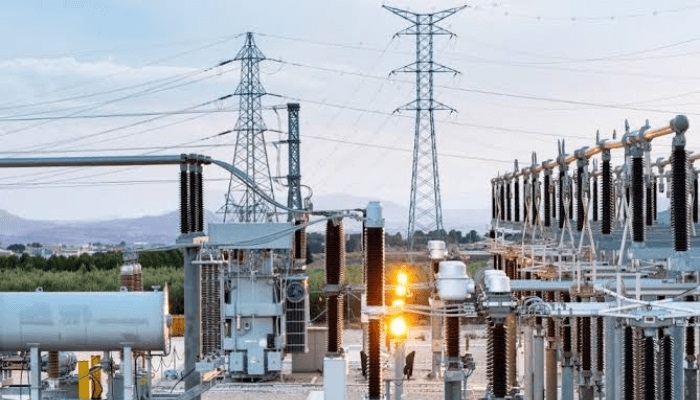
The Nigeria Labour Congress (NLC) and the Association of Power Generation Companies (APGC), an umbrella body for power generation companies (GenCos), have traded words over the N6.5 trillion in power debt.

The labour union attacked the association over the payment of the N6 trillion as well as a proposed N3 trillion federal bailout, describing the move as a “heist” and an attempt to loot public funds.

The NLC accused the power firms of attempting to transfer the burden of their operational failures to Nigerians, insisting that electricity consumers and taxpayers must not be made to pay for what it called the “collapse of a flawed privatisation model.”

In a rebuttal, the APGC has warned the NLC to stop victimising the GenCos and refuted the allegation that the power sector has “institutionalised extortion.”

The chief executive of APGC, Mrs Joy Ogaji, said the group firmly rejects the NLC’s characterisation of the sector’s challenges, adding that labelling the legitimate operations of power firms as “robbery” and a “grand deception” is a simplistic and inflammatory narrative that ignores the complex realities of the industry.

“We view these allegations, which include claims of “institutionalised extortion” and a phantom subsidy, as a misrepresentation of the facts and a disservice to the ongoing efforts to stabilise Nigeria’s electricity supply industry,” said Mrs Ogaji.

The association also strongly refutes the insinuation that the proposed government support for the sector is a clandestine plan to “settle the boys” ahead of elections.

In a statement reacting to the recent press release by the APGC, the NLC rejected allegations that it lacked the competence to speak on power sector matters, maintaining that its members work within the industry and understand its dynamics.

“We categorically reject their self-serving narrative and misleading characterisation of our position. First, the NLC stands firmly by every word of its earlier statement. The privatisation of the power sector was, and remains, a grand deception that has shortchanged the Nigerian people. The APGC’s claims of “victimisation” cannot conceal the persistent failure that has defined the sector since privatisation.

“The core issue is simple and troubling. The entire power sector assets were reportedly sold for approximately N400 billion. Yet today, GENCOs are demanding N6 trillion, while the Federal Government is said to be considering a N3 trillion bailout for companies that have not demonstrably increased generation capacity beyond pre-privatisation levels.

“This contradiction raises fundamental questions. How can assets purchased for N400 billion become the basis for a bailout running into trillions of naira? It is neither sound economics nor responsible governance to socialise losses while privatising profits. Public funds belonging to workers, pensioners, and ordinary Nigerians must not be diverted to rescue private investors from the consequences of their own operational shortcomings. We challenge the APGC to address this contradiction transparently.”

“The NLC is not a bystander in the power sector. Our members work in generation plants across the country. Our affiliate, the National Union of Electricity Employees (NUEE), operates daily within the system. The NLC played a leading role in the national debate around privatisation and consistently warned that, without proper safeguards and capacity, the exercise would fail. Those warnings appear increasingly justified.

“Regarding our reference to “settling the boys,” our position remains clear: public funds must not be used to enrich a select few under the guise of policy intervention. Nigerians deserve transparency and accountability, not opaque financial arrangements.
“In the interest of openness, we call on the APGC to publish a comprehensive list of the beneficial owners of all GENCOs and associated power assets. Nigerians have a right to know who stands to benefit from this N6 trillion demand,” parts of the statement said.

It also criticised Nigeria’s power sector privatisation for failing to significantly improve electricity generation or service delivery despite rising tariffs, questioned the lack of measurable returns and dividends to the government, raised concerns over labour rights violations, and firmly rejected the proposed N6 trillion bailout as unjustified and contrary to public interest.

Business Post reports that the federal government disclosed plans in December to raise N1.23 trillion by the first quarter (Q1) of 2026 to settle verified arrears owed to generation companies and gas suppliers. On January 27, the government said it had successfully issued a N501 billion inaugural bond under the presidential power sector debt reduction programme (PPSDRP).

However, the APGC has said that this is inadequate, comparing the debt to “garri soaked in water.”


Adedapo Adesanya is a journalist, polymath, and connoisseur of everything art. When he is not writing, he has his nose buried in one of the many books or articles he has bookmarked or simply listening to good music with a bottle of beer or wine. He supports the greatest club in the world, Manchester United F.C.

Click to comment

Leave a Reply

Your email address will not be published. Required fields are marked *

General

Kaduna Electric Vows to Prosecute Attackers of Workers

Published

on

Kaduna Electric

By Adedapo Adesanya

The management of Kaduna Electricity Distribution Company (KEDCO) has announced a sweeping crackdown on individuals who assault its staff members, warning that offenders would face prosecution and possible public exposure as incidents of violence against its workforce continue to rise.

In a statement issued on Thursday, the company expressed concern over what it described as a “disturbing surge” in attacks on its field workers and third-party partners.

It explained that the affected workers were primarily involved in meter installation, revenue collection, and maintenance of electricity infrastructure.

According to the company, the growing trend of harassment, physical assault, and even unlawful detention of its staff poses a significant threat not only to employee safety but also to the stability of electricity service delivery across its coverage areas.

According to the Discos’ Deputy Managing Director, Mr Abubakar Mohammed, the company will no longer tolerate any form of aggression against its workers.

“Let this serve as a clear warning to anyone who engages in the assault of our staff. Kaduna Electric will pursue every case to its logical conclusion,” he said.

“We will work closely with security agencies to ensure offenders are brought to justice and face the full weight of the law,” Mr Mohammed added.

He further revealed that the company plans to publicly disclose the identities of those found responsible for such attacks.

According to him, names, photographs, and other details of offenders will be published across the company’s official platforms as well as in national and local media.

“This measure is intended to ensure accountability and serve as a strong deterrent. Anyone who chooses to attack our personnel should be prepared not only to face prosecution but also public exposure,” he added.

Kaduna Electric stated that assaults on utility workers carry serious legal and financial consequences.

It also said that offenders risked criminal charges that might result in fines or imprisonment, in addition to civil liabilities such as compensation for medical treatment, psychological trauma, and lost work hours.

While condemning the attacks, the company urged customers to adopt peaceful and lawful means of resolving disputes, advising customers to channel complaints through its customer service units or relevant regulatory bodies.

The management reaffirmed its commitment to protecting its workforce and partners, stressing that a safe working environment is essential for delivering reliable and efficient electricity services.

Disagreements between electricity providers and consumers are often linked to billing disputes, metering issues, and service delivery concerns. This has worsened with recent challenges to the power supply across the country.

However, Kaduna Electric says it remains open to resolving such issues through dialogue, but insists that violence against its staff will no longer be tolerated.

Continue Reading

General

Senate Summons Ojulari, Kyari Over N210trn NNPC Audit Queries

Published

on

Bayo Ojulari Mele Kyari NNPC

By Adedapo Adesanya

The Senate, through its Committee on Public Accounts, has given the management of Nigerian National Petroleum Company (NNPC)  Limited an April 29 deadline to appear before it to account for the N210 trillion flagged in audit reports from 2017 to 2023.

The committee directed the chief executive of the state oil company, Mr Bayo Ojulari, to appear alongside his predecessor, Mr Mele Kyari, on the scheduled date unfailingly.

Also expected to appear are former Chief Financial Officer (CFO) of the firm, Mr Umar Ajia; Mr Bala Wunti and the external auditors of the national oil company.

The committee’s resolutions followed a motion moved by the senator of Imo West, Mr Osita Izunaso, and seconded by Mr Adams Oshiomhole, the senator representing Edo North.

Chairman of the committee, Mr Aliyu Wadada, said that the N210 trillion in question, as contained in the audit reports, must be fully accounted for by the company’s management.

Mr Wadada said that the explanations provided by NNPCL to the 19 audit queries were unsatisfactory, noting that Nigerians deserved clear, detailed and convincing responses.

“This committee, and by extension, the Senate, is not satisfied with the blanket explanation given by NNPCL on N103 trillion, which it claimed represents liabilities.

“Liabilities have components such as retention fees, legal fees and audit fees. Specific amounts spent on each of these components must be clearly stated and explained.

“Detailed explanations are also required for the N107 trillion, which NNPCL said was expended on joint venture cash calls as well as funds allegedly owed by some defunct banks whose identities were not disclosed.

“Consequently, it is resolved that NNPCL is given an additional two weeks to appear before this committee unfailingly.

“The deadline for compliance is Wednesday, April 29,” Mr Wadada said.

A member of the committee, Mr Abdul Ningi, had called for the invocation of the National Assembly’s powers to compel the appearance of NNPC officials, citing repeated failures to honour invitations.

“We must treat this matter with utmost seriousness. The strength of democracy rests significantly on the authority of the legislature.“Unfortunately, there appears to be a growing reluctance to honour invitations from the National Assembly, leaving members feeling helpless in enforcing compliance,” he said.

Continue Reading

General

BoI, GIZ to Drive Enterprise Growth, Boost Climate Resilience

Published

on

BoI GIZ

By Modupe Gbadeyanka

A partnership framework agreement designed to drive sustainable innovation and economic development for large enterprises, and Micro, Small and Medium Enterprises (MSMEs) sector in Nigeria has been signed by the Bank of Industry (BoI) and the German Agency for International Cooperation (GIZ).

Both parties put pen to paper on Wednesday, April 15, 2026, positioning them to mutually ensure that capacity building efforts for businesses focuses on strengthening the technical and institutional capabilities of BoI’s Business Development Service Providers (BDSPs), equipping them to deliver higher-impact advisory services to the bank’s customers; as well as enshrine a structured vocational training provided under the ICSS (Inspire, Create, Start and Scale) entrepreneurship programme to enhance productivity, workforce quality and overall business competitiveness to MSMEs.

Through this deal, there will be coordinated interventions across key strategic pillars, including access to finance, entrepreneurship development, capacity building, and market access; and integrates focused support for climate finance and renewable energy investments; and a robust alignment with global sustainability priorities that enables MSMEs to be engines of economic development.

“This partnership is about closing the gap between enterprise potential and enterprise reality. Too many Nigerian businesses, particularly MSMEs, have the ideas, the drive, and the market opportunity, but lack the financing, technical capacity, or market access needed to scale,” the chief executive of BoI, Mr Olasupo Olusi, said.

“This partnership reflects our unwavering commitment to constantly form new partnerships to strengthen the entrepreneurial ecosystem in Nigeria.

“By combining our financing expertise with our partner’s international development experience, we are building a comprehensive framework that will directly translate into jobs, innovation, affordable, long-term financing and sustainable growth for MSMEs in Nigeria,” he added.

In his remarks, the Country Director for GIZ Nigeria and ECOWAS, Mr Magnus Wagner, said, “This partnership demonstrates our joint commitments to strengthening Nigeria’s private sector and to advancing sustainable and inclusive economic growth.  Through this partnership, we aim to support small and medium enterprises.

“We are trying more to look at SME, formalised business, which is the resilient backbone of Nigeria’s economy. So, we would like to work, we have decided in areas such as climate and sustainable finance, renewable energy and energy efficiency, entrepreneurship and innovation, women’s economic empowerment, agribusiness and rural transformation, and digital trade and market access.

“We look forward to a close and successful collaboration with the Bank of Industry, one that delivers tangible results for business, communities, and the country and the population as a whole.”

Continue Reading

Trending