Economy
Oil at $85 Could Boost Nigeria’s External Balance Account—Bloomberg
By Adedapo Adesanya
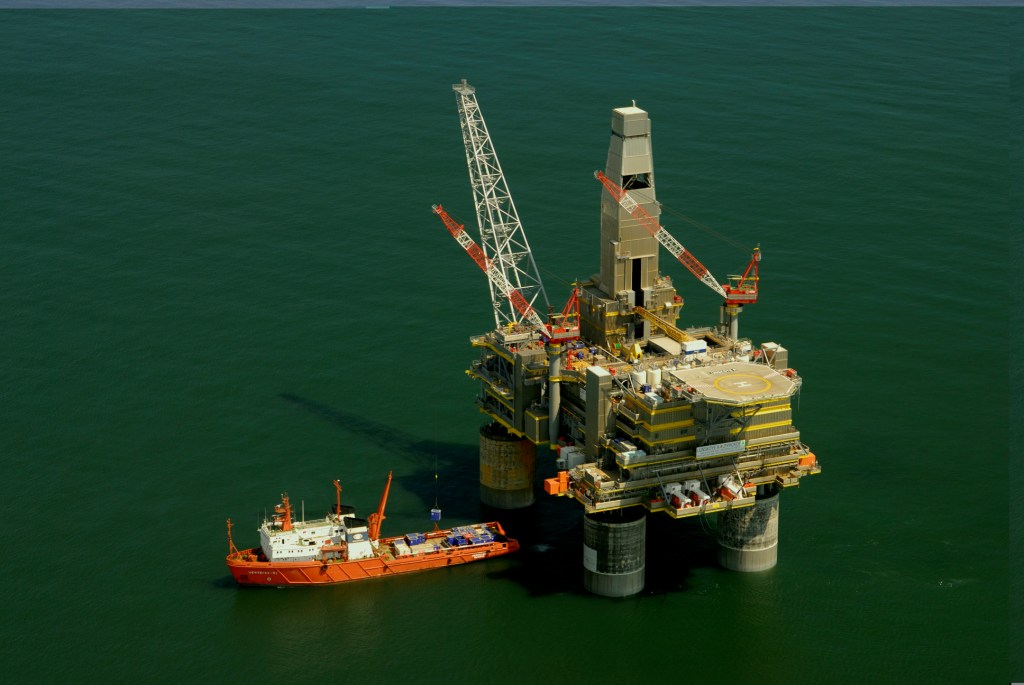
Nigeria has been identified as one of the winners of an oil windfall following the US and Israel’s war on Iran.
According to Bloomberg Economics, the rise in prices will improve the current account balance of just three sub-Saharan African economies.
Bloomberg Economics’ Ms Yvonne Mhango wrote in a report on Thursday that if oil stays at about $85 a barrel, Angola, Nigeria and Ghana will see their current account balance improve, while the Democratic Republic of Congo, South Africa and Kenya will be among the worst-hit.
“For most African economies, higher oil prices mean weaker currencies and renewed inflationary pressure, which could put rate hikes back on the table,” she said.
According to the analyst, Nigeria, which is Africa’s largest oil producer, will not only gain from crude sales but from fuel exports.
Bloomberg Economics data showed that Nigeria’s current account balance could benefit by as much as 2.3 per cent of gross domestic product (GDP), second only to Angola’s 3.3 per cent and Ghana’s 0.2 per cent.
Already, the 650,000-barrel-a-day Dangote oil refinery has raised the prospect of sending more product to Europe if the price is right.
Dangote is offering up to 44,000 metric tons of jet fuel for loading March 20-22, as well as at least 40,000 tons of gasoil with a maximum sulphur content of 50 parts per million for loading March 15-30.
However, countries like Africa’s largest economy – South Africa – may face challenges if India and Oman, two of its biggest fuel suppliers, cut down on exports. It may see a -1.0 per cent hit to its current account balance.
South African consumers are bracing for fuel costs to increase in April, according to Central Energy Fund data, while traders moved to price in a chance of an interest-rate hike later this month.
Following US and Israeli strikes on Iran over the weekend and retaliatory moves by the Islamic Republic, global crude prices have adjusted sharply.
The Strait of Hormuz, a narrow shipping lane between Iran and Oman, through which roughly a fifth of global oil supply normally passes, has been blocked completely by Iran.
As of press time, Brent crude, which Nigeria prices its crudes is trading up at 2.3 per cent at $83.23. Nigerian crude grades, Brass River and Qua Iboe, are selling at $87 per barrel.
Economy
Volume-led Revenue Growth, Others Raise Lafarge Africa’s Q1’26 PAT by 101%
By Aduragbemi Omiyale
The profit after tax (PAT) of Lafarge Africa Plc for the first quarter of 2026 more than doubled to N97.95 billion from N48.64 billion in the same period of last year.
This was largely driven by volume-led revenue growth, sustained cost discipline, and prudent financial management.
Analysis of the results filed with the Nigerian Exchange (NGX) Limited, the leading provider of innovative and sustainable building solutions noted that it improved its net sales by 35 per cent year-on-year to N334.88 billion from N248.35 per cent in the corresponding period of 2025, supported by improved volumes, enhanced plant stability, and distribution efficiency, while operating profit went up by 97 per cent to N141 billion.
According to the chief executive of Lafarge Africa, Mr Lolu Alade-Akinyemi, these numbers “reflect continued progress in executing our strategic priorities” and also “underscore our continued focus on delivering sustainable value to our shareholders.”
He stated that sustained revenue growth and continued progress on cost and efficiency initiatives were responsible for the rise in operating profit.
Mr Alade-Akinyemi noted that the company will continue to leverage the industrial and technical expertise of its partner, Huaxin Building Materials Ltd, to further enhance operations and unlock additional efficiency gains.
He stated that the company would continue to focus on disciplined capital deployment and tight cost control in its operations while unlocking opportunities aligned with its growth priorities, explaining that the company’s volume growth, evident in sustained momentum in consumer demand, resulted from easing macroeconomic pressures and reduced global supply chain disruptions.
“We anticipate continued market expansion from Nigeria’s infrastructure and construction sector demand, underpinned by improving economic fundamentals and demand across key segments.
“Within this context, we remain focused on capturing volume growth opportunities across its operating markets, while maintaining disciplined cost optimisation initiatives to safeguard margins amidst global tensions,” he said.
While expressing profound appreciation to customers and loyal stakeholders for their support, he noted that the company would continue to do its best to deliver consistent performance and long-term value to shareholders.
“Our sustainability-led growth model continues to anchor our long-term value creation agenda, supported by the effective execution of our strategic priorities and an unwavering commitment to operational excellence,” he added.
Economy
Cooking Gas Price Soars 12.6% as Nigerians Struggle to Survive
By Adedapo Adesanya
The average price of refilling a 5kg cooking gas cylinder surged 12.60 per cent in March 2026 to N7,655.73 from N6,799.18 in February 2026, according to the latest estimates by the National Bureau of Statistics (NBS).
The NBS disclosed this in its Cooking Gas Price Watch for March, released this week.
It disclosed that on a year-on-year basis, the 5kg price climbed 4.55 per cent from N7,322.49 in March 2025, as Nigerians suffer the ripple effect of the Middle East crisis.
Kaduna had the highest state price at N9,212.21, followed by Lagos at N8,909.73, and Taraba at N8,802.78, while Bauchi recorded the lowest at N6,295.40, with Osun at N6,457.35, and Ondo at N6,598.10.
By zone, the North-West led at N8,137.81, trailed by the North-East at N7,890.53, while the South-South had the lowest at N7,300.95.
For 12.5kg cylinders, prices jumped 15.62 per cent month-on-month to N19,652.83 from N16,997.94 in the previous month, and rose 6.48 per cent year-on-year from N18,456.24.
Nasarawa hit the highest at N23,418.12, followed by Kaduna at N23,030.52, and Akwa Ibom at N22,816.74. Bauchi was lowest at N15,738.50, then Osun at N16,143.38, and Ondo at N16,495.25. The North-West zone averaged at N20,701.66, with the South-East lowest at N18,432.63.
The rise in the price of cooking fuel came as the closure of the Strait of Hormuz affected prices of liquified natural gas (LNG) and over 10 billion cubic feet per day (Bcf/d) of global LNG supplies. Coupled with other issues like volatile exchange rates, global market swings, and high transport costs to northern rural areas, the cost continued to bite.
LPG, priced in US Dollars, faces higher landing costs from Naira devaluation and imported supply reliance.
Economy
NGX Group Shareholders Approve One-For-Three Bonus Share Issue
By Aduragbemi Omiyale
The one-for-three bonus share issue proposed by the board of Nigerian Exchange (NGX) Limited has been approved by shareholders.
The approval was given at the 65th Annual General Meeting (AGM) of the organisation on Wednesday. They also authorised the payment of the proposed N2.00 per share dividend for 2025.
Shareholders applauded the board and management for the group’s performance and strategic direction, urging continued focus on growth and long-term value creation.
They okayed the re-election of Mr Umaru Kwairanga as the chairman, Okechukwu Itanyi as an independent non-executive director, and Mrs Ojinika Olaghere as an independent non-executive director.
Speaking at the event, the president of New Dimension Shareholders Association, Mr Patrick Ajudua, commended the leadership of the firm for delivering a strong financial outcome, noting that the results reflect both improved market conditions and deliberate strategic execution.
“The numbers speak to a business that is gaining strength and direction,” he said.
Similarly, the chairman of the Progressive Shareholders Association of Nigeria, Mr Boniface Okezie, lauded the group’s commitment to innovation and infrastructure development.
“The market is becoming more forward-looking, supported by strong leadership at the Group level. Initiatives around market infrastructure and participation are yielding results, and this is positive for investors,” he noted.
Mr Kwairanga, while addressing investors, appreciated them for their continued support and reaffirmed the board’s commitment to sustainable value delivery, saying, “The progress recorded reflects the strength of the group’s strategy and the performance of its operating businesses.
|As a board, our responsibility is to ensure disciplined oversight, uphold strong governance standards, and position NGX Group to deliver sustainable, long-term value to shareholders.”
The chief executive of NGX Group, Mr Temi Popoola, said, “This next phase is about deepening momentum. Our priority is to scale infrastructure, broaden participation, and unlock new pathways for capital formation.”
-
Feature/OPED6 years agoDavos was Different this year
-
Travel/Tourism10 years ago
Lagos Seals Western Lodge Hotel In Ikorodu
-
Showbiz3 years agoEstranged Lover Releases Videos of Empress Njamah Bathing
-
Banking8 years agoSort Codes of GTBank Branches in Nigeria
-
Economy3 years agoSubsidy Removal: CNG at N130 Per Litre Cheaper Than Petrol—IPMAN
-
Banking3 years agoSort Codes of UBA Branches in Nigeria
-
Banking3 years agoFirst Bank Announces Planned Downtime
-
Sports3 years agoHighest Paid Nigerian Footballer – How Much Do Nigerian Footballers Earn