General
Zanoplus Gets N3.2bn REA Funding for Solar Projects in Bauchi
By Adedapo Adesanya
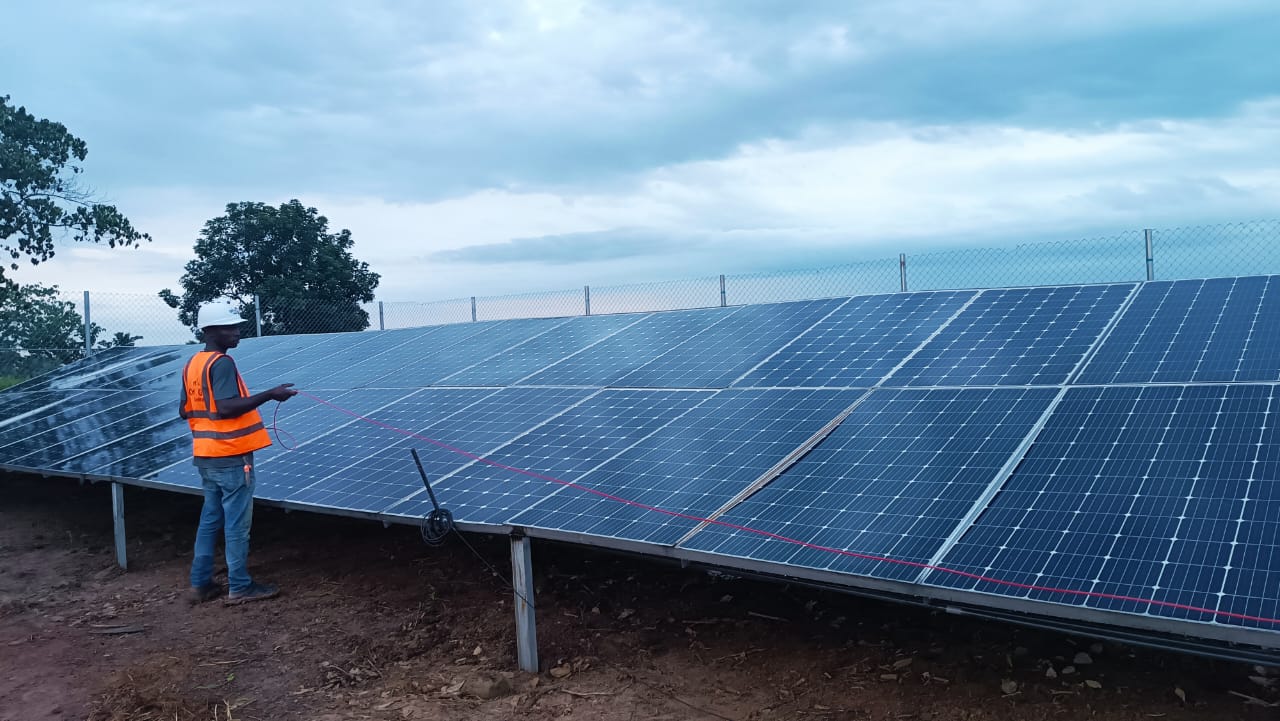
The Rural Electrification Agency (REA) said it has successfully disbursed a fresh N3.2 billion to Zanoplus, to allow the company to deploy solar mini-grid projects across strategic locations in Bauchi State, as part of the agency’s commitment to decentralised energy solutions.
The company noted that this latest disbursement follows closely on the heels of a N7.4 billion disbursement to Ventura Logistics Services for a 7MW mini-grid initiative.
Both interventions were executed under the Distributed Access through Renewable Energy Scale-up (DARES) Programme, a transformative partnership designed to catalyse private-sector participation through support for indigenous financial institutions.
The funding mechanism is rooted in a landmark Memorandum of Understanding signed in February between the REA and Lotus Bank, which established a N100 billion revolving credit facility.
Under this framework, developers can access up to N8 billion in equipment procurement financing with a tenure of 18 months, alongside Lotus Bank, which provides up to 90 per cent counterpart funding for projects approved through result-based financing.
Zanoplus’ deployment is set to transform Bauchi State’s socio-economic landscape by delivering a combined capacity of over 1.2 MWp.
A breakdown showed the specific allocations include 450 kWp for Gabarin East, 400 kWp for Futuk, 200 kWp for Gangalawai, and 150 kWp for Daburai (Gabarin West). These systems operate as integrated local generation and distribution networks with capacities below 1MW, functioning independently of the national grid to provide reliable, clean energy directly to numerous end-users in isolated regions.
Reflecting on the progress of the DARES Programme, the managing director of the REA, Mr Abba Aliyu, emphasised that the true success of these disbursements lies in the efficiency and integrity of the process.
He noted that the speed and transparency of execution demonstrate the vibrancy of the local financing capacity currently being catalysed by the REA.
According to Mr Aliyu, this momentum demonstrates that a performance-based financing framework can effectively channel capital to credible, ready-to-implement projects that are strictly aligned with delivery milestones.
The REA chief further highlighted that this consistent flow of capital sends a powerful signal to the global and local investment community that the Nigerian renewable energy market is active and the underlying structures are working.
He lauded the proactive role of Nigerian financial institutions, which are increasingly transitioning from mere participants to primary drivers of renewable energy infrastructure.
By aligning performance with streamlined financing, the REA and its partners aim to unlock the necessary scale to achieve universal energy access across the federation.
General
Alake Seeks Regional Energy Hubs for Africa’s Mining Value Chain
By Adedapo Adesanya
The Minister of Solid Minerals Development, Dele Alake, has called for the establishment of regional energy hubs as a strategic pathway to accelerate cross-border mining industrialisation and strengthen the supply chain of critical minerals essential for the global energy transition.
He called for the development of regional industrial corridors akin to the Lobito Corridor, noting that similar belts —such as the Lagos–Abidjan corridor, spanning Nigeria, Benin, Togo, Ghana, and Côte d’Ivoire, as well as the Walvis Bay Corridor linking Southern and Central Africa to global markets— could unlock vast mineral potential across the continent.
Speaking at a high-level panel themed: “Critical Minerals in Africa: Meeting Global Demand” at the ongoing Powering Africa Summit in Washington, D.C., United States, Mr Alake also said more investments had been attracted into Nigeria in the last two years.
The Minister emphasised that despite being open to investment, the country to prioritise strict compliance with local laws and regulations while outlining key investment incentives, including tax waivers on imported mining equipment and full repatriation of profits after due payment of royalties and taxes.
“We have successfully de-risked and sanitised the mining environment, making it conducive to Foreign Direct Investment (FDI). Within the last two and a half years, we have attracted over $2.6 billion in FDI into the sector,” he affirmed.
He stressed that sustainable partnerships with Africa remain the fastest route to meeting rising global demand for critical minerals.
According to the Minister, such corridors would serve as economic catalysts by driving infrastructure development, enhancing energy access, and promoting regional integration. “The development of nuclear power in one West African country, for instance, can service an entire corridor.
With that in place, local beneficiation, technology transfer, manufacturing, and cross-border industrialisation will naturally follow. If three to five such corridors are developed in Africa, we would significantly advance industrialisation across the continent, creating a win-win outcome for both Africa and the West,” he stated.
Mr Alake noted that under the administration of President Bola Ahmed Tinubu, the ministry has carried out some reforms, including strengthened governance structures, improved regulatory frameworks, digitisation of licensing processes, and enhanced ease of doing business, which have repositioned Nigeria’s mining sector as a key driver of economic diversification.
General
IGP Disu Orders Restructuring of Tactical Teams to Free Personnel for Police Stations
By Modupe Gbadeyanka
As part of efforts to free personnel for police stations and reduce complaints about tactical team excesses, the Inspector General of Police (IGP), Mr Tunji Disu, has ordered the restructuring of tactical teams at zonal, state command, area command and divisional levels.
In a statement issued on Sunday by the spokesman of the Nigeria Police Force (NPF), Mr Anthony Okon Placid, a Deputy Commissioner of Police (DCP), the police chief said the reduction could be achieved by the merger or disbandment of tactical teams.
However, he emphasised that security outfits created by state governments like the Lagos Rapid Response Squad, Oyo’s SRS, and Bayelsa’s Operation DOO-AKPOR and other similar outfits across the country, may not be affected by this directive.
He said tactical teams at Zonal and State Command levels should be a maximum of five, and Area Command and Divisional levels must be a maximum of three.
“This can be achieved by merging or disbanding teams, at the Heads of formations’ discretion,” a part of the statement read.
It was noted that this action was taken because of the proliferation of tactical teams and the bad image this was causing the security agency due to the excesses of the poorly supervised teams.
In addition, these teams were draining police divisions and posts of required manpower.
General
Nigeria Reiterates Promise to Boost Global Oil Supply Amid Middle East Tensions
By Adedapo Adesanya
Nigeria is prepared to support global energy stability, particularly as geopolitical tensions continue to affect oil supply in the Middle East.
This was disclosed by the Minister of Information, Mr Mohammed Idris, amid rising tensions in the Middle East, particularly in key oil-producing regions, which have disrupted supply expectations, heightened fears of shortages, and driven oil prices higher.
Mr Idris stated that Nigeria remains willing to play a key role in ensuring energy security, stressing that the country stands ready to contribute wherever necessary.
“Nigeria is ever ready to contribute to energy security around the world. Whatever Nigeria can do to ease tension, it will do. The world needs oil, and Nigeria is there,” he stated.
In a statement issued on Saturday by his Special Assistant on Media, Mr Rabiu Ibrahim, the minister also highlighted the significance of President Bola Tinubu’s ongoing engagements abroad, describing them as crucial to strengthening Nigeria’s international partnerships.
He said the visit reinforces the long-standing relationship between Nigeria and the United Kingdom, built on shared historical, cultural, and economic ties.
“This visit underscores the historical relationship, the cultural ties, and the economic ties between Nigeria and the United Kingdom. We hope that we will deepen it further in the interest of both countries,” Mr Idris said.
The minister further pointed to the impact of the administration’s reforms, noting that they are already improving Nigeria’s economic outlook and global perception.
“With the reforms that President Bola Ahmed Tinubu has instituted, we have seen a significant uplift in the economy,” he added.
Mr Idris reaffirmed the government’s commitment to sustaining reforms, improving security, and creating an environment where Nigerians can live and work safely, while positioning the country as a reliable partner on the global stage.
He also rejected the notion of a failure on the part of the Nigeria’s security agencies, saying, “I don’t think they failed. I think that more work needs to be done. Nigerian security agencies are working around the clock to ensure that this does not happen again,” adding, that Maiduguri had recorded significant improvements in peace and stability over time.
“The government is putting a lot of attention. The reform agenda of the President is aimed at ensuring that Nigerians are safe and that this does not happen again,” he further stated.
-
Feature/OPED6 years agoDavos was Different this year
-
Travel/Tourism10 years ago
Lagos Seals Western Lodge Hotel In Ikorodu
-
Showbiz3 years agoEstranged Lover Releases Videos of Empress Njamah Bathing
-
Banking8 years agoSort Codes of GTBank Branches in Nigeria
-
Economy3 years agoSubsidy Removal: CNG at N130 Per Litre Cheaper Than Petrol—IPMAN
-
Banking3 years agoSort Codes of UBA Branches in Nigeria
-
Banking3 years agoFirst Bank Announces Planned Downtime
-
Sports3 years agoHighest Paid Nigerian Footballer – How Much Do Nigerian Footballers Earn