General
Nigerians Turn to Solar Energy as Petrol Prices Bite Harder
By Adedapo Adesanya
Nigerians continue to seek alternative power sources, primarily solar, causing the consumption of Premium Motor Spirit (PMS), also known as petrol, to fall by 16.9 per cent in March 2026.
Prices of the petroleum products have been up since last month as a result of the US-Israel attack on Iran and its blowback.
According to data from the Nigerian Midstream and Downstream Petroleum Regulatory Authority (NMDPRA), daily petrol consumption dropped from 56.9 million litres in February to 47.3 million litres in March, marking one of the steepest month-on-month declines in recent times.
This fall is significant not just for its size, but for what it signals in a country where petrol has long remained the dominant fuel for transport and off-grid electricity generation, which has been epileptic.
The drop of over 9 million litres per day suggests that households, transport operators and small businesses had to adjust their consumption patterns in response to sustained fuel price pressure, which rose to as high as N2,000 in some parts of the country, following the blockade of the Strait of Hormuz.
At the same time, total PMS supply rose marginally from 39.5 million litres per day in February to 40.1 million litres in March, representing a 1.5 per cent increase. This contrast between rising supply and falling demand points to a market that is not constrained by availability but increasingly shaped by affordability and substitution effects.
Prices of petrol in Nigeria typically rise due to global market conditions since the government removed fuel subsidy, which led to changes in the cost of buying the fuel weekly.
Also, Dangote Refinery, which handles a chunk of Nigeria’s domestic supply, relies on international markets to get crude feedstock due to shortages from the Nigerian National Petroleum Company (NNPC) Limited. This comes into play when pricing for the local market.
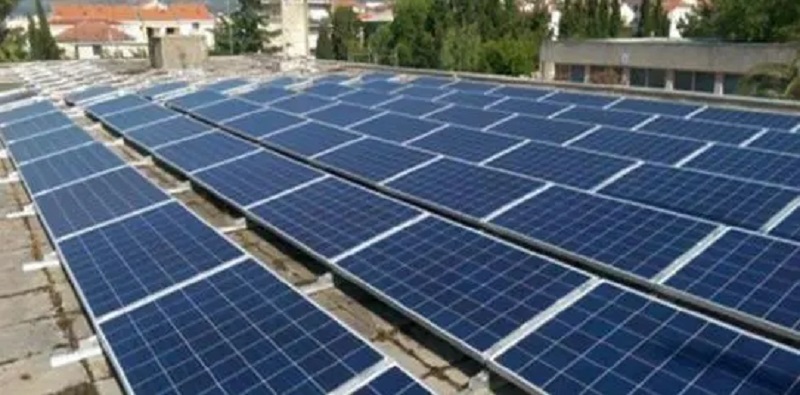
Also, the March figures could suggest rising renewable energy adoption as residential estates, businesses and commercial buildings are gradually expanding, driven largely by the need to escape rising diesel and petrol costs.
However, adoption is slow because of how expensive a solar power setup is, with the cost running into millions of Naira.
Energy experts told Business Post that, beyond cost, there are several factors, such as holding false beliefs as well as a lack of energy management.
Mr Danieel Anomfueme, a Port Harcourt-based solar expert, told this newspaper, “While going solar is a much better alternative to fuel-based generation (napkin maths puts it at ~3 years fuel cost ), most can’t make the move because they lack the upfront money. While there are solar financing companies, the credit cost and options don’t make it attractive.”
“We are wasteful energy-wise because we grew up with it being heavily subsidised electricity, and we don’t bother to know about energy conservation or efficiency of appliances. This is why someone will be spending 400k+ monthly on band A, but expect their “#6m setup” to power all those appliances 24/7 daily,” he added.
For the expert, interested Nigerians can design a solar setup, have an overview of it and get to build it up little by little as the money comes.
“They don’t have to deploy everything at once.”
General
Dangote Cement Ibese Distributes Farming Inputs to Boost Productivity
By Modupe Gbadeyanka
Some farming inputs have been distributed to farmers drawn from 17 host communities of the Ibese Plant of Dangote Cement Plc.
This is part of the organisation’s commitment to food security and sustainable community development, under its annual farmers’ empowerment initiative, which has become a cornerstone of the company’s social investment strategy.
The beneficiaries received modern farming inputs alongside technical training aimed at improving crop yield, productivity, and income across the agricultural value chain.
Business Post gathered that each of the 60 farmers got three bags of 50kg NPK fertiliser, two bags of Urea fertiliser, one Knapsack sprayer and 10 litres of Force-Up herbicide.
Welcoming the guests and beneficiaries, the Plant Director, Mr Ayyagari Subbaraidu, emphasised that the programme was designed not only to support local farmers but to build a sustainable agricultural ecosystem within the company’s host communities.
He noted that the intervention aligns with Dangote Cement’s broader corporate social responsibility priorities, which include empowerment, education, health, and infrastructure development.
Mr Subbaraidu said, “At Dangote Cement, we understand that while we manufacture cement for the construction of homes, schools, hospitals, roads, and other critical infrastructure, true development is ultimately about people. It is about creating opportunities, improving livelihoods, and enabling communities to thrive. This philosophy remains at the heart of our operations and our relationship with our host communities.”
He disclosed that to date, 300 farmers across our host communities have benefited from training, farm inputs, and agricultural tools, noting that they have cultivated more than 800 acres of farmland and produced over 40,000 tons of agricultural output.
“These figures tell an important story, representing families whose livelihoods have improved, children whose educational needs have been supported, businesses that have grown, and communities that have become more resilient. They demonstrate what can be achieved when communities and corporate organisations work together toward a common goal,” he stated.
“We provide modern farm inputs to support our farmers to enhance productivity and achieve better yields. This is not just about distribution; it is about enabling a shift to more efficient and sustainable farming methods that will ultimately boost food production and livelihoods,” he said.
Mr Subbaraidu revealed that the training component of the programme is critical in ensuring that beneficiaries maximise the value of the inputs provided, as participants were taken through practical sessions on good agricultural practices, including crop protection and pest management techniques, equipping them with knowledge to mitigate farming risks and improve output.
Speaking on behalf of the communities, a representative described the programme as a “game changer” that has not only boosted food production but also strengthened the relationship between the company and its host communities.
One of the farmers, Mr Akanbi Moses from Aga-Olowo Community, noted that the provision of free inputs and training has significantly improved their productivity and income levels, enabling them to scale their farming activities. Another beneficiary highlighted how the training sessions have enhanced their understanding of modern farming techniques, resulting in better crop management and reduced post-harvest losses.
General
Four Nabbed in Ogun, Lagos With 130kg of Elephant Tusks
By Modupe Gbadeyanka
Officials of the Nigeria Customs Service (NCS) and the National Environmental Standards and Regulations Enforcement Agency (NESREA) on Saturday, June 13, 2026, apprehended four suspected wildlife traffickers in Ogun and Lagos States.
The suspects were arrested with 22 pieces of elephant tusks weighing 130.84 kg during coordinated operations in Ofada, Ogun State, and Lagos, acting on intelligence developed by Wildlife Justice.
In a statement made available to Business Post on Tuesday, it was stressed that the arrests follow several months of intelligence gathering and investigative work targeting a high-level wildlife trafficking network linked to the illegal ivory trade.
The operation targeted a senior figure within the illegal ivory trade who had been identified through Wildlife Justice intelligence as a key supplier and associate of traffickers arrested in previous investigations. Due to the individual’s long-standing role, extensive connections, and access to significant quantities of ivory, the arrest is expected to have a substantial disruptive impact on the trafficking network.
“Wildlife Justice commends NCS and NESREA for their commitment, and continued leadership in combatting organised wildlife crime,” said Olivia Swaak-Goldman, Executive Director of the Wildlife Justice Commission.
“Over the past five years, sustained intelligence-led operations and coordinated law enforcement action have transformed the wildlife trafficking landscape in Nigeria. Traffickers who once operated with relative impunity are now facing a very different reality. Many have been arrested, forced to relocate, or significantly altered their operating methods in response to enforcement pressure.
“This operation demonstrates the power of strong partnerships, intelligence-led enforcement, and the commitment of the Nigerian authorities to tackling organised wildlife crime. By systematically identifying and targeting key actors within trafficking networks, Nigeria is showing that it is possible to disrupt criminal operations, increase the risks for traffickers, and make wildlife crime an increasingly difficult and unsustainable business.”
The latest arrests further reinforce the structural shift taking place in Nigeria’s wildlife trafficking landscape, where sustained enforcement pressure is impacting the ability of criminal networks to operate and profit from the illegal wildlife trade. As a result, traffickers are increasingly reluctant to maintain large stockpiles and are often forced to move smaller quantities of wildlife products, reducing opportunities for large-scale transactions and making the trade more difficult and less profitable.
The operation marks the 21st successful investigation conducted in partnership with NCS since 2021 and the second successful operation with NESREA since 2025. Together, these partnerships have resulted in the arrest of 48 wildlife traffickers, the seizure of 1,196 kg of ivory and 25,545 kg of pangolin scales, and 16 convictions to date.
General
2027: Court Orders Deregistration of ADC, Four Other Political Parties
By Adedapo Adesanya
Justice Peter Lifu of the Federal High Court in Abuja has ordered the deregistration of the African Democratic Congress (ADC) and four others over failure to meet the constitutional requirements for political parties in the country.
In a judgment, Justice Lifu ordered the Independent National Electoral Commission (INEC) to deregister the affected parties, having failed to secure 25 per cent of the votes in the last general elections in compliance with the provisions of the law.
The five political parties include ADC, Accord (A), Action Alliance (AA), Action Peoples Party (APP) and Zenith Labour Party (ZLP).
Justice Lifu, who earlier dismissed all the multiple preliminary objections filed by the defendants, ordered INEC not to allow the parties to participate in the subsequent elections, including the 2027 general polls, having failed to meet the constitutional threshold.
A group, the Incorporated Trustees of the National Forum of Former Legislators, had filed the suit against the five political parties.
The plaintiff, who also joined the Attorney-General of the Federation (AGF) in the suit, named INEC as the first defendant.
The forum argued that the affected political parties failed to meet constitutional requirements relating to electoral spread and performance.
It contended that political parties were required to secure at least 25 per cent of votes in prescribed elections to remain relevant under the law.
It therefore urged the court to order the deregistration of the parties, insisting that none of the defendants had effectively countered the arguments.
This development comes as the ADC announced former Rivers State Governor, Mr Rotimi Amaechi, as the running mate to its presidential candidate, former Vice President Atiku Abubakar, for the 2027 general election.
It said that the decision followed extensive consultations with party leaders, coalition partners, youth and women stakeholders, and representatives of all geopolitical zones.
“The National Leadership of the African Democratic Congress (ADC), after extensive consultations with party leaders, coalition partners, youth and women stakeholders, and representatives of all geopolitical zones, is proud to announce that Mr Chibuike Rotimi Amaechi has been selected as the vice-presidential candidate of our great party for the 2027 presidential election,” the party disclosed in a statement on Monday.
-
Feature/OPED6 years agoDavos was Different this year
-
Travel/Tourism10 years ago
Lagos Seals Western Lodge Hotel In Ikorodu
-
Showbiz3 years agoEstranged Lover Releases Videos of Empress Njamah Bathing
-
Banking8 years agoSort Codes of GTBank Branches in Nigeria
-
Economy3 years agoSubsidy Removal: CNG at N130 Per Litre Cheaper Than Petrol—IPMAN
-
Banking3 years agoSort Codes of UBA Branches in Nigeria
-
Banking3 years agoFirst Bank Announces Planned Downtime
-
Sports3 years agoHighest Paid Nigerian Footballer – How Much Do Nigerian Footballers Earn

Pingback: $83m IFC-Backed Funding Boosts Nigeria’s Off-Grid Electricity Drive | Business Post Nigeria
Pingback: Nigerians Turn to Solar Energy as Petrol Prices Bite Harder – PRIMA NEWS