Connect with us

General

Customs Area 11 Command Drives Generates N77bn in April

Published

on

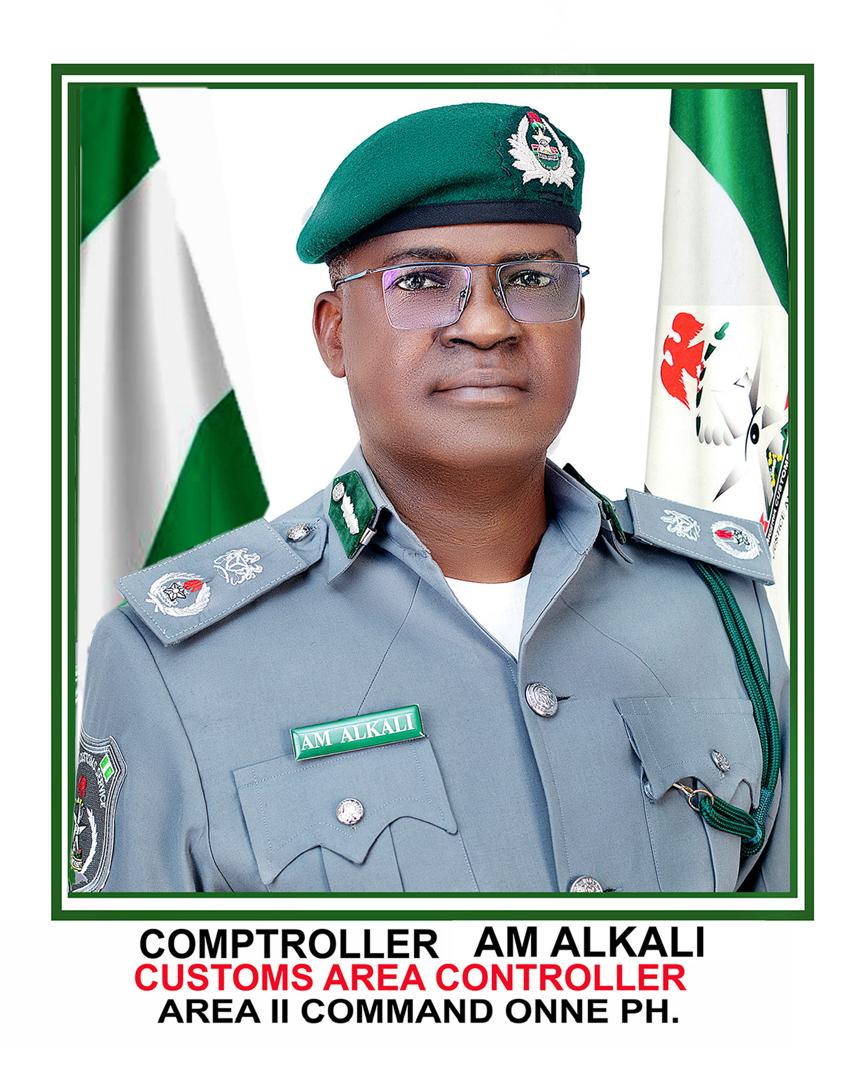
Alkali Customs Area 11 Command

By Bon Peters

Over N77 billion was generated as revenue in April 2026 by the Nigeria Customs Service (NCS) Area 11 Command in Onne, Port Harcourt, Rivers State.

This landmark feat in the command’s fiscal operations signals a new era of economic prosperity and administrative efficiency.

The revenue generated last month was 70.2 per cent higher than the amount collected in the same month of last year, according to a statement issued by the command’s acting spokesman, Mr Paul Istifanus Gimba, an Assistant Superintendent of Customs I.

This feat was attributed to the strategic and visionary leadership of the command’s area controller, Comptroller Aliyu Mohammed Alkali.

On innovation, the command has integrated modern technologies and cutting-edge logistics management, consolidating and strengthening existing protocols and building upon previous successes to create a sustainable economic environment.

The statement emphasised that, “By embracing these principles, the Area 11 Command has transformed into a critical hub for national revenue optimisation, ensuring that the federal government’s fiscal goals are not only met but consistently surpassed.”

It added that the core pillars of success under Comptroller Alkali, since assuming leadership, were the implementation of a rigorous operational strategy designed to maximise the command’s potential and commitment centred on core areas of Simplification and Trade Facilitation.

The statement further posited that in an effort to foster a business-friendly environment, the command has focused heavily on the simplification of procedures by identifying and removing bureaucratic bottlenecks, noting that the Command has significantly reduced delays in cargo clearance, insisting that such a streamlined approach has not only benefited importers and exporters but also accelerated the “ease of doing business” within the maritime sector.

On performance and target optimisation, the command has moved beyond mere compliance to a culture of excellence and by building on past successes, the administration has ensured that revenue targets were viewed as minimum benchmarks rather than ultimate goals.

It also stated that behind the record-breaking revenue generation lies a workforce characterised by dedication and professionalism, as Comptroller Alkali lauded the officers and men of the command for their commitment to duty, even as the Onne Customs boss emphasised that the achievement of April 2026 was a collective victory, made possible by the integrity and discipline of the personnel stationed at Onne.

He stated that their ability to balance security concerns with the need for rapid trade facilitation remained the cornerstone of the command’s operational philosophy.


Click to comment

Leave a Reply

Your email address will not be published. Required fields are marked *

General

Gbajabiamila Leads Presidential Working Group on State Police

Published

on

presidential working group state police

By Adedapo Adesanya

President Bola Tinubu on Tuesday inaugurated the Presidential Working Group on the National Policing Bill to prepare the legal framework for the implementation of state police across the country.

President Tinubu, represented by his Chief of Staff, Mr Femi Gbajabiamila, inaugurated the panel at the Presidential Villa, Abuja.

The inauguration followed the National Assembly’s passage of the Constitution Alteration (State Police) Bill, 2026, in which the President proposes a dual policing structure comprising the Federal Police Service and 36 State Police Services.

The President said that while the constitutional amendment creates the framework for state police, the National Policing Bill would provide the legal structure for its implementation.

“The Constitution Amendment Bill establishes the framework for dual policing, but it does not operationalise it. That work is left to the National Policing Bill.”

He said the proposed legislation would address issues necessary for a smooth operationalisation of the State Police system.

“The proposed National Policing Bill will include provisions on minimum policing standards, state readiness certification, federal-state coordination, accountability, human rights safeguards and fiscal conditions.”

The President said that the committee will produce an implementation-ready draft bill immediately after the constitutional amendment process.

“The Working Group has been constituted to produce a technically robust, implementation-ready draft National Policing Bill for transmission to the National Assembly,” President Tinubu said.

He said the committee was necessary to avoid delays after the State Police bill passed.

“We must not wait until the constitutional process is concluded before beginning this important assignment,” he said.

Mr Gbajabiamila will serve as the committee’s chairman. Members include the Attorney-General of the Federation, the President of the Nigerian Bar Association (NBA), the Chairman of the Nigeria Governors’ Forum (NGF), the National Security Adviser, the Inspector-General of Police, the Chairman of the NGF Committee on State Police. A Secretariat will offer some administrative assistance to the committee.

Governor Dapo Abiodun of Ogun State, on behalf of the NGF, pledged governors’ support for the speedy implementation of the reform.

He said the plan is for the 36 state governors to accelerate work on the bill once it reaches their respective Houses of Assembly and is passed unanimously.

Mr Abiodun described the proposed state police as a response to Nigerians’ long-standing demand for community-based policing.

“This bill has answered the cries of Nigerians about cascading policing and removing it from the Exclusive Legislative List.”

He said the initiative validated the success of regional security outfits such as Amotekun in the South-West.

Mr Abiodun said the state police would significantly increase the number of security personnel nationwide.

“If each state deploys about 6,000 personnel, we will add nearly 200,000 officers to complement the existing federal police.”

The Governor commended President Tinubu for initiating implementation plans before the constitutional amendment process was completed.

“This inauguration demonstrates the proactiveness of the Executive in preparing for effective implementation,” Mr Abiodun said.

The Attorney-General of the Federation and Minister of Justice, Mr Lateef Fagbemi, SAN, described the initiative as timely in view of Nigeria’s security challenges.

“There is no denying the fact that we are in a critical moment security-wise, and all hands must be on deck,” he said.

Mr Fagbemi urged governors to ensure speedy ratification of the constitutional amendment by their respective state assemblies.

“I appeal to the governors to do their utmost to ensure the early passage of the constitutional amendment because this is a shared responsibility,” he said.

President of the Nigerian Bar Association, Mr Afam Osigwe, reaffirmed the association’s support for the state police initiative.

“Nigeria can hardly be effectively policed by one national police. We fully support the constitutional amendment providing for state police,” he said.

Mr Osigwe, however, stressed the need for adequate legal safeguards to prevent abuse of state police.

“We must ensure we do not create a monster. The right legal framework must guarantee accountability and prevent oppression,” he said.

He pledged the NBA’s commitment to supporting the committee in producing legislation that will strengthen security while protecting citizens’ rights.

Continue Reading

General

NMDPRA Begins Stakeholder Talks on Cost-Reflective Petrol Pricing

Published

on

petrol queues

By Adedapo Adesanya

The Nigerian Midstream and Downstream Petroleum Regulatory Authority (NMDPRA) has commenced consultations with industry stakeholders on the implementation of a cost-reflective pricing framework for Premium Motor Spirit (PMS), also known as petrol.

The move is aimed at promoting stability, transparency and long-term sustainability in Nigeria’s downstream petroleum sector.

The high-level stakeholder engagement brought together marketers, operators and other industry participants to deliberate on a pricing regime that reflects prevailing market conditions while balancing the interests of consumers, investors and petroleum operators.

According to the authority, the initiative follows a similar consultative approach recently adopted to address price distortions in Nigeria’s domestic liquefied petroleum gas (LPG) market.

Speaking on this, the regulator’s chief executive, Mr Rabiu Umar, said the engagement was designed to encourage transparent and solution-driven dialogue on emerging challenges in the downstream sector.

“The engagement was designed to foster transparent, inclusive, and solution-oriented dialogue with stakeholders to address emerging industry challenges, strengthen market surveillance, and enhance Nigeria’s energy security through a more efficient and resilient downstream market,” Mr Umar said.

The meeting was led by the Minister of State for Petroleum Resources (Oil), Mr Heineken Lokpobiri, who received recommendations from stakeholders and reaffirmed the federal government’s commitment to building a competitive downstream petroleum industry.

Mr Lokpobiri said the government would continue to work closely with industry players to implement policies that promote investor confidence while safeguarding consumers.

“The federal government will continue to collaborate with all stakeholders to implement policies that inspire investor confidence, protect consumers, ensure fair market practices, and support Nigeria’s long-term economic growth and energy security,” the minister said.

He added that the stakeholder engagement would continue until an acceptable pricing framework is achieved.

He also assured everyone that this strategic engagement would be an ongoing drive until a satisfactory outcome is achieved in the near term.

The NMDPRA said the consultations form part of ongoing efforts to deepen market efficiency, strengthen energy security and establish a transparent pricing framework capable of supporting sustainable investment across Nigeria’s downstream petroleum industry.

Continue Reading

General

Nigeria Probes Big Tech Over Anti-Competitive Practices, News Content Use

Published

on

FCCPC

By Adedapo Adesanya

Nigeria is investigating major technology companies over alleged anti-competitive ​practices and unauthorised use of news content following a directive from President Bola Tinubu to the Federal Competition and Consumer Protection Commission (FCCPC) on Monday.

The anti-trust commission launched an investigation into major technology companies over allegations of anti-competitive practices, unlawful use of news content and other actions said to be harmful to Nigerian media organisations.

The development was disclosed in a statement issued on Monday by the FCCPC’s Director of Corporate Affairs, Mr Ondaje Ijagwu, following a joint petition submitted to the Presidency by the Nigerian Press Organisation (NPO).

The NPO comprises the Newspaper Proprietors’ Association of Nigeria (NPAN), the Nigeria Union of Journalists (NUJ), the Broadcasting Organisations of Nigeria (BON) and the Guild of Corporate Online Publishers (GOCOP).

The commission will also investigate Generative Artificial Intelligence platforms operating in Nigeria as part of the inquiry.

The federal government conveyed the directive to the FCCPC in a letter signed by the Minister of Information and National Orientation, Mr Mohammed Idris.

The petition centres on concerns by media stakeholders over the growing influence of some digital platforms on the survival of Nigeria’s news industry.

NPO accused major technology firms, including Meta, Alphabet and X, formerly known as Twitter, as well as some Generative AI platforms, of engaging in practices that could weaken fair competition, threaten the financial survival of media organisations and violate the rights of publishers and content creators.

FCCPC Executive Vice Chairman and Chief Executive Officer, Mr Tunji Bello, said the commission would carry out a transparent and evidence-based investigation into the claims.

“We recognise the strategic importance of the media to Nigeria’s democracy and the equally significant role of technology in driving innovation and economic growth. Our responsibility is to objectively determine the facts and ensure that competition within the digital ecosystem remains fair, transparent, and consistent with Nigerian law,” Mr Bello said.

Bello said the inquiry was not based on any assumption of guilt but was aimed at establishing the facts and hearing from all parties involved.

“This inquiry is not directed at any entity by presumption of wrongdoing. Rather, it is an opportunity to carefully examine the facts, hear from all affected parties, and determine whether any conduct has resulted in anti-competitive outcomes or unfair business practices. Every party will be accorded a fair opportunity to present relevant information before any conclusions are reached.”

He said the commission would determine whether the alleged conduct violates the Federal Competition and Consumer Protection Act 2018 or any other relevant law.

The FCCPC had previously investigated Meta and secured a judgment against the company in 2025 over breaches of the FCCPA, including data violations, resulting in a $220 million fine. Meta has appealed the ruling.

According to the commission, the new investigation will focus on allegations of market dominance and possible anti-competitive conduct by the companies involved.

It will also examine claims that copyrighted news articles, broadcast materials and other original journalistic works were extracted, scraped, ingested or commercially used without authorisation for the training and development of Generative AI models.

Another issue under review is the alleged absence of fair commercial arrangements between global technology companies and Nigerian media publishers. At the centre of this is the claim that local media organisations have not been given meaningful opportunities to negotiate compensation or proper commercial terms for the use of their content.

The FCCPC noted that a similar intervention in South Africa led to an agreement under which Google would pay South African news media R688 million, equivalent to about $40 million, every year for a period of three to five years following agitation by media organisations and an investigation by the South African Competition Commission.

France fined Google €500 million in 2021 over failures in negotiations with news publishers and ⁠breaches linked ​in part to the use of publisher ​content by AI systems. Australia and Canada have also introduced bargaining frameworks that resulted in payment agreements ​between technology companies and publishers.

Continue Reading

Trending