Feature/OPED
Democracy and Problems; Made in Nigeria
By Prince Charles Dickson (PhD), and Dorcas Bawa
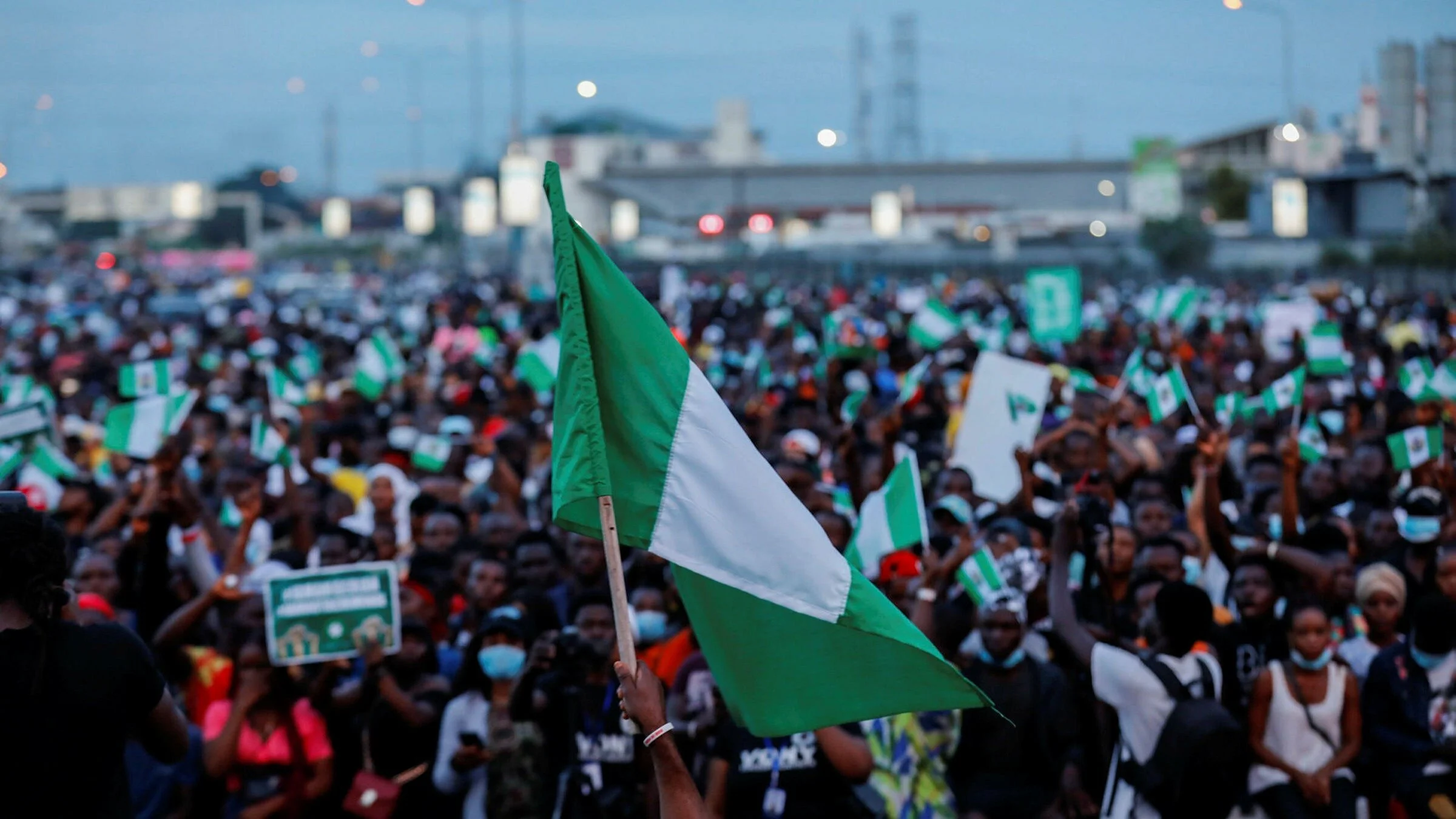
Nigeria’s democratic question is often wrongly framed as if democracy is a foreign garment that we must keep adjusting until it fits our body. We speak of Westminster, Washington, Athens, Paris and every borrowed vocabulary of governance, yet the wound before us is neither Greek nor British nor American. It is Nigerian. Our hunger is Nigerian. Our insecurity is Nigerian. Our broken families are Nigerian. Our abandoned children are Nigerian. Our vote-buying, ethno-religious suspicion, weak local institutions, elite impunity and democratic impatience are Nigerian. Therefore, any democracy that will heal us must be made in Nigeria.
This is not a call for isolation. It is a call for ownership. Democracy cannot survive as imported furniture placed in a burning house. It must grow from our values, culture, history and realities. It must be owned by the people, shaped by our communities, and driven by our collective aspirations for justice, equity and peace. It must answer the question of the farmer in Bassa, the displaced woman in Barkin Ladi, the market woman in Jos, the young person in Mangu, the traditional ruler trying to hold a fractured community together, the child who no longer trusts the home, and the citizen who has voted many times but has not yet felt government as care.
Since 1999, Nigeria has travelled a long and uneven democratic road. The return to civil rule after years of military dictatorship was not a small achievement. It restored constitutional government, reopened civic space, revived political parties, strengthened the press, expanded civil society engagement, and gave citizens the language with which to question power. We have had repeated elections, transitions between administrations, legislative contests, judicial interventions, public protests, investigative journalism and a growing generation of young Nigerians who no longer kneel before authority simply because it wears a title.
These are gains. They must not be dismissed.
But democracy is not merely the presence of elections. It is the presence of dignity. It is not only the counting of votes. It is the counting of lives. It is not complete because politicians campaign, courts sit, governors are sworn in, and budgets are read. Democracy becomes real when the weakest person in the community can say: “This country sees me. This system protects me. This government serves me.”
That is where our democratic journey remains painfully unfinished.
From 1999 to date, Nigeria has built the rituals of democracy faster than the culture of democracy. We have mastered rallies, slogans, posters, primaries, manifestoes, defections and inauguration ceremonies, but we have not sufficiently mastered accountability, inclusion, local ownership, civic discipline and justice. Too much power remains concentrated at the centre. Too many local governments exist more as salary points than as engines of grassroots development. Too many communities are remembered only during elections, condolences or conflict assessment visits. Too many citizens are mobilised as voters but abandoned as human beings.
Democracy made in Nigeria must therefore begin with the people at the centre. Government exists to serve the people, not the other way around. A system that treats citizens as spectators between election cycles is not a democracy. It is a political theatre with ballot boxes. A homegrown democracy insists that the woman, the youth, the person with disability, the displaced, the farmer, the trader, the child, the minority voice and the forgotten community are not footnotes in the national story. They are the story.
To be homegrown, democracy must also be rooted in culture, but not in the abusive misuse of culture. It must respect our languages, traditions, communal memory and ways of life, while refusing every cultural excuse for injustice. Culture should be a bridge, not a cage. It should protect the vulnerable, not silence them. It should teach respect for elders, but also responsibility by elders. It should honour family, but never hide violence inside family walls. It should value community, but never allow community loyalty to bury truth.
The crisis of Nigerian democracy is not only in Abuja. It is also in the home. It is in the family meeting where girls are denied inheritance. It is in the compound where abuse is covered because the offender is related. It is in marriage where responsibility is abandoned. It is in the neighbourhood where everyone knows a child is suffering but waits for the “government” to arrive. It is in the community where young people are recruited into dangerous labour because poverty has become an employer. It is in the silence that violence teaches how to grow teeth.
A recent week in the Plateau State Gender and Equal Opportunities Commission, particularly the Public Complaints and Mediation Department, tells a disturbing story. In one case, a sixteen-year-old schoolgirl became pregnant after alleged abuse within her own home. In another case, an eight-year-old girl from Tudun Wada was brought before the Commission after an alleged sexual assault by a neighbour. Her story was already layered with tragedy: displacement, loss of parents to violence, and dependence on an aged grandmother. Another ten-year-old child had to be reunited with her family in Enugu Agidi after two years of maltreatment while living with a distant relative in Jos. She required psychosocial support before returning home.
In the same week, an illegal commercial motor park around Anguldi in Jos South Local Government Area was reported. The Police were swiftly deployed, and arrests were made. Twelve young people, including three young women, were brought to the Commission. Early interrogation suggested a troubling pattern: the park operated weekly, moving young teenagers from Jos to Ibadan.
These are not isolated moral accidents. They are democratic alarms. But the entire team somehow collectively succeed because they understand the terrain.
Conflict does not end when gunfire stops. It enters homes. It alters parenting. It displaces children. It weakens supervision. It breaks livelihoods. It creates fear, dependency, resentment and desperation. A society that does not heal its conflict will eventually watch that conflict migrate into marriage, childhood, education, labour, politics and faith. The family becomes the first casualty, and later, the polling unit becomes only a mirror of the wounded home.
This is why democracy cannot be discussed only in constitutional language. It must be discussed in human language. When family values erode, democracy suffers. When parental responsibility collapses, democracy suffers. When the culture of respect for human dignity becomes almost non-existent, democracy suffers. When children are unsafe, women are overburdened, fathers disappear from responsibility, mothers are left unsupported, and communities outsource morality to government agencies, democracy becomes a tree without roots.
The problems holding us back are therefore clear. We continue to operate systems that often ignore local realities. We suffer from the concentration of power and the lack of accountability. Our local institutions are weak. Our democratic culture is poor. Tribalism, ethnicity and religious intolerance are too easily weaponised. Many citizens are apathetic because they have been disappointed too often. Others are active only when their group interest is touched. But a person who participates decides their destiny. A person who watches politics from the balcony should not be shocked when decisions are taken in rooms where they are absent.
Homegrown democracy must be community-driven. Decisions must be shaped at the local level through dialogue, consensus and trust. Nigeria cannot continue to pretend that Abuja can understand every stream, shrine, church, mosque, market, grazing route, school, boundary dispute and family wound better than the people who live with them daily. Local problems require local intelligence. But local intelligence must be connected to justice, not captured by local power brokers.
This is why traditional rulers, community heads, women leaders, youth groups, faith leaders, civil society organisations, government agencies, schools, security institutions and families must become democratic actors, not passive observers. Democracy is not INEC alone. It is not the National Assembly alone. It is not the courts alone. Democracy is the mother who protects her child, the father who carries responsibility with honour, the neighbour who reports abuse, the teacher who notices distress, the police officer who acts promptly, the mediator who listens carefully, the traditional ruler who refuses to hide wrongdoing, the pastor and imam who preach dignity, and the citizen who refuses to sell tomorrow for a small envelope today.
Finally, we must rebuild the moral architecture of the family. Mothers, fathers, guardians, relatives and neighbours must rise to nip these issues in the bud. The home is not outside democracy. The home is where citizenship first learns either care or cruelty. If the child learns silence in the face of abuse, she may become an adult who fears power. If the child learns dignity, he may become a citizen who demands justice.
Our country. Our democracy. Our future—May Nigeria win.
Feature/OPED
How Nigeria’s Financial Sector is Transitioning to Domestic Cloud
Nigeria’s financial services industry stands at a decisive crossroads as technology leaders prepare for the January 1, 2027, data residency deadline set by the Central Bank of Nigeria. The regulatory mandate requiring all payment transaction records, customer personally identifiable information (PII), and account ledgers to reside within domestic data centres is forcing a structural re-evaluation of banking IT architectures. For executive teams across the country, navigating this transition without interrupting daily banking operations is becoming the ultimate test of leadership.
For years, the industry’s reliance on foreign hyperscale providers delivered quick elasticity and global tools. However, transferring entire production stacks – encompassing real-time transaction processing, API gateways, and fraud scoring engines – back to local infrastructure requires significant engineering effort. With the country handling billions of electronic transactions annually, CIOs are seeking to preserve system uptime while severing deep operational dependencies on foreign data centres.
Experts have opined that the core challenge confronting financial technology teams is the lack of empirical, vendor-neutral benchmarks for domestic cloud platforms. Evaluating whether local data centres can sustain mission-critical financial traffic requires rigorous stress testing rather than relying on theoretical SLAs. The risk of potential downtime during a live migration makes vendor vetting the most crucial phase of the compliance roadmap.
To mitigate these operational risks, infrastructure partners like MTN are mobilising domestic capacity and technical insights tailored for the financial sector. By offering sovereign cloud solutions and collaborative engineering frameworks, MTN is helping CIOs and startups navigate the migration path with minimal disruption. Their localised infrastructure serves as an operational bridge, providing the uptime and data sovereignty assurances that both institutions and regulators require.
Lynda Saint-Nwafor, the Chief Enterprise Business Officer for MTN Nigeria, put it succinctly when she explained the upside of hosting data locally: “Hosting locally means lower latency, faster response times, and compliance with Nigeria’s data regulations. More importantly, it gives Nigerian businesses control, keeping sensitive financial, health, and government data within national borders.”
As the January 2027 benchmark approaches, the metric for success will depend on technical execution and operational discipline across companies.
Feature/OPED
Five Practical Holiday Saving Habits for Nigerian Households
By Osasikemwen Ighile
For many Nigerian families, the summer holiday is a season of fun, relaxation, and spending quality time together. But with the kids at home, more outings, higher electricity consumption, and extra entertainment costs, it’s also a period when expenses can quietly pile up.
The good news? You don’t have to choose between making memories and managing your finances. With a few smart habits, you can enjoy the holidays while keeping your savings goals on track.
Here are five practical ways to save smarter this summer.
1. Ditch Cash and Spend Smarter
Ever noticed how cash disappears faster than you expected? Whether it’s buying snacks for the kids, paying for transport, or making quick market runs, spending cash can make it difficult to track where your money goes.
Using a debit card can make it easier to track transactions and monitor spending. FairMoney customers can use their debit card for eligible transactions, subject to applicable terms and conditions. You can make payments conveniently at stores, shop online, and easily monitor your transactions. Instead of carrying cash everywhere, you get a clearer picture of your expenses and can avoid unnecessary impulse purchases.
Small changes like this can make a big difference over the course of the holiday.
2. The Kids Are Home—Stay Ahead of Your Utility Bills
School holidays often mean one thing: the TV is almost always on. From cartoons in the morning to football matches in the evening, your cable subscription becomes more important than ever. Add fans, air conditioners, gaming consoles, and other appliances, and it’s easy to see why electricity bills tend to increase during this period.
Rather than waiting until services are disconnected, planning and paying bills on time help households avoid unnecessary late-payment or reconnection charges. FairMoney customers can pay eligible bills and services through the platform, subject to applicable terms and service availability. You can conveniently pay for Cable TV subscriptions, Electricity bills, Internet subscriptions, Airtime and data for the entire family.
Paying bills on time can help reduce the risk of late payment consequences or applicable reconnection charges. Summer is filled with birthdays, outings, family visits, and spontaneous spending. While these moments are worth enjoying, your savings shouldn’t take a holiday.
3. Enjoy the Holidays—but Don’t Pause Your Savings
A simple strategy is to save first before spending. FairMoney customers can also use eligible savings products, such as FairSave and FairTarget, to set aside money towards specific financial goals, subject to the applicable product terms, conditions and eligibility requirements, even if it’s in small amounts. Already planning for the next school term? FairMoney customers can also use eligible savings products, such as FairSave and FairTarget, to set aside money towards specific financial goals, subject to the applicable product terms, conditions and eligibility requirements. Already planning for the next school term? Consider setting aside money regularly towards your school-fee goal. FairTarget can be used to help you organise savings around specific financial goals, subject to the applicable product terms, conditions and eligibility requirements. By starting early and saving consistently, you can better prepare for school-related expenses when the new term begins.
4. Plan Weekly Family Activities Instead of Daily Spending
The holidays don’t have to be expensive to be memorable. Instead of spending money every day on outings, cinemas, or restaurants, create a simple weekly activity plan. One weekend could be a family movie night at home. Another could be a picnic in a nearby park, a cooking competition, indoor games, or a visit to relatives.
Planning activities ahead helps you control spending while still giving everyone something to look forward to. Sometimes, the best memories cost very little.
5. Buy Household Essentials in Bulk
With everyone at home, groceries seem to disappear twice as fast. Instead of making frequent trips to the store, which often lead to impulse purchases, consider buying regularly used items in bulk.
Depending on the retailer and quantity purchased, some household essentials may offer better value when purchased in bulk.. You’ll spend less on transportation, reduce unplanned shopping, and avoid running out of important items.
Summer should be about creating happy memories not financial headaches. By spending more intentionally, paying your bills on time, planning ahead, and staying committed to your savings goals, you can enjoy everything the season has to offer without putting unnecessary pressure on your finances.
A few smart habits today can make the months ahead much easier. And that’s a win for every household.
Osasikemwen Ighile is the Brand Manager for FairMoney Microfinance Bank
Feature/OPED
Beyond the Screen: How Sports and Entertainment Keep Nigeria’s Economy Moving
When we talk about Nigeria’s economy, the conversation usually centres on oil and gas, banking, agriculture, manufacturing and technology. But there is another industry quietly creating jobs and driving economic activity: entertainment and sports. Most times, we only see the finished product. We watch the show, cheer during the match and move on to the […]
When we talk about Nigeria’s economy, the conversation usually centres on oil and gas, banking, agriculture, manufacturing and technology. But there is another industry quietly creating jobs and driving economic activity: entertainment and sports. Most times, we only see the finished product. We watch the show, cheer during the match and move on to the next thing. What we do not always see is the amount of work that happens before those moments reach our screens.
Take Big Brother Naija
When viewers tune in and see the housemates moving around the Big Brother house, it is easy to forget that the house itself is a product of many people’s work. From the interior designers and set builders who create the spaces to the electricians, carpenters, painters and technicians who bring them to life, an entire team works behind the scenes before the first episode even begins.
Once the cameras start rolling, the list gets even longer. Producers, directors, camera operators, sound engineers, editors, stylists, makeup artists, caterers, production assistants and security personnel all have a role to play. Then there is everything that happens outside the house. Publicists, photographers, videographers, digital teams, content creators and media platforms all contribute to keeping the conversation going. The housemates may be the faces audiences remember, but they are only one part of a much bigger entertainment ecosystem.
Sports have a similar impact
When the Super Falcons play a major game, the focus is naturally on the players and what happens on the pitch. But outside the stadium, the game can mean business for viewing centres, food vendors, restaurants and bars. Sports analysts and commentators have more to cover, content creators have something new to create around and businesses selling jerseys and football merchandise get an opportunity to make sales.
A major sporting event can turn an ordinary evening into a busy one for businesses that have little to do with what happens on the pitch. That is the part of sports and entertainment that is easy to overlook. The value is not only in the stars we see or the content we consume. It is also in the network of people whose skills and businesses keep these industries moving.
And this is where DStv and GOtv become an important part of the picture. They do more than give audiences access to the shows, matches and moments they care about. They connect the people producing this content with millions of viewers who keep the industry going.
Every time someone tunes in to Big Brother Naija, follows the Super Falcons or settles in for a major sporting event, they are engaging with an industry that supports producers, creatives, technicians, businesses and other professionals.
The impact of sports and entertainment, therefore, goes beyond what happens on the screen. By bringing some of the biggest entertainment and sporting moments to Nigerian audiences, DStv and GOtv help keep this ecosystem active, visible and working. Because sometimes, when we sit down to watch, we are not just consuming entertainment. We are also supporting an industry that provides jobs.


Pingback: Democracy and Problems; Made in Nigeria – PRIMA NEWS