Economy
Africa Needs Stronger Tax, Trade Laws—Experts
By Modupe Gbadeyanka
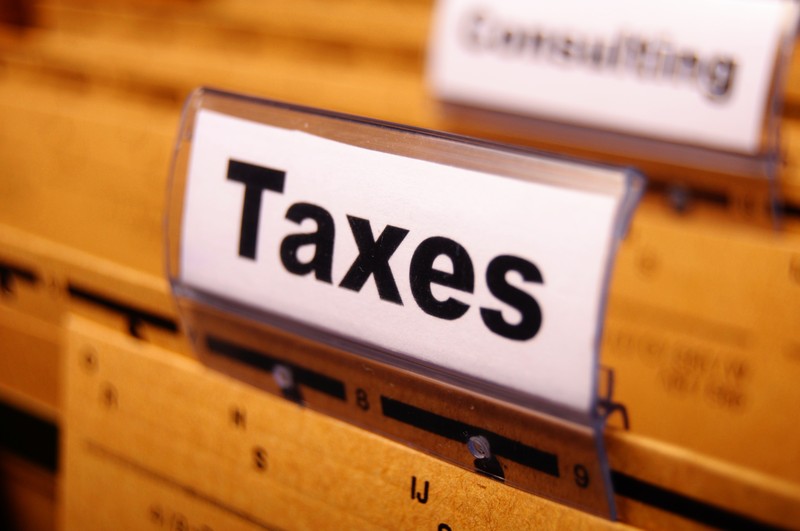
Experts have advised African leaders to come up with stronger tax laws and trade treaties in order to block huge amount of money lost to weak tax laws and unfair trade treaties.
At the Pan-African Conference on Illicit Financial Flows (IFFs) from Africa organised by Tax Justice Network Africa (TJNA) in Nairobi, Kenya, speakers agreed that a lot of funds have been lost to weak tax laws and trade treaties and that African countries must begin a holistic review of all trade and tax laws to address this.
According to the News Agency of Nigeria (NAN), over $50 billion has been lost to multinationals who take advantage of weak tax laws and unfair trade treaties.
In an interview with NAN on the sidelines of the conference, Mr Jason Braganza, Deputy Executive Director, TJNA said Africa was yet to ascertain the real amount being lost to IFFs as the quoted $50 billion was just a fraction of the entire sum.
He said that the conference was part of efforts to broaden Africa’s approach at defining and calculating illicit financial flows with a view to stopping them.
Mr Braganza said that there were a number of ways through which multinational companies cheated African countries, taking advantage of weak laws and policies without breaking them.
“When we talk about broadening the definition, what we mean is the need to come up with an approach that includes aggressive tax planning by high net worth individuals as well as big multinational corporations who engage in harmful tax practices in order to maximise their profits.
“They take advantage of weak tax policies and tax laws in many African countries, which make the countries vulnerable to these multinationals who are able to manipulate the laws without breaking them.
“Therefore taking away the profits from where they are generated and moved to other tax jurisdictions like offshore tax havens where there is high level of secrecy and tax laws are in favour of multinationals.
“The way businesses conduct their activities, the international financial architecture is very fractured, fractured in the sense that the complexity of operating tools and models for business transactions means that one single business can have over 100 subsidiaries or special purpose vehicles.
“This sort of arrangement provides them with the platform to hide or not fully reveal the kind of activities they have been undertaking, the kind of incomes they are making.
“They are able to hide what they are supposed to be paying to government, this is a big problem,” he said.
Mr Braganza said the illicit ways high net worth individuals and corporations were exploiting weak existing laws, policies and legislation was having a detrimental impact on government ability to collect revenue.
He said also that it significantly impacted on government’s ability to implement development projects.
He therefore advised African countries to review their laws to check such excesses by multinationals.
Mr Braganza said also that there were weak laws that allowed multinationals to trade within themselves and either charge lower or higher rates to evade tax liability.
He said that the law review should also include transparency in transactions and audit reports adding that African countries must collaborate to check the activities of these companies.
He also called for review of all trade treaties especially those entered into for decades and were not beneficial to Africa but to the western nations.
“There are a number of laws, policies and strategies that need to be strengthened in order to avoid and close these loops.
“In Uganda for instance, the government has taken the decision to suspend the negotiation of new treaties pending a review of all existing treaties to understand what exactly is contained in these treaties.
“You can go even in the case of Kenya, there are treaties that dates back to the 70s that have never been analysed for people to understand what the country has signed itself up for.
“The first step is to really appreciate that some of the treaties that were signed several decades ago are harmful and detrimental to the economies.
“The second point is for members of parliament to get involved in this conversation and be part of the negotiation process that governments enter into and not leave it only to technocrats or bureaucrats.
“This is because the lawmakers are the ones who pass laws that have significant impact on how a government or an economy can run,” he said.
Mr Braganza also called on African government to show more political commitments to implement recommendations that had already been made on these issues.
“The high level panel is a good example, they have made very good set of recommendations that can actually help African governments to try and stop IFFs, to better improve the way they negotiate treaties.
“The African Tax Administrative Forum (ATAF) is another platform where governments should sign on, because ATAF is responsible and involved in developing legislation and policy guidelines for Africa perspective.
“So we advise that African countries review all trade treaties but most importantly, implement the recommendations that they have signed up to.
“There is a charter that all heads of state of AU have signed up to, committing themselves to working with their members of parliament to try and curb IFFs,” he said.
Mr Braganza said that TJNA had also been engaging parliaments from different African countries to build their skills to understand the technicality of some of these issues so as to inform their law making process.
He added that TJNA had a specific programme, African Parliamentary Network on Illicit Financial Flows and Tax which was dedicated to working with lawmakers across the continent.
Economy
Customs Street Chalks up 1.08% on Renewed Buying Pressure
By Dipo Olowookere
A 1.08 per cent growth was further printed by the Nigerian Exchange (NGX) Limited on Friday on improved appetite for Nigerian stocks.
Data showed that the insurance sector lost 0.61 per cent yesterday due to profit-taking as the energy space gave up 0.08 per cent, while the commodity counter closed flat.
However, the industrial goods landscape appreciated by 2.06 per cent, the banking index improved by 1.31 per cent, and the consumer goods sector expanded by 0.83 per cent.
At the close of business on Customs Street, the All-Share Index (ASI) increased by 1,563.92 points to 147,040.07 points from 145,476.15 points and the market capitalisation went up by N996 billion to N93.722 trillion from N92.726 trillion.
UAC Nigeria led the advancers’ log yesterday after it grew by 10.00 per cent to N96.80, Transcorp Hotels jumped by 9.71 per cent to N172.80, Royal Exchange appreciated by 8.89 per cent to N1.96, Ikeja Hotel soared by 8.74 per cent to N31.10, and Veritas Kapital leapt by 8.07 per cent to N1.74.
On the flip side, Union Dicon declined by 10.00 per cent to N6.30, ABC Transport slipped by 9.88 per cent to N3.10, AXA Mansard depreciated by 7.19 per cent to N12.90, FTN Cocoa lost 4.62 per cent to trade at N4.75, and Guinea Insurance dropped 3.36 per cent to finish at N1.15.
A total of 38 stocks ended on the gainers’ table and 17 stocks finished on the losers’ table, representing a positive market breadth index and strong investor sentiment.
Traders transacted 361.6 million equities for N14.8 billion in 21,051 deals yesterday versus the 1.9 billion equities worth N19.2 billion traded in 23,369 deals a day earlier, showing a decline in the trading volume, value, and number of deals by 80.97 per cent, 22.92 per cent, and 14.20 per cent, respectively.
The busiest stock for the session was Zenith Bank with 59.5 million units worth N3.6 billion, Access Holdings traded 46.1 million units valued at N973.0 million, Fidelity Bank exchanged 29.4 million units for N560.4 million, FCMB transacted 27.9 million units worth N293.9 million, and Tantalizers sold 13.0 million units valued at N29.8 million.
Economy
Nipco, 11 Plc Crash OTC Securities Exchange by 4.76%
By Adedapo Adesanya
Energy stocks influenced the 4.76 per cent loss recorded by the NASD Over-the-Counter (OTC) Securities Exchange on Friday, December 5.
The culprits were the duo of 11 Plc and Nipco Plc,with the former shedding N32.17 to end at N291.83 per share compared with the previous day’s N324.00 per share, and the latter down by N21.00 to sell at N195.00 per unit versus the previous session’s N216.00 per unit.
Consequently, the NASD Unlisted Security Index (NSI) slumped by 170.16 points to 3,401.37 points from 3,571.53 points and the market capitalisation lost N101.81 billion to close at N2.035 billion from the N2.136 trillion quoted in the preceding session.
The OTC securities exchange suffered the decline yesterday despite the share prices of three companies closing green.
Central Securities Clearing System (CSCS) Plc was up by N1.80 to close at N39.80 per share compared with Thursday’s price of N38.00 per share, Air Liquide Plc appreciated by N1.09 to N11.99 per unit from N10.90 per unit, and FrieslandCampina Wamco Nigeria Plc grew by 78 Kobo to N56.57 per share from N55.79 per share.
During the session, the volume of transactions rose by 6,885.3 per cent to 18.2 million units from 4.3 million units, the value of transactions ballooned by 10,301.7 per cent to N389.7 million from N347.2 million, but the number of deals declined by 29.7 per cent to 26 deals from 37 deals.
Infrastructure Credit Guarantee Company (InfraCredit) Plc ended the day as the most traded stock by value on a year-to-date basis with 5.8 billion units worth N16.4 billion, followed by Okitipupa Plc with 170.4 million units valued at N8.0 billion, and Air Liquide Plc with 507.5 million units worth N4.2 billion.
InfraCredit Plc also finished the day as the most traded stock by volume on a year-to-date basis with 5.8 billion units transacted for N16.4 billion, followed by Industrial and General Insurance (IGI) Plc with 1.2 billion units sold for N420.2 million, and Impresit Bakolori Plc with 536.9 million units worth N524.9 million.
Economy
Naira Depreciates to N1,450/$1 at Official Forex Market
By Adedapo Adesanya
The Naira depreciated further against the US Dollar in the Nigerian Autonomous Foreign Exchange Market (NAFEX) on Friday, December 5, as FX demand pressure mounts.
The Nigerian currency lost N2.60 or 0.18 per cent against the greenback to close at N1,450.43/$1 compared with the previous day’s N1,447.83/$1.
Equally, the domestic currency declined against the Pound Sterling in the official forex market during the session by N4.48 to trade at N1,935.45/£1, in contrast to Thursday’s closing price of N1,930.97/£1 and shrank against the Euro by 43 Kobo to end at N1,689.17/€1 versus the preceding session’s rate of N1,688.74/€1.
Similarly, the local currency performed badly against the US Dollar at the GTBank FX counter by N2 to close at N1,455/$1 versus Thursday’s N1,453/$1 but traded flat at the parallel market at N14.65/$1.
As the country gets into the festive period, pressure mounted on the local currency reflecting higher foreign payments and lower FX inflows.
However, there are expectations that the Nigerian currency will be stable, supported by interventions by to the Central Bank of Nigeria (CBN) in the face of steady dollar Demand and inflows from Detty December festivities that will give the Naira a boost after it depreciated mildly last month.
Traders cited by Reuters expect that the Naira will trade within a band of N1,443-N1,450/$1 next week, buoyed by improved FX interventions by the apex bank.
As for the crypto market, it was down yesterday due to profit-taking associated with year-end trading. However, the December 1-Year Consumer Inflation Expectation by the University of Michigan fell to 4.1 per cent from 4.5 per cent previously and 4.5 per cent expected. The 5-Year Consumer Inflation Expectation fell to 3.2 per cent from 3.4 per cent previously and 3.4 per cent expected.
With the dearth of official economic data of late, these private surveys have taken on a new level of significance and the market banks of them to make decisions.
Cardano (ADA) depreciated by 5.7 per cent to $0.4142, Dogecoin (DOGE) slid by 5.1 per cent to $0.1394, Ethereum (ETH) dropped by 3.9 per cent to $3,039.75, Solana (SOL) declined by 3.8 per cent to $133.24, and Litecoin (LTC) fell by 3.7 per cent to $80.59.
Further, Bitcoin (BTC) went down by 2.6 per cent to sell at $89,683.72, Binance Coin (BNB) slumped by 2.2 per cent to $883.59, and Ripple (XRP) shrank by 2.1 per cent to $2.04, while the US Dollar Tether (USDT) and the US Dollar Coin (USDC) remained unchanged at $1.00 each.
-
Feature/OPED6 years agoDavos was Different this year
-
Travel/Tourism9 years ago
Lagos Seals Western Lodge Hotel In Ikorodu
-
Showbiz3 years agoEstranged Lover Releases Videos of Empress Njamah Bathing
-
Banking7 years agoSort Codes of GTBank Branches in Nigeria
-
Economy3 years agoSubsidy Removal: CNG at N130 Per Litre Cheaper Than Petrol—IPMAN
-
Banking3 years agoFirst Bank Announces Planned Downtime
-
Banking3 years agoSort Codes of UBA Branches in Nigeria
-
Sports3 years agoHighest Paid Nigerian Footballer – How Much Do Nigerian Footballers Earn