Connect with us

Feature/OPED

Aremu’s Letter and Matters Arising

Published

on

obasanjo-tongue

By Oladimeji Odeyemi

Those who are students of history particularly that of Yoruba history will remember the very Didactic story of a certain kingmaker in the Old Oyo Empire in Circa 1750 that was responsible for the installation of four Alaafins; Labisi, Awonbioju, Agboluaje and Majeogbe and also killed them all.

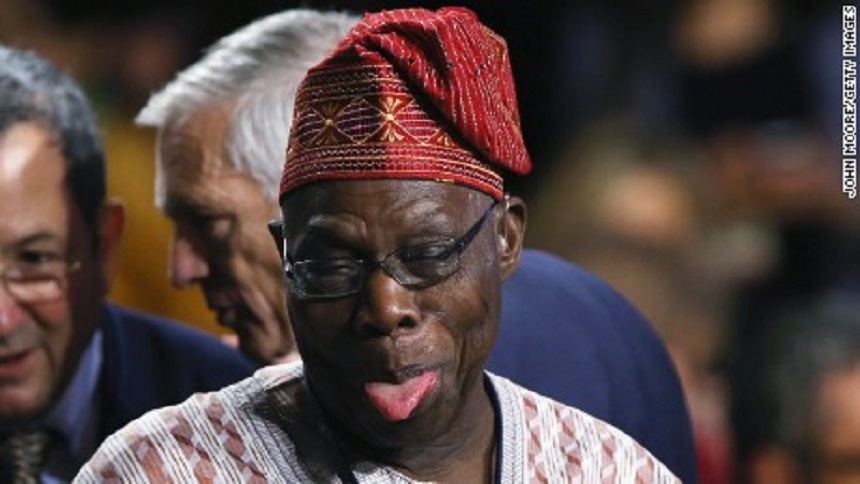
To the discerning and prescient mind, a certain parallel is to be found in the story of Bashorun Gaa and Chief Olusegun Aremu Obasanjo (former President of Nigeria), both kingmakers at different times and eras, yet possessing the same mindset and idiosyncrasies — a certain human function no doubt, which pretends to be something that is not.

In the old Oyo Empire, the Bashorun or Iba Osorun is the head of the cabinet cum legislators, upon whom the burden of administering the realm and also selecting the kings are rested.

There arose a powerful head of the kingmakers, through deft hands and carefully attained integrity status, Gaa, who became powerful enough to be deemed dependable to make choices on behalf of the rest.

So Gaa chose Labisi to be Alaafin. Labisi, a man of immense insight and managerial dexterity, extended the frontiers of the Yoruba empire from the banks of the Niger River to the shores of the Volta River in Ghana, where today a Yoruba king, The Oninana of the Gas people near Accra, reigns on the authority of the Alaafin made possible by Labisi, yet Bashorun Gaa got rid of him.

The other three Alaafins were in no fashion less in greatness than Labisi but Gaa Osorun got rid of them all.

How was he able to do these things? you might ask. Just as you might ask by what means has Chief Obasanjo become a factor in who becomes who and who is politically removed from office in Nigeria. The answers are very much about the same tact, methodology.

Gaa achieved this feat by pretence, pretending to be a defender of the common man, defending the commonwealth, fighting for the liberty of all and protecting the rights of every individual were the premises upon which Gaa acted.

Just like Obasanjo acts and speaks as the ombudsman, the defender of the masses and the protector of our collective liberal, but are they what they claim to be?

Bashorun Gaa was a rich man per excellence, far richer that he pretended to be, far more egoistic but never altruistic. What drove Bashorun Gaa was the control syndrome and quest for authority that flows from his wiles. He was the master of Service-To-Self, it was the binding rule that what Gaa wants, Gaa gets.

In the period that Chief Olusegun Aremu Obasanjo emerged unto the Nigerian national scene from the time of civil war, a clear pattern has also emerged. A clear pathological egoism, laced with psychological hedonism much like the life and style of Bashorun Gaa.

In all of Obasanjo’s books, it is easy to see a man of immense ego.

Right from his book, ‘My Command’, a memoir about his exploits in the civil war, Obasanjo blamed every commander and active officer he could remember and praised himself alone — From Shuwa, to Alabi-Isama, Benjamin Adekunle and to even Murtala Mohammed, Obasanjo lambasted all,   saving all the glory to himself alone.

In his last book, ‘My Watch’, Obasanjo shifted the blame of his failed 3rd term presidential bid on the governors who he said were the ones who wanted him to continue to be president for the unprecedented and unconstitutional 3rd term and not himself.

When Obasanjo, as a military Head of State, relinquished power to Alhaji Shehu Shagari in 1979, one would have thought the accident of his own emergence as a Head of State would have been quite compelling and humbling to ease his ego tripping, but he did not wait before writing in his book quite unnecessarily that as Chief Awolowo strived ever so hard to be president, providence made him, Obasanjo Head of State without asking for it. How much higher in ego massaging can anyone else get to in comparison with a master in hedonism?

It gives Obasanjo such pleasure to be seen in competition in which he can also safely declares himself the winner.

Many of his colleagues in the military and also others who have observed Obasanjo’s massive ego tripping have written about this, which I call the Obasanjo complex.

In the game of squash-racket in which two players knock a ball against the wall, a game Obasanjo loves, his opponents know the rules — you dare not play to win against Obasanjo, it is a taboo!

Historians have documented the hedonistic saga of Bashorun Gaa and a very important part of the books written on this kingmaker is his usual treaties after getting rid of yet another king, “Ija ilu ni Gaa n’gbe, Gaa o pa yin l’oba he Ooo.! “It is but the cause of the citizenry that drives Gaa to act in the manner that leads the king to be removed, it is not about Gaa wanting the king dead”.

Such was how Gaa Osorun was wont to say; such as the same way Chief Obasanjo has been saying it ever since he wrote his first letter to Alhaji Shehu Shagari, barely 3 years into his four year 1st term in office; always claiming it is for the common good and for the sake of nationhood has Obasanjo basing his letters to every President or Head of State to have emerged, ever since.

Obasanjo, Egoism and Hedonism

Psychological egoism is the view that humans are always motivated by self-interest, even in what seem to be acts of altruism. It claims that, when people choose to help others, they do so ultimately because of the personal benefits that they themselves expect to obtain, directly or indirectly, from doing so.

In the same manner is pathological hedonism, the view that the ultimate motive for all voluntary human action is the desire to experience pleasure or to avoid pain.

In both lies the Obasanjo complex; a mix of Service-To-Self and the gratification of pleasure in been seen as high and above everybody else.

In the Bashorun Gaa parallel, this same mix played out as the only Alaafin to survive Gaa antics, Alaafin Abiodun subjected himself seemingly to be under Gaa’s influence but prostrating to the Osorun, which is unheard of for an Oba to prostrate let alone the head of the empire to do so to anyone.

Though the Bashorun did not live in the era of letter writing, he employed much the same vending of publicly berating the king, rather than a more dignified purposeful altruistic private admonition.

Chief Obasanjo who has had a hand in the making of all the three presidents who have succeeded him, and with his position as a former president, has an unrestrained, unfettered, unrestricted access to whoever is President. But not unlike the hedonistic Gaa, Obasanjo has chosen and repeatedly so, to rush to press anytime he personally feels there should be a change of government.

Unto all Presidents A letter

That Chief Olusegun Aremu Obasanjo has written to all Presidents since President Shagari in 1982 is not the question, that he has yet written such a letter at these times and yet again is our focus. And why this letter should be seen as suspect is the reason for this article.

Comrade Oladimeji Odeyemi is the President of National Committee of Yoruba Youth (NCYY) and the Convener of the Coalition of Civil Society Groups against Terrorism in Nigeria sent this article from Ibadan.


Dipo Olowookere is a journalist based in Nigeria that has passion for reporting business news stories. At his leisure time, he watches football and supports 3SC of Ibadan. Mr Olowookere can be reached via [email protected]

Feature/OPED

How Inside Jobs and Policy Shocks Trigger Nigeria’s Rising Loan Crisis

Published

on

Nigeria’s Rising Loan Crisis

By Blaise Udunze

The latest in the Nigerian banking sector, as banks grapple with the recapitalization compliance deadline, is confronted with a familiar yet unsettling problem that stems from rising loan defaults amid expanding credit. Data from the Central Bank of Nigeria’s (CBN’s) latest macroeconomic outlook of 2025 showed that the banking industry’s Non-Performing Loans ratio climbed to an estimated 7 percent, pushing the sector above the prudential ceiling of 5 percent.

This deterioration has occurred even as banks report improved credit availability and strong loan demand across households and corporates. At first glance of the development, the narrative seems to defy logic in a real sense. However, below this lies a deeper story of macroeconomic strain, policy-induced shocks, and, most worryingly, persistent corporate governance abuses that continue to erode asset quality from within.

To be clear, Nigeria’s current wave of loan defaults cannot be blamed on reckless borrowers alone. The operating environment has become unusually hostile. Inflation, as reported by the National Bureau of Statistics (NBS), recently suggests that headline inflation is cooling and growth indicators show tentative improvement; regrettably, more Nigerians are slipping below the poverty line, eroding household purchasing power and raising operating costs for businesses.

Especially in the small and medium-sized enterprises, though, the economic growth appears positive, but has been uneven and insufficient to offset cost pressures in this space. This has heralded weak consumer demand that has squeezed revenues across retail, manufacturing and services, causing shrinking cash flows and also loan obligations remain fixed or, in many cases, rise. In such conditions, repayment stress is inevitable.

Tight monetary policy has compounded the problem. The CBN’s aggressive rate hikes, aimed at restoring price and exchange-rate stability, have significantly raised lending rates. Variable-rate loans have become more expensive mid-tenure, and businesses that borrowed under lower-rate assumptions now face repayment shocks. Even otherwise viable firms have found themselves pushed into distress as interest expenses consume a growing share of income. Going by the official survey for the last quarter of 2025, it shows that financial pressure on borrowers has intensified as more borrowers are failing to repay loans across all major categories for both secured loans, unsecured loans and corporate loans.

Exchange-rate volatility has delivered another blow. The Naira’s depreciation and FX reforms have sharply increased the burden on borrowers with dollar-denominated loans but Naira income. Import-dependent businesses have seen costs surge, while FX scarcity continues to disrupt production and trade cycles. For many firms, the problem is not poor management but currency mismatch. Loans that were sustainable under a more stable exchange regime have become unserviceable almost overnight.

Layered onto these macro pressures is Nigeria’s weak business environment, which has further worsened the situation, alongside chronic power shortages forcing firms to rely on costly alternatives, logistics challenges and insecurity disrupting supply chains, and regulatory uncertainty complicates planning. More on the burner that has continued to heighten the challenges is the multiple taxation and compliance burdens, further compressing margins. In survival mode, businesses naturally prioritise payrolls, energy, and raw materials over debt service. Defaults, in this context, are often a symptom rather than the disease.

Yet while these systemic pressures explain much of the stress, they do not tell the whole story. A critical and often underemphasised driver of rising loan defaults lies within the banks themselves, most especially corporate governance abuse, which emanates particularly from insider-related lending. This is the uncomfortable truth that Nigeria’s banking sector has struggled to confront decisively.

Corporate governance, at its core, is about discipline, accountability, and oversight. In the banking context, it determines how credit decisions are made, how risks are assessed, and how early warning signs are addressed. Where governance is weak, loan quality inevitably suffers. Nigeria’s history offers painful lessons, especially the banking failures of the 1990s to the post-2009 crisis clean-up, insider lending and boardroom abuses have repeatedly emerged as central culprits.

Recent evidence suggests that the problem has not disappeared. Industry estimates indicate that a significant portion of bad loans remains linked to insider and related-party exposures. Former NDIC officials have disclosed that, historically, directors and insiders accounted for as much as 40 per cent of bad loans in deposit money banks, with a handful of institutions holding the majority of insider-related NPLs. It would be said that governance frameworks have improved since then, but enforcement gaps still persist.

Insider abuse manifests in several ways. Loans are extended to directors, executives, or connected parties with inadequate due diligence. Credit decisions are influenced by relationships rather than repayment capacity, and this has been one of the critical problems as collateral is overvalued, covenants are weak, and stress testing is often superficial. When early signs of distress emerge, enforcement is delayed, restructuring is repeated without fundamental improvement, and recoveries are treated with undue caution to avoid internal embarrassment or exposure.

The result is predictable. These loans default faster and are harder to recover. Worse still, they distort bank balance sheets by crowding out credit to productive sectors. When insiders default, the signal to the wider market is corrosive. Here, credit discipline is optional, and accountability is selective, and it further fuels moral hazard, encouraging strategic defaults even among borrowers who could otherwise repay.

Governance failures also weaken loan recovery processes. Poorly empowered risk and audit committees miss warning signs or fail to act decisively because the system has been built to fail. Legal remedies are pursued slowly, if at all. In an environment where judicial delays already undermine contract enforcement, such reluctance turns manageable problem loans into fully impaired assets. Over time, NPLs accumulate not because recovery is impossible, but because it is poorly pursued.

Compounding these internal weaknesses are government policy shifts and fiscal stress, which have become major external shock absorbers for bank balance sheets. Policy inconsistency has made cash flow planning increasingly difficult for borrowers. For instance, the sudden tax changes or aggressive enforcement drives will definitely alter cost structures overnight. Delays in government payments to contractors starve businesses of liquidity, and this will surely push otherwise solvent firms into default. In theory, although removing fuel subsidies, while economically justified, have often occurred without adequate transition buffers, transmitting immediate cost shocks across energy, transport, and consumer goods sectors.

The banking sector, heavily exposed to government-linked projects and regulated industries, absorbs these shocks directly. Loans tied to this sector showed that the banks are hugely exposed to oil and gas, power, and infrastructure; they are particularly vulnerable when fiscal pressures delay receivables or alter contract economics. For instance, a total of 9 banks’ exposure to the Oil & gas sector increased to N15. 6 trillion in 2024, representing about 94.4per cent increase from N10. 17 trillion reported in 2023 financial year. It is therefore no coincidence that NPL concentrations remain high in these sectors. In effect, fiscal stress is being intermediated through bank balance sheets.

When the CBN ended the special leniency measures known as forbearance in 2025, the real extent of loan stress in the banking industry became much clearer. For a longer time, pandemic-era reliefs allowed banks to renegotiate stressed loans without immediately classifying them as non-performing. While this helped preserve surface stability, it also masked underlying vulnerabilities. With the end of forbearance, many restructured facilities have crystallised as bad loans, pushing the industry NPL ratio above the prudential ceiling. This does not mean risk suddenly increased; it means it is now being recognised.

To the CBN’s credit, transparency has improved as the industry witnessed stricter classification rules and reduced forbearance have forced banks to confront economic truth rather than regulatory convenience. And, despite the challenges, the financial system appears to be generally sound because banks have enough cash to meet obligations and sufficient capital buffers that still exceed regulatory floors, while these buffers are under pressure. Though the ongoing recapitalisation efforts are expected to provide additional buffers.

However, stability should not be confused with health. Rising NPLs, even in a liquid system, carry real consequences. Banks must set aside provisions, eroding profitability and capital. Credit supply tightens as lenders grow cautious, starving the real economy of funding. One known fact is that the moment governance and transparency concerns grow, investors, particularly foreign ones, become less willing to commit capital and this loss of confidence eventually slows down overall economic growth.

The policy response, therefore, must go beyond macroeconomic management. While stabilising inflation and the exchange rate is essential, it is not sufficient. Governance reform within banks must be treated as a systemic priority, not a compliance exercise. Insider lending rules must be enforced rigorously, with real consequences for violations. Boards must be strengthened, not merely in composition but in independence and courage. Risk and audit committees must be empowered to challenge management and act early.

Equally important is addressing the fiscal-banking nexus. The government must recognise that policy volatility and payment delays are not costless. They translate directly into higher credit risk and weaker financial intermediation. A more predictable policy environment, timely settlement of obligations, and credible transition frameworks for major reforms would significantly reduce default risk without a single naira of direct intervention.

The Global Standing Instruction framework, which the CBN continues to promote, can help improve retail and MSME recoveries. But frameworks cannot substitute for culture. Credit discipline begins at the top. When banks lend to themselves without consequence, the entire system pays the price.

Nigeria’s rising loan defaults are not merely an economic statistic; they are a governance signal. They reflect a system under stress, yes, but also one still wrestling with old habits. If recapitalisation is to be meaningful, it must be accompanied by recapitalisation of trust, through transparency, accountability, and consistent policy. Otherwise, the cycle will repeat the same strong balance sheets on paper, weak loans underneath, and another reckoning deferred, but not avoided.

Blaise, a journalist and PR professional, writes from Lagos and can be reached via: [email protected]

Continue Reading

Feature/OPED

Donald Trump: Umeagbalasi and the Powers of a Screwdriver Salesman

Published

on

Donald Trump Screwdriver Salesman

By Jude Chijioke Ndukwe

It is never difficult to see the hand of Esau in the report by The New York Times under the headline, “The Screwdriver Salesman Behind Trump’s Airstrikes in Nigeria” purportedly filed in by one Ruth Maclean.

The mocking description of Mr Emeka Umeagbalasi as a “short man” and the repeated mention of “Onitsha”, a leading commercial town in southeast Nigeria, a region with arguably the highest population and concentration of Christians in the country, in the report send all the signal needed to conclude that the report was not about facts, nor about love for Nigeria, but all about labelling a man and the ethnic group he belongs just to keep promoting a dangerous narrative mischievously and maliciously skewed against the Igbo ethnic stock of Nigeria.

It is also suspect that the same report has been generously and gleefully shared by some local media outlets despite its many flaws and glaring disinformation. These outlets that hardly share reports on Nigeria by foreign media houses have suddenly woken up to share this particular one with so much enthusiasm. “The agenda,” like we say in local parlance, “is truly agendaing.”

The same set of people who accuse Donald Trump of interfering in the internal affairs of Nigeria by deploying airstrikes against terrorists in the country have suddenly embraced The New York Times’ deliberate attempt at grand falsehood against Nigeria just because it suits their aim to pitch the rest of the country against the Igbo.

Such hypocrisy!

For clarity, incidents that led Nigeria being designated a Country of Particular Concern and subsequent follow up with airstrikes by the US started with the lackadaisical attitude government officials approached its fight against terrorism, often refusing to prosecute terrorists arrested but kept granting them pardon and entering into dubious peace deals with them to the angst and frustration of Nigerians.

These actions left victims of terrorism traumatised without any hope of justice and healing. They felt helpless and betrayed by their own government as they watched in despondency and indignation how, day after day, those who mindlessly killed their people, raped their women, hacked their children, including unborn babies, to death right before them, sacked them from their ancestral lands, desecrated and burnt their places of worship, were being handsomely rewarded by government officials at different levels instead of prosecuting them.

They watched in hopelessness, how terrorism kingpins turned billionaires from government “peace deals” while victims wallowed in penury in IDP camps where mass graves serve as a reminder of mass murders and an enduring grave injustice. Worse still is the indecent displays of money from such “peace deals” in the social media by the terrorists, thereby rubbing salt to the injury of their victims.

Left with no option, those directly in the line of fire decided to take their destinies in their own hands. They bypassed a lame and toothless government that seemed more interested in photo ops with terrorists than dealing decisively with them. They took the matter to the US Congress for help before they would be finally exterminated.

Among the first was the Catholic Bishop of Makurdi, Most Rev. Wilfred Chikpa Anagbe, who as far back as July 18, 2023, took his advocacy against “Christian genocide” in Nigeria to the US House Committee on Foreign Affairs, saying among other things that, “The inaction and silence about our plight by both the [Nigerian] government and powerful stakeholders all over the world prompts me to often conclude that there is a conspiracy of silence and a strong desire to just watch the Islamists get away with genocide in Benue State and other parts of Nigeria.”

On February 14, 2024, The US House Foreign Affairs Subcommittee on Africa held a hearing titled “The Future of Freedom in Nigeria”. Among those whose statements and testimony featured in the hearing were Bishop Wilfred Anagbe, Ebenezer Obadare, Oge Onubogu, and Kola Alapinni. From these names, one can easily see that the fight against terrorism and the campaign against “Christian genocide” in Nigeria in the international community transcend ethnicity.

A week before that, the U.S. Congress Members had already “voted to move forward with H. Res. 82, a House resolution calling for greater U.S. action in response to the religious freedom crisis in Nigeria. The House resolution…calls on the U.S. Secretary of State to designate Nigeria as a Country of Particular Concern (CPC) on their list of worst religious freedom offenders for ‘engaging in and tolerating systematic, ongoing, and egregious violations of religious freedom,’” while also highlighting religious prisoners of conscience and the egregious blasphemy laws in Nigeria.

This was in February 2024, long before Trump became President, long before the Tales by Moonlight story of “screwdrivers and airstrikes” peddled today by shameless merchants of conflicts whose “god is their belly”.

In March 2025, Bishop Anagbe continued his advocacy for the defence of his flock and their rescue from marauding terrorists to the US House Committee on Foreign Affairs (Africa Subcommittee) where he once again gave a gory detail of acts of terrorism unleashed on his people without help from government.

Following all these was the intervention of the fearless Rev Ezekiel Dachomo of Plateau State who joined in calling for an end to the killing of Christians through advocacy to the international community. He used his social media pages to highlight cases of mass murders and mass graves of his flock and other Christians killed on the Plateau, while openly calling for US intervention in the country.

We cannot forget Frank Utoo’s poignant and ceaseless advocacy and factual narratives about the killing of Christians in Nigeria, saying on the rooftops what many speak in hushed tones. He is from Yelwata, one of the worst-hit places in Benue State. And so many local and international advocates who have been calling for the intervention of the US in Nigeria’s sorry situation.

If that PR stunt by The New York Times was meant to cover up the ugly security situation in Nigeria and blame the US airstrike on Umeagbalasi, and by extension, his Igbo ethnic stock, then the mission failed abysmally. It rather presented the Nigerian government as purveyors of deceit and merchants of mischief because the same Nigerian government had earlier confirmed to the world that it (and not Umeagbalasi) provided the intelligence upon which the US acted and struck Sokoto with so much fury that sent terrorists scampering to hell like they have never done before. The Nigerian government also confirmed that the airstrike was a joint operation with the US.

The New York Times PR stunt backfired big time and those associated with it are now panting in frustration like dogs that just escaped the jaws of hyenas by the whiskers.

Let me end this piece by making it clear that anyone who gets riled that terrorists are being eliminated in Nigeria, whether by the US or by our local gallant troops, is also a terrorist or a terrorism enabler. Such people should be treated as criminal conspirators in the fight against terrorism.

Meanwhile, Mr Emeka Umeagbalasi, the noble screwdriver salesman from the East, the “short man” who towered above the “Giant of Africa” to reach Trump, the man in Onitsha who moved the hands of Trump in Washington, should celebrate his greater rise to global stardom and the unintended decoration of honours inadvertently bestowed upon him by those who sought to lead him to the guillotine.

Terrorists, their enablers and spin doctors, should learn a very important lesson from Umeagbalasi, that no matter your height and profession, “godliness with contentment is great gain.”

Jude Chijioke Ndukwe sent this piece from Abuja

Continue Reading

Feature/OPED

How Policy Flip-Flops Are Making Nigerians Poorer

Published

on

Policy Flip-Flops

By Blaise Udunze

Nigeria’s deepening poverty crisis is no longer speculative; it is now statistically inevitable. Although the latest Consumer Price Index figures released by the National Bureau of Statistics (NBS) suggest that headline inflation is cooling and growth indicators show tentative improvement, regrettably, more Nigerians are slipping below the poverty line. Reviewing the recent projections from PwC’s Nigeria Economic Outlook 2026, it is alarming, which reveals that no fewer than two million additional Nigerians are expected to fall into poverty next year. This is expected to push the total number of poor people to about 141 million, roughly 62 percent of the population and the highest level ever recorded in the country’s history.

This grim outlook persists despite eight consecutive months of easing inflation and modest economic recovery, and as one can perceive, the contradiction is telling. The fact remains that macroeconomic signals are improving on paper, yet lived reality continues to deteriorate. It is glaring that the widening gap between policy metrics and human outcomes exposes a deeper truth in the sense that Nigeria’s poverty crisis is not simply the product of external shocks or temporary adjustment pains. It is the cumulative result of fragile policymaking, inconsistent reforms, weak institutional coordination, and a failure to sequence economic changes with adequate social protection. With these, it becomes clearer that poverty in Nigeria is no longer an unintended side effect of reform; it is increasingly its most visible outcome as identified today.

It would be recalled that the current administration in 2023, when it assumed office, promised a bold economic reset. At this point, the nation witnessed the fuel subsidy removal, exchange-rate liberalisation, and tighter fiscal discipline being introduced swiftly and applauded internationally for their courage and long-term logic. Notably, these reforms unleashed an economic storm whose aftershocks continue to batter households and currently resulting to the cost of a bag of rice that sold for about N35,000 two years ago now costs between N65,000 and N80,000, while a crate of eggs has risen from N1,200 to over N6,000 and basic staples like garri, tomatoes, and pepper have drifted beyond the reach of ordinary Nigerians. For millions, the economy did not reset; it snapped.

Inflation, often described by economists as a “silent tax,” has punished productivity, mocked thrift, and rewarded speculation.

Reports from the NBS’s December 2025 disclosed that headline inflation eased to 15.15 percent and according to it, this is due to a rebasing of the Consumer Price Index, down sharply from 34.8 percent a year earlier, this statistical moderation has brought little relief to households. Food inflation, at 10.84 percent year-on-year, and a marginal month-on-month decline may look reassuring on spreadsheets, but for families spending 70 to 80 percent of their income on food, such figures feel detached from reality. These figures are not only implausible but also insulting to those whose lives have been torn apart by the skyrocketing prices. With the realities facing the larger populace, Nigeria must be using another mathematics.

Nigeria may have changed its base year, but it has not changed the harsh arithmetic of survival.

PwC’s data underscores this disconnect, as nominal household spending rose by nearly 20 percent in 2025, real household spending contracted by 2.5 percent, reflecting the erosive impact of rising food, transport, and energy costs. The painful part of it, is that Nigerians are spending more money to consume less, and this is to say that growth, hovering around 4 percent, is not strong enough to absorb shocks or lift households meaningfully. As analysts note, Nigeria would require sustained growth of 7 to 9 percent to make a significant dent in poverty. That is to say that anything less merely slows the descent.

The structural weakness of the economy is compounded by policy inconsistency. Nigeria’s economic landscape is littered with abrupt shifts, subsidy removals without buffers, currency reforms without stabilisation mechanisms and trade policies that oscillate between restriction and openness. For households and small businesses, which employ most Nigerians, this unpredictability makes planning impossible. The economy has constantly being faced with price volatility, income shocks, and lost jobs because these are the ripple effects of every policy reversal. Uncertainty itself has become a poverty multiplier.

Nowhere is this fragility more evident than in food systems and rural livelihoods, and this has been where insecurity has merged with policy failure to create a new poverty spiral. Across farmlands in the North and Middle Belt, crops rot unharvested as banditry and insurgency force farmers off their land. Nigeria’s largely agrarian economy has been crippled by violence that disrupts planting cycles, destroys infrastructure, and displaces communities. The result is both income poverty for farmers denied access to their livelihoods and food inflation that erodes purchasing power nationwide.

For record purposes, earlier last year, the NBS Multidimensional Poverty Index showed that 63 percent of Nigerians, about 133 million people, are multidimensionally poor, with poverty heavily concentrated in insecure regions. Findings showed that about 86 million of the poor live in the North, and this is where insecurity is most severe. This record showed that rural poverty stands at 72 percent,c compared to 42 percent in urban areas, and while the states most affected by banditry and insurgency record poverty rates as high as 91 percent. Insecurity is no longer just a security problem; it is one of Nigeria’s most powerful poverty drivers.

The economic cost of insecurity in Nigeria today is staggering. This is because the conservative estimates suggest Nigeria loses about $15 billion annually, which is roughly equivalent to N20 trillion, due to insecurity-induced disruptions across agriculture, trade, manufacturing, and transportation. At the same time, security spending now consumes up to a quarter of the federal budget. In just three years, over N4 trillion has been spent on security, which crowded out investment in health, education, power, and infrastructure. Every naira spent managing perpetual violence is a naira not invested in preventing poverty, even as poverty deepens, the state’s fiscal response reveals a troubling misalignment of priorities. The 2026 federal budget, estimated at N58.47 trillion, ironically allocates just N206.5 billion to projects directly tagged as poverty alleviation and this only amounts to about 0.35 percent of total spending and less than one percent of the capital budget. In a country where over 60 percent of citizens live below the poverty line, this allocation borders on policy negligence.

Worse still, over 96 percent of this already meagre poverty envelope sits under the Service Wide Vote through the National Poverty Reduction with Growth Strategy, largely as recurrent provisions. All ministries, departments, and agencies combined account for barely N6.5 billion in poverty-related projects. This fragmentation reflects a deeper institutional failure, that is to say, poverty reduction exists more as a line item than as a coherent national mission.

Where MDA-level interventions exist, they are largely palliative and scattered, grain distribution in select communities, tricycles and motorcycles for empowerment, and small scale skills acquisition for women and youths. The largest such project, a N2.87 billion tricycle and motorcycle scheme under a federal cooperative college, accounts for nearly half of all MDA-based poverty spending. The fact remains that the various interventions may offer temporary relief, and they do little to address structural drivers of poverty such as job creation, productivity, market access and human capital development.

Even the Ministry of Humanitarian Affairs and Poverty Alleviation illustrates the problem just as its budget jumped sharply in 2026, much of the increase went into administrative and capital items, office furniture, equipment, international travel, retreats, and systems automation rather than direct poverty-fighting programmes. This reflects a familiar Nigerian paradox: institutions grow, but impact shrinks.

International partners have been blunt in their assessments. The World Bank estimates that Nigeria spends just 0.14 percent of GDP on social protection, which is far below the global and regional averages. Only 44 percent of safety-net benefits actually reach the poor, rendering the system inefficient and largely ineffective. PwC similarly warns that without targeted job creation, productivity-focused reforms, and effective social protection, poverty will continue to rise, undermining domestic consumption and straining public finances further.

Fiscal fragility compounds the crisis. The N58.18 trillion 2026 budget carries a deficit of N23.85 trillion, with debt servicing projected at N15.52 trillion, nearly half of expected revenue. The public debt has ballooned to over N152 trillion. The contradiction here is that Nigeria is borrowing not to expand productive capacity but to keep the machinery of government running. The truth is not far-fetched because, as debt crowds out development spending, households are forced to pay privately for public goods, education, healthcare, water, deepening inequality and entrenching poverty across generations.

To be clear, not all signals are negative. This is because opportunities exist if reforms are sustained and properly sequenced. Regional trade under the African Continental Free Trade Area could diversify exports and create jobs. But reform momentum without inclusion and institutional capacity risks becoming another missed opportunity.

This is the central tragedy of Nigeria’s moment. The country is attempting necessary reforms in an environment of weak buffers, fragile institutions, and low trust. Poverty is therefore not accidental. It is the predictable outcome of inconsistency, reforms without protection, stabilisation without security, and budgets without people.

Nigeria faces an undeniable choice. It can continue down a path where fragile policies deepen deprivation and erode trust, or it can build a disciplined, coordinated framework that aligns reforms with social protection, security, and inclusive growth. Poverty is not destiny. But escaping it requires more than courage in reform announcements; it demands consistency, compassion, and the political will to place human welfare at the centre of economic strategy.

Blaise, a journalist and PR professional, writes from Lagos and can be reached via: [email protected]

Continue Reading

Trending