Connect with us

Travel/Tourism

Dubai Unveils Dazzling New Attractions

Published

on

By Modupe Gbadeyanka

Ever evolving and growing, Dubai continues to surprise and amaze with stunning new attractions and world-class developments opening almost every week. 2017 saw a host of exciting new additions to the city’s must-visit list, and looking ahead there’s plenty more to come in 2018.

Read on for our picks of the top sites and attractions that rounded off last year in style and those are set to capture travellers’ imagination in the coming year.

NEWLY OPENED

Bulgari Resort Dubai

The newest five-star hotel to join Dubai’s luxury hotel scene is the world’s fifth Bulgari Hotels and Resorts property, and it’s now open at the exclusive seahorse-shaped Jumeirah Bay Island, just off the coast of Jumeirah Beach Road. Bringing elegant Italian style to the Middle East, this private island retreat is the perfect contrast to the city’s skyscraper hotels, boasting a Mediterranean-style design that welcomes guests through the world’s first Bulgari Marina and Yacht Club. The luxury 1.7 million square foot marine complex is framed by lush landscaped gardens and features 100 rooms and suites, 20 residential villas and a marina, all accompanied by a full range of luxury amenities. The resort celebrated its launch with a star-studded affair that welcomed Bulgari brand ambassadors and VIPs, model Bella Hadid, Oscar-winning actress Alicia Vikander, model and actor Jon Kortajarena, and model Jasmine Sanders.

Renaissance Downtown Hotel

With 298 guestrooms including 65 sprawling suites, along with a thoughtful design that incorporates elements from local artists, there’s plenty for the stylish traveller to explore at the Renaissance Downtown Hotel. Restaurants include David Myers’ Bleu Blanc, which resembles a Southern French farmhouse, BASTA!, an urban interpretation of a Roman trattoria, and BHAR, a Middle Eastern-style brasserie whose name means ‘spice’. Chef Masaharu Morimoto also opened the first UAE branch of his eponymous restaurant, mixing traditional Japanese techniques with Western twists. In addition, the hotel boasts a first-of-its-kind, all-suite spa concept from the renowned Six Senses brand.

XLine Dubai Marina

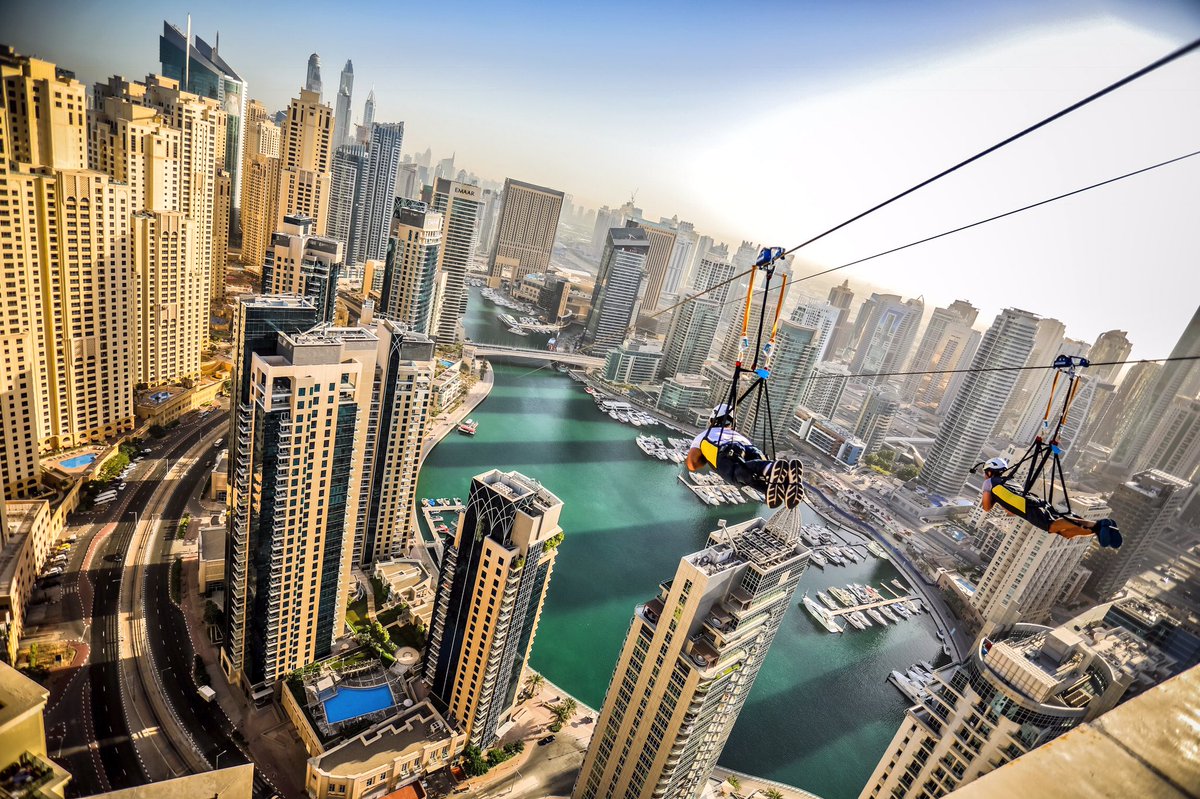
Currently standing as the world’s longest urban zip line, extending a full kilometre from a height of 170 metres to ground level, the XLine Dubai Marina is now open to the public. The line features an incline of 16 degrees and reaches an average top speed of 80 kilometres per hour. Building on the original XLine over The Dubai Fountain launched in 2015, this new edition is twice the length of its forerunner and features two zip lines running adjacent to one another. Also new is the Superman-style harness, suspending daredevils horizontally as they zip from one of the Amwaj towers in JBR down to the terrace of Dubai Marina Mall.

Dubai Safari Park

Dubai Safari Park is a massive wildlife project that spans over 119 hectares just a short drive from downtown. The park is divided into different sections – Asian Village, African Village and Open Safari Village – and recreates the different habitats suitable for its varied and unique wildlife, including 2,000 animals of 250 different species from around the world. It’s also home to a 1,000-seat theatre, a garden for children, a botanical garden, a butterfly garden and an amateur golf course, in addition to restaurants and a food court in the park’s Valley and Children’s Park. It features the world’s first drive-through crocodile park, the UAE’s largest aviary and the country’s only drive-through hippo and tiger exhibit. The park is also set to offer a zoo-keeping course, which will make it the first place in the UAE to offer such training.

Dubai Frame

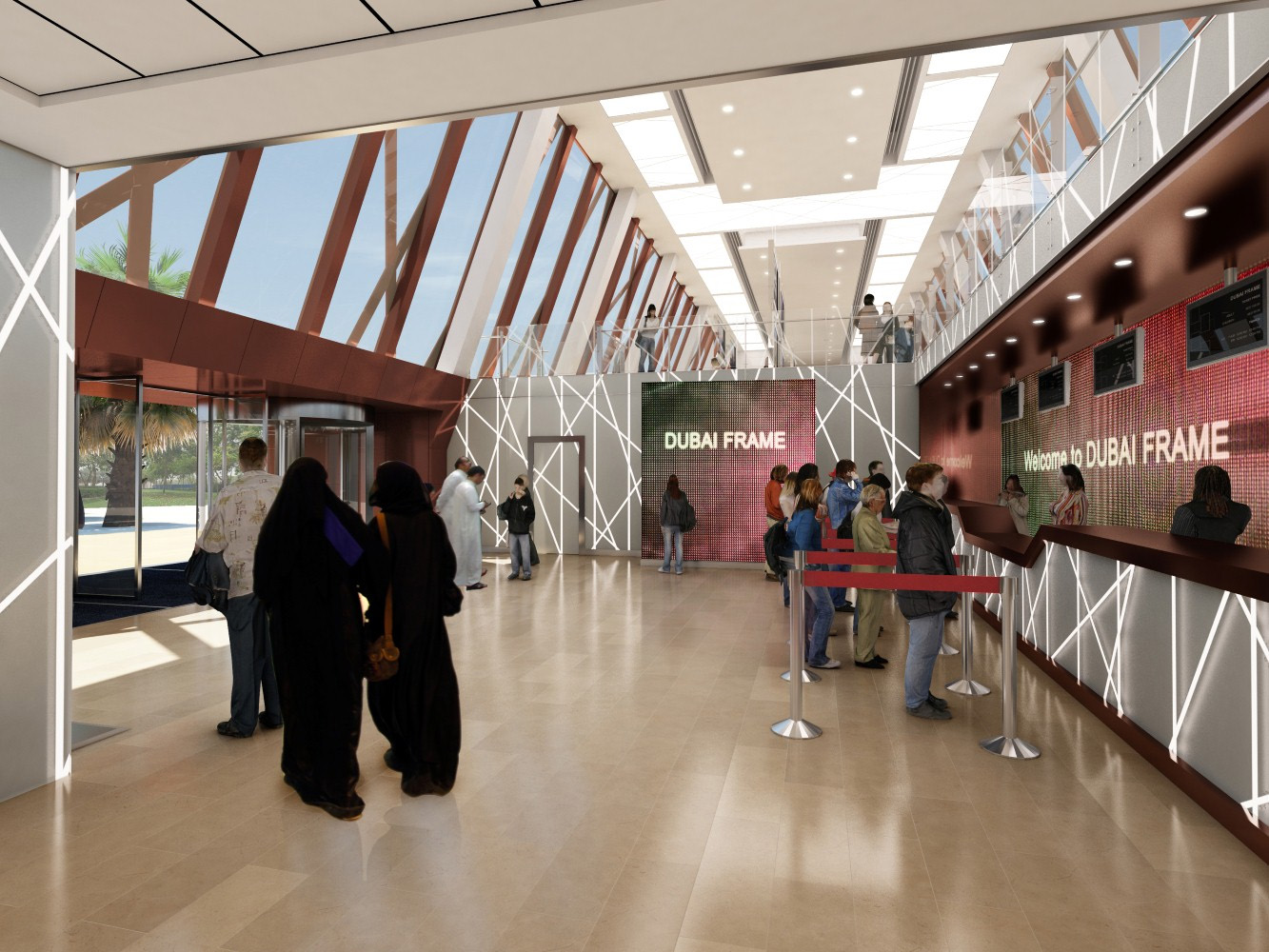
Rising 150 metres high and 93 metres wide, Dubai Frame is an impressive and imposing architectural landmark that unites the city’s past, present and future. Its two vertical towers are connected by a 100-square-metre bridge that features a 25-square-metre glass panel in the centre, offering a great 360-degree view of the city. The bridge serves as an observation deck providing uninterrupted views of Old Dubai to the north and New Dubai to the south. Visitors begin their journey by learning about the history of Dubai in the Past Gallery, with picturesque projections depicting Bedouin life, camels and the infinite sands of the desert. Visitors then move on to augmented reality-activated screens on the Sky Deck level that showcase present-day Dubai, before walking through a specially designed ‘vortex tunnel’ to a virtual metropolis representing the future of Dubai.

OPENING SOON

The Opus by Zaha Hadid

Designed by the late renowned Iraqi-born architect Zaha Hadid, The Opus consists of two glass towers linked by a ground-floor podium and a steel and glass bridge towards the top. The architectural wonder, developed by Omniyat Properties, artfully integrates futuristically stylish interiors with exquisite detail, and features 56,000 square feet of office space, a club, restaurants and ME Dubai, a boutique hotel.

Gevora Hotel

The property, which is scheduled to open in the first quarter of 2018, will have 528 rooms spread right up to the 75th floor. At 356 metres high, it will be the world’s new tallest hotel. To put its huge stature in perspective, Gevora Hotel will be more than three times taller than London’s Big Ben, 56 metres taller than Paris’ Eiffel Tower, and around equal to the length of three football pitches. Located on Sheikh Zayed Road in the Trade Centre area, the hotel will feature four restaurants, swimming pools for adults and children, a Jacuzzi facility, a health club, a luxury spa and gymnasiums.

W Hotel, The Palm

A second W Hotel will open in Dubai in March, located on the beautiful shores of the western crescent of Palm Jumeirah. Built to resemble the letter W, the world-class hotel resort and residential complex will feature a spa, pool areas, water features and other amenities, as well as approximately 100,000 square metres of accommodation including 350 guest rooms and 45 super luxury duplex, triplex apartments and penthouses. Restaurants, retail outlets and function facilities will mostly be located on the ground floor of the hotel wing, with a destination bar and restaurant at a high level to take full advantage of the dual aspect views.

Mohammed Bin Rashid Library

The world’s largest library, overlooking Dubai Creek, will open to the public in the first quarter of 2018, spread over 66,000 square metres. Designed in the shape of an open book on a Rahle (the Arabic lectern), the larger-than-life, seven-storey library will be home to 4.5 million print, audio and electronic books and will include several areas for interaction, events, activities and educational and cultural festivals.

Dolce Sky

A concept like no other is coming to Downtown Dubai’s Address Boulevard Hotel. Located in Downtown Dubai, the hotel boasts a breath-taking panorama of nearby icons; from the world’s tallest building, the Burj Khalifa, to the award-winning Dubai Mall, Dubai Fountain and the Dubai Opera District. Dolce Sky is located on the 70th and 71st floors of the hotel; a five-star hospitality location that will boast a glass stage housing a grand piano above diners, and aerial performers – welcoming global visitors to a delectable variety of cuisines, while promising unique experiences with every visit. The two floors will bring together a chic lounge and rooftop terrace, as well as two first-rate restaurants: the French cuisine of ‘La Vie’ served from a floating kitchen; and the Japanese-inspired ‘Takumi’, led by acclaimed chef Hide Yamamoto, featuring a sushi bar and a lounge specialising in Japanese beverages. It will also include the private, members-only Ellecti Lounge.
Modupe Gbadeyanka is a fast-rising journalist with Business Post Nigeria. Her passion for journalism is amazing. She is willing to learn more with a view to becoming one of the best pen-pushers in Nigeria. Her role models are the duo of CNN's Richard Quest and Christiane Amanpour.

Travel/Tourism

FG to Introduce Biometric Single Travel Emergency Passport 2026

Published

on

Biometric Single Travel Emergency Passport

By Adedapo Adesanya

The federal government has announced plans to introduce the new biometric emergency travel document, the Single Travel Emergency Passport (STEP), by 2026 as part of reforms aimed at modernising Nigeria’s immigration processes and strengthening border security.

Initially revealed in November, the Comptroller General of the Nigeria Immigration Service (NIS), Mrs Kemi Nandap, speaking on Monday in Abuja during the decoration of 46 newly promoted Assistant Comptrollers of Immigration (ACIs) to the rank of Comptrollers of Immigration, said the proposed STEP would replace the current Single Travel Emergency Certificate (STEC) and is designed to enhance efficiency, security, and global acceptability of Nigeria’s emergency travel documentation.

She explained that the new emergency passport would be biometric-based and deployed through alternative, technology-driven platforms to ensure seamless service delivery.

“I’m looking forward to embracing 2026, which will also be part of all the reforms we’re doing to ensure that we optimise our services, in terms of visas, passport production lines and our contactless solutions,” she said.

The NIS boss noted that the STEP is one of several technology-driven innovations being rolled out by the Service to improve operational efficiency and meet its constitutional mandate.

She also highlighted the recent introduction of the ECOWAS National Biometric Identity Card (ENBIC), describing it as a critical step towards seamless regional integration and secure cross-border movement within West Africa.

“We want to ensure that our processes are seamless. The STEP, which we are going to launch early next year, is another key programme that will further strengthen our service delivery,” Nandap added.

The Comptroller General charged the newly decorated officers to demonstrate heightened vigilance, professionalism, and integrity, particularly in light of Nigeria’s prevailing security challenges.

“Your decoration today symbolises the trust reposed in you and carries with it expectations of enhanced leadership, sound judgement, accountability and exemplary conduct,” she said.

Mrs Nandap stressed that officers at senior levels must combine professional competence with strong leadership qualities, including clarity of vision, decisiveness, empathy, and the ability to mentor and inspire subordinates.

“Considering the current security challenges our nation faces, we must remain vigilant and unrelenting in the fight against multifaceted threats. Your actions will set the tone and reflect the core values and reputation of this Service,” she warned.

She reaffirmed the Service’s zero tolerance for indolence and unprofessional conduct, urging officers to embrace innovation, adapt to emerging challenges, and place the interest of the NIS above personal considerations.

Continue Reading

Travel/Tourism

Moving to France After Retirement: What You Need to Know First

Published

on

retirement visa france

The idea of spending retirement in France comes up often — sometimes because of the climate, sometimes because of the healthcare system, and sometimes simply because of the way everyday life is organised there. But once the initial appeal fades, a practical question usually follows: under what conditions can a retiree actually live in France legally?

The short answer is: it’s possible.
The longer answer requires a closer look.

No “retirement visa,” but a workable solution

Unlike some countries, France does not offer a dedicated retirement visa. This often comes as a surprise. In practice, however, most retired foreigners settle in France under the long-stay visitor visa — a residence status that is not tied to age or professional background.

The logic behind it is straightforward: France allows people to live in the country if they do not intend to work and can support themselves financially. For this reason, the visitor visa is used not only by retirees, but by other financially independent residents as well.

Income matters more than age

When an application is reviewed, age itself is rarely decisive. Financial stability is.

French authorities do not publish a fixed minimum income requirement. What they assess instead is whether the applicant has sufficient and reliable resources to live in France without relying on public assistance. This usually includes:

  • a state or private pension;
  • additional regular income;
  • personal savings.

In practice, the clearer and more predictable the income, the stronger the application.

Paris

Housing is not a formality

Relocation is not possible without a confirmed place to live. A hotel booking or short-term accommodation is usually not enough.

Applicants are expected to show that they:

  • have secured long-term rental housing;
  • own property in France;
  • or will legally reside with a host who can provide accommodation.

This is one of the most closely examined aspects of the application — and one of the most common reasons for refusal.

Healthcare: private coverage first

At the time of application, retirees must hold private health insurance valid in France and covering essential medical risks. This requirement is non-negotiable.

Access to France’s public healthcare system may become possible after a period of legal residence, but this depends on individual circumstances, length of stay, and administrative status. It is not automatic.

What the process usually looks like

Moving to France is rarely a single step. More often, it unfolds as a sequence:

  • applying for a long-stay visa in the country of residence;
  • entering France;
  • completing administrative registration;
  • residing legally for the duration of the visa;
  • applying for renewal.

The initial status is typically granted for up to one year. Continued residence depends on meeting the same conditions.

Restrictions people often overlook

Living in France under a visitor visa comes with clear limitations:

  • working in France is prohibited;
  • income from French sources is not allowed;
  • social benefits are not part of this status.

These are not temporary inconveniences, but core conditions of residence.

Looking further ahead

Long-term legal residence can, over time, open the door to a more permanent status, such as long-term residency. In theory, citizenship may also be possible, though it requires meeting additional criteria, including language proficiency and integration.

For many retirees, however, the goal is simpler: to live quietly and legally, without having to change status every few months.

Moving to France after retirement is not about a special programme or age-based privilege. It is a question of preparation, financial resources, and understanding the rules. For those with stable income and no intention to work, France offers a lawful and relatively predictable way to settle long-term.

No promises of shortcuts — but no closed doors either.

Continue Reading

Travel/Tourism

Trump Slams Partial Travel Ban on Nigeria, Others Over Security Concerns

Published

on

trump nigeria

By Adedapo Adesanya

The United States President Donald Trump has imposed a partial travel restriction on Nigeria, as part of a series of new actions, citing security concerns.

The latest travel restriction will affect new Nigerians hoping to travel to the US, as it cites security concerns and difficulties in vetting nationals.

The travel restrictions also affect citizens of other African as well as Black-majority Caribbean nations.

This development comes months after the American President threatened to invade the country over perceived persecution against Christians.

President Trump had already fully banned the entry of Somalis as well as citizens of Afghanistan, Chad, Republic of the Congo, Equatorial Guinea, Eritrea, Haiti, Iran, Libya, Myanmar, Sudan, and Yemen.

The countries newly subject to partial restrictions, besides Nigeria, are Angola, Antigua and Barbuda, Benin, Dominica, Gabon, The Gambia, Ivory Coast, Malawi, Mauritania, Senegal, Tanzania, Tonga, Zambia and Zimbabwe.

Angola, Senegal and Zambia have all been prominent US partners in Africa, with former president Joe Biden hailing the three for their commitment to democracy.

In the proclamation, the White House alleged high crime rates from some countries on the blacklist and problems with routine record-keeping for passports.

The White House acknowledged “significant progress” by one initially targeted country, Turkmenistan.

The Central Asian country’s nations will once again be able to secure US visas, but only as non-immigrants.

The US president, who has long campaigned to restrict immigration and has spoken in increasingly strident terms, moved to ban foreigners who “intend to threaten” Americans, the White House said.

He also wants to prevent foreigners in the United States who would “undermine or destabilize its culture, government, institutions or founding principles,” a White House proclamation said.

Other countries newly subjected to the full travel ban came from some of Africa’s poorest countries — Burkina Faso, Mali, Niger, Sierra Leone and South Sudan — as well as Laos in southeast Asia.

Continue Reading

Trending