Travel/Tourism
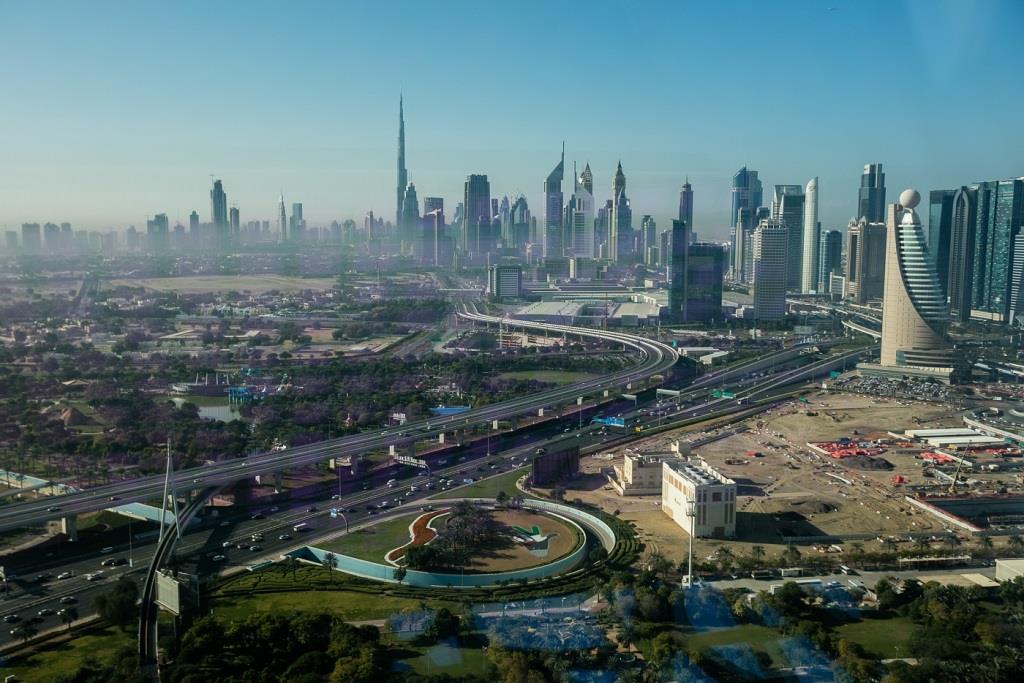
Dubai Moves to Become World’s First Most Visited City
**Records 15.8m Int’l Overnight Visitors in 2017
By Modupe Gbadeyanka
Last year, Dubai recorded a strong 6.2 percent year-on-year increase in international overnight visitation, accelerating the 5 percent growth witnessed in the previous year and propelling the emirate’s momentum towards its 2020 goal of welcoming 20 million visitors per year by the start of the next decade.
According to the latest data published by Dubai’s Department of Tourism and Commerce Marketing (Dubai Tourism), a total of 15.79 million tourists visited Dubai last year, setting a new record for the emirate and underlining the sustained strength and resilience of its travel and tourism sector.
Commenting on the development, His Excellency Helal Saeed Almarri, Director General, Dubai Tourism, said: “Under the visionary leadership of His Highness Sheikh Mohammed Bin Rashid Al Maktoum, Vice-President and Prime Minister of the UAE and Ruler of Dubai, the emirate has continued to capture the share of the global outbound travel market, complemented by a significant increase in tourism-driven economic contribution to the country’s GDP.
“Our strong 6.2 percent growth in 2017 has allowed us to ramp up the pace towards meeting our 2020 targets, and we remain confident that our performance, backed by the continued strength of our partnerships across government and private sector stakeholders, will enable us to successfully attain our goals of becoming the number one most visited city as well as being the most recommended with the highest number of repeat Dubai loyalists.”
India retained top spot in 2017, contributing 2.1 million visitors, becoming the first country to cross the 2 million mark in a single year.

The country’s performance represented a 15 percent year-on-year increase and validated, among other factors, the success of Dubai Tourism’s ongoing collaboration with Bollywood superstar Shah Rukh Khan in the multi award-winning #BeMyGuest campaign.
The Kingdom of Saudi Arabia (KSA) maintained its second rank, contributing a total of 1.53 million tourists last year, maintaining its position as the highest driver of traffic volumes from within the Gulf Cooperation Council (GCC).
Third-placed UK, meanwhile, delivered 1.27 million travellers, rising 2 percent over 2016, underscoring Dubai’s enduring popularity among British travellers.
Impressive results from some of Dubai’s remaining top 10 source markets for inbound tourism included fifth-placed China with 764,000 tourists, up 41 percent while eighth-placed Russia with 530,000 visitors, recording a stellar 121 percent increase over the previous year.
Both markets benefited from easier access following the introduction of visa-on-arrival facilities to Chinese and Russian citizens in late 2016 and early 2017, respectively.
With increased contributions also from the USA, Germany and Iran, at 633,000, 506,000 and 503,000 visitors respectively, collective gains across all of these markets helped mitigate the decline in visitation observed from some of the regional markets like Oman and Pakistan.

Western Europe replaced the GCC as Dubai’s main regional source market with a 21 percent share, contributing more than 3.2 million travellers, up 5.5 percent.
Although last year’s top performer ended 2017 in second place, the GCC region still maintained a high share of volume at 19 percent, delivering an overall 3.02 million travellers to Dubai. This 4 percentage point decline in GCC share was, however, effectively countered by year-on-year increases in tourist volumes from all other regional source markets except Australasia.
The South Asia region, in third place, contributed an 18 percent share of over 2.8 million visitors, up a strong 10.6 percent, followed by the Middle East and North Africa (MENA), and North and South-East Asia regions in joint fourth position, each contributing close to 1.7 million visitors and independently commanding 11 percent share, the former recording a 3.2 percent increase and the latter, an impressive 23.6 percent over 2016 visitation figures.
Underscoring the successful delivery of its diversified market strategy, Dubai’s regional mix saw the biggest year-on-year gain of 51.8 percent from the Russia, CIS and Eastern Europe block, contributing more than 1.1 million visitors and representing a share of 7 percent; the Americas with a 6 percent share made up of just under 1 million visitors, up 7.7 percent; the Africa region with a 5 percent share made up of more than 780,000 travellers, up 6.7 percent; and finally Australasia countries with a 2 percent share of overall volumes, with a total of just under 340,000 visitors.

Supporting the city’s priority agenda to always offer something new, unique and world-class to every global traveller, 2017 saw further strides made in broadening Dubai’s appeal to a wide spectrum of visitors.
The city’s newest beachfront district, La Mer, opened to provide families with a new hotspot for dining, playing and unwinding, while Etihad Museum was inaugurated to give the culturally curious an enriching overview of the birth of the United Arab Emirates and the fathers of the nation.
Meanwhile, Dubai’s new era of live entertainment saw yet another boost with the inauguration of La Perle, the region’s first resident theatrical show, performed in a state-of-the-art aqua theatre in Habtoor City.
Dubai’s major theme parks – IMG Worlds of Adventures and Dubai Parks and Resorts (DPR) had their first full year of operations in 2017. And continuing to enhance Dubai’s attractiveness as a global shopping destination following its launch in December 2016, Dubai’s Retail Calendar saw both traffic and engagement across the 12 months of shopping-related festivals, promotions and seasonal offer periods, mega-sales and clearance events, exclusive retail experiences and activations.
Among the openings towards the end of the year were Dubai Frame and Dubai Safari. New destination offerings coming online in 2018 include sections of the Dubai Historic District, giving visitors an immersion into the rich history of the emirate, glimpses of how people used to live and work, and traditions and customs that remain to this day. To add to the mix is UAE’s first national park, Al Marmoum, which launched at the beginning of 2018, providing an opportunity for tourists to interact, learn and appreciate the wildlife flora and fauna of the emirate. With more options for visitors, combined with key fundamentals and the UAE’s status as the second ranked country globally for safety and security, according to the World Economic Forum’s Travel and Tourism Competitiveness Report, a firm path has been set for further growth in visitation numbers.
Travel/Tourism
Passengers to Enjoy Starlink Wi-Fi on Emirates’ Flagship A380
By Aduragbemi Omiyale
Air travellers flying through Emirates will enjoy Starlink Wi-Fi onboard after the completion of the installation of the internet service on the company’s flagship A380.
The introduction of Starlink on the A380 builds on Emirates’ ongoing investment into redefining the customer journey, including one of the most ambitious retrofit programmes in aviation history.
The airline operator recently test-run this on a flight to Dubai, and it allowed passengers to enjoy seamless broadband while flying at 40,000 feet.
The Emirates A380 was one of the first commercial aircraft in the world to offer internet to its customers, with first-generation systems offering a total aircraft bandwidth of less than 1 Mbps. The installation and certification were accomplished in Newquay, UK.
With more A380s scheduled for accelerated installation throughout 2026, Emirates customers will soon enjoy a transformative leap in onboard connectivity with the ability to stream, game, browse, and work throughout their journey on personal devices.
The service will be complimentary for all customers, across all cabins, with easy sign-up and access. Future enhancements will include Live TV streaming over Starlink, initially on personal devices and later integrated into seatback screens.
So far, more than 650,000 Emirates customers have already flown on Starlink‑equipped flights, experiencing the benefits of next‑generation onboard connectivity firsthand.
As the world’s largest passenger aircraft, the A380 presents unique engineering challenges and opportunities. This industry-first Starlink configuration is designed to meet the demands of the A380’s ‘double-decker’ layout and high passenger capacity and is capable of delivering more than 2 Gbps of total aircraft bandwidth across the cabin.
Compared with the Emirates Boeing 777, the Emirates A380 features additional wireless access points and a third antenna to deliver an enhanced connectivity experience for its higher passenger capacity. Optimised inter‑deck integration supports a seamless Wi‑Fi experience, with customers able to enjoy high speeds depending on usage and device capability.
Starlink installations will soon begin at Emirates Engineering facilities in Dubai to accelerate deployment across the fleet.
Emirates is committed to bringing the best possible connectivity to its entire fleet at the earliest opportunity, with 25 Boeing 777-300ER aircraft already equipped with Starlink and the first A380 now joining service.
Travel/Tourism
Nigeria Caps Jet Fuel Prices, Allows Airlines Buy on Credit to Avert Disruptions
By Adedapo Adesanya
The Nigerian government is capping jet fuel prices and allowing airlines to get supplies on credit as part of efforts to avert flight disruptions caused by soaring fuel costs.
Reuters reported that the Nigerian Midstream and Downstream Petroleum Regulatory Authority (NMDPRA) said in an internal document that aviation fuel should sell for N1,760 to N1,988 ($1.29 to $1.46) per litre in Lagos and N1,809 to N2,037 in Abuja, based on benchmarks from April 17 to April 23.
The decision follows emergency talks after airlines threatened to go on a strike, warning that jet fuel prices had jumped by more than 300 per cent, forcing fare increases and raising the risk of capacity cuts.
The strike was averted after the federal government met with the Airline Operators of Nigeria (AON) and other stakeholders.
President Bola Tinubu last week approved 30 per cent relief on airlines’ debts to aviation agencies and ordered fuel marketers, airlines and regulators to agree on a “fair” fuel price within 72 hours to prevent the sector-wide shutdown that would have impacted the country’s economy.
The talks also agreed to grant airlines a 30-day credit window to pay for fuel and tasked the aviation ministry with mediating debt disputes between operators and oil marketers, according to the document.
The NMDPRA also formed a technical committee, which recommended that fuel marketers sell directly to airlines within the indicated price range to cut costs and improve supply-chain transparency.
The committee also urged regulators to engage Dangote Petroleum Refinery and Petrochemicals over the increased premiums applied to international benchmarks used to price jet fuel.
Other recommendations include validating airside fuel distributors with adequate infrastructure, potentially reducing the number of authorised suppliers at airports, and considering jet fuel for Nigeria’s Crude-for-Naira initiative to limit airlines’ foreign exchange exposure. So far, the Crude-for-Naira has only been for upstream operations.
The cost of fuel has generally risen in the last two months due to the escalating war with Iran by the US and Israel, which has triggered one of the most severe energy shocks in decades. Oil prices are currently above $100 per barrel as markets react to escalating tensions and the risk of prolonged disruption.
At the centre of the crisis is the Strait of Hormuz, a chokepoint through which roughly one-fifth of global oil supply flows. With shipping constrained, the effects are cascading across the global economy, raising fuel costs, fueling inflation, and increasing the risk of economic slowdown across many economies. This is forcing airlines to raise fares, curb growth plans and rethink forecasts.
Travel/Tourism
US to Nigerian Travellers: Visa Overstays Not Good for Fellow Citizens
By Adedapo Adesanya
The United States (US) has warned that visa overstays by Nigerian travellers could deny future opportunities for other aspiring applicants.
The United States embassy had earlier in February stated that compliance would help protect visa access for students and business travellers.
In a reminder statement posted on its official X handle on Monday, the US Mission in Nigeria advised that strengthening compliance helps protect visa access for students, business travellers, and families who travel responsibly.
“#Reminder: Visa overstays by Nigerian travellers can affect opportunities for their fellow citizens. Strengthening compliance helps protect access for students, business travellers, and families who travel responsibly. If you are aware of visa fraud, please report it to [email protected] or [email protected],” the statement read.
Last August, the Mission also announced that all non-immigrant visa applicants must now provide details of their social media accounts from the past five years.
In a statement, the embassy said applicants are required to disclose usernames or handles from every platform used within the period when completing the DS-160 visa application form.
“Visa applicants are required to list all social media usernames or handles of every platform they have used from the last 5 years on the DS-160 visa application form. Applicants certify that the information in their visa application is true and correct before they sign and submit,” the statement read.
The mission warned that omitting such information could result in visa denial and render applicants ineligible for future visas.
The DS-160 is the standard online form required for most US non-immigrant visas, including temporary business (B-1), tourism (B-2), student visas (F and M), and work-related categories such as the H-1B.
It insisted the new rules were designed to enhance security, they come amid repeated US criticism of governments accused of clamping down on free speech online.
-
Feature/OPED6 years agoDavos was Different this year
-
Travel/Tourism10 years ago
Lagos Seals Western Lodge Hotel In Ikorodu
-
Showbiz3 years agoEstranged Lover Releases Videos of Empress Njamah Bathing
-
Banking8 years agoSort Codes of GTBank Branches in Nigeria
-
Economy3 years agoSubsidy Removal: CNG at N130 Per Litre Cheaper Than Petrol—IPMAN
-
Banking3 years agoSort Codes of UBA Branches in Nigeria
-
Banking3 years agoFirst Bank Announces Planned Downtime
-
Sports3 years agoHighest Paid Nigerian Footballer – How Much Do Nigerian Footballers Earn