Economy
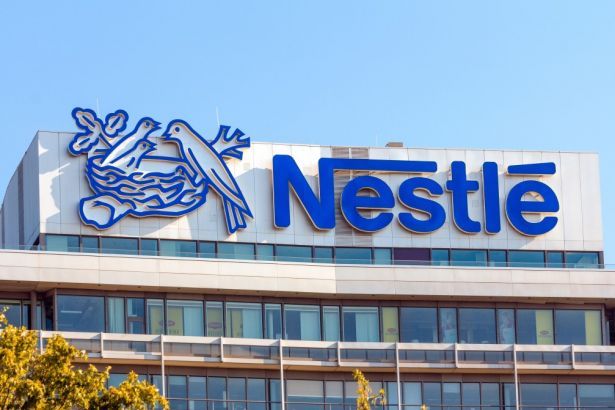
Nestle Pays $7.15b to Market Starbucks Products
By Modupe Gbadeyanka
A licensing deal worth $7.15 billion has been sealed between Nestle and Starbucks Corporation, allowing Nestle have the perpetual right to market Starbucks’ consumer and foodservice products globally outside of Starbucks coffee shops, which are not part of the transaction.
“This transaction is a significant step for our coffee business, Nestlé’s largest high-growth category,” said Mr Mark Schneider, CEO, Nestlé.
“With Starbucks, Nescafé and Nespresso we bring together three iconic brands in the world of coffee.
“We are delighted to have Starbucks as our partner. Both companies have true passion for outstanding coffee and are proud to be recognized as global leaders for their responsible and sustainable coffee sourcing. This is a great day for coffee lovers around the world,” he added.
“This global coffee alliance will bring the Starbucks experience to the homes of millions more around the world through the reach and reputation of Nestlé,” President and CEO of Starbucks, Mr Kevin Johnson, stated.
“This historic deal is part of our ongoing efforts to focus and evolve our business to meet the changing consumer needs, and we are proud to work alongside a company that is committed to our shared values,” he added.
Business Post reports that the two companies will work closely together on innovation and go-to-market strategies to bring the best coffee to customers around the world as the deal allows Nestlé to capture exciting new growth opportunities in the rest of the world with Starbucks premium products. As a complete provider of coffee solutions, Nestlé will accelerate growth in out-of-home channels.
However, the agreement is subject to customary regulatory approval and is expected to close by the end of 2018. The agreement excludes Ready-to-Drink products and all sales of any products within Starbucks coffee shops.
As part of this transaction, Starbucks will receive an up-front cash payment of $7.15 billion for a business which generated annual sales of $2 billion.
But the transaction does not include the transfer of any fixed assets, which facilitates a smooth and efficient integration and Nestlé expects this business to contribute positively to its earnings per share and organic growth targets as from 2019.
Nestlé’s ongoing share-buyback program will remain unchanged, the management said, but approximately 500 Starbucks employees will join the Nestlé family to drive performance of the existing business and global expansion. Operations will continue to be located in Seattle.
Meanwhile, notable credit rating company, Moody’s, has rated the Nestlé’s Starbucks deal as “credit negative,” changing its outlook on Nestlé’s Aa2 rating to negative from stable.
It noted that the deal will be fully funded with debt, increasing Nestlè’s reported gross debt by approximately 20 percent.
Moody’s said because Nestle confirmed that its ongoing CHF20 billion share buyback to be completed by 2020 will not be amended following the transaction, the firm’s credit metrics, which are already weak for its current Aa2 rating, will deteriorate.
“We expect Nestlé’s ratio of retained cash flow to net debt to drop to below 20% in 2019 and 2020 from 29 percent in 2017, which is below our 30 percent quantitative guidance for its Aa2 rating, and its ratio of funds from operations to net debt to decline to 36 percent -40 percent from around 56 percent,” Moody’s said in its report obtained by Business Post.
However, Moody’s said in spite of the negative credit implications, the agreement is positive from an industrial standpoint because it will reinforce Nestlé’s position in the coffee segment, which is growing faster and with higher profitability than the group’s average.
In 2017, Nestlé’s powdered and liquid beverage division, which includes coffee, grew by 3.6 percent compared with the group’s consolidated organic sales growth of 2.4 percent and the division’s underlying trading operating margin was 21.9 percent compared with a consolidated 16.4 percent.
The Starbucks’ business included in the agreement generated approximately $2.0 billion of revenue in 2017 and Nestlé could rapidly expand it, especially outside the US given its global distribution platform.
Moreover, the deal does not entail any fixed-asset transfer, which should limit execution risk and reduce integration costs.
The agreement is consistent with Nestlè’s strategy to reach mid-single-digit organic sales growth in 2020 and improve its underlying operating margin to 17.5 percent -18.5 percent by 2020 from 16 percent in 2016, reflecting accelerating organic sales growth via product innovation and renovation; a CHF2.0-CHF2.5 billion cost-savings programme; and the adjustment of the group’s product portfolio by disposing of low-growth, low margin segments and by investing in more attractive ones. Recent transactions include the disposal of the US confectionery business for $2.8 billion in January 2018, the acquisition of Canadian nutritional company Atrium for $2.3 billion in December 2017 and the purchase of a 68 percent stake in premium coffee retailer Blue Bottle Coffee in September 2017. The company is also considering the disposal of Gerber’s life insurance business.
Economy
Zichis Joins NGX, Lists 600.0 million Shares Worth N1.086bn
By Dipo Olowookere
The Nigerian Exchange (NGX) Limited has welcomed a new member and its Zichis Agro-Allied Industries Plc.
The company listed its shares on the local stock exchange on Tuesday, January 20, 2026, and was assigned the trading symbol, Zichis.
Business Post reports that Zichis boosted the market capitalisation of Customs Street by N1.086 billion with the listing of 600 million ordinary shares of 50 Kobo each at N1.81 per unit.
The stock exchange put Zichis under its growth board standard segment.
The new member of the Nigerian bourse was welcomed with open arms by investors yesterday as it was among the most traded stocks for the session.
Yesterday, traders bought and sold 69.6 million shares of Zichis Agro Allied Industries worth N138.5 million at the close of transactions.
The Head of Issuer Regulation Department of the NGX, Mr Godstime Iwenekhai, disclosed in a circular that Zichis listed its stocks on the platform by introduction.
“Trading license holders are hereby notified that the entire issued and fully paid 600,000,000 ordinary shares of Zichis Agro-Allied Industries Plc were listed by Introduction at N1.81 per share on the standard segment of the growth board of Nigerian Exchange Limited on Tuesday, January 20, 2026.
“The trading symbol of Zichis Agro-Allied Industries is ZICHIS,” the notice disclosed.
This is the first major listing on the NGX in 2026.
After the listing yesterday, executives of the organisation met with stakeholders to explain what they do and more insights into the company’s numbers.
Economy
Sell-Offs in Five Securities Weaken NASD Bourse by 0.30%
By Adedapo Adesanya
The NASD Over-the-Counter (OTC) Securities Exchange receded by 0.30 per cent on Tuesday, January 20 following sell-offs in five stocks on the unlisted stock trading platform.
The price losers were led by FrieslandCampina Wamco Nigeria Plc, which gave up N1.71 to sell at N72.00 per share compared with the N73.71 per share it traded a day earlier.
Further, Central Securities Clearing System (CSCS) Plc dropped 37 Kobo to close at N41.43 per unit versus Monday’s closing price of N41.80 per unit, Ge0-Fluids Plc lost 14 Kobo to trade at N7.00 per share compared with the previous day’s N7.14 per share, Afriland Properties Plc depreciated by 13 Kobo to trade at N14.60 per unit versus the N14.73 per unit it was exchanged a dy earlier, and UBN Property Plc declined by 11 Kobo to quote at N1.90 per share, in contrast to the preceding session’s N2.01 per share.
As a result, the market capitalisation went down by N6.5 billion to N2.187 trillion from N2.194 trillion, while the NASD Unlisted Security Index (NSI) depreciated by 10.86 points to 3,656.36 points from 3,667.22 points.
Business Post reports that yesterday, there was a price gainer, which was IPWA Plc. It gained 16 Kobo to end at N1.79 per unit versus N1.63 per unit.
During the trading day, the total value of transaction jumped by 137.5 per cent to N43.3 million from N18.2 million, while the volume of transactions decreased by 3.2 per cent to 2.6 million units from 2.7 million units, as the number of deals depreciated by 30.2 per cent to 30 deals from 43 deals.
At the close of trades, CSCS Plc was the most active stock by value on a year-to-date basis with 3.6 million units worth N145.6 million, trailed by MRS Oil Plc with 278.971 units valued at N55.7 million, and Geo-Fluids Plc with 7.6 million units sold for N51.9 million.
Geo-Fluids Plc maintained its position as the most active stock by volume on a year-to-date basis with 7.6 million units traded for N51.9 million, followed by CSCS Plc with 3.6 million units transacted for N145.6 million, and Industrial and General Insurance (IGI) Plc with 3.1 million units valued at N1.9 million.
Economy
Naira Appreciates 0.06% to N1,419/$1 at Official Market
By Adedapo Adesanya
The Naira rebounded on Tuesday, January 20 in the Nigerian Autonomous Foreign Exchange Market (NAFEM) as it appreciated against the US Dollar by 93 Kobo or 0.06 per cent to N1,419.35/$1 from Monday’s N1,420.28/$1.
However, it depreciated against the Pound Sterling in the official market by N2.43 to trade at N1,908.31/£1 versus the previous day’s N1,905.88/£1 and lost N13.53 against the Euro to finish at N1,666.31/€1 compared with the preceding session’s closing price of N1,652.78/€1.
The Nigerian currency also weakened against the Dollar at the GTBank forex counter yesterday by N5 to sell at N1,429/$1, in contrast to Monday’s exchange rate of N1,424/$1 and maintained stability at the parallel market at N1,485/$1.
Market analysts said they expect the current trading range of the Naira to remain firm in the near term supported by stronger foreign inflows driven by higher oil receipts, improved FPI participation, and consistent FX management by the Central Bank of Nigeria (CBN).
Boost from exporters’ and importers’ inflows in addition to non-bank corporate supply will also help enhance liquidity.
The Dollar also faced pressure in the international market in the midst of a dispute between the US and its European allies over Greenland, which President Donald Trump said “no going back” on his campaign thereby triggering selloffs to other safe haven assets.
As for the cryptocurrency market, Bitcoin (BTC) dropped below $90,000 on Tuesday amid a sharp shift in global risk sentiment, triggering more than $1 billion in forced liquidations of leveraged crypto positions.
The crypto sell-off coincided with broader market jitters tied to renewed tariff threats from President Donald Trump and a sell-off in Japanese government bonds that pushed global yields higher and pressured risk assets, with the BTC down by 1.6 per cent to $89,456.08.
Ethereum (ETH) lost 4.7 per cent to trade at $2,974.67, Binance Coin (BNB) slumped by 4.1 per cent to $878.27, Solana (SOL) depreciated by 2.8 per cent to $128.14, Cardano (ADA) crashed by 1.9 per cent to $0.3595, Ripple (XRP) slipped by 1.8 per cent to $1.91, Litecoin (LTC) declined by 1.7 per cent to $68.92, and Dogecoin (DOGE) shrank by 1.5 per cent to $0.1251.
On the flip side, the US Dollar Tether (USDT) appreciated by 0.01 per cent to trade at $1.00, and the US Dollar Coin (USDC) gained 0.03 per cent to settle at $1.00.
-
Feature/OPED6 years agoDavos was Different this year
-
Travel/Tourism9 years ago
Lagos Seals Western Lodge Hotel In Ikorodu
-
Showbiz3 years agoEstranged Lover Releases Videos of Empress Njamah Bathing
-
Banking8 years agoSort Codes of GTBank Branches in Nigeria
-
Economy3 years agoSubsidy Removal: CNG at N130 Per Litre Cheaper Than Petrol—IPMAN
-
Banking3 years agoFirst Bank Announces Planned Downtime
-
Banking3 years agoSort Codes of UBA Branches in Nigeria
-
Sports3 years agoHighest Paid Nigerian Footballer – How Much Do Nigerian Footballers Earn