Economy
OPEC Meeting in Focus Amid Light Economic Day
By Investors Hub
The major U.S. index futures are pointing to a higher opening on Friday, with stocks likely to regain ground after moving notably lower in the previous session.
The markets may benefit from bargain hunting, with the Dow likely to rebound after closing lower for eight consecutive sessions.
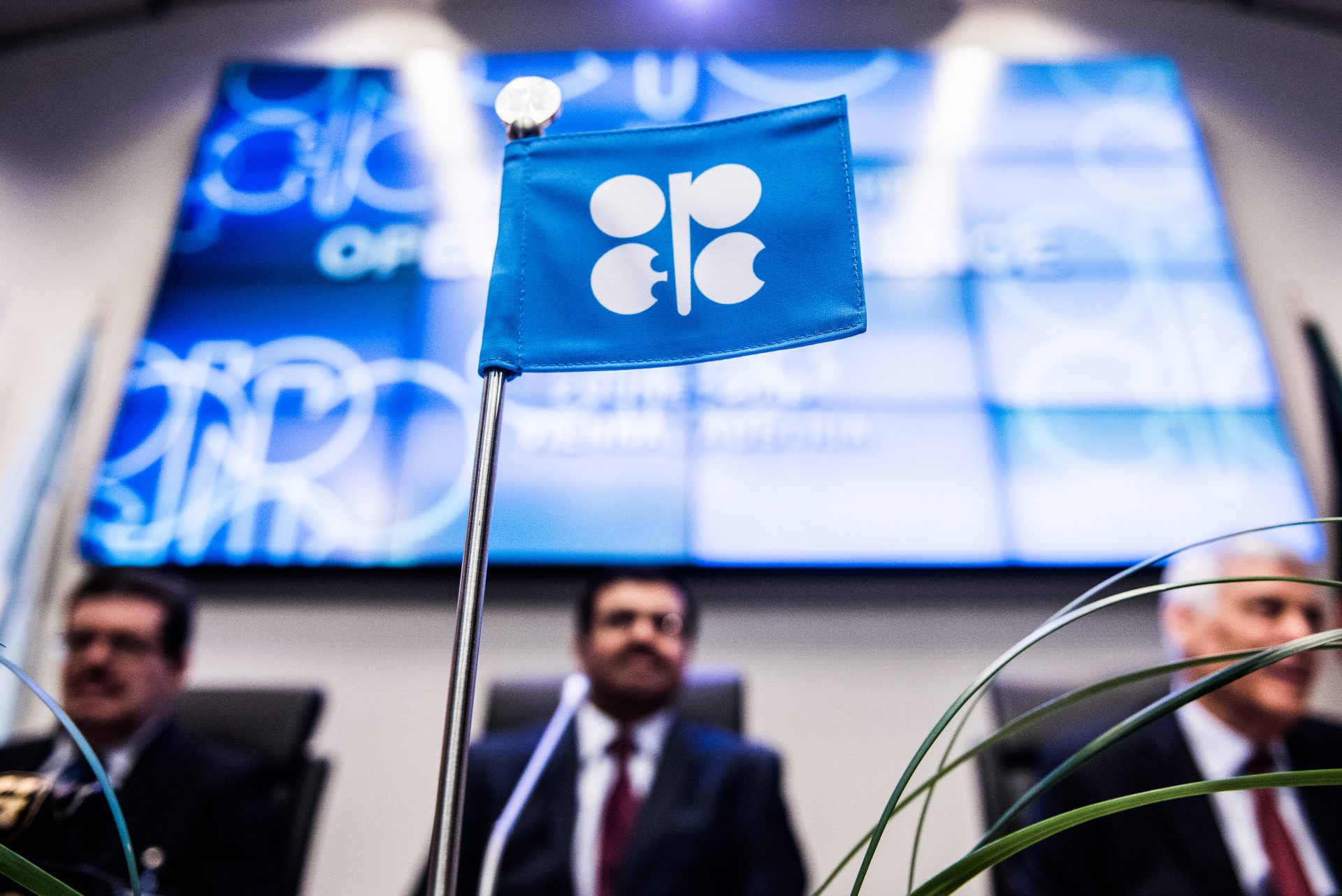
Traders are also likely to keep an eye on the outcome of the Organization of the Petroleum Exporting Countries meeting in Vienna, Austria.
A report from Reuters said OPEC ministers have reached an agreement to raise oil production by about 1 million barrels per day beginning in July.
Overall trading activity may be somewhat subdued, however, with a lack of major U.S. economic data likely to keep some traders on the sidelines.
Stocks moved mostly lower during trading on Thursday following the mixed performance seen on Wednesday. With the drop on the day, the tech-heavy Nasdaq pulled back off the record closing high set on Wednesday and the Dow extended its losing streak to eight sessions.
The major averages climbed off their worst levels going into the close but remained firmly negative. The Dow fell 196.10 points or 0.8 percent to 24,461.70, the Nasdaq slid 68.56 points or 0.9 percent to 7,712.95 and the S&P 500 dropped 17.56 points or 0.6 percent to 2,749.76.
The weakness on Wall Street was partly due to lingering concerns about the trade dispute between the U.S. and China along with uncertainty about the outcome of this week’s OPEC meeting.
Saudi Arabia and Russia are reportedly pushing for an increase in oil production, with OPEC expected to announce its decision on output on Friday.
Notable declines by some online retailers also weighed on the Nasdaq after the Supreme Court ruled states can force online shoppers to pay sales tax.
Negative sentiment may also have been generated by some disappointing economic data, including a report from the Conference Board showing a slightly smaller than expected increase by its index of leading economic indicators in the month of May.
The Conference Board said its leading economic index edged up by 0.2 percent in May after climbing by 0.4 percent in April. Economists had expected the index to rise by 0.3 percent.
“The U.S. LEI still points to solid growth but the current trend, which is moderating, indicates that economic activity is not likely to accelerate,” said Ataman Ozyildirim, Director of Business Cycles and Growth Research at the Conference Board.
A separate report from the Philadelphia Federal Reserve showed a much bigger than expected slowdown in the pace of growth in regional manufacturing activity in the month of June.
The Philly Fed said its index for current general activity slumped to 19.9 in June from 34.4 in May. While a positive reading still indicates growth in regional manufacturing activity, the index had been expected to dip to 29.0.
On the other hand, the Labor Department released a report showing a modest decrease in initial jobless claims in the week ended June 16th.
The report said initial jobless claims dipped to 218,000, a decrease of 3,000 from the previous week’s revised level of 221,000.
Economists had expected jobless claims to inch up to 220,000 from the 218,000 originally reported for the previous week.
Energy stocks saw significant weakness on the day amid expectations that the OPEC meeting in Vienna, Austria, will result in an increase in oil production.
Reflecting the weakness in the energy sector, the Philadelphia Oil Service Index plunged by 2.3 percent, the Philadelphia Oil Service Index tumbled by 2.1 percent and the NYSE Arca Natural Gas Index slumped by 1.7 percent.
Considerable weakness was also visible among biotechnology stocks, which gave back ground after moving notably higher over the two previous sessions. The NYSE Arca Biotechnology Index dropped by 1.9 percent after ending Wednesday’s trading at a record closing high.
Steel, housing, and semiconductor stocks also showed notable moves to the downside on the day, reflecting broad based weakness on Wall Street.
Economy
Grey to Cut Cross-Border Payment Costs with New USD Offering
By Adedapo Adesanya
A cross-border payments solutions company, Grey has expanded its business banking platform to include US Dollar corporate accounts, bulk international payments, and USDC stablecoin support, all integrated into a single system.
The company is positioning itself as a low-cost, faster alternative to traditional international banking, particularly for businesses in emerging markets as it enables companies to open US Dollar accounts, receive global payments, and send payouts to 170+ countries, including bulk transfers, within minutes.
Grey aims to solve common cross-border payment challenges, particularly the high transfer costs that often range between 6 and 7 per cent of transaction value, prolonged settlement cycles that can stretch across several days, and the limited access many businesses face when trying to open and operate foreign currency accounts. In addition, companies frequently contend with hidden intermediary fees and poor foreign exchange transparency, both of which undermine cost predictability and effective cash flow management.
By integrating USD business accounts and USDC stablecoin functionality into its platform, Grey enhances its value proposition around faster settlement, clearer pricing structures, improved cost efficiency, and broader global accessibility. The expanded capabilities enable businesses to manage international transactions with greater speed, transparency, and operational control.
“Businesses may operate without borders today, but access to reliable global banking remains uneven, particularly for companies in high-growth markets,” said Mr Idorenyin Obong, Co-founder and Chief Executive Officer of Grey. “We’re closing that gap and enabling businesses to move money faster, with greater transparency and control, wherever their clients or partners are based.”
“When payments are delayed, or costs are unpredictable, growth stalls,” added Mr Joseph Femi Aghedo, Chief Operating Officer and Co-founder of Grey. “Grey eliminates those friction points, giving businesses a faster, simpler way to manage payroll, supplier payments, and partner payouts across borders. Adding USD and stablecoin capabilities makes these benefits accessible to even more customers.”
Established in Africa in 2020, Grey has a presence in key markets, including the United States, the United Kingdom, and Europe, and has recently expanded its services and operations into Latin America and Southeast Asia.
Since its inception, the company has consistently enhanced its services to empower digital nomads worldwide, regardless of location. Grey’s offerings include multi-currency accounts, low-cost international money transfers, a virtual USD card, expense management tools, and robust security measures.
Economy
Quidax, Lisk to Unlock Stablecoins, On-chain Financial Opportunities
By Aduragbemi Omiyale
A partnership designed to expand access to stablecoins and on-chain financial opportunities for everyday users and businesses has been entered into between Quidax and Lisk.
The partnership provides a critical gateway for the developer community, as builders on the Lisk network can now leverage Quidax’s robust digital asset infrastructure to access stablecoins and local currencies at competitive rates.
This institutional-grade infrastructure is designed to power “future-forward” financial products, ranging from neobanks and cross-border payment platforms to regional exchanges and global fintech solutions. It will also allow Quidax customers to trade and move value seamlessly using USDT, USDC, LSK, and Ether (ETH) on the Lisk network.
The collaboration will also accelerate the adoption of Web3 solutions that solve real-world financial challenges for millions of customers across Africa by combining Quidax’s deep local liquidity and compliant framework with Lisk’s scalable L2 technology.
In 2024, Quidax became the first crypto exchange to receive a provisional operating license from Nigeria’s Securities and Exchange Commission (SEC).
“The partnership with Lisk enables us to extend our platform to serve more people and cater to the increasing demand from products and services that want to integrate our stablecoin and digital assets product to build products across Africa,” the Chief Infrastructure Officer at Quidax, Mr Morris Ebieroma, said.
Also commenting, the Ecosystem Lead for Africa at Lisk, Ms Chidubem Emelumadu, said, “Africa represents one of the most critical frontiers for blockchain innovation, where the demand for reliable and inclusive financial tools is urgent.
“Our partnership with Quidax expands access to stablecoins and on-chain financial opportunities for everyday users and businesses. At the same time, it gives founders building on Lisk the critical infrastructure they need to create solutions that can scale meaningfully across the continent,” she added.
Economy
Customs Urges Freight Forwarders to Adopt Automated Licence, Permit System
By Adedapo Adesanya
The Nigeria Customs Service (NCS) has urged freight forwarders to adopt its automated Licence and Permits Processing system to reduce the cost of doing business.
This advice was given by the Assistant Comptroller-General of Customs, Mr Muhammed Babadede, during a stakeholders’ engagement on automation held in Lagos on Monday.
He noted that the reform responds to longstanding demands for faster, more transparent and simpler procedures for industry stakeholders, disclosing that Comptroller-General of Customs, Mr Bashir Adeniyi, has approved the full automation of the service’s licences and permits processes.
“For years, stakeholders dealt with paperwork, long queues and uncertainty from manual processing. Those days are coming to an end.
“This sensitisation is across all zones. The goal is to ensure stakeholders understand the automated system before implementation,” Mr Babadede said.
He said automation would enable applications and renewals from offices or mobile phones, eliminating visits to customs formations, assuring stakeholders of a fair and consistent process, and reducing errors associated with manual documentation.
He said automation would improve record-keeping, supervision and service delivery without increasing pressure on officers.
The Deputy Comptroller-General, Tariff and Trade, CK Naigwan, also represented by Mr Babadede, reiterated management’s commitment to seamless implementation.
Meanwhile, the Comptroller of Customs for Licence and Permit Unit, Mrs Ngozika Anozie, praised the Comptroller-General for driving innovation within the Service, saying the automation aligns Customs procedures with global best practice and strengthens institutional efficiency.
According to her, the reform reflects the three-point agenda of the Chairman of the World Customs Organisation, Mr Adeniyi, centred on consolidation, collaboration and innovation.
She said the system would enhance the ease of doing business in the maritime sector and boost national revenue generation.
“Automation will cut business costs and reduce travel risks for stakeholders
“They will no longer travel repeatedly to Abuja, paying for transport, hotels and feeding to process licences and permits,” she said, adding that the platform would automatically reject fake documents and accept genuine submissions, curbing fraudulent practices.
“The CGC is determined to sanitise the system, and we are committed to achieving that objective,” Mrs Anozie said.
On his part, the Assistant Superintendent of Customs, Mr Ibrahim Usman, said the Licence and Permit Unit operates under the Tariff and Trade Department.
He explained that the unit ensures proper issuance of licences and permits and compliance with import regulations.
Mr Usman said all licences and permits expire on December 31 of their issuance year.
He added that the portal would become fully operational after nationwide sensitisation, with stakeholders duly informed.
Customs Area Controller, Tincan Island Command, Mr Frank Onyeka, thanked stakeholders for their continued support.
He urged them to take the exercise seriously to achieve seamless processing across Customs operations.
Stakeholders raised concerns about online payment integration and potential technical disruptions.
Officials addressed the questions and pledged continued engagement to ensure smooth implementation nationwide.
-
Feature/OPED6 years agoDavos was Different this year
-
Travel/Tourism10 years ago
Lagos Seals Western Lodge Hotel In Ikorodu
-
Showbiz3 years agoEstranged Lover Releases Videos of Empress Njamah Bathing
-
Banking8 years agoSort Codes of GTBank Branches in Nigeria
-
Economy3 years agoSubsidy Removal: CNG at N130 Per Litre Cheaper Than Petrol—IPMAN
-
Banking3 years agoSort Codes of UBA Branches in Nigeria
-
Banking3 years agoFirst Bank Announces Planned Downtime
-
Sports3 years agoHighest Paid Nigerian Footballer – How Much Do Nigerian Footballers Earn