Feature/OPED
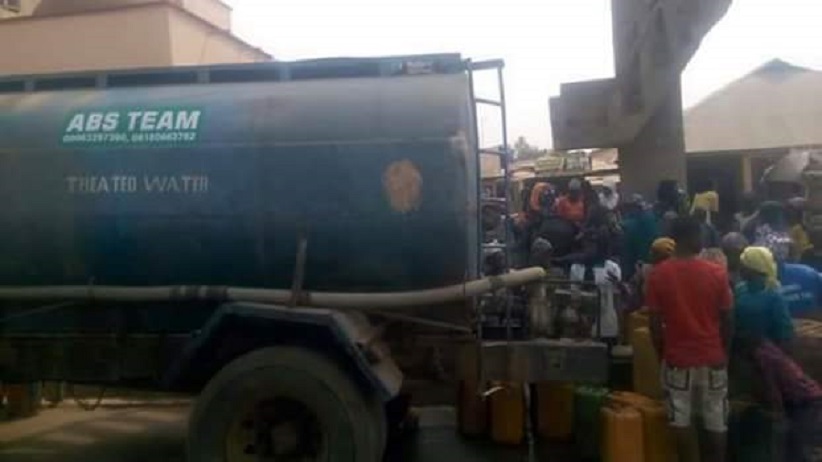
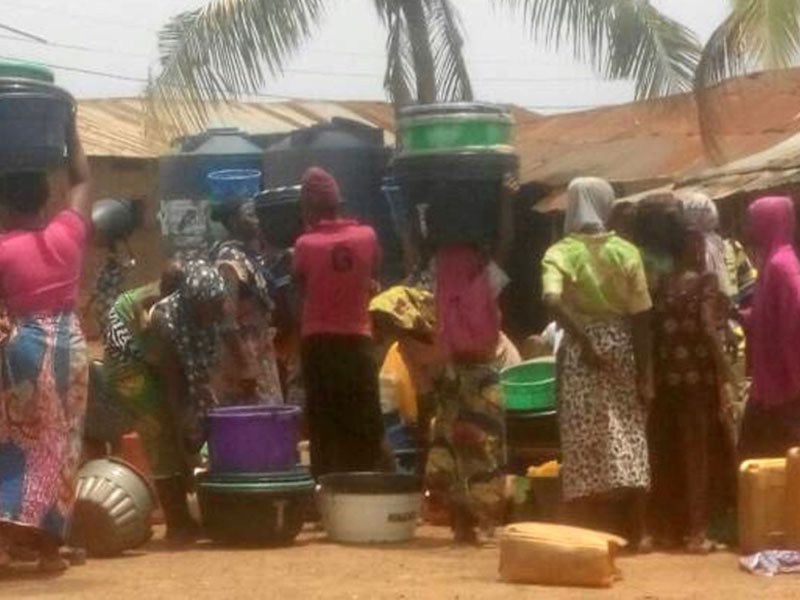
The Multi-Billion Naira Water Reticulation Project in Ilorin: A Scam?
By Abdullateef Alagbonsi
Water is a necessity for life and it is the responsibility of every responsible government to give priority to provision of good water. The unmatchable importance of hygienic water to human survival has triggered the consciousness of some international organisations to flag off different water provision programs for developing countries including Nigeria.
Ilorin metropolis has three water dams (Asa dam, Agba dam and Sobi dam) with capacity to supply water to every part of the city and take care of any expansion in the future. Asa dam, which has capacity to supply water that would cover up to 60% of city of Ilorin, supplies water to Kuntu, Alore, Taiwo road, Mandate, Al-hikma, etc. The dam is a water flow with high water level and capacity to supply water to Agba dam during dry season. Sobi dam is also a river flowing dam with capacity to supply water to up to 30% of total area of Ilorin. The dam already supplies water to areas like Shao, Shao garage,
Sobi barrack, Gambari, Aiyegbami, Madinat and some other areas of Ilorin. Agba dam, which is a lake, can only supply water to about 15% of Ilorin metropolis during rainy season while it would depend on Asa dam during dry season to effectively supply water around its circus. Though the pump to make that achievable had been procured for over 4 years, but it can’t be ascertained if the pump has been put in use as at this moment. All these show that there are enough water sources in Ilorin, and there is no need for government to make water source as an excuse.
Ilorin water reticulation project, which is meant to make water available to the nooks and crannies of Ilorin metropolis, is one of the major projects inherited by the current administration of Alhaji Abdulfatai Ahmed from his predecessor, Dr. Abubakar Bukola Saraki.
It involves water distribution network that will provide water routes to the consumers after it has been collected and treated. Being the capital city of Kwara state, Ilorin continues to expand on daily basis and the need to expand the water radius becomes very inevitable.
When completed, the project is expected to increase the coverage of potable water distribution infrastructure in Ilorin metropolis.
The project started in year 2009 and has remained one of the most controversial projects since that time. It has gulped several billions of naira since almost a decade that it commenced but it’s sad that the light has not been sighted at any end of the tunnel.
The general public may wish to be reminded of a publication in Vanguard Newspaper dated October 7, 2014 that reported Mr Yomi Ogunsola, who was the Senior Special Assistant to Governor Abdulfatah Ahmed on Investment Promotion and Strategy, to have said in an interview with News Agency of Nigeria that Ilorin water reticulation project cost is N7.2 billion.
He also disclosed in the same interview that the state government had earlier spent more than N5.2 billion on the project. Interestingly, he boastfully disclosed that the project was at 98% completion stage as at that time.
In a statement published by Ilorin.Info on January 10, 2018, Barrister Abdulrazaq Akorede who is the state Commissioner for Water Resources, was quoted to have said that with the level of work done so far as at that time, the project would be completed by May or June, 2018. He also disclosed the ongoing interventions on some water projects across the state and lamented the destruction of some water project facilities by some vandals.
On February 2, 2018, the Kwara state government, through her official website, disclosed that she is set to commence the testing of the Ilorin Metropolis Water works following the completion of the reticulation project.
Moreover, the Governor approved the diversion of water mains to the Western reservoir and other overhead tanks that supply water to 50% of Ilorin due to some ongoing projects in the state.
In a statement published by National Accord Newspaper on April 18, 2018, the General Manager of the State Water Corporation, Alhaji Tunde Yahaya, was specific in his disclosure that the Primary phase of the Water Reticulation project had been completed, and conducted Journalists around the 5 water works in Ilorin metropolis.
He also disclosed that the tertiary phase of the reticulation project, which involves laying of pipes into street and homes and repair of damaged pipes, had been captured in the 2018 budget and will soon be commenced.
In a statement published by Ilorin.Info on June 1, 2018, Governor Abdulfatai Ahmed made the following interesting revelations in an interactive session with journalists on May 31, 2018.
First, N8 billion has been committed to the Ilorin water reticulation project in the last 7 years to tackle the problems of water supply in the state.
Second, the project was categorised into 3 sections: primary, secondary and tertiary.
Third, the primary section has been completed, while the remaining secondary and tertiary sections will soon be completed.
Fourth, his administration had renovated about 17 water works across the state.
Fifth, his administration had provided boreholes to over 400 communities in the state.
We wish to remind the public that sometimes in 2014 (5 years after the project commenced), the then Senior Special Assistant (SSA) to Governor Abdulfatai Ahmed on Investment Promotion and Strategy, Mr Yomi Ogunsola, explained that “the state government had earlier spent more than N5.2 billion on the project and the project was at 98 per cent completion stage while the water pipes would be connected to the water mains soon”.
It would also be of great interest to let the public have little idea of billions of naira that had been committed to water project (including Ilorin water reticulation) in the state since 2009.
In 2009, N6.79 billion was spent on water project. Out of this sum, N4 billion was gotten from the N17 billion bonds that the state sold in year 2009 by the state Governor as at that time, Dr Abubakar Bukola Saraki for Ilorin water distribution project and Asa dam mixed use development.
Specifically, a sum of 2 billion naira was committed directly to the water reticulation project).
2010 – N2.65 billion 2011 – N983.57 million
2012 – N1.44 billion 2013 – N612.25 million
2014 – N360.80 million (due to recession and low FAAC to states)
2015 – N749.11 million
2016 – N350 million (spent on Ilorin water reticulation alone.
Effort to get the total funds expended on water project could not be ascertained as at this moment but the estimate has it to be about N1.2 billion).
In conclusion, as a Civil Society Organisation occupying the highest office in the society (office of the Citizens) and advocating for open leadership and good governance in Kwara state, the salient questions ENetSuD wants the government to answer are:
Despite the billions of tax-payers monies spent on water projects (including water reticulation), where is the water?
Since 2014 that 98% completion was achieved, funds have been annually allocated and released for the water reticulation project. Why has the remaining 2% of the project not been completed since 2014 to ensure citizens’ access to good water and provide value for all our billions of naira spent so far since 2009?
Since N8 billion committed on the project in the last 7 years is more than the total project cost of 7.2 billion naira, why has only the primary phase been completed so far?
Now that the secondary and tertiary phases have been included in the recently approved 2018 budget, how much is the government planning to spend on these phases? Are these phases part of the remaining 2% completion as at 2014?
When will the secondary and tertiary phases of the water reticulation project captured in the 2018 budget be completed?
This article was written by Dr Abdullateef I. Alagbonsi, ACPA, Ph.D. He is also the Coordinator of www.ENETSUD.ORG He can be reached on [email protected].
Feature/OPED
Ledig at One: The Year We Turned Stablecoins Into Real Liquidity for the Real World
Ever tried sending a large amount of money into or out of certain markets and felt your stomach twist a bit? That was the feeling many companies carried long before Ledig existed. Delays. Guesswork. Phone calls that sounded unsure. People waiting on people, and no reliable derivatives hedging protocol to shield them from currency swings. It was messy.
That frustration is what pushed us to open Ledig to the world a year ago. We wanted a system built for big transfers. Not a few hundred dollars. Serious amounts. A hundred thousand. A million. Even more. And we wanted it to move in seconds, not a strange timeline that no one could explain.
So, we built a setup that lets companies bring in stablecoins and get local currency out quickly. We also kept the opposite direction just as clean. Local currency in, stablecoins out. Both ways needed to feel the same because business doesn’t move in only one direction. Some clients even switch between the two during the same week.
In the early days, people sent smaller amounts to test us. Fair enough. But once they saw a large payment settle almost instantly, confidence spread. This is how we crossed our first $100M. Most of that came from global companies working across Africa and other emerging markets. These firms care about stability, not buzzwords. They just want their money to land where it should.
A lot of the magic sits behind the scenes. Wallets. Local settlement tools. A solid FX engine that adjusts as needed. None of this appears on the surface. All a user sees is a simple dashboard or a set of API calls that get the job done. They don’t even need to think about crypto. The tech exists under the hood, doing the heavy lifting quietly.
But fast movement alone wasn’t enough.
Ledig derivatives hedging protocol
There was another problem staring companies in the face. Currency swings. And they hurt. Imagine finishing a project today and waiting ninety days to get paid in a currency that drops often. By the time the company receives the money, the value has fallen so much that the profit is almost gone. This is a real issue, and many firms have lived through that shock.
This is where our derivatives hedging protocol stepped in. It lets companies lock in their value early so they don’t get caught off guard later. The product ran off-chain at first and still passed $55M in activity. Now we’re taking the derivatives hedging protocol fully on-chain. We picked Base for this next step because it fits the type of stablecoins our settlement system relies on. It also gives companies a clean, transparent environment to execute derivatives hedging protocol strategies built for actual commercial needs rather than trading games.
It took time to get here. Our team is small, which surprised a lot of people, but that worked in our favour. We avoided noise. We focused on building pieces that work. Think of it like a set of tools. One tool converts stable to fiat. Another handles fiat to stable. Another manages FX. Another supports treasury. Another delivers hedging to protect value. Each tool works alone, but when a company puts them together, they get a full workbench that covers money movement and risk in one place.
We rarely talk about revenue publicly, but the business is in a good place. The real sign of health is that companies keep trusting us with large transactions. Not one-off tests. Proper flows. The kind that supports payrolls, suppliers, expansion, and daily operations. In markets where delays can break everything, this matters.
Looking ahead, our focus for 2026 is simple. Bring the derivatives hedging protocol on-chain at scale. Grow our liquidity pipeline so larger payments stay just as smooth as they are today. Strengthen our licensing and regulatory setup, so bigger institutions can work with us without extra steps. And continue tightening the entire system so companies entering emerging markets can do it with far less stress.
Ledig is one year old. The mission is still the same. Move large amounts of money fast. Protect companies from painful currency swings using a battle-tested derivatives hedging protocol. Build tools they can rely on without worrying about how the background tech works.
This is just the beginning.
Feature/OPED
If You Understand Nigeria, You Fit Craze
By Prince Charles Dickson PhD
There is a popular Nigerian lingo cum proverb that has graduated from street humour to philosophical thesis: “If dem explain Nigeria give you and you understand am, you fit craze.” It sounds funny. It is funny. But like most Nigerian jokes, it is also dangerously accurate.
Catherine’s story from Kubwa Road is the kind of thing that does not need embellishment. Nigeria already embellishes itself. Picture this: a pedestrian bridge built for pedestrians. A bridge whose sole job description in life is to allow human beings cross a deadly highway without dying. And yet, under this very bridge, pedestrians are crossing the road. Not illegally on their own this time, but with the active assistance of a uniformed Road Safety officer who stops traffic so that people can jaywalk under a bridge built to stop jaywalking.
At that point, sanity resigns.
You expect the officer to enforce the law: “Use the bridge.” Instead, he enforces survival: “Let nobody die today.” And therein lies the Nigerian paradox. The officer is not wicked. In fact, he is humane. He chooses immediate life over abstract order. But his humanity quietly murders the system. His kindness baptises lawlessness. His good intention tells the pedestrian: you are right; the bridge is optional.
Nigeria is full of such tragic kindness.
We build systems and then emotionally sabotage them. We complain about lack of infrastructure, but when infrastructure shows up, we treat it like an optional suggestion. Pedestrian bridges become decorative monuments. Traffic lights become Christmas decorations. Zebra crossings become modern art—beautiful, symbolic, and useless.
Ask the pedestrians why they won’t use the bridge and you’ll hear a sermon:
“It’s too stressful to climb.”
“It’s far from my bus stop.”
“My knee dey pain me.”
“I no get time.”
“Thieves dey up there.”
All valid explanations. None a justification. Because the same person that cannot climb a bridge will sprint across ten lanes of oncoming traffic with Olympic-level agility. Suddenly, arthritis respects urgency.
But Nigeria does not punish inconsistency; it rewards it.
So, the Road Safety officer becomes a moral hostage. Arrest the pedestrians and risk chaos, insults, possible mob action, and a viral video titled “FRSC wickedness.” Or stop cars, save lives, and quietly train people that rules are flexible when enough people ignore them.
Nigeria often chooses the short-term good that destroys the long-term future.
And that is why understanding Nigeria is a psychiatric risk.
This paradox does not stop at Kubwa Road. It is a national operating system.
We live in a country where a polite policeman shocks you. A truthful politician is treated like folklore—“what-God-cannot-do-does-exist.” A nurse or doctor going one year without strike becomes breaking news. Bandits negotiate peace deals with rifles slung over their shoulders, attend dialogue meetings fully armed, and sometimes do TikTok videos of ransoms like content creators.
Criminals have better PR than institutions.
In Nigeria, you bribe to get WAEC “special centre,” bribe to gain university admission, bribe to choose your state of origin for NYSC, and bribe to secure a job. Merit is shy. Connection is confident. Talent waits outside while mediocrity walks in through the back door shaking hands.
You even bribe to eat food at social events. Not metaphorically. Literally. You must “know somebody” to access rice and small chops at a wedding you were invited to. At burial grounds, you need connections to bury your dead with dignity. Even grief has gatekeepers.
We have normalised the absurd so thoroughly that questioning it feels rude.
And yet, the same Nigerians will shout political slogans with full lungs—“Tinubu! Tinubu!!”—without knowing the name of their councillor, councillor’s office, or councillor’s phone number. National politics is theatre; local governance is invisible. We debate presidency like Premier League fans but cannot locate the people controlling our drainage, primary schools, markets, and roads.
We scream about “bad leadership” in Abuja while ignoring the rot at the ward level where leadership is close enough to knock on your door.
Nigeria is a place where laws exist, but enforcement negotiates moods. Where rules are firm until they meet familiarity. Where morality is elastic and context-dependent. Where being honest is admirable but being foolish is unforgivable.
We admire sharpness more than integrity. We celebrate “sense” even when sense means cheating the system. If you obey the rules and suffer, you are naïve. If you break them and succeed, you are smart.
So, the Road Safety officer on Kubwa Road is not an anomaly. He is Nigeria distilled.
Nigeria teaches you to survive first and reform later—except later never comes.
We choose convenience over consistency. Emotion over institution. Today over tomorrow. Life over law, until life itself becomes cheap because law has been weakened.
This is how bridges become irrelevant. This is how systems decay. This is how exceptions swallow rules.
And then we wonder why nothing works.
The painful truth is this: Nigeria is not confusing because it lacks logic. It is confusing because it has too many competing logics. Survival logic. Moral logic. Emotional logic. Opportunistic logic. Religious logic. Tribal logic. Political logic. None fully dominant. All constantly clashing.
So, when someone says, “If dem explain Nigeria give you and you understand am, you fit craze,” what they really mean is this: Nigeria is not designed to be understood; it is designed to be endured.
To truly understand Nigeria is to accept contradictions without resolution. To watch bridges built and ignored. Laws written and suspended. Criminals empowered and victims lectured. To see good people make bad choices for good reasons that produce bad outcomes.
And maybe the real madness is not understanding Nigeria—but understanding it and still hoping it will magically fix itself without deliberate, painful, collective change.
Until then, pedestrians will continue crossing under bridges, officers will keep stopping traffic to save lives, systems will keep eroding gently, and we will keep laughing at our own tragedy—because sometimes, laughter is the only therapy left.
Nigeria no be joke.
But if you no laugh, you go cry—May Nigeria win.
Feature/OPED
Post-Farouk Era: Will Dangote Refinery Maintain Its Momentum?
By Abba Dukawa
“For the marketers, I hope they lose even more. I’m not printing money; I’m also losing money. They want imports to continue, but I don’t think that is right. So I must have a strategy to survive because $20 billion of investment is too big to fail. We are in a situation where we will continue to play cat and mouse, and eventually, someone will give up—either we give up, or they will.” —Aliko Dangote
This statement reflects that while Dangote is incurring losses, he remains committed to his investment, determined to outlast competitors reliant on imports. He believes that persistence and strategy will eventually force them to concede before he does.
Aliko Dangote has faced unprecedented resistance in the petroleum sector, unlike in any of his other business ventures. His first attempt came on May 17, 2007, when the Obasanjo administration sold 51% of Port Harcourt Refinery to Bluestar Oil—a consortium including Dangote Oil, Zenon Oil, and Transcorp—for $561 million. NNPC staff strongly opposed the sale. The refinery was later reclaimed under President Yar’adua, a setback that provided Dangote a tough but invaluable lesson. Undeterred, he went on to build Africa’s largest refinery.
As a private investor, Dangote has delivered much-needed infrastructure to Nigeria’s oil-and-gas sector. Yet, his refinery faces regulatory hurdles from agency’s meant to promote efficiency and growth. Despite this monumental private investment in the nation’s downstream sector, powerful domestic and foreign oil interests may have influenced Farouk Ahmad, former NMDPRA Managing Director, to hinder the refinery’s operations.
The dispute dates back to July 2024, when the NMDPRA claimed that locally refined petroleum products including those from Dangote’s refinery were inferior to imported fuel. Although the confrontation appeared to subside, the underlying rift persisted. Aliko Dangote is not one to speak often, but the pressure he is facing has compelled him to break his silence. He has begun to speak out about what he sees as a deliberate targeting of his investments, as his petroleum-refining venture continues to face repeated regulatory and institutional challenges.
The latest impasse began when Dangote accused the NMDPRA of issuing excessive import licenses for petroleum products, undermining local refining capacity and threatening national energy security. He alleged that the regulator allowed the importation of cheap fuel, including from Russia, which could cripple domestic refineries such as his 650,000‑barrel‑per‑day Lagos plant.
The conflict intensified after Dangote publicly accused Farouk Ahmad, former head of NMDPRA, of living large on a civil servant’s salary. Dangote claimed Ahmad’s lifestyle was way too lavish, pointing out that four of his kids were in pricey Swiss schools. He took his grievance to the ICPC, alleging misconduct and abuse of office.
It’s striking how Nigerian office holders at every level have mastered the art of impunity. Even though Ahmad dismissed the accusations but the standoff prompting Ahmad’s resignation. But the bitter irony these “public servants” tasked with protecting citizens’ interests often face zero consequences for violating policies meant to safeguard the Nation and public interest.
The clash of titans lays bare deeper flaws in Nigeria’s petroleum governance. It shows how institutional weaknesses turn regulatory disputes into personal power plays. In a system with robust norms, such conflicts would be settled via clear rules, independent oversight, and transparent processes not media wars and public accusations.
Even before completion, the refinery’s operating license was denied. Farouk Ahmad claimed Dangote’s petrol was subpar, ordering tests that appeared aimed at public embarrassment. Dangote countered with independent public testing of his diesel, challenging the regulator’s claims.
He also invited Ahmad to verify the tests on-site, but the offer was declined. Moreover, NNPC initially refused to supply crude oil, forcing Dangote to source it from the United States a practice that continues.
President Tinubu later directed the NNPC to resume crude supplies and accept payment in naira, reportedly displeasing the state oil company. In addition to presidential directives, Farouk claimed Dangote was producing petrol beyond the approved quantity and insisted that crude oil be purchased exclusively in U.S. dollars a condition Dangote accepted.
From the public’s point of view, the Refinery is a game-changer for Nigeria, with the potential to end fuel imports and boost the economy. With a capacity of 650,000 barrels per day, it produces around 104 million liters of petroleum products daily, meeting 90% of Nigeria’s domestic demand and allowing exports to other West African countries.
The Dangote Refinery is poised to earn foreign exchange, stabilize fuel prices, and strengthen Nigeria’s energy security. However, the ongoing dispute surrounding the refinery underscores the challenges of aligning national interests with regulatory and institutional frameworks.
The Dangote Refinery’s growing dominance has sparked concerns among stakeholders like NUPENG and PENGASSAN, who fear it could lead to a private monopoly, stifling competition and harming smaller players. This concern stems from the refinery’s rejection of the traditional ₦5 million-per-truck levy on petroleum shipments.
However, Dangote has taken steps to address these concerns, reducing the minimum purchase requirement from 2 million liters to 250,000 liters, opening the market to smaller operators and strengthening distribution networks. The refinery has also purchased 2,000 CNG trucks to maintain operations, emphasizing its commitment to making energy affordable and accessible
Many are watching closely to see if Dangote’s actions are driven by a desire for transparency and fairness in Nigeria’s oil and gas sector or private business interests. Did Dangote genuinely want to fight the corruption going on in the sector?, Will Dangote refinery operate for the common good or seek market dominance? Did Farouk Ahmad act in the public interest or obstruct the refinery for hidden oil interests? Will the Dangote Refinery Maintain Its Momentum in the Post-Farouk Era?The dispute between Dangote and Farouk Ahmad remains shrouded in mystery, with the ICPC investigation likely to uncover the truth
To many, the government faces a delicate balancing act: protecting local refiners while ensuring fair competition. While some argue that Dangote’s success shouldn’t come at the expense of smaller players, others see it episodes like this reveal persistent contradictions: powerful interests, fragile institutions, and blurred lines between regulation and politics.The Petroleum Industry Act (PIA) promised a new era of clarity, efficiency, and accountability, but its implementation has been slow. The PIA’s success hinges on addressing these challenges.
What benefits one party can indeed threaten another. Despite entering the sector with good intentions, Dangote has faced relentless pushback, all eyes are on whether the refinery can sustain its momentum. Analysts and commentators are sharing their perspectives based on available data from relevant institutions. If anyone spreads false information, the truth will eventually come out
Dukawa is a journalist, public‑affairs analyst, and political commentator. He can be reached at [email protected]
-
Feature/OPED6 years agoDavos was Different this year
-
Travel/Tourism9 years ago
Lagos Seals Western Lodge Hotel In Ikorodu
-
Showbiz3 years agoEstranged Lover Releases Videos of Empress Njamah Bathing
-
Banking7 years agoSort Codes of GTBank Branches in Nigeria
-
Economy3 years agoSubsidy Removal: CNG at N130 Per Litre Cheaper Than Petrol—IPMAN
-
Banking3 years agoFirst Bank Announces Planned Downtime
-
Banking3 years agoSort Codes of UBA Branches in Nigeria
-
Sports3 years agoHighest Paid Nigerian Footballer – How Much Do Nigerian Footballers Earn