Economy
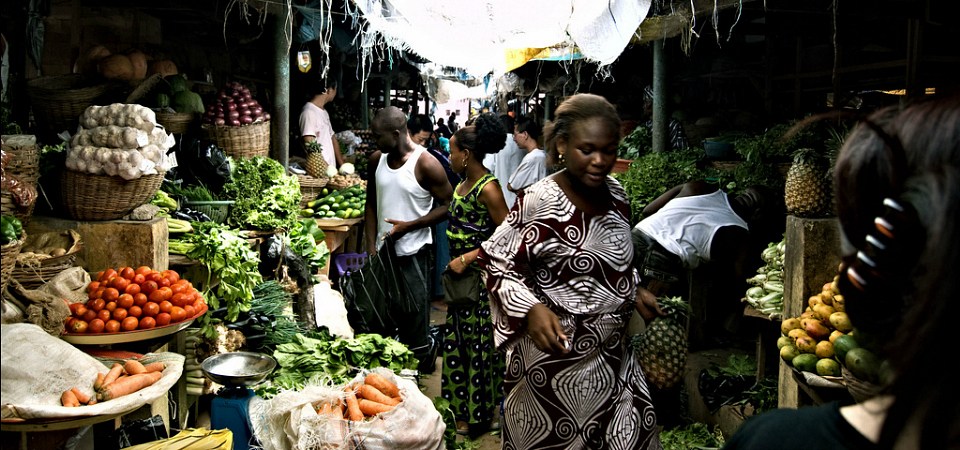
July Inflation to Drop to 11.01% from 11.23%—FSDH
By Dipo Olowookere
One of the leading investment research firms in Nigeria, FSDH, has predicted a marginal drop in the inflation rate for the month of July 2018.
The National Bureau of Statistics (NBS) is due to release the inflation rate for the month of July on Wednesday, August 15, 2018.
In the month of June 2018, the inflation rate moderated to 11.23 percent year-on-year and analysts at FSDH are saying this would further drop to 11.01 percent.
Economic expert at the company explained that the expected decrease in the inflation rate would be largely due to the base effect of the previous year with a slower increase observed in the price of some food items in July than in June.
The Food Price Index (FPI) published by the Food and Agriculture Organization (FAO) for the month of July 2018 indicated that the index averaged 168 points in July 2018, 3.73 percent lower than the June value, and the first significant month-on-month decline since December 2017.
According to the FAO, all the sub-indices reflected a notable drop in values. The FAO Dairy Index fell by 6.59 percent from June 2018 as the prices of butter, cheese, skim milk powder and whole milk powder eased in July.
The FAO Sugar Price Index was down by 6.01 percent on the heels of reports on improved supply conditions in the main sugar producing region of India and Thailand.
The FAO Cereal Price Index was down by 3.58 percent, largely driven by weaker export quotations for maize, rice and wheat. The FAO Vegetable Oil Price Index was down by 2.88 percent, marking a two and half year low and the sixth consecutive month fall in the index.
This was as a result of abundant inventory levels coupled with a favourable outlook for global supply and weak export demand of soy and palm oil.
The FAO Meat Price Index was also down by 1.88 percent as prices of bovine, pig and poultry meat declined due to reduced demand.
According to FSDH, its analysis indicated that the value of the Naira depreciated marginally at the Nigerian Autonomous Foreign Exchange (NAFEX), while it appreciated at the parallel market to end July 2018.
The value of the Naira depreciated by 0.03 percent to close at $/N361.20 at the NAFEX market while it appreciated by 0.84 percent at the parallel market to close at $/N359 to end July.
The general decline in the international prices of food coupled with the appreciation in the value of the Naira at the parallel market muted the prices of imported consumer goods in Nigeria between the two months under review.
The prices of most of the food items the firm monitored in July 2018 moderated compared with June, while a few items recorded price appreciation.
“The movement in the prices of food items during the month led to a 1.18 percent increase in our Food and Non-Alcoholic Index. This Index increased year-on-year by 12.57 percent, up from 248.82 points recorded in July 2017.
“We also observed an increase in the prices of Transport and Housing, Water, Electricity, Gas & Other Fuels divisions between June and July 2018.
“We estimate that the increase in the Composite Consumer Price Index (CCPI) in July would produce an inflation rate of 11.01 percent, lower than the 11.23 percent recorded in June,” the Inflation Watch report released on Friday said.
Economy
Nigeria Earns N1.17trn from Petroleum Sector in November 2025
By Adedapo Adesanya
Nigeria earned N1.17 trillion from the oil and gas industry in November 2025, lower than the N1.396 trillion generated in October 2025 by 16.2 per cent, according to data presented to the Federation Account Allocation Committee (FAAC) by the Central Bank of Nigeria (CBN).
The CBN, in the latest data available, noted that the N1.17 trillion earnings from the petroleum industry in November 2025 represented 96.4 per cent of the N1.214 trillion revenue budgeted for the sector for the month under review.
In comparison, revenue from the petroleum industry in October 2025 represented 94.71 per cent of the N1.474 trillion budgeted for the sector in the month.
In its breakdown of revenue from the oil and gas industry in November 2025, the central bank stated that the country earned N37.134 billion from crude oil sales, climbing by 395.58 per cent from N7.493 trillion recorded in the previous month; while revenue from gas sales appreciated by 25.22 per cent to N7.265 billion in November, compared with N5.802 billion recorded in October 2025.
Furthermore, the CBN noted that revenue from crude oil royalties dipped by 25.6 per cent, from N790.086 billion in October 2025 to N587.865 billion in November; while miscellaneous oil revenue more than doubled to N1.356 billion, from N447.279 million in October 2025.
Also, it stated that royalties from gas dipped by 38.1 per cent to N9.405 billion in November, from N15.195 billion in October, while the country earned N51.842 billion from gas flare penalties in November 2025, down from N61.898 billion recorded in the previous month.
The apex bank added that revenue from companies’ income tax (CIT) from upstream oil industry operations stood at N106.106 billion in the month under review, as against N73.025 billion in October 2025.
It also stated that revenue from Petroleum Profit Tax (PPT) stood at N301.471 billion; rentals – N775.162 million; while taxes stood at N67.242 billion in November 2025; as against N242.621 billion, N3.197 billion, and N196.277 billion in October 2025.
In addition, the apex bank reported that from the country’s oil earnings in November 2025, N18.163 billion was deducted for 13 per cent refund on subsidy, priority projects and Police Trust Fund from 1999 to 2021; while N2.872 billion was deducted by the Nigerian National Petroleum Company (NNPC) Limited in respect of its 13 per cent management fee and frontier exploration fund.
It added that N26.401 billion was deducted and collected by the Nigerian Upstream Petroleum Regulatory Commission (NUPRC) in October 2025, being four per cent cost of collection; while N49.768 billion was transferred to the Midstream and Downstream Gas Infrastructure Fund from gas flare penalties in the same month.
Economy
NGX Weekly Trading Volume, Value Down as Investors Weigh Risks, Benefits
By Dipo Olowookere
The decision of investors weighing the risks and benefits of holding Nigerian stocks took a toll on the Nigerian Exchange (NGX) Limited last week.
The bourse suffered a marginal week-on-week 0.09 per cent loss, with the All-Share Index (ASI) down to 165,370.40 points. However, the market capitalisation gained 0.18 per cent in the five-day trading week to settle at N106.153 trillion.
Data from Customs Street indicated that all other indices finished higher apart from the NGX 30, NGX CG, premium, banking, pension, growth and pension broad indices, which respectively depreciated by 0.13 per cent, 0.63 per cent, 0.75 per cent, 0.63 per cent, 0.41 per cent, 1.13 per cent, and 0.22 per cent, respectively.
The level of activity also depleted in the week as the market recorded a turnover of 3.087 billion shares worth N81.505 billion in 222,185 deals compared with the 3.748 billion shares valued at N99.865 billion traded in 237,179 deals a week earlier.
The financial services industry was the most active with 1.495 billion shares valued at N33.923 billion traded in 83,939 deals, contributing 48.45 per cent and 41.62 per cent to the total trading volume and value apiece.
The services sector sold 443.222 million equities worth N4.936 billion in 17,615 deals, and the ICT space transacted 279.520 million stocks valued at N6.443 billion in 24,552 deals.
The three most active stocks for the week were Veritas Kapital Assurance, Cutix, and Secure Electronic Technology, accounting for 513.382 million units worth N1.139 billion in 4,895 deals, contributing 16.63 per cent and 1.40 per cent to the total trading volume and value, respectively.
Business Post reports that 44 stocks appreciated during the week versus 58 stocks a week earlier, 49 shares depreciated versus 40 shares in the previous week, and 55 equities closed flat versus 50 equities in the preceding week.
Zichis was the best-performing stock with a price appreciation of 59.92 per cent to sell for N4.19, Omatek expanded by 49.25 per cent to N3.00, Union Homes REIT grew by 32.94 per cent to N94.85, Morison Industries surged by 32.85 per cent to N9.99, and SCOA Nigeria grew by 32.77 per cent to N31.60.
Neimeth ended the week as worst-performing stock after it shed 26.04 per cent to trade at N9.80, Living Trust Mortgage Bank shrank by 21.36 per cent to N4.05, May and Baker lost 19.54 per cent to quote at N35.00, Livestock Feeds crashed by 13.70 per cent to N6.30, and Austin Laz dropped 13.14 per cent to finish at N3.90.
Economy
Dangote, NNPC Seal Strategic Gas Supply Deals
By Aduragbemi Omiyale
Three subsidiaries of Dangote Industries Limited have signed Gas Sales and Purchase Agreements (GSPA) with two business segments of the Nigerian National Petroleum Company (NNPC) Limited.
The three firms of Dangote Industries Limited involved in the strategic gas supply deals are Dangote Petroleum Refinery, Dangote Fertiliser Plant and Dangote Cement Plc, while the two belonging to the NNPC include the Nigerian Gas Marketing Limited and the NNPC Gas Infrastructure Company Limited (NGIC).
It was gathered that the deals were signed at the unveiling of the NNPC Gas Master Plan (GMP) 2026 tagged NGMP 2026 at the NNPC Towers over the weekend in Abuja.
The gas supply agreements will help to drive the conglomerate’s Vision 2030, resulting in increased output, better and cleaner energy supply as well as support ongoing expansion projects.
A statement from Dangote Industries Limited disclosed that the chief executive of Dangote Petroleum Refinery, Mr David Bird, signed for the refinery, while his counterpart at Dangote Cement, Mr Arvid Pathak, signed for the cement business, with Mr Mustapha Matawalle, putting pen to paper for Dangote Fertiliser FZE.
In his remarks, Mr Bird said that the agreement demonstrates the refinery’s bold steps to expand its capacity, noting that it marks a critical milestone in the expansion drive as well as a proactive measure to lock in vast energy requirements for the anticipated increase in its production capacity.
On his part, Mr Pathak point out that the deal guarantees the gas required to support the drive towards CNG adoption as Autogas and to meet the increasing gas demand as production capacities in Nigeria are expanded. It also promotes the adoption of cleaner fuel for both Autogas through CNG and gas to support increased production output, he added.
For Dangote Fertiliser FZE, it is anticipated the agreement will support the company’s fertiliser capacity expansion projects, given that fertiliser is a product of natural gas.
Also speaking at the event, the Minister of State for Petroleum Resources (Gas), Mr Ekperikpe Ekpo, described the Gas Master Plan as a deliberate pivot from policy articulation to disciplined execution, anchored on commercial viability and integrated sector-wide coordination.
“Today’s launch is not merely the unveiling of a document; it represents a deliberate shift towards a more integrated, commercially driven, and execution-focused gas sector, aligned with Nigeria’s development aspirations. Nigeria is fundamentally a gas Nation.
“With one of the largest proven gas reserves in Africa, our challenge has never been potential, but translation: translating resources into reliable supply, infrastructure into value, and policy into measurable outcomes for our economy and our people. The Gas Master Plan speaks directly to this challenge,” he stated.
The Minister further noted that the plan’s strong focus on supply reliability, infrastructure expansion, domestic and export market flexibility, and strategic partnerships aligns seamlessly with the federal government’s Decade of Gas Initiative, positioning natural gas as the backbone of Nigeria’s energy security, industrialisation, and just energy transition.
In his address, the chief executive of NNPC, Mr Bashir Bayo Ojulari, described the plan as a bold, effective execution-anchored roadmap designed to unlock Nigeria’s immense gas potential and elevate the country into a globally competitive gas hub.
Mr Ojulari noted that with about 210 trillion cubic feet (Tcf) of proven gas reserves and an upside potential of up to 600 Tcf, Nigeria possesses one of the most consequential hydrocarbon basins in the world; one reinforced by the Petroleum Industry Act (PIA) and the federal government’s gas-centric energy transition agenda.
“The plan is structured not just to deliver – but to exceed- the Presidential mandate of increasing national gas production to 10 billion cubic feet per day by 2027 and 12 billion cubic feet per day by 2030, while catalysing over 60 billion dollars in new investments across the oil and gas value chain by 2030,” he said.
The NNPC chief explained that the plan prioritises cost optimisation, operational excellence, and systematic advancement of resources from 3P to bankable 2P reserves, while strengthening gas supply to power generation, CNG, LPG, Mini-LNG, and critical industrial off-takers.
Reaffirming his personal commitment as Chief Sponsor of the initiative, the NNPC boss stressed that the company has adopted a more collaborative, investor-centric approach in shaping the NGMP 2026, with strong alignment to industry stakeholders, partners, and investors.
-
Feature/OPED6 years agoDavos was Different this year
-
Travel/Tourism9 years ago
Lagos Seals Western Lodge Hotel In Ikorodu
-
Showbiz3 years agoEstranged Lover Releases Videos of Empress Njamah Bathing
-
Banking8 years agoSort Codes of GTBank Branches in Nigeria
-
Economy3 years agoSubsidy Removal: CNG at N130 Per Litre Cheaper Than Petrol—IPMAN
-
Banking3 years agoSort Codes of UBA Branches in Nigeria
-
Banking3 years agoFirst Bank Announces Planned Downtime
-
Sports3 years agoHighest Paid Nigerian Footballer – How Much Do Nigerian Footballers Earn