Connect with us

Banking

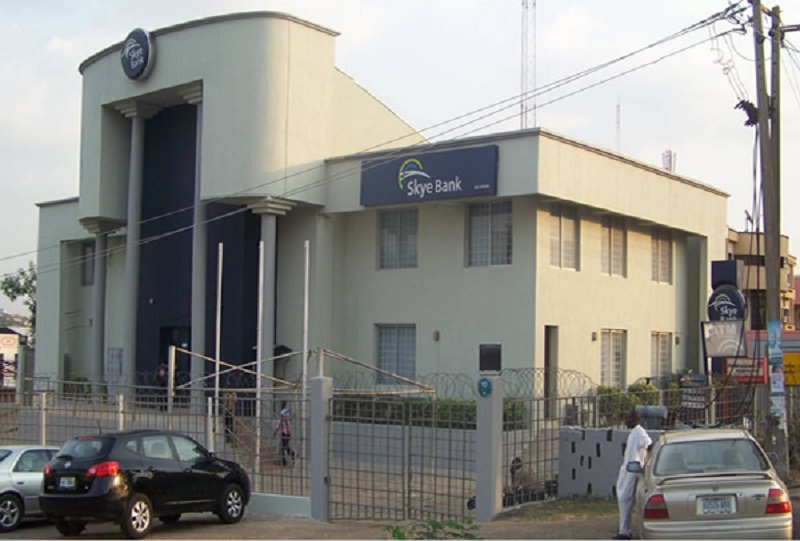
Fear Grips Ex-Directors of Skye Bank, Seek Soft-landing

Published

on

By Modupe Gbadeyanka

Information reaching Business Post indicates that all is not well with former directors of the defunct Skye Bank Plc, following a directive by federal government last week that the former bankers would be used as scapegoat to stop the incessant wrecking financial institutions by their top management staff.

Last week, Minister of Finance, Mrs Zainab Ahmed, directed the Central Bank of Nigeria (CBN) and the Nigeria Deposit Insurance Corporation (NDIC) to fully investigate and prosecute all the directors and executive management who contributed to the collapse of Skye Bank as well as other Deposit Money Banks (DMBs) in liquidation.

Mrs Ahmed said the failure of Skye Bank must be used as an opportunity to deal decisively with those behind the collapse so as to serve as a deterrent to other operators in the financial system.

According to her, federal government was no longer prepared to treat such serious infractions with levity.

The had Minister expressed her serious concern about the spate of non-performing loans in the banking industry, adding that while the bail-out of distressed financial institutions was necessary in the interest of the stability of the banking system, emphasis should also be placed on the investigation and prosecution of delinquent board directors and executive management of financial intuitions who abused the trust placed on them by depositors.

Soon after this directive, those fingered to be behind the fall of Skye Bank have started to look for ways to get a soft-landing.

According to sources in the banking sector, some of them have started consultations with their lawyers to see how they would not be “heavily dealt with.”

“I can confirm to you that even before the Minister [of Finance] gave the directive [last week], some of the former directors of Skye Bank had been making efforts to get a soft-landing.

“One thing they are aware of is that they might not escape justice because the forces behind their travails are beyond ordinary,” a top management staff of Polaris Bank, who seriously begged not to be named, told our correspondent at the weekend.

In September 2018, the CBN announced the collapse of Skye Bank, naming Polaris Bank as a bridge bank, noting that afterwards that Polaris Bank would run the financial institution until a suitable buyer is found.

In the past, not much had been done to decisively punish directors of failed banks in the country and in most cases; it is the minority shareholders who bear the brunt.

This has led many to believe that government and regulators are mere toothless bulldog, who find pleasure in making more investors lose confidence in the nation’s economy.

When Skye Bank was liquidated, many blamed the CBN, Nigerian Stock Exchange (NSE) and the Securities and Exchange Commission (SEC) for it.

Observers believed that these agencies did not do enough to protect interests of shareholders by raising the necessary red flags.

During the visit of the Finance Minister to NDIC last week, its Managing Director, Mr Umaru Ibrahim, assured her the corporation will do all it can to assist in the recovery of all the debts owed the defunct Skye Bank and other banks in liquidation.

He also expressed the agency’s determination to ensure that the directors who perpetrated in insider abuse and other illegalities in running the affairs of the bank are investigated and prosecuted by appropriate authorities.

The primary concern of the NDIC, he assured the Minister, is to ensure the safety of depositors’ funds and minimise the disruption of banking services.

Business Post recalls that last month, Mr Ibrahim had said that a former chairman of Skye Bank, Mr Tunde Ayeni, as well as a director of the defunct bank, Mr Festus Fadeyi, were being investigated by government.

He had disclosed that as soon as investigation was finalised, the necessary action would be taken and those found culpable severely dealt with.

“They are being investigated and I can assure you that when the time comes, the necessary security and law enforcement agencies would do their work,” the NDIC chief said on the sidelines of the International Association of Deposit Insurers (IADI) Africa Regional Committee (ARC) workshop in Lagos in September 2018.

It was alleged that Mr Ayeni and Fadeyi contributed to the downfall of the firm by borrowing huge amount of money that were never repaid.

While Mr Ayeni was said to have borrowed billions of Naira from the firm to fund the acquisitions of the Ibadan and Yola Electricity Distribution Companies; NITEL/M-Tel; and an energy services firm, Ascot Offshore Nigeria Limited; Mr Fadeyi, was accused of using Pan Ocean to obtain loans to fund the firm’s oil and gas upstream projects which were considered as one of the major non-performing loans amongst others.

It was said that the funds pulled out of Skye Bank allegedly by the duo and others led to the total collapse of the bank.


Modupe Gbadeyanka is a fast-rising journalist with Business Post Nigeria. Her passion for journalism is amazing. She is willing to learn more with a view to becoming one of the best pen-pushers in Nigeria. Her role models are the duo of CNN's Richard Quest and Christiane Amanpour.

Advertisement
Click to comment

Leave a Reply

Your email address will not be published. Required fields are marked *

Banking

Public Offer: Sterling Holdco Allots 13.812 billion Shares to 18,276 Shareholders

Published

on

Sterling Holdco

By Aduragbemi Omiyale

Sterling Financial Holdings Company Plc has allotted shares from its public offer of 2025 to investors with valid applications.

The allotment follows the earlier receipt of final approval from the Central Bank of Nigeria (CBN) and the recent clearance by the Securities and Exchange Commission (SEC).

In September 2025, the financial institution offered for sale about 12,581,000,000 ordinary shares of 50 kobo each at N7.00 per share in public offer.

However, the exercise received wide participation from the investing public, with the company getting 18,280 applications for 16,839,524,401 ordinary shares valued at approximately N117.88 billion.

Following a thorough verification process, valid applications were received from 18,276 shareholders for a total of 13,812,239,000 ordinary shares, representing a subscription level of 109.79 per cent and reflecting sustained confidence in Sterling Holdco’s strategic direction, governance, and long-term growth prospects.

The firm approached the capital market for additional funds for the recapitalisation of its two flagship subsidiaries, Sterling Bank and The Alternative Bank.

The capital injection will support the commencement of full operations and contribute to the group’s revenue diversification objectives.

In line with the guidelines set out in the offer prospectus, Sterling Holdco confirmed that all valid applications will be allotted in full. Every investor who complied with the terms of the offer will receive all the shares for which they applied.

A very small number of applications were not processed or were partially rejected due to non-compliance with the offer terms, including duplicate payments and failure to meet the minimum subscription requirement of 1,000 units or its multiples, as stipulated in the offer documents.

The group ensures a seamless post-offer process, with refunds for excess or rejected applications, along with applicable interest, to be remitted via Real Time Gross Settlement or NIBSS Electronic Funds Transfer directly to the bank accounts detailed in the application forms.

Simultaneously, the electronic allotment of shares has be credited to successful shareholders’ accounts with the Central Securities Clearing System (CSCS) on February 17, and for applicants who do not currently have CSCS accounts, their allotted shares will be temporarily held in a registrar-managed pool account pending the submission of their completed account opening documentation to Pace Registrars Limited, after which the shares will be transferred to their personal CSCS accounts.

Continue Reading

Banking

CBN Governor Seeks Coordinated Digital Payment Reforms

Published

on

Yemi Cardoso Coordinated Digital Payment Reforms

By Modupe Gbadeyanka

To drive inclusive growth, strengthen financial stability, and deepen global financial integration across developing economies, there must be coordinated reforms in digital cross-border payments.

This was the submission of the Governor of the Central Bank of Nigeria (CBN), Mr Olayemi Cardoso, at the G‑24 Technical Group Meetings in Abuja on Thursday, February 19, 2026.

According to him, high remittance costs, settlement delays, fragmented systems, and heavy compliance burdens still limit the participation of households and Micro, Small and Medium Enterprises (MSMEs) in global trade.

The central banker emphasised that efficient payment systems are essential for economic inclusion, highlighting that global remittance corridors still incur average costs above 6 per cent, with settlement delays of several days, excluding millions from modern economic activity.

Mr Cardoso cautioned that while digital payments present significant opportunities, they also carry risks such as currency substitution, weakened monetary transmission, increased FX volatility, capital-flow pressures, and regulatory fragmentation.

The G-24 TGM 2026, themed Mobilising finance for sustainable, inclusive, and job-rich transformation, convened global financial stakeholders to advance the modernisation of finance in support of emerging and developing economies.

The CBN chief reaffirmed Nigeria’s commitment to working with G-24 members, the IMF, the World Bank Group, and other partners to build a more inclusive, resilient, and development-oriented global financial architecture.

“We have strengthened our AML/CFT frameworks in line with FATF guidelines, requiring strict dual-screening of cross-border transactions to mitigate risks.

“To deepen regional integration, the CBN introduced simplified KYC/AML requirements for low-value cross-border transactions to encourage broader participation in PAPSS, easing processes for Nigerian SMEs and enabling faster intra-African trade payments.

“We have also embraced fintech innovation through our Regulatory Sandbox, allowing payment-focused fintechs to test secure, instant cross-border solutions under close CBN supervision,” he disclosed.

Coordinated Digital Payment Reforms

Continue Reading

Banking

Unity Bank, Providus Bank Merger Awaits Final Court Approval

Published

on

unity bank providus bank

By Modupe Gbadeyanka

The merger and business combination between Unity Bank Plc and Providus Bank Limited remains firmly on course, a statement from one of the parties disclosed.

According to Unity Bank, there is no iota of truth in reports in certain sections of the media suggesting that the merger process had stalled, as the transaction remains firmly on track.

It was disclosed that the necessary regulatory steps have been completed, but only a few other steps to finalise the transaction, especially the final court sanction.

There had been speculations that both lenders may not meet the new minimum capital requirement of the Central Bank of Nigeria (CBN) before the March 31, 2026, deadline.

However, it was noted that the combined capital base of Unity Bank and Providus Bank exceeds N200 billion, which is the minimum requirement to retain a national banking licence under the CBN’s recapitalisation framework.

When completed, the Unity-Providus merger is expected to deliver a stronger, more competitive, and customer-centric financial institution — one with the scale, innovation, and reach to redefine the retail and SME banking landscape in Nigeria.

“The merger with Providus Bank significantly enhances our capital base, operational capacity, and strategic positioning.

“We are confident that the combined institution will be better equipped to support economic growth and deliver innovative financial solutions across Nigeria,” the chief executive of Unity Bank, Mr Ebenezer Kolawole, stated.

Recall that a few months ago, shareholders authorised the merger between the two entities at Court-Ordered Meetings. They also adopted the scheme of merger at their respective Extraordinary General Meetings (EGMs) in September 2025,

The central bank also backed the merger, with a pivotal financial accommodation to support the transaction. The merger also received a further boost with a “no objection” nod from the Securities and Exchange Commission (SEC).

The regulatory approvals form part of broader efforts to strengthen the resilience of Nigeria’s banking system, reinforce capital adequacy across the sector, and mitigate potential systemic risks.

The development positions the combined entity among the 21 banks that have satisfied the apex bank’s new capital threshold for national banking operations.

Continue Reading

Trending