Education
60,000 Children to Benefit from Oranto’s Support to Education in South Sudan
By Dipo Olowookere
As part of its commitment to the socio-economic development of South Sudan, Oranto Petroleum Limited will be financing an educational programme in conjunction with the Ministry of Petroleum, to provide training to 25 teachers in the most under-privileged parts of the country.
The support from Oranto Petroleum paves the way for 25 teachers to receive quality training that will benefit 60,000 children across 30 villages in Yirol, in South Sudan’s Eastern Lakes State.
The program will run for a 5-year period and is expected to have a considerable impact on communities in the State, which is amongst the poorest of the country.
It will be implemented by Action for Intervention and Management (AIM), a non-governmental organization that works to provide quality education to the most under-developed parts of South Sudan.
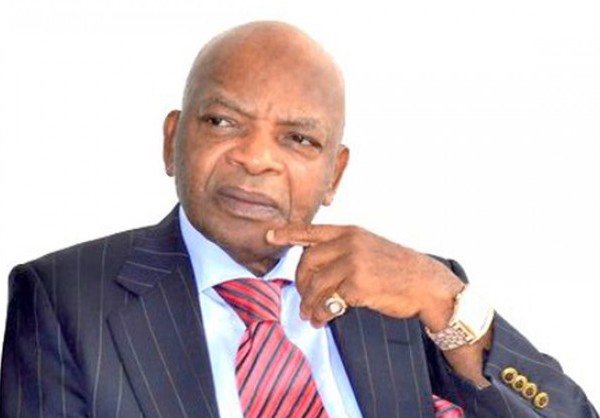
“At Oranto Petroleum, it is our firm belief that supporting teachers in their professional development leads to improved outcomes for learners. Good quality training is an essential part of a teacher’s professional life and it is going to help so many children,” said Prince Arthur Eze, Executive Chairman of Oranto Petroleum
“In South Sudan and across Africa, too many children have not had the utmost access to an excellent education. I am happy this program will start addressing this issue and closing the gap especially with young girls. Oranto will continue supporting what catalyzes leadership to make educational equity a reality,” added Prince Arthur Eze
Oranto’s support to the programme is in line with the company’s policy to significantly engage local capacities in all its activities in South Sudan and promote the development of social infrastructure. The company already awarded last year a contract for the construction of two primary schools in Yirol and Rumbek, at an estimated cost of over $800,000.
The construction of the schools is being executed by local construction company Dynamic Supplies and Construction Limited, in line with Oranto’s commitment to mobilise local human and material resources in all its activities in the Republic of South Sudan
“The South Sudanese oil industry can never be at its best without qualified citizens to take up roles across the full value chain. Earning a qualification is not enough for teachers to continue to grow, develop and evolve,” declared Ezekiel Lol Gatkuoth, Minister of Petroleum of the Republic of South Sudan.
“For South Sudan to reach its true place in Africa, we have to invest in education and great students are the result of great teachers and it is therefore essential to empower and support teaching professionals throughout this country and I am thankful to Oranto Petroleum and implore on other oil companies in the country to do the same,” added the Minister.
Oranto, and its sister company, Atlas Petroleum, comprise Africa’s largest privately held, Africa-focused exploration and production group, with 22 licenses in 11 jurisdictions, including producing assets in Nigeria and Equatorial Guinea. In late May, Oranto agreed to work with Rosneft, Russia’s largest oil producer, on the development of 21 oil assets in 17 African countries.
Oranto acquired Block B3 South Sudan in March 2017 and has since both engaged in unprecedented fast pace exploration activities on the Block and demonstrated significant interest in delivering oil and gas asset development in South Sudan ahead of schedule and in a most cost-effective manner. Oranto completed data acquisition on Block B3 in the second quarter of 2017 and is currently in the data interpretation stage.
Education
2025 Agreement: ASUU Gives 21 State Universities 14-Day Ultimatum
By Adedapo Adesanya
The Academic Staff Union of Universities (ASUU) has issued a 14-day ultimatum to 21 state-owned universities over alleged failure to implement key provisions of the 2025 agreement reached with the federal government.
The union warned that the affected universities could be heading for industrial action if their respective authorities fail to resolve the outstanding issues within the two-week window.
The ultimatum was one of the major resolutions reached at ASUU’s National Executive Council (NEC) meeting held at the University of Abuja recently.
In a statement signed by ASUU President, Professor Christopher Piwuna, the union expressed concern over what it described as the “haphazard implementation” of the 2025 Federal Government-ASUU agreement, accusing relevant authorities of displaying a lackadaisical attitude towards its implementation.
ASUU said the problem was particularly pronounced in several state universities, where university visitors had allegedly failed to implement the agreement, leaving affected branches with little option but to seek NEC’s approval to commence the process for industrial action.
Consequently, NEC authorised the affected branches to issue 14-day ultimatums to their university authorities, after which strike procedures would commence if the issues remained unresolved.
The universities affected include Nasarawa State University, Keffi; Ibrahim Badamasi Babangida University, Lapai; University of Medical Sciences, Ondo; Gombe State University; Plateau State University, Bokkos; Adekunle Ajasin University, Akungba; Ambrose Alli University, Ekpoma; Olusegun Agagu University of Science and Technology, Okitipupa; Abia State University, Uturu; and University of Education and Entrepreneurship, Akamkpa.
Others are Emmanuel Alayande University of Education, Oyo; Kaduna State University; Aliko Dangote University of Science and Technology, Wudil; Northwest University, Kano; Enugu State University of Science and Technology; Imo State University, Owerri; Niger Delta University, Wilberforce Island; University of Africa, Toru-Orua; Bayelsa Medical University, Yenagoa; and Taraba State University, Jalingo.
According to the union, the 14-day ultimatum is a precondition for the affected branches to begin formal procedures for industrial action.
ASUU said branches in the Sokoto Zone had already issued a similar two-week ultimatum, while NEC would reconvene in an emergency session at the end of August or early September to assess developments and determine the union’s next line of action.
The union also revived its “No-pay-No-work” position, directing branches in federal universities where salaries had been withheld or underpaid to take appropriate action.
It specifically cited affected universities, including universities of agriculture, where members had allegedly received incomplete salaries.
Beyond the salary and agreement implementation disputes, ASUU maintained its opposition to the National Education Repository Databank (NERD), insisting that unresolved questions surrounding its hosting arrangements and intellectual property rights must first be addressed.
The union also waded into the country’s political process, urging its members to participate actively in politics and approving the establishment of an ASUU Independent Monitoring Group.
The group, according to the union, will monitor and observe elections across the country.
Meanwhile, growing insecurity within university campuses also featured prominently in the NEC deliberations.
ASUU expressed concern over attacks and other security incidents that had claimed the lives of members, directing affected branches to engage the police and other relevant security agencies in pursuing justice for victims.
Branches were also mandated to document cases of insecurity and present comprehensive records to the union’s NEC for further action.
Education
WAEC Releases 2026 WASSCE Results, 61.54% Candidates Pass
By Adedapo Adesanya
The West African Examinations Council (WAEC) has released the results of the 2026 West African Senior School Certificate Examination (WASSCE) for school candidates, with 61.54 per cent of candidates obtaining credits in at least five subjects, including English Language and Mathematics.
The Head of WAEC’s Nigeria National Office, Mr Amos Dangut, announced the results at a press briefing in Lagos on Wednesday.
Mr Dangut said 1,200,514 candidates met the benchmark for admission to higher institutions, out of the 1,950,726 candidates who sat the examination nationwide, held between April 24 and June 19.
He said 102,708 examiners were engaged in the marking exercise held at 88 marking venues across the country between 2 July and 20 July.
“Today, I am happy to inform you that all the processes leading to the release of results have been completed. It is now my pleasure to announce the release of the results of candidates who sat the WASSCE for School Candidates, 2026 in Nigeria,” he said, directing candidates to the agency’s portal to access their results.
“UPDATE: 2026 WASSCE (SC) results have been released. Generate your PIN at waec.org and check your results now on waecdirect.org,” the examination body said, noting that candidates must obtain their Serial Number and PIN before they can check their results.
To generate the required credentials, candidates are expected to visit WAEC’s official website and select the “Serial Number and PIN” option at the top of the page.
They are then required to select the appropriate examination year and diet, enter their examination number and National Identification Number (NIN), and ensure that the NIN provided is the same one used during registration for the examination.
Candidates must also provide their email address and phone number to receive a One-Time Password (OTP).
After entering the OTP, candidates can recover their Serial Number and PIN, which they can subsequently use to check their results through WAEC Direct.
Education
Groups Tutor Female Students About Risks Associated With Shisha, Vaping
By Aduragbemi Omiyale
Over 200 senior students of Cleggs Girls High School, Surulere, Lagos, were on July 23, 2026, engaged in practical knowledge about the risks associated with smoking, vaping, and shisha.
This engagement was made possible through a collaboration between Breathe Life Foundation and Teach Nigeria Fellow.
Participants were students aged 15–19 years. They were also informed about the misconception that shisha is a safer alternative to cigarettes or other substances.
Through an engaging and interactive discussion, students explored the influence of peer pressure and learned practical strategies for making healthier, more informed lifestyle choices.
They also gained a better understanding of common environmental triggers of asthma and other respiratory conditions, including cigarette smoke, generator fumes, bush burning, mosquito coil smoke, candles, charcoal, and firewood.
The session highlighted an important reality: young people may not always recognise how seemingly routine lifestyle choices and environmental exposures can gradually affect their respiratory health, quality of life, and long-term wellbeing.
For Breathe Life Foundation, this reinforces the importance of shifting the conversation from treatment to prevention through awareness and education.
By equipping young people with the knowledge to identify risks and make healthier choices early, the foundation is helping to build a generation that is more conscious of – and better prepared to protect – its respiratory health.
The organisation said it is dedicated to advancing respiratory health, an often-neglected public health priority. Healthy lungs are essential to life, yet respiratory diseases remain among the world’s leading causes of death and disability, even though many are preventable and treatable.