Connect with us

World

Russia and Angola: Cooperating On Trade, Arms Delivery and Natural Resource Exploration

Published

on

By Kester Kenn Klomegah

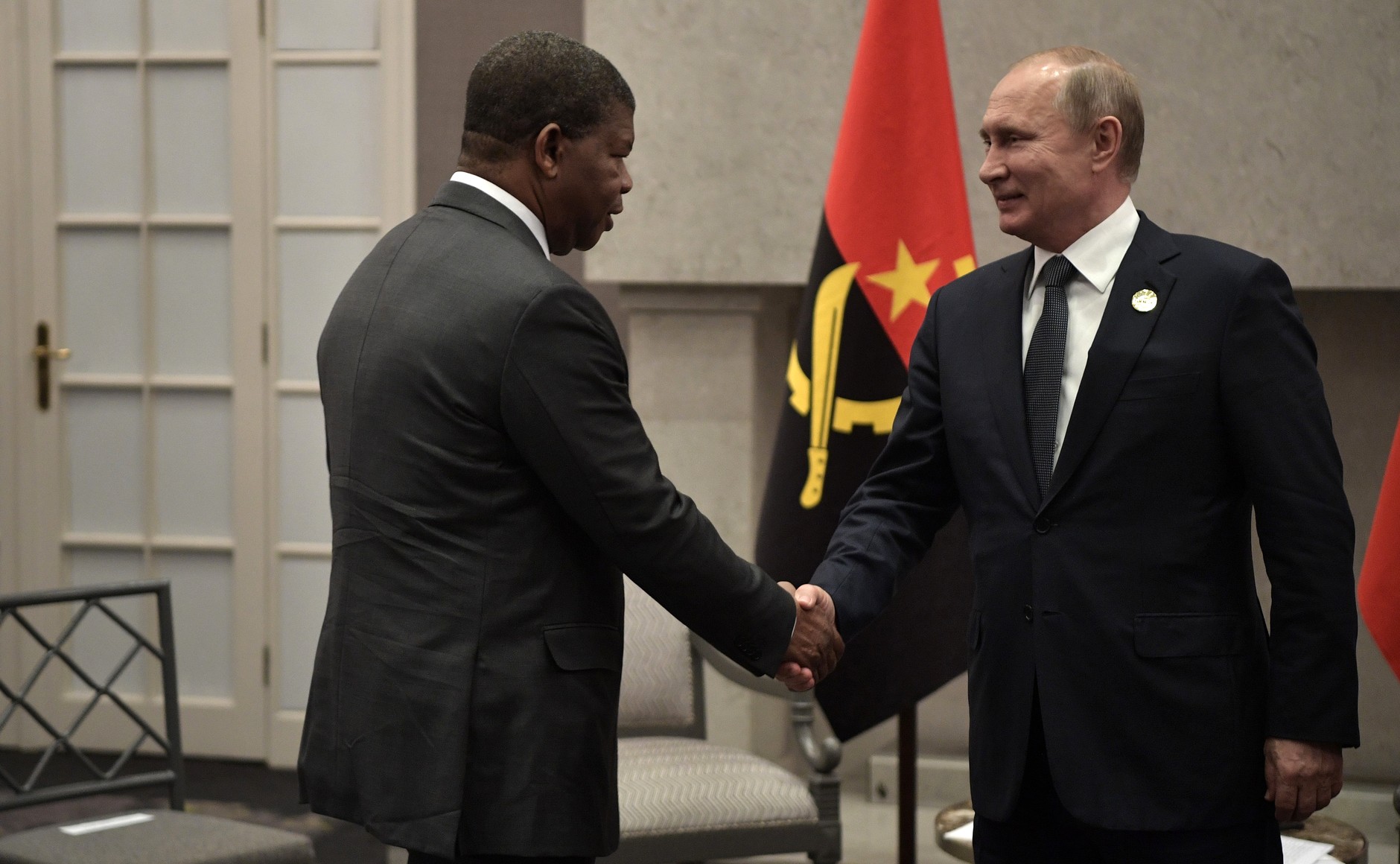
Russia is ready to raise its full-fledged bilateral ties and strengthen multifaceted cooperation by signing a series of agreements with Angola, one of Russia’s key partners in the African region, during the meeting scheduled early April between President Vladimir Putin and Angolan counterpart Joao Manuel Goncalves Lourenco in the Kremlin, Moscow.

Putin has expressed his confidence that Joao Lourenco official visit marks a new stage in the development of bilateral relations between the two countries. Putin has had bilateral connectivity with this southern African country, for example, during the leadership of Jose Eduardo Dos Santos who visited in October 2006.

Russia-Angolan relations have been developing actively “on the principles of mutual respect, trust and sincere friendship.” It is worth saying that Russia and Angola successfully cooperate in resolving actual international and regional problems and in ensuring security, law and order in the world.

In July 2018, Vladimir Putin held a meeting with President of Angola Joao Lourenco on the sidelines of the BRICS Summit. “Russia and Angola have longstanding and friendly relations that we greatly treasure. We are actively cooperating in political matters, security, and at international organizations. Our trade is quite modest so far, but in general, we have good projects that can be implemented. Our military and technical cooperation is also developing,” Putin told his Angolan Joao Lourenco.

During the Cold War, Russia always supported the Angolan people and helped achieve what is now treasure most of all: independence. Even after independence, Angola has enjoyed political freedom for 42 years, Russia never turned its back on Angola; it always supported and helped us fight the apartheid regime, which was a threat to Angola and the entire African continent.

“Rest assured that the people of Angola will never forget the friendship between our countries that was forged in battle. Now, we are focused on development. We want our country to develop in all areas. Speaking about economic cooperation, we are counting on interaction with Russia. First of all, Russian enterprises work in our mining complex. But, we would also like Russian businesses to be represented in other industries,” Joao Lourenco, in his turn, told Putin.

Russia plans large-scale economic engagement with Angola. Last year February, during a working meeting between Vladimir Putin and Alrosa CEO Sergei Ivanov in Kremlin, it came out that Russia’s Alrosa plans to develop one of the largest diamond deposits, Luaxe in Angola. “We are currently conducting a feasibility study. We have met with the President of Angola. Everything is on schedule. I am certain it will be a significant asset that will help us maintain our leadership,” according to Sergei Ivanov.

Soon, the truth in his words comes to fruition. In March 2019, Joao Lourenco gave an exclusive interview to a Russian media, Itar-TASS, he outlined some of his plans. The Angolan leader hinted that his country was ready to undertake the building factories to manufacture Russian weapons and military equipment for the African market.

“As for our military and technical cooperation with Russia – it will continue and be deepened. We would like to evolve from our current state of purchasers of Russian military equipment and technologies towards becoming the manufacturers and having an assembly point of Russian military equipment in our country,” he told the news agency.

Russia and Angola have military and technical cooperation. In 2018, Russia agreed to supply arms and military equipment to Angola worth US$2.5 billion, including spare parts for the Soviet-made weaponry, light weapons, ammunition, tanks, artillery and multi-purpose helicopters.

Besides, there are a number of Russia companies interested in Angola. For example, Mazepin’s companies considers an important step building nitrogen fertilizer plant in Angola. Zarubezhneft, an intermediary for the state interests in the field of fuel and energy complex on the international arena, plans to work in the oil and gas industry – from exploration and field construction to the pipeline systems construction and supply of equipment to the oil facilities.

Zarubezhneft has sealed a memorandum of understanding with Angola’s authorities to cooperate when exploring and producing from crude oil fields of that African country. For this purpose, the consortium eyes the Atlantic shelf of Angola, expecting to produce from it in partnership with Angola’s Sonangol and Dark Oil Company, which licenses for the area.

On the other hand, it was also reported in March 2017 that Angola had given two Russian companies the green light to build a major refinery complex and railroad. The US$12bn mega project put forward by companies Rail Standard Service and Fortland Consulting Company, which have set up a consortium with local partners.

Gustavo Plácido Dos Santos, Researcher at the Portuguese Institute of International Relations and Security (IPRIS), wrote recently that Angola has been on the frontline of Russia’s expansion in sub-Saharan Africa. Luanda enjoys strong historical ties with Moscow. Although political ties have failed to translate into deeper commercial interactions, it is worth highlighting Angola’s potential for Russian companies, especially in terms of mineral resources.

According to him, Sub-Saharan Africa is set to produce more gas than Russia by 2040. Thus, the region becomes a viable alternative for the European Union’s aim of diversifying energy sources away from Russia. In this sense, given the geographic proximity, countries such as Nigeria would be in the front line to satisfy Europe’s diversification goals. However, instability in Nigeria and its neighborhood positions Angola — one of Africa’s most stable energy producers — as a viable alternative.

Interesting to recall that back in June 2009, Dmitry Medvedev and Jose Eduardo dos Santos also held bilateral talks. A joint communique issued following the talks sets out the priority areas for developing the partnership between the two countries. The sectors in question include mining, energy, transport, telecommunications, military-technical cooperation, health and education.

Both leaders then witnessed the signing of a number of bilateral agreements, in particular, an intergovernmental agreement on air transport links, an agreement on encouragement and mutual protection of investment, and the medium-term program for economic and trade, science and technology as well as agreements on cooperation in geology and higher professional education.

In addition, there was a contract signed for the building and financing of Angola’s national satellite communications and broadcasting system, AngoSat. Energiya corporation reaffirmed its intention to fulfill the contract that envisions creation of a satellite network for telecommunication and broadcasting in Angola.

This April, some of the large-scale economic and investment projects crystallized in the documents signed covering projects in energy, minerals exploration, and high technology, in particular building a satellite communications system, and that of economic cooperation to a new level. There are the desires and the possibilities, but the need to reflect on setting up new financial mechanisms, according to South African based Senior Analyst on African policy, Kelvin Dewey Stubborn.

In his discussion for this article, Dewey Stubborn acknowledged that there are various forms of cooperation two largest state-owned companies, Zarubezhneft and Sonangol. There are a number of projects to develop and find new hydrocarbon deposits. This is certainly of interest because of very big players in the oil market, but this does not mean that Russians cannot cooperate in this field. Regarding the overall situation, Africa is a continent developing very dynamically, a continent on the rise, and second, Africa today has powerful countries that have chosen their own development paths.

Experts, such as Professors Vladimir Shubin and Alexandra Archangelskaya, Institute for African Studies in Moscow, have also argued that “both Angola and Russia still need to be more strategic in aligning their interests, and more proactive in carving out efficient bilateral instruments and mechanisms in order to promote economic exchanges and reap the benefits of a fully-fledged partnership.”

According to Wikipedia, compared to the Soviet era, trade between Russia and Angola is still minimal. In 2016, exports from Russia to Angola amounted to US$567.9 million and Angolan exports to Russia amounted to just US$14.94.

Angola has diamonds, oil, gold, copper and a rich wildlife, forest and fossil fuels. Since independence, oil and diamonds have been the most important economic resource. The Republic of Angola is a country in south-central Africa, the seventh largest by territorial size and bordered by Namibia to the south, Democratic Republic of Congo to the north and Zambia to the east, and on the west the Pacific Ocean.

Kester Kenn Klomegah writes frequently about Russia, Africa and the BRICS.

Dipo Olowookere is a journalist based in Nigeria that has passion for reporting business news stories. At his leisure time, he watches football and supports 3SC of Ibadan. Mr Olowookere can be reached via [email protected]

Advertisement
Click to comment

Leave a Reply

Your email address will not be published. Required fields are marked *

World

Russian-Nigerian Economic Diplomacy: Ajeokuta Symbolises Russia’s Remarkable Achievement in Nigeria

Published

on

Ajaokuta Steel Plant, Nigeria

By Kestér Kenn Klomegâh

Over the past two decades, Russia’s economic influence in Africa—and specifically in Nigeria—has been limited, largely due to a lack of structured financial support from Russian policy banks and state-backed investment mechanisms. While Russian companies have demonstrated readiness to invest and compete with global players, they consistently cite insufficient government financial guarantees as a key constraint.

Unlike China, India, Japan, and the United States—which have provided billions in concessionary loans and credit lines to support African infrastructure, agriculture, manufacturing, and SMEs—Russia has struggled to translate diplomatic goodwill into substantial economic projects. For example, Nigeria’s trade with Russia accounts for barely 1% of total trade volume, while China and the U.S. dominate at over 15% and 10% respectively in the last decade. This disparity highlights the challenges Russia faces in converting agreements into actionable investment.

Lessons from Nigeria’s Past

The limited impact of Russian economic diplomacy echoes Nigeria’s own history of unfulfilled agreements during former President Olusegun Obasanjo’s administration. Over the past 20 years, ambitious energy, transport, and industrial initiatives signed with foreign partners—including Russia—often stalled or produced minimal results. In many cases, projects were approved in principle, but funding shortfalls, bureaucratic hurdles, and weak follow-through left them unimplemented. Nothing monumental emerged from these agreements, underscoring the importance of financial backing and sustained commitment.

China as a Model

Policy experts point to China’s systematic approach to African investments as a blueprint for Russia. Chinese state policy banks underwrite projects, de-risk investments, and provide finance often secured by African sovereign guarantees. This approach has enabled Chinese companies to execute large-scale infrastructure efficiently, expanding their presence across sectors while simultaneously investing in human capital.

Egyptian Professor Mohamed Chtatou at the International University of Rabat and Mohammed V University in Rabat, Morocco, argues: “Russia could replicate such mechanisms to ensure companies operate with financial backing and risk mitigation, rather than relying solely on bilateral agreements or political connections.”

Russia’s Current Footprint in Africa

Russia’s economic engagement in Africa is heavily tied to natural resources and military equipment. In Zimbabwe, platinum rights and diamond projects were exchanged for fuel or fighter jets. Nearly half of Russian arms exports to Africa are concentrated in countries like Nigeria, Zimbabwe, and Mozambique. Large-scale initiatives, such as the planned $10 billion nuclear plant in Zambia, have stalled due to a lack of Russian financial commitment, despite completed feasibility studies. Similar delays have affected nuclear projects in South Africa, Rwanda, and Egypt.

Federation Council Chairperson Valentina Matviyenko and Senator Igor Morozov have emphasized parliamentary diplomacy and the creation of new financial instruments, such as investment funds under the Russian Export Center, to provide structured support for businesses and enhance trade cooperation. These measures are designed to address historical gaps in financing and ensure that agreements lead to tangible outcomes.

Opportunities and Challenges

Analysts highlight a fundamental challenge: Russia’s limited incentives in Africa. While China invests to secure resources and export markets, Russia lacks comparable commercial drivers. Russian companies possess technological and industrial capabilities, but without sufficient financial support, large-scale projects remain aspirational rather than executable.

The historic Russia-Africa Summits in Sochi and in St. Petersburg explicitly indicate a renewed push to deepen engagement, particularly in the economic sectors. President Vladimir Putin has set a goal to raise Russia-Africa trade from $20 billion to $40 billion over the next few years. However, compared to Asian, European, and American investors, Russia still lags significantly. UNCTAD data shows that the top investors in Africa are the Netherlands, France, the UK, the United States, and China—countries that combine capital support with strategic deployment.

In Nigeria, agreements with Russian firms over energy and industrial projects have yielded little measurable progress. Over 20 years, major deals signed during Obasanjo’s administration and renewed under subsequent governments often stalled at the financing stage. The lesson is clear: political agreements alone are insufficient without structured investment and follow-through.

Strategic Recommendations

For Russia to expand its economic influence in Africa, analysts recommend:

  1. Structured financial support: Establishing state-backed credit lines, policy bank guarantees, and investment funds to reduce project risks.
  2. Incentive realignment: Identifying sectors where Russian expertise aligns with African needs, including energy, industrial technology, and infrastructure.
  3. Sustained implementation: Turning signed agreements into tangible projects with clear timelines and milestones, avoiding the pitfalls of unfulfilled past agreements.

With proper financial backing, Russia can leverage its technological capabilities to diversify beyond arms sales and resource-linked deals, enhancing trade, industrial, and technological cooperation across Africa.

Conclusion

Russia’s Africa strategy remains a work in progress. Nigeria’s experience with decades of agreements that failed to materialize underscores the importance of structured financial commitments and persistent follow-through. Without these, Russia risks remaining a peripheral player (virtual investor) while Arab States such as UAE, China, the United States, and other global powers consolidate their presence.

The potential is evident: Africa is a fast-growing market with vast natural resources, infrastructure needs, and a young, ambitious population. Russia’s challenge—and opportunity—is to match diplomatic efforts with financial strategy, turning political ties into lasting economic influence.

Continue Reading

World

Afreximbank Warns African Governments On Deep Split in Global Commodities

Published

on

Commodities Market

By Adedapo Adesanya

Africa Export-Import Bank (Afreximbank) has urged African governments to lean into structural tailwinds, warning that the global commodity landscape has entered a new phase of deepening split.

In its November 2025 commodity bulletin, the bank noted that markets are no longer moving in unison; instead, some are powered by structural demand while others are weakening under oversupply, shifting consumption patterns and weather-related dynamics.

As a result of this bifurcation, the Cairo-based lender tasked policymakers on the continent to manage supply-chain vulnerabilities and diversify beyond the commodity-export model.

The report highlights that commodities linked to energy transition, infrastructure development and geopolitical realignments are gaining momentum.

For instance, natural gas has risen sharply from 2024 levels, supported by colder-season heating needs, export disruptions around the Red Sea and tightening global supply. Lithium continues to surge on strong demand from electric-vehicle and battery-storage sectors, with growth projections of up to 45 per cent in 2026. Aluminium is approaching multi-year highs amid strong construction and automotive activity and smelter-level power constraints, while soybeans are benefiting from sustained Chinese purchases and adverse weather concerns in South America.

Even crude oil, which accounts for Nigeria’s highest foreign exchange earnings, though still lower year-on-year, is stabilising around $60 per barrel as geopolitical supply risks, including drone attacks on Russian facilities, offset muted global demand.

In contrast, several commodities that recently experienced strong rallies are now softening.

The bank noted that cocoa prices are retreating from record highs as West African crop prospects improve and inventories recover. Palm oil markets face oversupply in Southeast Asia and subdued demand from India and China, pushing stocks to multi-year highs. Sugar is weakening under expectations of a nearly two-million-tonne global surplus for the 2025/26 season, while platinum and silver are seeing headwinds from weaker industrial demand, investor profit-taking and hawkish monetary signals.

For Africa, the bank stresses that the implications are clear. Countries aligned with energy-transition metals and infrastructure-linked commodities stand to benefit from more resilient long-term demand.

It urged those heavily exposed to softening agricultural markets to accelerate a shift into processing, value addition and product diversification.

The bulletin also called for stronger market-intelligence systems, improved intra-African trade connectivity, and investment in logistics and regulatory capacity, noting that Africa’s competitiveness will depend on how quickly governments adapt to the new two-speed global environment.

Continue Reading

World

Aduna, Comviva to Accelerate Network APIs Monetization

Published

on

Aduna Comviva Network APIs Monetization

By Modupe Gbadeyanka

A strategic partnership designed to accelerate worldwide enterprise adoption and monetisation of Network APIs has been entered into between Comviva and the global aggregator of standardised network APIs, Aduna.

The adoption would be done through Comviva’s flagship SaaS-based platform for programmable communications and network intelligence, NGAGE.ai.

The partnership combines Comviva’s NGAGE.ai platform and enterprise onboarding expertise with Aduna’s global operator consortium.

This unified approach provides enterprises with secure, scalable access to network intelligence while enabling telcos to monetise network capabilities efficiently.

The collaboration is further strengthened by Comviva’s proven leadership in the global digital payments and digital lending ecosystem— sectors that will be among the biggest adopters of Network APIs.

The NGAGE.ai platform is already active across 40+ countries, integrated with 100+ operators, and processing over 250 billion transactions annually for more than 7,000 enterprise customers. With its extensive global deployment, NGAGE.ai is positioned as one of the most scalable and trusted platforms for API-led network intelligence adoption.

“As enterprises accelerate their shift toward real-time, intelligence-driven operations, Network APIs will become foundational to digital transformation. With NGAGE.ai and Aduna’s global ecosystem, we are creating a unified and scalable pathway for enterprises to adopt programmable communications at speed and at scale.

“This partnership strengthens our commitment to helping telcos monetise network intelligence while enabling enterprises to build differentiated, secure, and future-ready digital experiences,” the chief executive of Comviva, Mr Rajesh Chandiramani, stated.

Also, the chief executive of Aduna, Mr Anthony Bartolo, noted that, “The next wave of enterprise innovation will be powered by seamless access to network intelligence.

“By integrating Comviva’s NGAGE.ai platform with Aduna’s global federation of operators, we are enabling enterprises to innovate consistently across markets with standardised, high-performance Network APIs.

“This collaboration enhances the value chain for operators and gives enterprises the confidence and agility needed to launch new services, reduce fraud, and deliver more trustworthy customer experiences worldwide.”

Continue Reading

Trending