Connect with us

Economy

Stockbroker Blames Buhari for Recent Decline in Stock Market

Published

on

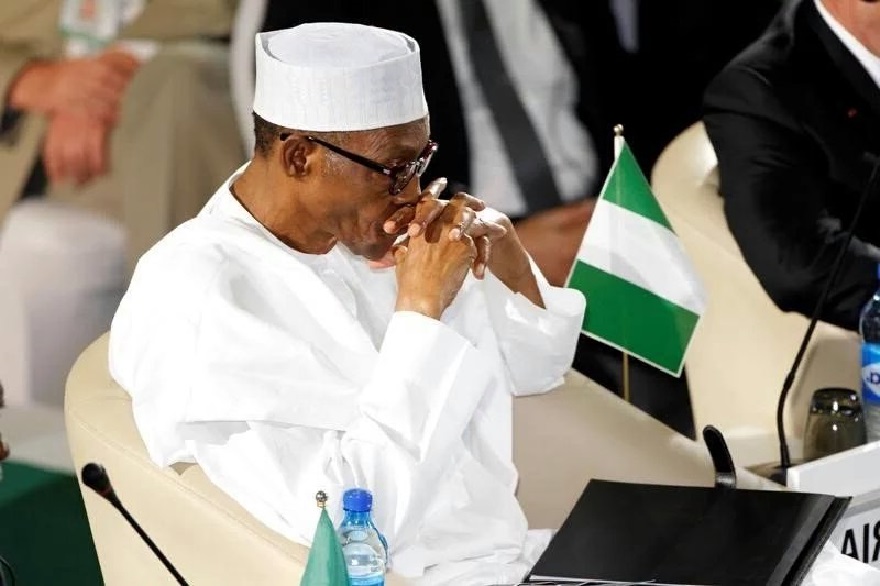
buhari thinking deep

By Adedapo Adesanya

Things are not looking well for investors at the Nigerian Stock Exchange (NSE) due to the bearish trend that has plagued it and an expert in the field has blamed the President Muhammadu Buhari-led administration for being the cause.

Chairman of the Association of Securities Dealing Houses of Nigeria (ASHON), Mr Patrick Ezeagu, in a chat last month, said market began to fall when the President kept investors in the dark by not announcing members of his cabinet almost four months after he was sworn in for a second term in office.

According to Mr Ezeagu, this singular act by Mr Buhari sent the wrong signal to investors, who felt the present government was not serious for governance.

“The bearish trend has to do with the fact that the government is yet to settle down after the elections,” the stockbroker said, adding that “core investors are awaiting a couple of things, including announcement of ministers of the federal republic and the economic team to show the clear direction of the government.”

Even with the screening of ministers by the Senate earlier in the month, market sentiment remained weak so far in August, with the All Share Index down by 286 basis points month-to-date, amid unimpressive macro and global conditions.

The NSE said a total turnover of 726.607 million shares worth N10.459 billion in 12,915 deals were traded last week by investors on the floor of the exchange, in contrast to a total of 1.081 billion shares valued at N12.014 billion that exchanged hands the previous week in 16,246 deals.

Despite the addition of N1.4 trillion into the market as a result of the listing of Airtel Africa Plc shares on July 1, 2019 on the stock exchange, total market recapitalisation has seen lost N645 billion since President Buhari was sworn in on Wednesday, May 29, 2019.

Total market capitalisation stood at N13.766 trillion a day after the President’s second term inauguration, however, as at last Friday, the market capitalisation finished at N13.121 trillion.

Business Post reports that after the Sallah holiday last week, stock investors in the nation’s equity market lost a total of N186 billion.

But despite the situation of things at the equity market, Mr Ezeagu said, “Astute and professionally guided investors should take position now that most stocks are trading lower than their net realisable asset value and expect handsome returns when the market shall eventually rally.”


Adedapo Adesanya is a journalist, polymath, and connoisseur of everything art. When he is not writing, he has his nose buried in one of the many books or articles he has bookmarked or simply listening to good music with a bottle of beer or wine. He supports the greatest club in the world, Manchester United F.C.

Advertisement
Click to comment

Leave a Reply

Your email address will not be published. Required fields are marked *

Economy

Oil Prices up as US Inflation Data Outweighs OPEC Supply Concerns

Published

on

oil prices cancel iran deal

By Adedapo Adesanya

Oil prices were marginally higher on Friday after data showed an overall slowdown in US inflation, helping offset supply concerns as the Organisation of the Petroleum Exporting Countries and allies (OPEC+) is leaning towards a resumption in production increases.

Brent crude futures grew by 23 cents or 0.3 per cent to $67.75 a barrel, while the US West Texas Intermediate (WTI) crude futures expanded by 5 cents or 0.08 per cent to $62.89 per barrel.

US consumer prices increased less than expected in January amid cheaper gasoline prices and a moderation in rental inflation.

The Consumer Price Index rose 0.2 per cent last month after an unrevised 0.3 per cent gain in December, the Labor Department’s Bureau of Labor Statistics said.

The report followed news this week of an acceleration in job growth in January and a drop in the unemployment rate to 4.3 per cent from 4.4 per cent in December.

Market analysts noted that since inflation is stabilising, it may lead to interest rates probably continuing to move a little bit lower.

OPEC is leaning towards a resumption in oil output increases from April, ahead of the upcoming peak summer fuel demand, and amid firmer crude prices owing to tensions over US-Iran relations.

There are indications that this will happen when eight OPEC+ producers – Saudi Arabia, Russia, the United Arab Emirates, Kazakhstan, Kuwait, Iraq, Algeria and Oman – meet on March 1.

The eight members raised production quotas by about 2.9 million barrels per day from April to the end of December 2025, equating to about 3 per cent of global demand, and froze further planned increases for January through March 2026 because of seasonally weaker consumption.

OPEC’s latest oil market forecasts show demand for OPEC+ crude in the second quarter falling by 400,000 barrels per day from the first three months of the year, but demand for the whole year is projected to be 600,000 barrels per day higher than in 2025.

Oil prices had strengthened earlier in the week on concerns that the US could attack Middle Eastern oil producer Iran over its nuclear programme. The US is sending an aircraft carrier from the Caribbean to the Middle East on Friday, a move that would put two carriers in the region as tensions soar between the two countries.

The US also eased sanctions on Venezuela’s energy sector on Friday, issuing two general licenses that allow global energy companies to operate oil and gas projects in the OPEC member and for other companies to negotiate contracts to bring in fresh investments.

On the US supply side, Baker Hughes said oil rigs fell by three to 409 this week.

Continue Reading

Economy

Katsina Provides Additional N500m for Women-owned Businesses

Published

on

Katsina Civil Servant

By Modupe Gbadeyanka

The Katsina State government has offered additional N500 million to support women-owned businesses in the state as part of efforts to boost economic activities.

Governor Dikko Umaru Radda announced this at the Women of Influence and Investment Summit hosted by the Katsina Inner Wheel Development Initiative (KIWDI), in partnership with Access Bank Plc.

The event brought together women entrepreneurs, investors, policymakers, and development partners to advance women’s economic empowerment in the state.

The summit, themed Where Influence Meets Investment, focused on positioning women as key drivers of enterprise, leadership, and inclusive growth. It also highlighted the growing collaboration between Access Bank and the Katsina State Government on financial inclusion and SME development.

Mr Radda noted that investing in women was critical to building a productive and sustainable economy.

In her welcome address, the founder of KIWDI, Ms Amina Zayyana, said the summit was designed to connect women to opportunities, training, finance, and markets, stressing that when women-led businesses grow, families and communities benefit.

On her part, the Group Head of Women Banking at Access Bank, Mrs Nene Kunle-Ogunlusi, said the lender was proud to partner with Katsina State and KIWDI in advancing women’s economic participation.

“At Access Bank, we are committed to moving women from potential to prosperity. Through our Women Banking proposition and the ‘W’ Initiative, we provide access to finance, capacity building, and market linkages that help women start, stabilise, and scale their businesses,” she said.

She noted that the W Initiative, launched in 2014, is Access Bank’s flagship women- focused platform, designed to meet the real needs of women entrepreneurs and professionals across Nigeria and Africa.

“Our partnership with Katsina State goes beyond banking. It is about supporting economic empowerment, SME growth, and financial inclusion, especially for women,” she added.

Mrs Kunle-Ogunlusi noted that Access Bank was proud to participate not just as a financial institution, but as a long-term partner in women’s economic advancement across Nigeria and Africa.

“At Access Bank, we made a deliberate decision to change that, not with charity, but with strategy. Not with sympathy, but with solutions. The W Initiative, which was launched in 2014, is Access Bank’s flagship women-focused proposition, created to respond to the real needs of women,” she said.

The banker disclosed that through the W Initiative, the bank has disbursed over N314 billion in loans to women, supporting over 3.6 million female loan beneficiaries, and helping women-owned businesses start, stabilise, and scale up.

Continue Reading

Economy

2026 Budget: Reps Threaten Zero Allocation for SON, NAICOM, CAC, Others

Published

on

Reps Stoppage of Forex Sales

By Adedapo Adesanya

The House of Representatives Public Accounts Committee (PAC) has recommended zero allocation for the Standards Organisation of Nigeria (SON), the National Insurance Commission (NAICOM), and the Corporate Affairs Commission (CAC), among others, in the 2026 budget for allegedly failing to account for public funds appropriated to them.

The committee, at an investigative hearing, accused the affected ministries, departments and agencies (MDAs) of shunning invitations to respond to audit queries contained in the Auditor-General for the Federation’s annual reports for 2020, 2021 and 2022.

The affected MDAs include the Federal Housing Authority (FHA), the Federal Ministry of Housing and Urban Development, the Federal Ministry of Women Affairs and Social Development, the National Business and Technical Examinations Board (NABTEB), and the Nigerian Meteorological Agency (NiMet).

Others are Federal University of Gashua; Federal Polytechnic, Ede; Federal Polytechnic, Offa; Federal Medical Centre, Owerri; Federal Medical Centre, Makurdi; Federal Medical Centre, Bida; Federal Medical Centre, Birnin Kebbi; Federal Medical Centre, Katsina; Federal Government College, Kwali; Federal Government Boys’ College, Garki, Abuja; Federal Government College, Rubochi; Federal College of Land Resources Technology, Owerri; Council for the Regulation of Freight Forwarding in Nigeria; and the FCT Secondary Education Board.

The PAC chairman, Mr Bamidele Salam, while speaking on the decision of the committee to recommend a zero budget for the defaulting MDAs, stated that the National Assembly should not continue to appropriate public funds to institutions that disregard accountability mechanisms.

“Public funds are held in trust for the Nigerian people. Any agency that fails to account for previous allocations, refuses to submit audited accounts, or ignores legislative summons cannot, in good conscience, expect fresh budgetary provisions. Accountability is not optional; it is a constitutional obligation,” he said.

The panel maintained that its recommendation for a zero budget for the affected MDAs is aimed at restoring fiscal discipline and strengthening transparency across federal institutions and conforms with extant financial regulations and the oversight powers of the parliament.

Continue Reading

Trending