Connect with us

Feature/OPED

Kogi and Bayelsa 2019 Governorship Elections: Foretelling the Outcome

Published

on

Kogi & Bayelsa elections

By Omoshola Deji

Democracy is earning the power to govern through free, fair and credible elections. Nigeria is a democratic state, but the leadership recruitment process is largely undemocratic. Material and financial inducements determine victory, the security agencies are political, and the umpire lacks the capacity and will to conduct credible polls. Public sovereignty is departing the ballot for court as the 2019 general elections produced about a thousand petitions.

Subjecting almost every electoral victory to judicial confirmation is making voting lose its essence. Like every human, judges are prone to errors as much as they have preference. Hence, their verdicts can’t always be a true reflection of the peoples will. Several mandates have been mistakenly or deliberately upturned. Parties and candidates must strive to end their contests at the polls, instead of the court.

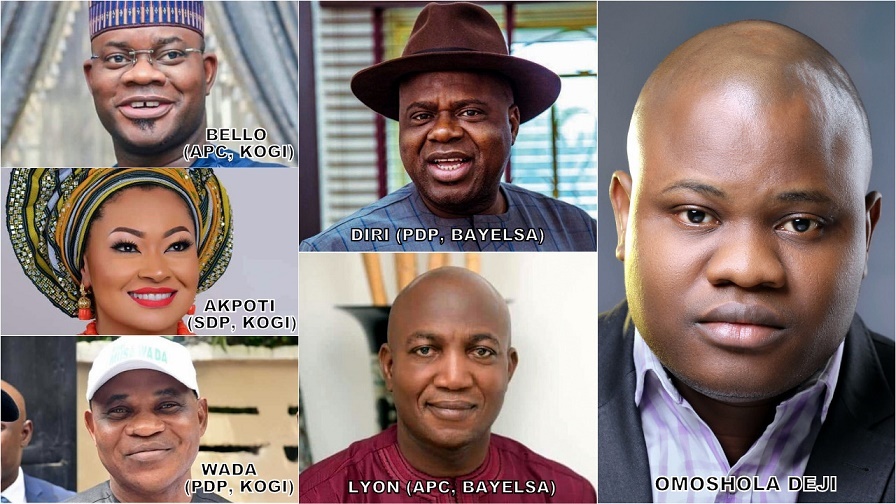
Nigerians hope for this as the people of Kogi and Bayelsa state elect governor on 16 November, 2019. Over 40 parties fielded candidates, but the contest is a two-horse race between the All Progressives Congress (APC) and the People’s Democratic Party (PDP). APC’s David Lyon is slugging it out with PDP’s Duoye Diri in Bayelsa state. In Kogi, PDP’s Musa Wada and SDP’s Natasha Akpoti are challenging incumbent Governor Yahaya Bello of the APC. On the sideline, PDP’s Dino Melaye is facing APC’s Smart Adeyemi in the Kogi-West senatorial rerun. This piece foretells the outcome of the elections.
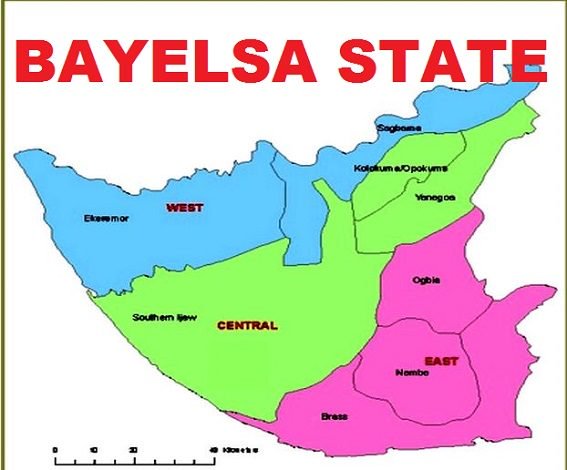
map of bayelsa state

Image Credit: Apply For A Job

Bayelsa State

Bayelsa is a riverine, less populated state of about 2.5 million persons, eight local governments, and 923,182 registered voters. Unfavorable judicial pronouncements have practically make winning an unattainable height for APC in Bayelsa state. The party’s deputy governorship candidate, Biobarakuma Degi-Eremienyo, was disqualified on November 12 for providing false information in his nomination form. On November 14, the court invalidated David Lyon’s candidacy on account that the governorship primary that produced him was improperly conducted. APC miraculously got a stay of execution at the Court of Appeal few hours after Justice Jane Inyang of Bayelsa High Court gave the ruling.

Is Nigeria’s legal system so flexible that appellants can get a stay of execution the same day judgment is delivered? Did the trial judge err by granting reliefs not sought by Heineken Lokpobiri, the plaintiff who originally prayed to be declared candidate?

In any case, APC is back on the ballot and the poll won’t be a walkover for PDP. The former made an impressive performance in the last general elections and may increase the beat. From scoring a meagre 5,000 votes in the 2015 presidential poll, APC garnered over 118,000 votes in 2019. While one may argue that the party got more votes because a Bayelsa indigene wasn’t on the ballot, as in 2015, the progression is a testament that APC is making waves in Bayelsa.

Ethno-regional balance of power would earn PDP votes. The party’s primary generated resentment, but drastic measures were taken to address the impasse. Diri and the immediate past speaker of the state assembly, Tony Isenah hails from Kolokuma Opokuma. Agitations were rife that the region cannot produce governor and speaker, while Southern Ijaw, the second largest voting population, held no key position. To calm frayed nerves, Governor Seriake Dickson and other PDP leaders forced Isenah out for Monday Obolo. The move has brightened PDP’s chance in Southern Ijaw, the APC candidate’s homeland.

A major setback for the PDP is intra-party crisis. Governor Dickson backed Duoye Diri, against the wish of ex-president Goodluck Jonathan and other bigwigs. Diri’s candidature was actualized through the Restoration Group, the dominant PDP faction in the state controlled by Dickson. Diri pulled 561 votes, while Jonathan’s preferred candidate, Timi Alaibe, scored 365 votes in the primary. Efforts to make Dickson concede the deputy governorship ticket to Alaibe’s faction failed. This made several PDP stalwarts decamp to APC and other parties. Gabriel Jonah, the incumbent deputy governor’s younger brother led the Otita Force group out of the PDP to APC. Some of the defectors have returned and PDP also won some APC decampees.

Recurring conflict of interest broke the cordial relationship between Dickson and his godfather, Jonathan. The latter wants to keep calling the shot, but the former feels he has come of age. Dickson is having his way as the party structure is firmly under his control. Many allege the Jonathans are working against PDP’s victory. Ex-first lady Patience reportedly attend an APC rally and the husband visited President Buhari within the same period. Politics is an interest driven game; hence, it is not impossible, but most unlikely that Jonathan would support APC. This is premised on the manner the party has disparaged him since he lost power in 2015.

Every governor wants to install a successor and Dickson is no exemption. He is striving to enthrone Diri to protect himself from probe and prosecution. Bayelsa’s development is incommensurable with the federal allocation and internal revenue Dickson has accrued. His government spent mammoth funds on less impactful schemes. For instance, the Bayelsa International Cargo Airport was constructed at a prodigious rate, while the population is lacking basic amenities.

Ex-governor Timipre Sylva’s appointment as Minister of State for Petroleum has energized APC in Bayelsa. Sylva hopes to raise his political clout by capturing the state. Poised to bring honey out of the rock, Sylva will use federal might and fund for APC, but the party will not sail through. The 2019 Ameachi-Rivers scenario would most-likely occur. Sylva would predictably incapacitate PDP bigwigs, flood the state with armed officers, and do all legally and illegally possible to enthrone APC. Yet the party would lose. PDP is more formidable despite the intra-party crisis and shortcomings of the Dickson administration. Duoye Diri (PDP) would win the election.
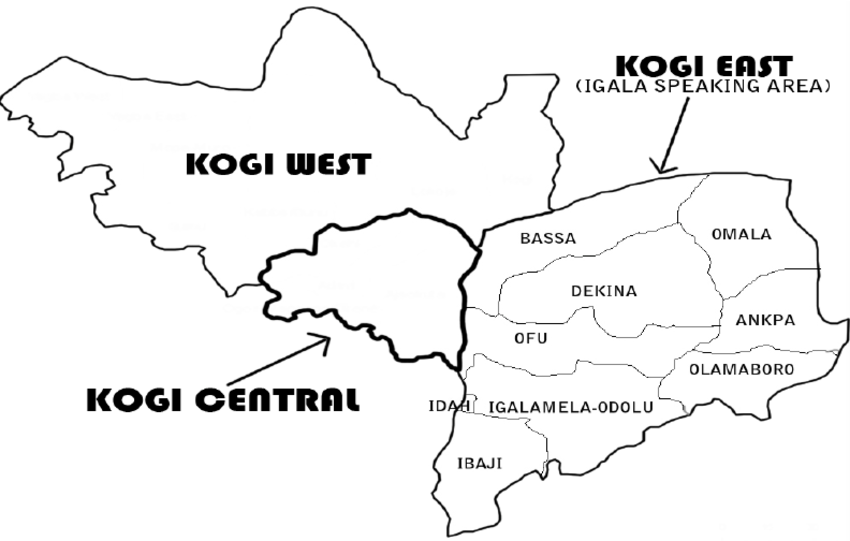
map of kogi state

Image Credit: ResearchGate

Kogi State

‘Your Excellency’ is a title Nigerian elites admire, and do all possible to acquire. Struggle for the coveted position of governor has made Kogi the violence capital of Nigeria lately. The 2019 governorship poll will go down in history as the fiercest in the state. Yahaya Bello (APC) and Musa Wada (PDP) are not aiming for second and Natasha Akpoti (SDP) is waxing strong. They are campaigning aggressively, spewing unfulfillable promises, and going all out to win the heart of the 1,646,350 registered voters.

Kogi APC had a good outing in the 2019 general election. The party won two of the state’s three senatorial seats, and seven out of the nine House of Representative seats. While this is a pointer that APC is on course for victory, it may lose the governorship election for fielding an unpopular candidate. Bello’s track record shows he’s not deserving of governorship or any other position. He is bereft of ideas, non-tolerant, arrogant, and violent. His address during campaigns are basically hate speeches and threats, rather than a presentation of his scorecard and manifesto.

Another minus for Bello is his style of governance. He ruled Kogi like a conquered territory. His mindset is too shallow to accommodate opposite views and criticisms. You either agree with him or be hounded. He has, at different times, been embroiled in conflict with the labor union, university staffs, and the state’s Chief Judge. Bello also has issues with his former deputy, Elder Simon Achuba. He withheld Achuba’s allowances and honoraria, and influenced his unconstitutional removal from office.

A major impediment to Bello’s re-election is the non-payment of salaries in the civil service, salary-dependent state. Bello has no tenable excuse for owing as he accrued over N300 billion internally generated revenue and federal allocation within 38 months of his administration. Yet workers were unpaid and no landmark project has been commissioned. The state is enmeshed in poverty, unemployment, insecurity and underdevelopment.

Sadly, the funds that should have been used to better Kogites lot would be apparently used for vote-buying. Federal government has aided the practice by releasing N10 billion project-executed repayment fund to Bello three days to the election. It’s upsetting Buhari’s anti-corruption centered government released the fund at a time it would most certainly be used for election purposes.

Vote-buying shouldn’t be aiding poor performing politicians to victory, but most Nigerians are descendants of Esau, the biblical character who sold his birthright for a plate of porridge. Pecuniary gain makes many praise-sing and reelect failed governments. Kogi people won’t act different. Many would vote the poor performing governor after receiving peanuts. Vote-buying is not a one-party affair. PDP also induce voters and will do so again in Kogi.

Ethnic politics reigns supreme in Kogi. The population often deliver bulk votes to their tribesmen, irrespective of party. Igala tribe has numerical advantage and principally determines who carry the day. In 1999, Abubakar Audu won the governorship election under the defunct All Nigeria Peoples Party, defeating PDP which had better structures at the time. Igala people are domiciled in Kogi East and constitutes over half of the state’s voting population. PDP’s Wada and the APC deputy governorship candidate, Edwin Onoja are Igala natives.

If ethnic voting occurs, Wada would win as Bello hails from the less populated Ebira tribe. Onoja’s influence won’t earn APC majority vote; Igala people would rather be first than play second fiddle. Moreover, Wada’s allies are conversant with the tactics of winning elections in Kogi state, especially Igala land. The PDP candidate is the brother of ex-governor Idris Wada and in-law of ex-governor Ibrahim Idris.

Bello is hoping to harvest Ebira votes in Kogi Central, but Akpoti is a pain. The budding politician’s fan base is increasing outstandingly. Her supporters are largely women, a crucial and influential arm of the voting population. Akpoti knows she can’t win, but wants to split Bello’s vote in Kogi Central, not minding who her action benefits. Having her way would propel PDP to victory and Bello’s army of thugs won’t watch that happen. They allegedly set her campaign office ablaze and have been harassing her routinely. This misstep is earning Akpoti the popularity she might have joined the race for. It would also earn her sympathy votes, which may be inadequate to make her win, but sufficient to make Bello lose. In case Bello gets injured in Kogi Central (which is most unlikely), he will hope on recovering at Kogi West.

Kogi West Senatorial Rerun

One man’s misfortune is often another’s stroke of luck. Dino Melaye’s trouble turned to blessing for Wada when he needs it most. The former’s senatorial mandate was nullified and rerun is holding alongside the governorship election. Melaye who had initially distanced himself from Wada’s campaign, having lost out in the primary, backtracked upon realizing him and Wada must either rise or fall together.

Melaye is facing arch-rival Smart Adeyemi of the APC in an epic rerun. In the nullified February 2019 election, Melaye defeated Adeyemi in six out of the seven local governments constituting Kogi West. He won despite being hounded by the state and federal government, and under a party in opposition at both levels of government.

Melaye is in tune with the masses than Adeyemi and other APC bigwigs in Kogi West. James Faleke’s reconciliation with Bello will not help APC much in the district. Faleke is late Abubakar Audu’s running mate in the 2015 governorship poll. He’s been inactive in the state since he lost the party’s mandate to Bello after Audu’s demise. Bello came second in the party primary.

Faleke is currently a federal lawmaker representing Lagos. He and Adeyemi’s political strength does not match Melaye’s in Kogi West. Melaye has over 100 projects to his credit; a contribution neither Adeyemi, Faleke nor Bello has made to the district. Call it uncivilized, Melaye’s politicking is admired by his people. His comical utterances and songs has won him the hearts of the population who sees other politicians as arrogant and inaccessible.

Melaye is a grassroots politician and popular in Kogi West. He stands a chance as none of the major opposition candidates in the governorship election hails from Kogi West. Based on the prominence of ethnic voting in the state, Melaye would lose if a strong opposition governorship candidate like Bello hails from Kogi West. Favored by these odds, Melaye (PDP) would defeat Adeyemi (APC) in the senatorial rerun election. In the same vein, for governorship, Musa Wada of the PDP would garner more votes than Yahaya Bello of the APC in Kogi West.
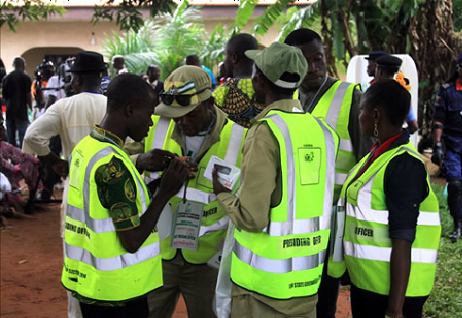
Governorship Election Outcome

Bello’s underperformance, mis-governance, dwindling admiration, and the odd-against ethnic voting permutation would deter his win. PDP’s Wada would get bulk ethnic votes in Kogi East. Melaye’s senatorial rerun coincidence would earn Wada majority vote in Kogi West. Natasha Akpoti would split Bello’s bulk vote in Kogi Central. The lowest of Wada’s vote would come from the district, while highest would come from Kogi East.

In a free, fair and credible contest, PDP’s Musa Wada would defeat APC’s Yahaya Bello. But the election is not going to be free; not going to be fair; and not going to be credible. Thugs would disperse voters and smash ballot boxes in Wada’s stronghold. The security agencies won’t arrest disruptors, and would be grossly partisan. Above all, the Independent National Electoral Commission would be ‘remote controlled’ by the ‘powers that be’. Several votes would be cancelled and the election would be declared inconclusive.

Virtually all the election winning indicators point to Wada’s emergence, but the pundit foresees Kogi 2019 governorship election ending with a rerun, and if it does, APC’s Yahaya Bello would ultimately be declared winner.

Note: Foretelling the outcome of an election doesn’t mean the writer has access to one sacred information or the election winning strategy of any candidate. Assessing candidates’ fortes and flaws to foretell election results is a common practice in developed nations. This doesn’t mean the pundits are demeaning the electoral process or influencing election results. Bayelsans and Kogites have already decided who they would vote for, and nothing – not this prediction – can easily change their mind.

Omoshola Deji is a political and public affairs analyst. He wrote in via [email protected]

Disclaimer: The views and opinions expressed in this article are purely of the writer and do not necessarily reflect the position of Business Post Nigeria on the subject matter.


Dipo Olowookere is a journalist based in Nigeria that has passion for reporting business news stories. At his leisure time, he watches football and supports 3SC of Ibadan. Mr Olowookere can be reached via [email protected]

Advertisement
Click to comment

Leave a Reply

Your email address will not be published. Required fields are marked *

Feature/OPED

Navigating Nigeria’s $1 Trillion Roadmap: Growth Indexes and PR Intelligence That Define Success in 2026

Published

on

Nosa Iyamu IVI PR

By Nosa Iyamu

As we navigate the threshold of 2026, the Nigerian economic landscape is finally shedding the “survivalist” skin that defined the previous two years. The data from 2025 paints a compelling picture of a nation pivoting toward stability. Headline inflation, which sat at a staggering 34.8% in December 2024, underwent a significant decline through 2025, cooling to 14.45% by November. This disinflationary trend, paired with economic reforms such as the Nigerian Electricity Regulatory Commission’s (NERC) aggressive reforms and strategic shifts in the Oil and Gas sector, has effectively reopened the floodgates for Foreign Direct Investment (FDI). The narrative has shifted from a desperate scramble for survival to a strategic quest for sustainability. Investors who were once hesitant are now looking at Nigeria not as a volatility risk, but as a market undergoing profound structural re-engineering. This transition is marked by a renewed focus on transparency and a commitment to market-driven policies that reward institutional resilience and long-term planning.

Building on the stability achieved last year, 2026 is projected to be a period of “Growth Consolidation.” With GDP expansion forecasted between 4.1% and 4.2% and headline inflation expected to settle into a manageable range of 12.5% to 20%, the mandate for brands should shift. It is no longer about merely surviving the storm of volatility; it is about scaling within high-impact corridors that have been cleared by these macroeconomic reforms. Strategic opportunities are ripening in four key sectors: Energy, driven by the Electricity Act 2023 and NERC’s cost-reflective market reforms; Healthcare, anchored by the landmark $5.1B Bilateral MOU between the U.S. and Nigeria; Financial Services, fueled by post-recapitalization lending power; and the Digital Economy, accelerated by the 5G rollout and the maturity of social commerce. Brands playing in these spaces and other industries must recognize that the consumer of 2026 is more discerning, having been refined by the economic hardships of the past, and will only reward businesses that offer clear value and authentic connection.

Perhaps the most pivotal anchor for 2026 is that $2 billion bilateral health Memorandum of Understanding (MOU) signed between the U.S. and Nigeria. This five-year agreement, which began its full implementation cycle in early 2026, is far more than a healthcare play; it is a massive economic stimulus and a resounding vote of global confidence in Nigeria’s institutional reforms. It signals that Nigeria is ready for high-level international cooperation and that the groundwork for a stable, productive economy is being laid. As we march toward the ambitious goal of a $1 trillion economy by 2030, visibility is no longer the endgame for any serious brand. To survive and thrive during this transition from subsistence to high productivity, brands must be deeply understood. It is about moving from the “top of mind” awareness to “top of heart” resonance, where the brand’s purpose aligns with the aspirations of a nation on the move.

In the fast-evolving communications landscape of 2026, visibility has become a cheap commodity, but clarity is a premium asset. The Public Relations industry has officially entered the era of Narrative Intelligence. Traditional Search Engine Optimization (SEO) is being rapidly superseded by Generative Engine Optimization (GEO). As consumers increasingly rely on AI agents and large language models (LLMs) rather than scrolling through pages of search results, brands must ensure they aren’t just “present” on the web—they must be cited as authoritative, credible voices by AI models. This requires a shift from keyword stuffing to high-context storytelling and data-backed authority. If an AI agent cannot summarize your brand’s value proposition accurately in two sentences, you are effectively invisible to the next generation of digital consumers. Narrative Intelligence is about ensuring your brand’s story is coherent, consistent, and machine-readable across all digital touchpoints.

However, this AI-driven world brings a darker side – the proliferation of Deepfakes and hyper-realistic misinformation. As the 2027 political cycle begins to warm up in late 2026, the Nigerian digital space could become a minefield of synthetic media designed to manipulate public opinion. For brands, this represents a significant reputational risk. PR professionals must now act as “Narrative Bodyguards,” deploying advanced AI detection tools to monitor, detect, and neutralize synthetic media before it erodes brand equity. Authenticity is no longer a buzzword or a marketing slogan; it is a defensive necessity. Brands must lean into “Responsible Communication,” ensuring that every piece of content is verifiable and that their response mechanisms for crisis management are faster than the speed of a viral deepfake. Trust, once lost in this high-speed environment, is nearly impossible to regain.

The era of the “Press Release for the sake of it” is officially dead. In 2026, Nigerian boardrooms are demanding a direct, quantifiable line between PR activity and business impact. This marks the definitive death of vanity metrics. Success is no longer measured by the thickness of a press clipping file or the number of generic “likes” on a social media post. Instead, we are seeing a shift from volume to impact, where the primary KPIs are how a campaign drives customer acquisition, increases investor interest, or improves employee retention. Measurement has shifted focus to quality over quantity; it is about the sentiment of the conversation and the conversion rate of the audience. If your PR strategy does not move the needle on the set measurable objectives, it is considered mere noise. PR is now a performance-driven discipline, integrated deeply into the sales and growth funnels of the modern Nigerian enterprise.

The age of the N100 million celebrity brand ambassador is also rapidly fading. Battle-hardened by years of economic shifts and broken promises, Nigerian consumers are increasingly skeptical of high-gloss, low-substance celebrity endorsements. In 2025, the Creator Economy has professionalized and matured. We will see the ascendancy of Niche Creators—the personal finance expert on TikTok, the sustainable farmer on YouTube, or the tech-policy analyst on Instagram. These voices offer what traditional celebrities cannot: community, deep credibility, and a mastery of their craft. Brands in 2026 will pivot toward long-term “Responsible Communication” partnerships with these creators who speak the hyper-local language of their audience. The “next big creator” is no longer a movie star; they are a subject matter expert with a loyal, high-intent community that values authentic insight over superficial fame.

While we must continue to support and prioritize independent media platforms to maintain democratic health, the reality is that traditional newsrooms continue to shrink under the weight of digital disruption. In response, savvy brands are increasingly becoming their own media houses. “Owned Media”—newsletters, podcasts, proprietary research reports, and custom-built community platforms—is the new frontier for brand storytelling. By owning the platform, brands can ensure their story is not diluted or lost in the noise of a fragmented media landscape. This allows for Direct Empathy, speaking to the consumer’s daily reality without a third-party filter. It provides Narrative Control, which is essential in an era of deepfakes, and grants Data Ownership, allowing brands to deeply understand who is engaging with their story and why. Owned media is the bridge that moves a brand from being seen to being truly understood and must be a strategy for 2026.

The 2026 landscape is a high-stakes arena of immense complexity and opportunity. With the active involvement of global powers like China, Russia, and the USA in trade and commerce, and a renewed national commitment to fighting insecurity to protect the $1 trillion goal, Nigeria is a land of profound transformation. But for a brand to capture this opportunity, it must move beyond the surface-level metrics of the past. Brands must empathize through genuine partnerships, drive cross-sector collaboration, and tell stories that resonate with the Nigerian spirit of resilience. The verdict for the year is clear: Trust is the new currency. In a world of AI-generated noise and economic restructuring, the brands that win will be those that have spent the time to build a foundation of understanding. The mandate for 2026 is simple: Don’t just show up. Ensure your audience knows exactly who you are, what you stand for, and why you are essential to their future.

Nosa Iyamu is the CEO of IVI PR

Continue Reading

Feature/OPED

On the Gazetted Tax Laws: What if Dasuki Was Indifferent?

Published

on

Abdussamad Dasuki

By Isah Kamisu Madachi

For over a week now, flipping through the pages of Nigerian newspapers, social media, and other media platforms, the dominant issue trending nationwide has been the discovery of significant discrepancies between the gazetted version of the tax laws made available to the public and what was actually passed by the Nigerian legislature.

Since this shocking discovery by a member of the House of Representatives, opinions from tax experts, public affairs analysts, activists, civil society organisations, opposition politicians, and professional bodies have been pouring in.

Many interesting events capable of burying the tempo of the debate have recently surfaced in the media, yet the tax law discussion persists due to how deeply entrenched public interest is in the contested laws.

However, while many view the issue from angles such as a breach of public trust, a violation of legislative privilege by the executive council, the passage of an ill-prepared law and so on, I see it from a different, narrower, and governance-centred perspective.

What brought this issue to public attention was an alarm raised by Abdulsammad Dasuki, a member of the House of Representatives from Sokoto State, during a plenary on December 17, 2025. He called the attention of the House to what he identified as discrepancies between the gazetted version of the tax laws he obtained from the Federal Ministry of Information and what was actually debated, agreed upon, and passed on the floors of both the House and the Senate.

He requested that the Speaker ensure all relevant documents, including the harmonised versions, the votes and proceedings of both chambers, and the gazetted copies, are brought before the Committee of the Whole for careful scrutiny. The lawmaker expressed concern over what he described as a serious breach of his legislative privilege.

Beyond that, however, my concern is about how safe and protected Nigerians’ interests are in the hands of our lawmakers at the National Assembly. This ongoing discussion raises a critical question about representation in Nigeria. Does this mean that if Dasuki had also been indifferent and had not bothered to utilise the Freedom of Information Act 2011 to obtain the gazetted version of the laws from the Federal Ministry of Information, take time to study it, and make comparisons, there would have been no cause for alarm from any of Nigeria’s 360 House of Representatives members and 109 senators? Do lawmakers discard the confidence we reposed in them immediately after election results are declared?

This debate should indeed serve a latent function of waking us up to the reality of the glaring disconnect between public interest and the interests of our representatives. The legislature in a democratic setting is a critical institution that goes beyond routine plenaries that are often uninteresting and sparsely attended by the lawmakers. It is meant to be a space for scrutiny, deliberation, and the protection of public interest, especially when complex laws with wide social consequences are involved.

We saw Ali Ndume in a short video clip that recently swept the media, furiously saying during a verbal altercation with Adams Oshiomhole over ambassadorial screening that “the Senate is not a joke.” The Senate is, of course, not a joke, and either should the entire National Assembly be.

Ideally, it should not be a joke to us or to the legislators themselves. Therefore, we should not shy away from discussing how disinterested those entrusted with the task of representing us, and primarily protecting our interests, appear to be in our collective affairs.

It is not a coincidence that even before the current debate around the tax reform law, it had continued to generate controversy since its inception. It also does not take quantum mechanics to understand that something is fundamentally wrong when almost nobody truly understands the law. Thanks to social media, I have come across numerous skits, write-ups, and commentaries attempting to explain it, but often followed by opposing responses saying that the authors either did not understand the law themselves or did not take sufficient time to study it.

The controversy around the gazetted Tax Reform Laws should not end with public outrage or media debates alone. It should force a deeper reflection on how laws are made, checked, and defended in Nigeria’s democracy. A system that relies on the alertness of one lawmaker to prevent serious legislative discrepancies is not a resilient or reliable system. Representation cannot be occasional and vigilance cannot be optional.

Nigerians deserve a legislature that safeguards their interests, not one that notices breaches only when a few individuals choose to be different and look closely. If this ongoing debate does not lead to formidable internal checks and a renewed sense of responsibility among lawmakers, then the problem is far bigger than a flawed gazette. When legislative processes fail, it is ordinary Nigerians who bear the cost through policies they did not scrutinize and consequences they did not consent to.

Isah Kamisu Madachi is a public policy enthusiast and development practitioner. He writes from Abuja and can be reached via: [email protected]

Continue Reading

Feature/OPED

After the Capital Rush: Who Really Wins Nigeria’s Bank Recapitalisation?

Published

on

CBN Building Governor Yemi Cardoso

By Blaise Udunze

By any standard, Nigeria’s ongoing bank recapitalisation exercise is one of the most consequential financial sector reforms since the 2004-2005 consolidation that shrank the number of banks from 89 to 25. Then, as now, the stated objective was stability to have stronger balance sheets, better shock absorption, and banks capable of financing long-term economic growth.

The Central Bank of Nigeria (CBN), in 2024, mandated a sweeping recapitalisation exercise compelling banks to raise substantially higher capital bases depending on their license categories. The categorisation mandated that every Tier-1 deposit money bank with international authorization is to warehouse N500 billion minimum capital base, and a national bank must have N200 billion, while a regional bank must have N50 billion by the deadline of 31st March 2026. According to the apex bank, the objectives were to strengthen resilience, create a more robust buffer against shocks, and position Nigerian banks as global competitors capable of funding a $1 trillion economy.

But in the thick of the race to comply and as the dust gradually settles, a far bigger conversation has emerged, one that cuts to the heart of how our banking system works. What will the aftermath of recapitalisation mean for Nigeria’s banking landscape, financial inclusion agenda, and real-sector development?

Beyond the headlines of rights issues, private placements, and billionaire founders boosting stakes, every Nigerians deserve a sober assessment of what has changed, and what still must change, if recapitalisation is to translate into a genuinely improved banking system.

The points are who benefits most from its evolution, and whether ordinary Nigerians will feel the promised transformation in their everyday financial lives, because history has taught us that recapitalisation is never a neutral policy. The fact remains that recapitalization creates winners and losers, restructures incentives, and often leads to unintended outcomes that outlive the reform itself.

Concentration Risk: When the Big Get Bigger

Recapitalisation is meant to make banks stronger, and at the same time, it risks making them fewer and bigger, concentrating power and risks in an ever-narrowing circle. Nigeria’s Tier-1 banks, those already controlling roughly 70 percent of banking assets, are poised to expand further in both balance sheet size and market influence. This deepens the divide between the “haves” and “have-nots” within the sector.

A critical fallout of this exercise has been the acceleration of consolidation. Stronger banks with ready access to capital markets, like Access Holdings and Zenith Bank, have managed to meet or exceed the new thresholds early by raising funds through rights issues and public offerings. Access Bank boosted its capital to nearly N595 billion, and Zenith Bank to about N615 billion.

In contrast, banks that lack deep pockets or the ability to quickly mobilise investors are lagging. The results always show that the biggest banks raise capital faster and cheaper, while smaller banks struggle to keep pace.

As of mid-2025, fewer than 14 of Nigeria’s 24 commercial banks met the required capital base, meaning a significant number were still scrambling, turning to rights issues, private placements, mergers, and even licensing downgrades to survive.

The danger here is not merely numerical. It is systemic: as capital becomes more concentrated, the banking system could inadvertently mimic oligopolistic tendencies, reducing competition, narrowing choices for customers, and potentially heightening systemic risk should one of these “too-big-to-fail” institutions falter.

Capital Flight or Strategic Expansion? The Foreign Subsidiary Question

One of the most contentious aspects of the recapitalisation aftermath has been the deployment of newly raised capital, especially its use outside Nigeria. Several banks, flush with liquidity from rights issues and injections, have signalled or executed investments in foreign subsidiaries and expansions abroad, like what we are experiencing with Nigerian banks spreading their tentacles to the Ivory Coast, Ghana, Kenya, and beyond. Zenith Bank’s planned expansion into the Ivory Coast exemplifies this outward push.

While international diversification can be a sound strategic move for multinational banks, there is an uncomfortable optics and developmental question here: why is Nigerian money being deployed abroad when millions of Nigerians remain unbanked or underbanked at home?

According to the World Bank, a large number of Nigeria’s adult population still lack access to formal financial services, while millions of SMEs, micro-entrepreneurs, and rural households remain on the edge, underserved by traditional banks that now chase profitability and scale.

Of a truth, redirecting Nigerian capital to foreign markets may deliver shareholder returns, but it does little in the short term to advance domestic financial inclusion, poverty reduction, or grassroots economic participation. The optics of capital flight, even when legal and strategic, demand scrutiny, especially in a nation still struggling with deep regional and demographic disparities.

Impact on Credit and the Real Economy

For the ordinary Nigerian, the most important question is simple: will recapitalisation make credit cheaper and more accessible?

History suggests the answer is not automatic. The tradition in Nigeria’s bank system is mainly to protect returns, and for this reason, many banks respond to higher capital requirements by tightening lending standards, raising interest rates, or focusing on low-risk government securities rather than private-sector loans, because raising capital is expensive, and banks are profit-driven institutions.  Small and medium-sized enterprises (SMEs), often described as the engine of growth, are usually the first casualties of such risk aversion.

If recapitalisation results in stronger balance sheets but weaker lending to the real economy, then its benefits remain largely cosmetic. The economy does not grow on capital adequacy ratios alone; it grows when banks take measured risks to finance production, innovation, and consumption.

Retail Banking Retreat: Handing the Mass Market to Fintechs?

In recent years, we have witnessed one of the most striking shifts, or a gradual retreat of traditional banks from mass retail banking, particularly low-income and informal customers.

The question running through the hearts of many is whether Nigerian banks are retreating from retail banking, leaving space for fintech disruptors to fill the void.

In recent years, players like OPAY, Moniepoint, Palmpay, and a host of digital financial services arms have become de facto retail banking platforms for millions of Nigerians. They provide everyday payment services, wallet functionalities, micro-loans, and QR-enabled commerce, areas traditional banks once dominated. This trend has accelerated as banks chase corporate clients where margins are higher and risk profiles perceived as more manageable. The true picture of the financial landscape today is that the fintechs own the retail space, and banks dominate corporate and institutional finance. But it is unclear or uncertain if this model can continue to work effectively in the long term.

Despite the areas in which the Fintechs excel, whether in agility, product innovation, and customer experience, they still rely heavily on underlying banking infrastructure for liquidity, settlement, and regulatory compliance. Should the retail banking ecosystem become split between digital wallets and corporate corridors, rather than being vertically integrated within banks, systemic liquidity dynamics and financial stability could be affected.

Nigerians deserve a banking system where the comforts and conveniences of digital finance are backed by the stability, regulatory oversight, and capital strength of licensed banks, not a system where traditional banks withdraw from retail, leaving unregulated or lightly regulated players to carry that mantle.

Corporate Governance: When Founders Tighten Their Grip

The recapitalisation exercise has not been merely a technical capital-raising exercise; it has become a theatre of power plays at the top. In several banks, founders and major investors have used the exercise to increase their stakes, concentrating ownership even as they extol the virtues of financial resilience.

Prominent founders, from Tony Elumelu at UBA to Femi Otedola at First Holdco and Jim Ovia at Zenith Bank, have all been actively increasing their shareholdings. These moves raise legitimate questions about corporate governance when founders increase control during a regulatory exercise. Are they driven by confidence in their institutions, or are they fortifying personal and strategic influence amid industry restructuring?

Though there might be nothing inherently wrong with founders or shareholders demonstrating faith in their institutions, one fact remains that the governance challenge lies not simply in who holds the shares, but how decisions are made and whose interests are prioritised. Will banks maintain robust internal checks and balances, ensuring that capital deployment aligns with national development goals? The question is whether the CBN is equipped with adequate supervisory bandwidth and tools to check potential excesses if emerging shareholder concentrations translate into undue influence or risks to financial stability. These are questions that transcend annual reports; they strike at the heart of trust in the system.

Regional Disparity in Lending: Lagos Is Not Nigeria

One of the persistent criticisms of Nigerian banking is regional lending inequality. It has been said that most bank loans are still overwhelmingly concentrated in Lagos and the Southwest, despite decades of financial deepening in this region; large swathes of the North, Southeast, and other underserved regions receive disproportionately smaller shares of credit. This imbalance not only undermines inclusive growth but also fuels perceptions of economic exclusion.

Recapitalisation, in theory, should have enhanced banks’ capacity to support broader economic activity. Yet, the reality remains that loans and advances are overwhelmingly concentrated in economic hubs like Lagos.

The CBN must deploy clear incentives and penalties to encourage geographic diversification of lending. This could include differentiated capital requirements, credit guarantees, or tax incentives tied to regional loan portfolios. A recapitalised banking system that does not finance national development is a missed opportunity.

Cybersecurity, Staff Welfare, and the Technology Deficit

Beyond balance sheets and brand expansion, there is a human and technological dimension to the banking sector’s challenge. Fraud remains rampant, and one of the leading frustrations voiced by Nigerians involves failed transactions, delayed reversals, and poor digital experience. Banks can raise capital, but if they fail to invest heavily in cybersecurity, fraud detection, staff training, and welfare, the everyday customer will continue to view the banking system as unreliable.

Nigeria’s fintech revolution has thrived precisely because it has pushed incumbents to become more customer-centric, agile, and tech-savvy. If banks now flush with capital don’t channel a portion of those funds into robust IT systems, workforce development, fraud mitigation, and seamless customer service, then the recapitalisation will have achieved little beyond stronger balance sheets. In short, Nigerians should feel the difference, not merely in stock prices and market capitalisation, but in smooth banking apps, instant reversals, responsive customer care, and secure platforms.

The Banks Left Behind: Mergers, Failures, or Forced Restructuring?

With fewer than half the banks having fully complied with the recapitalisation requirements deep into 2025, a pressing question is: what awaits those that lag? Many banks are still closing capital gaps that run into hundreds of billions of naira. According to industry estimates, the total recapitalisation gap across the sector could reach as much as N4.7 trillion if all requirements are strictly enforced.

Banks that fail to meet the March 2026 deadline face a few options:

–       Forced M&A. Regulators could effectively compel weaker banks to merge with stronger ones, echoing the consolidation wave of 2005 that reduced the sector from 89 to 25 banks.

–       License downgrades or conversions. Some banks may choose to operate at a lower license category that demands a smaller capital base.

–       Exits or closures. In extreme cases, banks that can neither raise capital nor find a merger partner might be forced out of the market.

This regulatory pressure should not be construed merely as punitive. It is part of the CBN’s broader architecture of ensuring that only solvent, well-capitalised, and risk-prepared institutions operate. However, the transition must be managed carefully to prevent contagion, protect depositors, and preserve confidence.

Why Are Tier-1 Banks Still Chasing Capital?

Perhaps the most intriguing puzzle is why some Tier-1 banks, long regarded as strong and profitable, are aggressively raising capital. Even banks thought to be among the strongest, such as UBA, First Holdco, Fidelity, GTCO, and FCMB, have struggled to close their capital gaps. UBA, for instance, succeeded in raising around N355 billion toward its N500 billion target at one point and planned additional rights issues to bridge the remainder.

This reveals another reality that capital is not just numbers on paper; it is investor confidence, market appetite, and macroeconomic stability.

One can also say that the answer lies partly in ambition to expand into new markets, infrastructure financing, and compliance with stricter global standards.

However, it also reflects deeper structural pressures, including currency depreciation eroding capital, rising non-performing loans, and the substantial funding required to support Nigeria’s development needs. Even giants are discovering that yesterday’s capital is no longer sufficient for tomorrow’s challenges.

Reform Without Deception

As the Nigerian banking sector recapitalization exercise comes to a close by March 31, 2026, the ultimate test will be whether the reforms deliver on their transformational promise.

Some of the concerns in the minds of Nigerians today will be to see a system that supports inclusive growth, equitable credit distribution, world-class customer service, and resilient financial intermediation. Or will we see a sector that, despite larger capital bases, still reflects old hierarchies, geographic biases, and operational friction? The cynic might say that recapitalisation simply made big banks bigger and empowered dominant shareholders.

But a more hopeful perspective invites stakeholders, including regulators, customers, civil society, and bankers themselves, to co-design the next chapter of Nigerian banking; one that balances scale with inclusion, profitability with impact, and stability with innovation. The difference will be made not by press releases or shareholder announcements, but by deliberate regulatory action and measurable improvements in how banks serve the economy.

For now, the capital has been raised, but the true capital that counts is the confidence Nigerians place in their banks every time they log into an app, make a transfer, or deposit their life’s savings. Only when that trust is visible in everyday experience can we say that recapitalisation has truly succeeded.

Blaise, a journalist and PR professional, writes from Lagos and can be reached via: [email protected]

Continue Reading

Trending