

Education
Russia’s Diplomacy of Education, Contribution to Human Resource Development and the Third World: 60 Years of RUDN

By Kester Kenn Klomegah
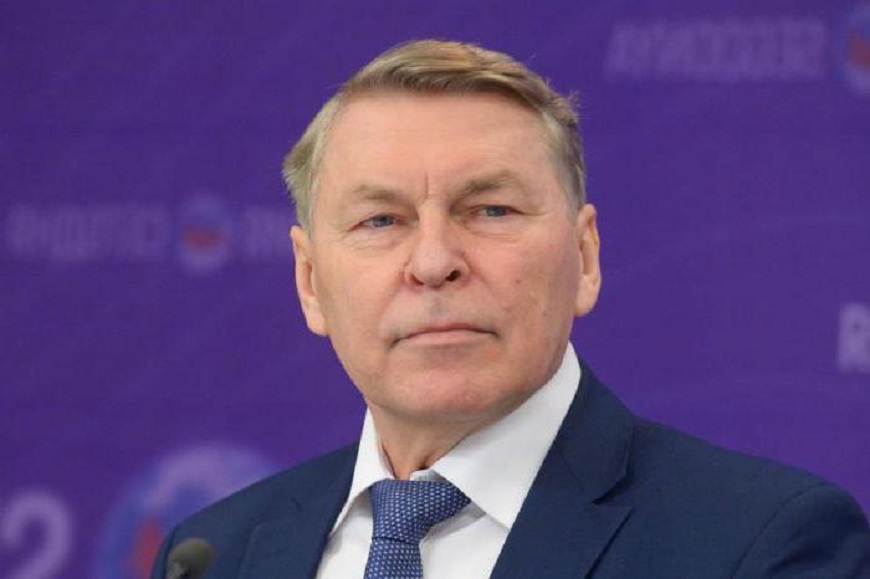
Professor Vladimir Filippov, Rector of the Russian University of Peoples’ Friendship (RUDN) and Minister for Higher Education (1998-2004) has given an exclusive long-ranging interview in which he speaks about his university as it marks its 60th year of establishment and the plans for the future.
During his meeting with this correspondent, Kester Kenn Klomegah, he also discusses the importance of reforms, challenges and achievements in his university in the Russian Federation.
The Russian University of Peoples’ Friendship (RUDN) is an educational and research institution located in Moscow. It was established in 1960 primarily to provide higher education to Third World students. It became an integral part of the Soviet cultural offensive in nonaligned countries. Many students especially from developing countries still attend this university. It is Russia’s most multidisciplinary university, which boasts the largest number of foreign students. The university offers various academic programmes, has research infrastructure that comprises laboratories and interdisciplinary centers.
Here are the interview excerpts:
First of all, the Russian University of Peoples’ Friendship (RUDN) has a long history since its establishment in 1960. What is unique about this educational institution compared to others in the Russian Federation?
The full name of RUDN is Russian University of Peoples’ Friendship. The university is based on the ideas of diverse institutes and faculties, and international students and staff. From the very first days of its foundation, students and researchers were free to study and do research outside politics in conditions of equality. RUDN has given knowledge to professionals from Asia, Africa, Latin America, the Near and Middle East. During the first historic graduation in 1965, diplomas were received by representatives from 47 countries. Now, we are teaching nationals from 157 countries.
Of course, 60 years of existence, in itself, can be considered as the greatest achievement. But, could you tell us about its latest marked achievements during the past ten years, after the golden jubilee?
Of course, the biggest success of recent years is a breakthrough in international rankings. Now RUDN is among the top 400 best universities in the QS World University Rankings – we have risen by 258 positions in 4 years. Only a few universities around the world have achieved this result
RUDN began to purposefully develop along the path of a research university. Specialisties such as mathematics, physics, chemistry, medicine and modern languages have become priority scientific areas. We changed the structure of faculties and created separate scientific institutes. There are chemists who now have a separate laboratory complex for molecular design, creation of useful substances and the study of new reactions. Our mathematicians are involved in 5G technology, the internet of things and of skills. RUDN has a supercomputer with 205 teraflops.
We are a university with the biggest number of international students in the Russian Federation, so international cooperation is also our priority. RUDN has proposed a new export model for Russian education through an industrial-educational and research partnership. This project referred to as “Cluster Approach” – it covers 70 countries. The university has opened six Russian language centers in the Dominican Republic, Zambia, Jordan, China, Namibia and Ecuador, as well as more than 30 specialized classes in 22 countries for talented applicants who want to study in Russian universities.
The university received a new international name – RUDN – an abbreviation of the Russian name “Russian University of Peoples’ Friendship.” It was formerly and popularly referred to as Patrice Lumumba University of Peoples’ Friendship. In the process, “Russian” replaces “Patrice Lumumba” in the rewording of the name of the university after the Soviet era.
Without doubt, RUDN has prepared lot of specialists for the local labour market, especially from the former Soviet republics. How do you value this role and its impact today?
About 200,000 of our graduates work worldwide. These are professionals and leaders in medicine and politics, civil engineering and economics, agronomy and diplomacy … RUDN graduates unite in associations maintaining relations with the university. There are dozens of such associations, and our delegations regularly attend alumni meetings. Early February 2020, when the Peoples’ Friendship University celebrates its 60th anniversary, thousands of guests – our graduates and friends will come to Moscow.
Now, much emphasis has been placed on other regions: Latin American, Asian and African countries. What is the situation currently with the foreign students from these regions?
There are 9.5 thousand foreign students at the university. We have 1,200 students from sub-Saharan Africa alone. If in the Soviet years the university did not have citizens from Western Europe, North America, now the number of students from Europe and from Latin America would be the same. The top 10 foreign countries by the number of students include China, Iran, Vietnam, Afghanistan, Namibia, South Africa, Syria, Mongolia, Nigeria and Ecuador. Indeed, the geography is expanding – during the past year, for the first time, citizens of Niger, the Netherlands, Suriname and Croatia came to RUDN.
As a former Education Minister and now Rector, how do you view Russian education as an export product? And, as an export product, it must have high value especially in the current burgeoning competitive market?
Mathematics, physics, chemistry, medicine, engineering – scientific schools of Russia are already well-known all over the world. The high quality of Russian higher education is guaranteed by the state standard. Each program clearly defines the requirements that all universities have to fulfill: the names of disciplines, the number of hours, professional competences … research projects – term papers and dissertations must necessarily be guided by highly qualified scientific supervisors.
Education quality requirements are very high, while the state also provides an opportunity for free education. Each year, Russia allocates 15,000 quotas for the training of foreigners. In addition, a contract for tuition in Russian universities costs much less than the average prices for higher education in other top universities in the world.
What are the challenges and hindrances to offering quality education these years? Do you have any suggestions here on how to overcome and improve the situation?
Only a few Russian universities have started to move away from quantitative principles when recruiting foreign students. Before, it was important how many foreigners you have at the university, what percentage they make of the total number of students. Some universities recruited applicants from two to three Commonwealth of Independent States (CIS), that is the former Soviet republics, – and that was enough for them. There was no particular need to look for talented applicants. Because of this, foreigners often chose Russia according to the “residual principle” – they came to us after failing to enter universities in England, the United States, France and so forth.
For RUDN, geography and the level of knowledge of applicants have always been a priority. Over the past 10 years, we have been teaching students from more than 150 countries. Interestingly, we are the first to conduct Olympiads abroad, to look for talented applicants, to offer them special scholarship programs. Now Russia has adopted the national project “Education”, thus the number of international students should increase twice (double) by 2024. At the same time, every fifth student who entered on the quota of the Russian Federation must be the winner of international Olympiads. Therefore, the university’s experience is now relevant – we share it with leading Russian universities.
Aware of the importance of international recognition of the Russian education system, it still seems that Russian universities have to inculcate diversified cultural tolerance, take advantage of multiculturalism and cosmopolitanism, aspects of modern life, which are necessary pre-requisites for any success in the now globalized world. Do you have any objections to these, as a former Education Minister?
Most ethnic-related problems are absolutely due to ignorance, misunderstanding, or disrespect for another culture. At RUDN, the principle of peoples’ friendship lies in the very name of the university. For us, the culture of interethnic communication is the norm, this is what we get used to from the very first day at the university when it was established. In our university, there is even among students a popular slogan – “We Are Different – We Are Equal!” In a globalized world, friendship with representatives of several states is an undoubted advantage, because an international university has to project itself as global community and that really makes the world a better place to grow up, and our university is all about cultivating friendship.
Finally, the future vision for the Russian University of Peoples’ Friendship? How would you like it transformed, or diversify its activities for example into research, hubs of technology and other directions of human development, in the coming years?
Among plans for the near future – to celebrate the 60th birthday of Russian University of Peoples’ Friendship in the Kremlin on February 8. This year, we are planning to start building two new skyscraper hostels. I would like the number of foreign countries in RUDN to increase to 160. This is also our target.
Long-term goals are more ambitious. We will continue the transformation towards a research university. There is a lot to do about international activities – we have identified six levels of internationalization of education and science at the university. It is necessary to continue work in the field of digitalization of the educational process and Life Long Learning – restoring the system of advanced training for foreign graduates of Russian universities. However difficult our plans and goals may be, our principles will not change – we will continue uniting people of different culture by knowledge, train future leaders and elites who will make the world a better place.


