Banking
Standard Bank Helps Growthpoint Investec’s Expansion Strategy
A funding solution from Standard Bank’s Real Estate Financing division has helped Growthpoint Investec African Properties Limited (GIAP) expand its sub-Saharan footprint, following the acquisition of properties from the RMB Westport Fund I (RMBW).
Standard Bank acted as Mandated Lead Arranger, underwriter and coordinator and agency functions with transactional banking solutions to follow.
Historically, property acquisition in sub-Saharan Africa has been on a bilateral single asset deal basis, and GIAP recently concluded transactions with AttAfrica for the acquisition of Manda Hill in Lusaka, Zambia, and Achimota Mall in Accra, Ghana. Subsequently, the Group was then presented with the opportunity to acquire a nine-asset portfolio in West and Central Africa from RMBW.
Having only completed its fund raising in March 2018 and strategically timing its deployment of capital to fund its first two acquisitions in June and July of 2019, GIAP needed a financing solution that would provide the liquidity needed to complete the full acquisition of the RMBW portfolio ahead of any future fundraising exercises within agreed transaction timelines.
Following a competitive bid, Standard Bank was able to create a suitable funding structure and adequate liquidity to complete the acquisition, strategically providing funding of $50 million on an equity bridging basis, along with the balance of the fund equity to successfully close the transaction.
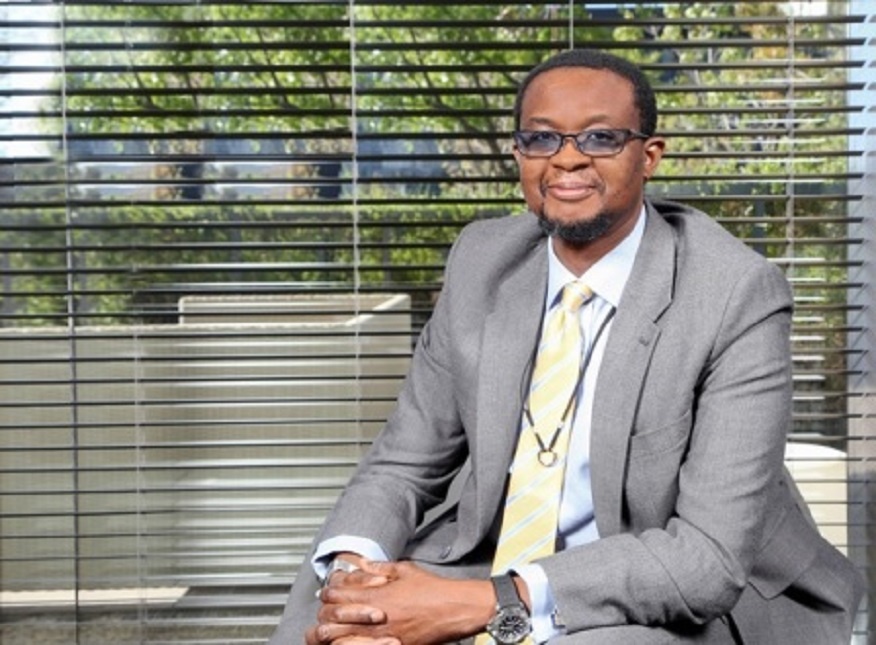
Discussions started in the early part of 2019 and Standard Bank was able to structure and implement the deal in line with the transaction closing milestone. Adeniyi Adeleye, Head, Real Estate Finance for Standard Bank Africa Regions emphasises that “Over the course of the primary transaction, elements of the deal structure such as timing, security structure and equity stakes evolved, but Standard Bank was able to adjust to fulfil the client requirements.”
Thomas Reilly, MD of Growthpoint Investec African Properties, says, “Standard Bank have a long history as leading financial institution across sub-Saharan Africa. As a result, their team has over time become very familiar with the assets we own as well as each asset’s financing requirements, which facilitates an understanding of our needs and the overall lending process. They operate in all the jurisdictions we have a presence in, thus having a deep knowledge of the specific intricacies and requirements of ours from a financing perspective in each of these markets, as well our finance requirements from a group perspective.”
The facility was utilised to complete the acquisition with additional flexibility and headroom to draw any excess funds over a further extended period. Standard Bank underwrote the entire funding of the US$50m, 18-month equity bridge facility.
“This transaction facilitated one of the largest real estate transactions ever concluded across the various regions in Africa that we operate in. It has materially elevated our business in terms of its scale and its ability to impact the broader markets and the asset class,” says Mr Reilly. “The input and advice from the team at Standard Bank Real Estate Team was excellent throughout. We look forward to working further with them in the future.”
Following the financial close in December 2019, Standard Bank distributed 50% of the facility to another South African Bank, illustrating the robustness of its structuring and financing solution and investor demand for the borrower and the asset class in the market.
“The success of this transaction further cements Standard Bank South Africa’s position as the leading real estate finance house in Africa,” says Mr Adeleye.
Banking
All Set for Second HerFidelity Apprenticeship Programme
By Modupe Gbadeyanka
Registration for the second HerFidelity Apprenticeship Programme (HAP 2.0) organised by Fidelity Bank Plc has commenced.
The Divisional Head of Product Development at Fidelity Bank, Mr Osita Ede, informed newsmen that the initiative was designed to empower women with sustainable entrepreneurship skills.
The lender created the flagship women-empowerment initiative to equip women with practical, income‑generating skills and structured pathways to entrepreneurship.
“HerFidelity Apprenticeship Programme 2.0 reflects our commitment to continuous improvement. Having evaluated feedback from the first edition, we have returned with stronger partnerships and deeper mentorship programmes to ensure that women acquire not just skills, but sustainable economic opportunities,” he said.
“At the heart of the programme is guided, real‑world learning. Participants will undergo intensive apprenticeship training under reputable institutions and industry experts across select fields such as hair styling, shoe making, auto mechatronics, and interior decoration,” Mr Ede added.
He noted that HerFidelity Apprenticeship Programme 2.0 goes beyond skills acquisition by offering participants a wide range of business advisory services. These include business and financial literacy training, mentorship support throughout the apprenticeship journey, access to Fidelity Bank’s women‑focused and SME financial solutions, as well as guidance on business formalisation and growth strategies.
Further emphasising the bank’s vision, Mr Ede said, “By integrating structured mentorship with entrepreneurial development, Fidelity Bank is positioning women not just as trainees, but as future employers, innovators, and economic contributors within their communities. This aligns with our mandate to help individuals grow, businesses thrive, and economies prosper.”
Banking
The Alternative Bank Opens New Branch in Ondo
By Modupe Gbadeyanka
A new branch of The Alternative Bank (AltBank) has been opened in Ondo State as part of the expansion drive of the financial institution.
A statement from the company disclosed that the new branch would support export-oriented agribusinesses through Letters of Credit and commodity-backed trade finance, ensuring that local producers can scale beyond state borders.
For SMEs, the bank is introducing robust payment rails, asset financing for equipment and inventory, and supply chain-backed facilities that strengthen working capital without trapping businesses in interest-based debt cycles.
The Governor of Ondo State, Mr Lucky Aiyedatiwa, represented by his Chief of
Staff, Mr Olusegun Omojuwa, at the commissioning of the branch, underscored the importance of financial institutions in economic development.
“The pivotal role of financial institutions to economic growth and development of any economy cannot be overemphasised. It provides access to capital, supporting small and medium-scale enterprises and encouraging savings.
“Therefore, I have no doubt in my mind that the presence of The Alternative Bank in Ondo State will deepen financial services, create employment opportunities and stimulate economic activities across various sectors,” he said.
In her remarks, the Executive Director for Commercial and Institutional Banking (Lagos and South West) at The Alternative Bank, Mrs Korede Demola-Adeniyi, commended the state government’s leadership and outlined the lender’s long-term vision for Ondo State.
“As Ondo State steps into its next fifty years, and into the future anchored on the sustainable development championed during the recent anniversary celebrations, The Alternative Bank is here to be the financial engine for that vision. We didn’t come to Akure to hang banners. We came to fund work, farms, shops, and factories.”
With Ondo State’s economy anchored largely on agriculture, particularly cocoa production, poultry farming, and other cash crops, alongside a growing SME and trade ecosystem, AltBank is deploying sector-specific financing solutions tailored to these strengths.
For cocoa aggregators, processors and poultry operators, the bank will provide production financing, facility expansion support, machinery lease structures, and structured trade facilities under its joint venture and cost-plus financing models, with transaction cycles of up to 180 days for commodity trades and longer-term structured asset financing for equipment and infrastructure.
The organisation is a notable national non-interest bank with a physical network now surpassing 170 locations, deploying capital to solve real-world challenges through initiatives such as the Mata Zalla project, which saw to the training of hundreds of women as electric tricycle drivers and mechanics.
Banking
Recapitalisation: 20 Nigerian Banks Now Fully Compliant—Cardoso
By Adedapo Adesanya
The Governor of the Central Bank of Nigeria (CBN), Mr Yemi Cardoso, announced on Tuesday that the country’s banking sector is making strong progress in the recapitalisation drive, with 20 banks now fully compliant.
Mr Cardoso disclosed this during a press conference at the first Monetary Policy Committee (MPC) meeting of 2026, where he also highlighted positive developments in the nation’s foreign reserves.
On March 28, 2024, the apex bank announced an increase in the minimum capital requirements for commercial banks with international licences to N500 billion.
National and regional financial institutions’ capital bases were pegged at N200 billion and N50 billion, respectively.
Also, CBN raised the merchant bank minimum capital requirement to N50 billion for national licence holders.
The banking regulator said the new capital base for national and regional non-interest banks is N20 billion and N10 billion, respectively.
To meet the minimum capital requirements, CBN advised banks to consider the injection of “fresh equity capital through private placements, rights issue and/or offer for subscription”.
Following the development, several banks announced plans to raise funds through share and bond issuances.
In January, Zenith Bank said it had raised N350.46 billion through rights issue and public offer to meet the CBN minimum capital requirement.
Guaranty Trust Holding Company Plc (GTCO), on July 4, said it had successfully priced its fully marketed offering on the London Stock Exchange (LSE).
In September, the CBN governor said 14 banks fully met their recapitalisation requirements — up from eight banks in July.
With one month to the central bank’s March 31, 2026, recapitalisation deadline, 13 Nigerian lenders are yet to cross the finish line.
Additionally, the governor noted that 33 banks have raised funds as part of the ongoing recapitalisation exercise, signalling robust capital mobilisation across the sector.
He stated that gross foreign reserves have climbed to a 13-year high of $50.4 billion as of mid-February 2026.
-
Feature/OPED6 years agoDavos was Different this year
-
Travel/Tourism10 years ago
Lagos Seals Western Lodge Hotel In Ikorodu
-
Showbiz3 years agoEstranged Lover Releases Videos of Empress Njamah Bathing
-
Banking8 years agoSort Codes of GTBank Branches in Nigeria
-
Economy3 years agoSubsidy Removal: CNG at N130 Per Litre Cheaper Than Petrol—IPMAN
-
Banking3 years agoSort Codes of UBA Branches in Nigeria
-
Banking3 years agoFirst Bank Announces Planned Downtime
-
Sports3 years agoHighest Paid Nigerian Footballer – How Much Do Nigerian Footballers Earn