

General
Biafra Would Have Fared Much Better After Civil War If..—Umeagbalasi

By Kester Kenn Klomegah
Nigeria gained its independence in October 1960. Since then the British colonial ideology has strongly influenced the division of Nigeria into three regions – North, West and East – and further exacerbated the already well-developed economic, political, and social differences among Nigeria’s ethnic groups.
The Igbos in the Eastern states have been struggling for peace necessary for development after the Civil War ended in 1970.
The Nigerian Civil War was fought between the Government of Nigeria and the State of Biafra from July 1967 to January 1970. The Biafra represented nationalist aspirations of the Igbo people, whose leadership still felt they could no longer coexist with the Northern-dominated Federal Government.
The Eastern River States are devastated, millions of the population deeply impoverished while resources remained untapped.
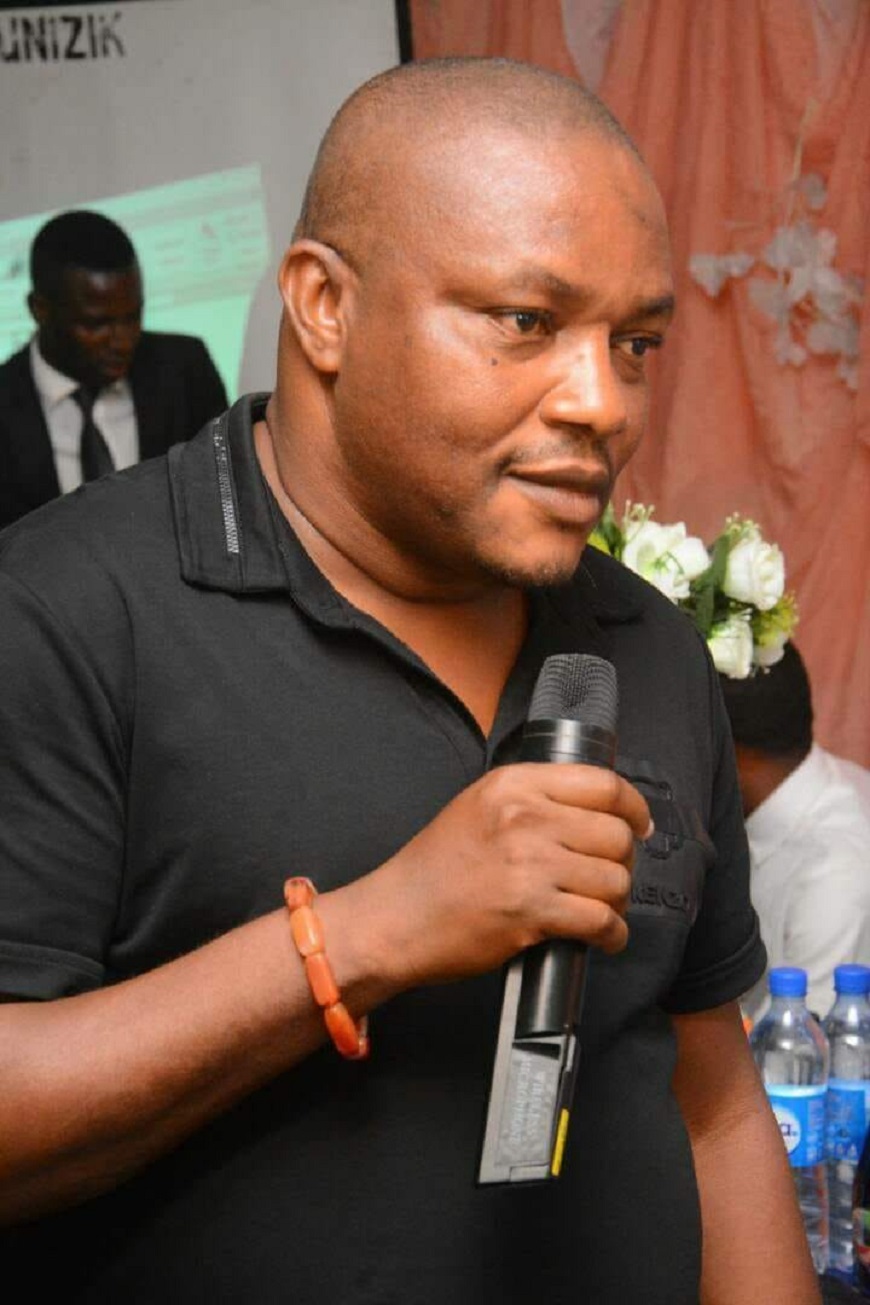
In June, Kester Kenn Klomegah interviewed Emeka Umeagbalasi, the Board Chair of International Society for Civil Liberties and Rule of Law.
Intersociety is a registered Nigerian rights, democracy and security advocacy group, it thematically campaigns for civil liberties and rule of law, democracy and good governance, and public security and safety.
In this interview, Umeagbalasi highlights persistent human rights violations, the weaknesses of the federal governance and steps needed to address the current situation in the region as well as the development of the Eastern region of Nigeria.
Here are the interview excerpts:
What is the level of human rights violations in the Biafra today?
The level of rights violations and abuses against the Igbos in the Biafra State is grisly and on industrial scale. This is with particular reference to four generations of human rights: Civil and Political Rights, Economic, Social and Cultural Rights, Group Rights and Environmental Rights. Under Group Rights, they are sub-divided into structural rights violation or violence and cultural rights violation or cultural violence. These four generations of human rights have been violated with reckless abandon in present Igbo Nation (Biafra). Their perpetrators are also divided into state actors and non-state actors, all state aided and shielded.
In the area of structural violence or rights violations, there has been large scale political exclusion and segregation and massive citizens’ disenfranchisement or denial of participation of the Igbo people in the country’s political or democratic process. Few allowed to participate are usually friends or agents of the Caliphs now in charge of the country’s Presidency. Structurally or socio-environmentally speaking, there has been state backed or aided invasion of Igbo lands and their forceful occupation by the Jihadist Fulani herdsmen and their imported Shuwa Arab Brothers.
There are cases with attendant loss of lives or threats of same, abduction for ransom, sexual violence and religious radicalism including rape, forced pregnancies and, overt and covert conversion of vulnerable Igbo women to Islam. Parts of these, too, are land seizures and destruction of farmlands, crops and economic trees. In the same structural violence or rights violations, there is gross disproportional representation of Igbo people in the present Nigerian top security forces and political or public office appointments.
In physical violence aspect or mass killings and maiming, there has been state actor mass killing of innocent and defenseless Igbo citizens – mostly young men and some women and maiming of others. Victims of both are in their multiple hundreds including no fewer than 480 massacred by the Nigerian military and the police and not less than 500 others shot and terminally injured. See “Intersociety: the Nigerian Military Massacre in Eastern Nigeria: 2015-2017: Jan 2019 (updated in Jan 2020)”. There are also countless cases of tribal hatred and racial profiling leading to indiscriminate arrests, long detention without trial, captivity torture and trumped-up charges and trials perpetrated against Igbo citizens.
In the area of Socio-Economic Rights violations, Igbo Nation and the land are the most victimized. Apart from being under permanent siege by Nigeria’s security forces with gross rights abuses and violations particularly by the Police, Army, Navy and Air Force; the region also witnesses the highest level of broad-day official corrupt practices in Nigeria, to the extent that according to our field study conducted in Oct 2019, “not less than $1b or N306b was illegally collected as bribes by the Police and the Military from road users between August 2015 and Oct 2019 or a period of four years and two months.”
What armed groups are currently active, prominent and operating in the region?
There is no single armed group of Igbo extraction operating in the region. The only armed group now ravaging the region is the Nigerian Government backed Jihadist Fulani Herdsmen and their imported Shuwa Arab Brothers from Niger, Chad, Sudan, Mali and their ‘technical assistants’ from the Maghreb and Sahel regions of Africa.
On what conditions could the near 30,000 Igbo people were massacred be considered “genocide” in the country?
Correctly, between 45,000 and 50,000 and “not 30,000” mostly Igbo citizens were massacred between May 1966 and December 1967, during which over 1.67 million mostly Igbo citizens were also internally displaced. Categorizing their massacre as ‘genocide’ is a matter of local and international law provisions. For instance, in the eyes of the Rome Statute of Int’l Criminal Court of 1998, signed and ratified by Nigeria in Sept 2001, the massacre is not ‘triable’ before it having taken place before the coming into force of the Statute in 2002.
Except the UN Security Council decides to create a genocide tribunal, yet it will have an incurable legal deformity, even if given backdated legal effect. Retroactive criminal legislations or provisions are almost obsolete or out-fashioned around the globe. In other words, diplomatically, the massacre was a genocide, but legally not seen as such, owing to the timeframe of the incident. The only exception arises if the present ‘Igbo Nation’ or “Biafra Nation-State” becomes a United Nation recognized and enlisted Republic or Independent and filed on the basis of ‘inter-State’ before the Int’l Court of Justice at The Hague. Controversies bordering on ‘time, place and space’ of the genocide may, again, rear their ugly heads.
Do the political elites, business people and experts (academics) share similar views, interpretation and consider the effects of the war as “genocide” in the history of Nigeria?
Of course, they do. As a matter of fact, among the ‘attentive Igbo public’, ‘Biafra is openly pronounced and among ‘the un-attentive Igbo public’, ‘Biafra’ lives in their minds. Generations born after the brutal and genocidal Civil War are conscious of “Biafra” as a liberation slogan than the genocide aspect of the War. This is because they were not yet born during the Civil War. On the other hand, surviving generations who witnessed the Civil War are more conscious and enlightened about the “genocide” content of the Civil War they witnessed during their time.
Do you estimate that there will be a qualitative difference and widening cultural gap between the Hausa cum Fulani (North), Yoruba (West) and Igbos (East) in Nigeria?
Of course, there has always been such difference, which also applies uniformly all over the world. But the truth of the matter lies on the fact that Nigeria’s present and successive leaders have widened the gap to its present maddening and boiling point; all done through bad leadership and steady promotion of radical tribalism and religiosity. The best cure for these lie within the confines of provision of good governance, healthy economy and institutionalization of ‘peaceful coexistence’ using people oriented or approved Constitution. Look at the case of China and, to a large extent, India; countries of widened ethno-religious multiplicity, yet bound strongly by their rapidly growing economies.
Still in the light of hostilities, armed attacks and development pitfalls, it is likely the breakaway of Biafra from the rest of Nigeria. What are your arguments here?
This is also not peculiar to Igbo Nation or the Biafra; it is a normal phenomenon with global trend. When people are pushed to the wall or have what they share dearly in common including values like existence, identity, religion and development inherited from their creation; brutally attacked or made to face imminent extinction, it becomes a struggle for survival and in such struggle, anything can happen including resort to attainment of statehood using violence or nonviolence.
What possible solutions human rights groups have offered to halt the growing threats in the Biafra?
A whole lot of them, but governing authorities only listen and ready to make amend when they see those conduct atrocities as “governmental anomalies” or “mistakes”, or “blunders”. It is a different ball game, when they see them as ‘legitimate policies”; just the same way the West regarded ‘Atlantic Slave Trade’ of 1400s to 1800s as “legitimate trade”. So the situation in Nigeria is seen by the present governing authorities beyond ‘anomalies’, ‘mistakes’ and ‘blunders’; to the extent that it is like hitting the rock advising them or getting them to change and make amend.
What do people remember and say, already 50 years, about the civil war (1970) in Nigeria? What are the popular sentiments among the people there?
To the extent that after 50 years of brutal and genocidal civil war, little has changed in Nigeria, is enough to get the Igbo people deeply worried. The popular sentiments among the population are: “since the country is not working, Nigerians must be allowed to decide their immediate and future destinies; particularly whether to live together or to live apart in peace and with dignity”; as a onetime Haitian President once advised the United States of America to “allow Haitians to live in poverty with dignity”.
What do human rights organizations and civil society say about this?
Same thing said by “the attentive Igbo public”. They believe that there shall be reparations paid to the Igbo Nation and specific individual victims of the genocidal war. This is more so when Nigerian Governments after the Civil War have failed woefully to implement the so-called “3-Rs” (Rehabilitation, Reintegration and Reconstruction); making the region to be least in the area of sharing and location of federal projects across the country.
The rights and civil society groups are, in agreement that killings resulting from the ‘Biafra-Nigeria’ Civil War are ‘genocidal’ but challenged by international legal bottlenecks. While they are full-blown ‘genocide’ in nature, there are presently no legal basis to get same locally and internationally addressed. This is more so when there are no existing bilateral agreements to enforce such ‘reparations’; just as they are similarly done in United States (US reparations to Japan over Hiroshima and Nagasaki), Canada and Australia (reparations against maltreatments of the aborigines).
How, in your assessment has the Biafra transformed after the civil war?
To a great deal especially in the area of ‘private person’ material development and transformation. The Nation-State has not done well in terms of public governance, which has generally been marked with colossal leadership failures. The present and past leaders including those at the center; except a fraction, have been dominated by misfits and dregs-who are more interested in enriching themselves through all manners of corrupt practices than to meritoriously serve their own people and the State. The State is still lagging behind in the area of ‘mental wealth’ creation and sustenance. Except millions of its ‘urban refugees’ largely in Europe and Americas, majority of its adult male population back home are still dominated by materially rich but mentally impoverished citizens.
How would you assess the economy, in fact the overall development, of the Biafra State?
Individually, the Igbo people or “Biafrans” have done well. This is despite losing properties and cash worth over $50 billion – $100 billion and estimated 3.5 million citizens between 1937 and 1970; and from 1970 to present day 2020. Governmentally speaking, not much has been achieved.
Do you think it could have been different, or better, if the Southeast is not under the Federal Government of Nigeria?
Of course, Igbo Nation or ‘Biafra State’ would have fared much better as an independent State since 1970. With right leadership and leaders in place, in addition to its present substantial homogenous composition, it would have gone far and possibly overtaken the likes of South Korea, Taiwan, Hong Kong, Singapore and Malaysia.
What do you think should be the possible way out of the current situation in the region and what are suggestions?
It is for Igbo Nation to read the handwriting of the jihadists and their allied Government of the day in Nigeria on the wall, to get fully prepared. The country can never work and progress as one peaceful and prosperous country. The destructions brought especially by the present central Government have gotten to the level of irreversible doldrums and quagmire. The decay has become immitigable in Nigeria.
Judging from above, Igbos must be prepared, be aware and not to be caught unaware. It also appears that the only stock-in-trade of the present Federal Government of Nigeria is jihad or propagation of radical Islamism through community invasion and violence with full state aiding and abetting. These, having said, we still have to advocate through peaceful means to resolve all the existing challenges. Nigerian leaders can still come back to their senses, convene a national conference with representatives of all the ethnic nationalities, to sit together to decide the best ways of living together in peace as a country. It is better to have these done, in a most probable way, in peace than to have the same done in pieces.
Kester Kenn Klomegah writes frequently about Russia, Africa and the BRICS.


