Economy
Restart of Libyan Crude Production Weighs Down Prices by 3%
By Adedapo Adesanya
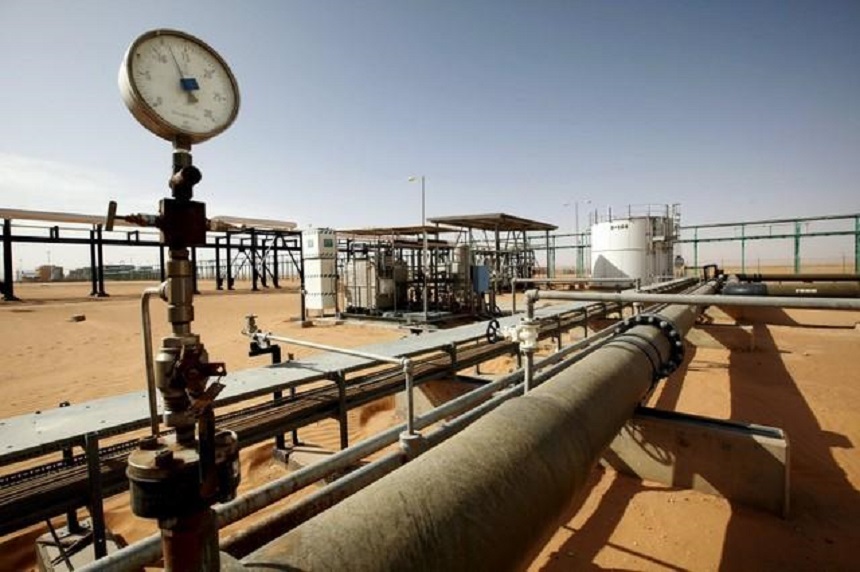
Oil prices slid more than 3 per cent on Monday over fears of increased global supply following news that Libya will resume oil production since January after oil export terminals and oilfields were blocked due to conflict.
Brent crude fell $1.36 or 3.15 per cent to $41.79 per barrel while the United States West Texas Intermediate (WTI) crude shed 3.48 per cent or $1.43 to close at $39.68 barrel.
Libya’s National Oil Corporation will restart production from certain fields and some exports of crude oil, the company said, adding that it will only restart production at safe fields and exports from safe ports.
The resumption of Libyan oil flowing to the global market at a time of weak demand recovery and weak oil prices was not a piece of news welcomed by market participants with open arms.
It has the possibility to bring back 1.2 million barrels per day to the market from just about 100,000 barrels it is currently. The scale-down happened in January when General Khalifa Haftar’s Libyan National Army (LNA) occupied the African producer’s oilfields, effectively blocking the North African country’s black gold.
But now that Libya will start bringing production back on, things may well change as the agreement by the Organisation of the Petroleum Exporting Countries and its allies (OPEC+) relied on the country’s involuntary contribution to the overall supply curbs.
Analysts noted that there will be a gradual ramp-up of Libyan supply starting from the end of the month to 650,000 barrels a day in early 2021, a level below pre-crisis levels of 1.2 million barrels a day, based on earlier reports of damaged infrastructure.
This means Libya is set to add 230,000 barrels a day on average over the fourth quarter of 2020, with the possibility of ramping up production above this as they will be spared from the OPEC+ cuts.
Also, depressing prices on Monday were reports of rising coronavirus cases in Europe, which means already affected demand will be further impacted by the possible renewal of restrictions on activities on the continent.
Also, in the United States, Tropical Storm Beta is forecast to move toward the central coast of an oil state, Texas. Natural disasters normally prop up prices but the Gulf of Mexico region is still recovering from back-to-back hurricanes, following Hurricane Laura in late August and Hurricane Sally last week. As of Monday, more than 10 per cent of the region’s oil production remained shut-in.
Economy
Eni Targets Nigeria’s Deepwater Sector After OPL 245 Split
By Adedapo Adesanya
Italian oil major, Eni, is positioning to embark on deepwater exploration investment in Nigeria after President Bola Tinubu met its chief executive Officer, Mr Claudio Descalzi, in Abuja to discuss the company’s deepwater expansion plans.
This follows the recent conversion of Oil Prospecting Licence 245 (OPL 245) into new development and exploration licenses.
Under an agreement with the Federal Government of Nigeria, OPL 245 has been converted into two Petroleum Mining Leases (PML 102 and 103) and two Petroleum Prospecting Leases (PPL 2011 and 2012), following a mutually agreed settlement of claims and the discontinuation of arbitration proceedings at the International Centre for Settlement of Investment Disputes (ICSID).
Nigerian Agip Exploration Limited will operate the licenses alongside partners Nigerian National Petroleum Company (NNPC) Limited and Shell Nigeria Exploration and Production Company Limited (SNEPCO).
The conversion clears the path for the development of the Zabazaba and Etan deepwater fields under PML 102 and 103.
The Etan-Zabazaba project is estimated to contain approximately 500 MMbbl of reserves and is planned around a 150,000-bopd floating production, storage and offloading (FPSO) facility. Associated gas volumes of up to 200 MMscf/d at peak are expected to be exported to Nigeria LNG.
Eni, which has operated in Nigeria since 1962, also discussed its broader offshore portfolio, including interests in the Abo and Bonga fields and Nigeria LNG.
The company recently increased its stake in OML 118 to 15 per cent, reinforcing its position in Nigeria’s deepwater sector, where it currently produces approximately 55,000 barrels of oil equivalent per day on an equity basis.
Business Post reported earlier this week that Nigeria has broken up the OPL 245 oil block into four new assets to be operated by Eni and Shell, potentially settling the future of the field at the centre of one of the oil industry’s biggest historic corruption trials.
The agreement clears the way for the development of OPL 245, one of Nigeria’s biggest deepwater reserves that has remained untapped for almost three decades amid overlapping lawsuits in multiple countries.
The block is estimated to hold up to 9 billion barrels of oil equivalent in reserves, enough to rival Nigeria’s entire proven reserves if fully developed.
Economy
Linking Macroeconomic Trends to Personal Financial Goals Vital—Delano
By Aduragbemi Omiyale
The Executive Director for Personal and Private Banking at Stanbic IBTC, Mr Olu Delano, has stressed the need to link macroeconomic trends to personal financial goals.
At the 2026 Regional Economic Outlook Series of Stanbic IBTC recently, he said, “Whether planning for retirement, funding education abroad, or expanding a business, improved stability creates opportunities. But those opportunities require careful structuring around foreign exchange dynamics, inflation trends, and interest rate movements.”
Business Post reports that the regional investor summit was designed to provide high-net-worth individuals, investors, business leaders, and senior executives with clarity in a rapidly evolving economic environment.
Hosted in Lagos, Abuja, and Port Harcourt, the series served as a strategic platform for translating Nigeria’s reform momentum into practical investment and business decisions.
It featured a keynote address by Professor Adedipe, whose insights set a strong analytical foundation for the conversations that followed. His presentation unpacked structural reforms, fiscal recalibration, and the direction of monetary policy, offering attendees a comprehensive perspective on Nigeria’s growth trajectory and the discipline required to sustain macroeconomic stability.
Across all three cities, Stanbic IBTC’s subject matter experts and industry professionals moved the discussion from macroeconomic signals to market strategy. Sessions were structured to bridge economic context with sector-specific opportunities, portfolio construction frameworks, and risk management considerations. The focus extended beyond understanding the environment to making informed, disciplined decisions within it.
A recurring theme throughout the summit was the evolving monetary policy cycle. Discussions examined the Central Bank of Nigeria’s tight stance in addressing inflationary pressures and stabilising the currency.
Participants also considered the potential implications of a gradual policy easing cycle, particularly for fixed income instruments, equity positioning, and broader asset allocation strategies. Emphasis was placed on timing, selectivity, and portfolio resilience.
Beyond markets, the conversations addressed the practical realities of wealth and business strategy. High net worth individuals gained clarity on diversification, currency exposure, and inflation management, while business leaders explored how improving macroeconomic stability can support capital allocation decisions and long-term expansion plans.
The chief executive of Stanbic IBTC Asset Management, Ms Busola Jejelowo, reflected on the quality of engagement across the regions.
She noted that the depth of questions and analytical rigour demonstrated a maturing investment culture and a growing appetite for data-driven strategies.
According to her, the series was not only about presenting forecasts, but about equipping clients with structured frameworks for navigating uncertainty.
Economy
Coronation Registrars Processes N1.28trn Dividends for Stock Investors
By Adedapo Adesanya
Coronation Registrars Limited processed N1.28 trillion in dividends for the year 2025, representing over 40 per cent of the total dividends distributed on the Nigerian Exchange (NGX) Limited.
This information was revealed by the company in its 2025 performance scorecard, highlighting its continued role in supporting transparency, efficiency, and investor confidence within Nigeria’s capital market.
According to the company, the performance underscores its scale and the trust placed in it by leading publicly listed companies, which it helps in administering dividend processing. Other functionalities include managing shareholder records, corporate actions, and investor communications while ensuring compliance with regulations of the NGX and the Securities and Exchange Commission (SEC).
Coronation Registrars also recorded 34.8 per cent market share of the NGX by market capitalisation, while maintaining 64 per cent coverage of companies listed on the NGX Premium Board, reflecting strong partnerships with some of Nigeria’s largest and most influential issuers.
Operationally, the registrar facilitated 1.99 million buy and sell transactions in 2025, while managing 2.91 million shareholder accounts across its registrar’s portfolio.
The organisation also continued to address the longstanding issue of unclaimed dividends. In 2025, N3.67 billion in legacy unclaimed dividends was successfully returned to investors, helping reconnect shareholders with previously outstanding entitlements.
To further strengthen shareholder record accuracy and service efficiency, Coronation Registrars processed over 513,000 Know-Your-Customer (KYC) and shareholder account updates, including Clearing House Number (CHN) updates and record changes.
Commenting on the milestone, the Managing Director of Coronation Registrars Limited, Mr Seyi Owuturo, stated, “Our 2025 scorecard reflects the responsibility we carry as custodians of shareholder records and facilitators of dividend distribution for many of Nigeria’s leading companies. We remain committed to improving investor access, strengthening operational efficiency, and supporting the continued development of Nigeria’s capital market.”
Coronation Registrars said it remains focused on leveraging technology, operational excellence, and strong issuer partnerships to deliver reliable registry services while supporting the evolving needs of shareholders and listed companies.
-
Feature/OPED6 years agoDavos was Different this year
-
Travel/Tourism10 years ago
Lagos Seals Western Lodge Hotel In Ikorodu
-
Showbiz3 years agoEstranged Lover Releases Videos of Empress Njamah Bathing
-
Banking8 years agoSort Codes of GTBank Branches in Nigeria
-
Economy3 years agoSubsidy Removal: CNG at N130 Per Litre Cheaper Than Petrol—IPMAN
-
Banking3 years agoSort Codes of UBA Branches in Nigeria
-
Banking3 years agoFirst Bank Announces Planned Downtime
-
Sports3 years agoHighest Paid Nigerian Footballer – How Much Do Nigerian Footballers Earn