Feature/OPED
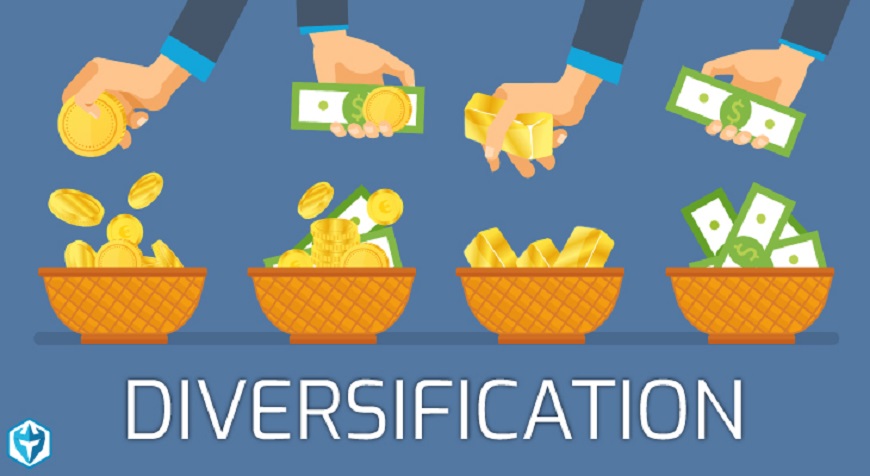
The Economics of Diversification Versus Specialisation in Nigeria
By Oremade Oyedeji
Comparative Advantage as an Alternative Strategy
A few days after I published my opinion piece, The Economics of Nigerians Destroying Nigeria, in which I referred to a well-told story of economics still being recycled, alluding to one former chief of the Central Bank of Nigeria (CBN), who repeatedly stressed that Nigerians were eating up the country’s GDP like they consume ponmo, my good friend sent a clip from Channels TV about the Kaduna Investment Forum (KADINVEST) organised annually by “an Obasanjo Boy”, Governor Nasir El Rufai, and there was Lamido Sanusi Lamido, his childhood friend, delivering a speech as the guest speaker.
I smiled when I watched a part of the video and decided to save the rest for later and somehow, I forgot to and didn’t think about it again until after two days when I saw my friends who enquired if I watched the clip. I told them I hadn’t so the one who sent it to me narrated.
The conversation went something like this (* not real names):
Kadri*: You won’t believe this, I listened to Lamido’s speech at KADINVEST this year, and for the first time at an event like this, he didn’t mention ponmo or any Nigerian eating the GDP.
Me: Really? It is not possible, especially at a forum like KADINVEST?
Malik*: what then did he talk about to shore up state revenue, address unemployment or to revive the dead leather, cotton or groundnut industry in Kaduna and its suburbs?
Kadri: Robotics, use of smartphones and smartphone production.
Malik: What are you saying? Has Kaduna started producing smartphones, and even if we plan to start one now, when are we gaining a comparative advantage in smartphone production to attract consumers from Kaduna or Kano talk less of selling to Lagos?
My friend’s use of the word “comparative advantage” really got me intrigued and it spurred this piece because I then went to watch Sanusi’s speech at KADINVEST 2020.
In his introductory remark, he joked about how his speech has always been a marker for new troubles. Indeed! According to Sanusi, Nigeria has to take economic diversification more seriously. He said that over-reliance on oil has left the country unproductive. He referenced Malaysia to Nigeria (Typically), giving a breakdown of the economic growth of both countries within a 30-year period (using GDP index).
In his words, we were growing but we did not diversify and that explained the huge levels of poverty in the country. He said that was what exposed Nigeria to huge levels of inequality within the country and vulnerability of the economy to shocks.
When Malaysia started, according to him, they started from a GDP per capita level lower than Nigeria’s GDP per capita in 1985. It started from $310 to $4,045 while Nigeria started from $345 to $2,055.
Sanusi said “One way to look at it is to understand the difference between production and consumption,” urging the youths to explore the endless possibilities of their smartphones.
How do we understand technology or electricity? He said, “are we consumers or are we producers?” challenging the state to “Produce young men who know that they are worth more than just using their phones to import a pair of shoes.”
Sanusi also believes that the groundnut pyramids do not impress the world any more, adding that he wants Kaduna to focus on robotics instead of production of cotton, groundnut, and leather.
That, in my opinion, is very confusing; I am not sure if there will ever be any programmer that that will write an app to produce food at least not like the one which Kaduna State already has in terms of comparative advantage in trading.
Meanwhile, President Muhammadu Buhari, in his October 1 speech, called for a sincere process of national healing as the nation marked the 60th anniversary of its independence from Great Britain.
The President said Nigeria’s biggest asset is its human capital asset, the most important any nation requires. KADINVEST forum is a good forum to discuss real economic healing, and in my opinion, Governor El-Rufai has a better idea.
In an article, The Nigerian Context in Emerging New World Order & The Pandemic (Part II), published May 25, 2020, where I mentioned the likely benefits of COVID-19 in Northern Nigeria after many economic analysts challenged Northern states in Nigeria to take advantage of the pandemic in understanding and realigning its economy, El-Rufai simply “hit the nail on the head” then, without mincing words when he spoke then as the head of Northern States Governors’ Forum, said he was determined to end the Almajiris’ system of education in the north, amidst the spread of COVID-19 among the children.
El-Rufai said the COVID-19 pandemic, which is still pretty much on the ravage today, provided the opportunity to determine the state of Almajiri education. Almajiri is ideally a system of Islamic education practised in northern Nigeria, where young children leave their homes to live with Islamic scholars and learn about religion.
Almajiri has over the years been corrupted with thousands of such children roaming the streets of Northern Nigeria as beggars and without any form of education, contributing to the over 10 million out of school children in Northern Nigeria alone. That is 10 million human capital assets, the most important any nation requires, according to the president speech on October 1.
A focus on Human capital asset development, a 10-year strategy to integrate millions of Almajiri children on the street of Kaduna into taxpayers in the next few years will thereby be increasing state’s capacity to generate revenue from personal income tax geometrically.
Let me conclude this article by mentioning trending calls for true federalism, understandable economics and restructuring in Nigeria among many senior citizens recently.
For example, the Guardian and Thisday newspapers headline some days ago noted: We either restructure or breakup – Pastor Adeboye. Likewise, Former President Olusegun Obasanjo was also accused and called Divider-in-Chief recently for the same course, to mention a few.
According to the United Nation document titled 50 years together for a sustainable future, “the necessity of specialisation according to comparative advantage for economic development should continue to be an integral part of policy advice to every state.
“The argument is that every state should develop a comparative advantage in commodities that demand skills and assets it readily has a comparative advantage in trading.”
Nigeria may yet produce the first Female Director-General (Dr Ngozi Okonjo-Iweala) of the World Trade Organization (WTO). This may prove that Nigeria can position herself for trading with the world in goods and services she has a comparative advantage in.
Feature/OPED
Building 234 Solutions: A Response to Everyday Workforce Challenges
By Owoloye Emmanuel
Every business starts with a problem. For us, that problem was hiding in plain sight.
Across organisations, we kept seeing HR professionals, payroll teams, and business leaders spend significant time navigating processes that should be simpler. Employee records sat across multiple systems, payroll processes required manual intervention, and routine workforce tasks often became more complicated than they needed to be.
As businesses grow, workforce operations naturally become more complex. Yet many organisations still rely on disconnected tools and workflows that create unnecessary friction for both employers and employees.
The consequence is more than operational inefficiency. HR teams spend valuable time managing systems instead of supporting people. Business leaders struggle to access timely workforce insights, while employees experience delays in processes that should be seamless.
These weren’t isolated challenges. They were recurring realities across workplaces, regardless of industry or size.
That observation led us to a simple question: what if workforce management could be easier?
What if HR, payroll, and workforce operations could work together within a single, connected experience?
That question became the foundation for 234 Solutions.
We are building 234 Solutions with a clear belief that workplace technology should reduce complexity, not add to it. Our goal is to help organisations spend less time navigating processes and more time focusing on productivity, growth, and people.
As we prepare for launch, our focus remains simple: building practical solutions for real workplace challenges and helping organisations create better experiences for the people who power them every day.
Owoloye Emmanuel is the founder of 234 Solutions
Feature/OPED
The Role of TV in Preserving African Stories and Identity
Scroll through social media today, and you will notice something interesting: everyone is either reacting to a series, quoting a movie line, or debating a character as though they personally know them. Beneath the memes and binge-watch culture, however, lies something deeper. Television remains one of the most powerful tools shaping how Africans see themselves, remember their history, and tell their own stories. In a continent as diverse and expressive as Africa, that matters more than ever.
TV as a Cultural Archive, Not Just Entertainment
Long before streaming algorithms began shaping our viewing habits, television was already preserving African identity. From Nollywood dramas that capture the rhythm of everyday Lagos life to documentaries exploring Maasai traditions and Ghanaian folklore, TV has served as a living archive of the continent’s stories.
It preserves more than entertainment; it preserves language, culture, humour, values, and shared experiences. Unlike fleeting social media content, television allows stories to unfold with depth, exploring the realities of family, tradition, ambition, and modern African life without reducing them to stereotypes. That is the power of TV: preserving not just stories, but perspective.
Why Representation on TV Still Matters
There is a subtle but important truth: if people do not see themselves on screen, they may begin to believe their stories are not worth telling. This is why African TV content is more than entertainment; it is affirmation.
Seeing a character who speaks like you, struggles like you, or celebrates like your community does something powerful. It validates identity and challenges outdated narratives that have historically defined Africa through external lenses.
This is where MultiChoice Group, through platforms such as DStv and GOtv, plays an important role. They do not simply broadcast content; they help distribute cultural memory at scale.
GOtv, DStv, and the Everyday African Viewer
Think about a typical evening in many African homes: the TV is on in the background, someone is laughing at a comedy show, another person is watching a local series, and someone else is catching up on the news. That shared viewing experience remains very real.
Through platforms such as DStv and GOtv, African households are exposed to a blend of local storytelling and global content. More importantly, they have helped amplify African-produced content by bringing Nollywood films, African reality shows, talk shows, and documentaries into mainstream rotation.
It is not just about access. It is about visibility.
A young filmmaker in Lagos today is more likely to believe their story matters because they have seen similar stories broadcast widely. A child in Accra grows up hearing familiar accents and seeing environments that look like their own on screen, not as exceptions, but as the norm.
TV Is Also Shaping Modern African Identity
African identity is not static; it is evolving. Television reflects that evolution in real time.
Today, audiences see:
-
Young Africans balancing tradition and modern dating culture
-
Stories tackling mental health in African households
-
Fashion and music influences spreading through TV series
-
Political satire shaping public conversation
Conversations that were once confined to homes are now being explored on screen, giving audiences the language to discuss issues that were previously unspoken.
In many ways, television is doing what oral tradition has always done: passing stories, values, humour, warnings, and history from one generation to the next. The difference is that today’s griots are writers, directors, and broadcasters.
The Future: From Watching to Owning Our Narratives
The next stage of African storytelling is not just about being seen; it is about ownership.
As more African creators produce content and platforms continue to invest in regional storytelling, television becomes more than a mirror. It becomes a tool for shaping how Africa is represented to itself and to the world.
While streaming continues to grow, television, particularly accessible platforms such as GOtv, remains one of the most effective ways to reach everyday audiences across different income levels and regions. After all, storytelling only matters if people can access it.
African stories are not new. They have always existed in families, on streets, in markets, in history books, and through oral traditions. What television has done, and continues to do, is give those stories a stage wide enough for millions to experience them at once.
The next time you watch a local series or documentary on DStv or GOtv, remember that you are not just being entertained. You are participating in the preservation of African identity itself.
Feature/OPED
The Future of AI in Nigerian SMEs: Overcoming Barriers to Implementation
By Kehinde Ogundare
Ask a tech entrepreneur in San Francisco what AI means for their business, and they are likely to talk about competitive advantage, product differentiation, and scale. Ask a small business owner in Kano or Onitsha the same question, and the conversation shifts entirely.
For many Nigerian SMEs, the priority is keeping the lights on, managing costs, and finding sustainable ways to grow in a challenging economic environment. This difference in perspective explains why the global AI conversation, often shaped by assumptions about stable infrastructure, deep capital, and abundant technical talent, frequently fails to address the realities facing Nigerian SMEs.
This matters because Nigerian SMEs are not a peripheral concern. In 2024 alone, MSMEs contributed 46.32% to Nigeria’s GDP, accounting for 96.9% of businesses and 87.9% of employment. These businesses are the backbone of the Nigerian economy, and if AI is going to mean anything for Nigeria’s development, it has to work for them in the daily conditions they actually operate in.
However, research drawing on empirical data from 144 Nigerian SMEs found that inadequate infrastructure, low digital literacy, skills shortages, and regulatory gaps are collectively preventing them from meaningfully engaging with AI. Awareness of AI is high and growing. What is missing is a clear and honest conversation about what adoption actually requires in this specific context. The barriers are real, but none of them are insurmountable. The question is whether the tools, pricing models, and support structures being offered to Nigerian SMEs are designed with those barriers in mind, or whether they have been built for another market entirely.
Subscription models making AI affordable for small businesses
When most small business owners hear “AI,” they imagine expensive software, specialist consultants, and a hefty upfront bill.
That assumption is not entirely wrong, but it describes a particular way of buying technology, not AI itself. The shift that makes AI genuinely accessible at the SME level is the move away from large, one-time capital purchases towards tools that charge a predictable monthly subscription. Businesses can pay for what they use, scale back when necessary, and avoid the debt that a major technology investment can create.
The deeper opportunity here is consolidation. Many SMEs are already spending money across multiple disconnected tools—one for invoicing, another for customer records, another for stock tracking—none of which talk to each other. An integrated platform that handles several of these functions together, with AI built in, can actually cost less than the sum of those separate subscriptions while giving business owners a clearer picture of their operations.
With margins already under pressure, any technology a business adopts needs to visibly show an increase in productivity or bottom line. Subscription-based, integrated platforms, priced transparently and honestly, are the model that best fits this reality.
Infrastructure challenges demand a mobile-first approach
No conversation about technology in Nigeria is complete without confronting the infrastructure problem, and AI is no exception. Nigeria continues to face major infrastructure barriers, including limited broadband access, unreliable power supply, and high data costs, all of which constrain deeper AI adoption. These are structural features of the operating environment that any sensible technology strategy must account for today.
The electricity situation alone is significant. The World Bank estimates that the lack of stable electricity costs Nigeria’s economy approximately $26.2 billion annually, equivalent to about 2% of GDP, forcing many businesses to run on expensive diesel generators. That cost ripples outward.
In practical terms, AI tools built for Nigeria cannot assume a stable broadband connection or a computer that is always powered on. The tools that will actually get used are the ones that work on a smartphone, consume minimal data, and can function offline when connectivity drops, syncing back up when it returns. The mobile phone is already how many Nigerian SME owners run their businesses. AI that meets them there, rather than demanding infrastructure they do not have, is AI that has a genuine future in this market.
The direction is clear: build capability from within, using tools that make that possible. Recent AI performance research reveals that 64% of African workers are already actively using AI at work, signalling massive grassroots readiness and driving forward-thinking organisations across Nigeria, Kenya, and South Africa to aggressively prioritise internal upskilling frameworks to bridge the talent gap.
As the policy groundwork is being laid, the commercial ecosystem is beginning to respond. What remains is a clear-eyed acceptance that AI tools built for this market need to look different from those built for markets with different realities. Low cost, low bandwidth, and usability for non-technical people are not modest ambitions; they are the actual requirements. Build for those realities, and AI has a real future in Nigeria’s SME economy.
-
Feature/OPED6 years agoDavos was Different this year
-
Travel/Tourism10 years ago
Lagos Seals Western Lodge Hotel In Ikorodu
-
Showbiz3 years agoEstranged Lover Releases Videos of Empress Njamah Bathing
-
Banking8 years agoSort Codes of GTBank Branches in Nigeria
-
Economy3 years agoSubsidy Removal: CNG at N130 Per Litre Cheaper Than Petrol—IPMAN
-
Banking3 years agoSort Codes of UBA Branches in Nigeria
-
Banking3 years agoFirst Bank Announces Planned Downtime
-
Sports3 years agoHighest Paid Nigerian Footballer – How Much Do Nigerian Footballers Earn