Feature/OPED
Building, Managing and Protecting Wealth
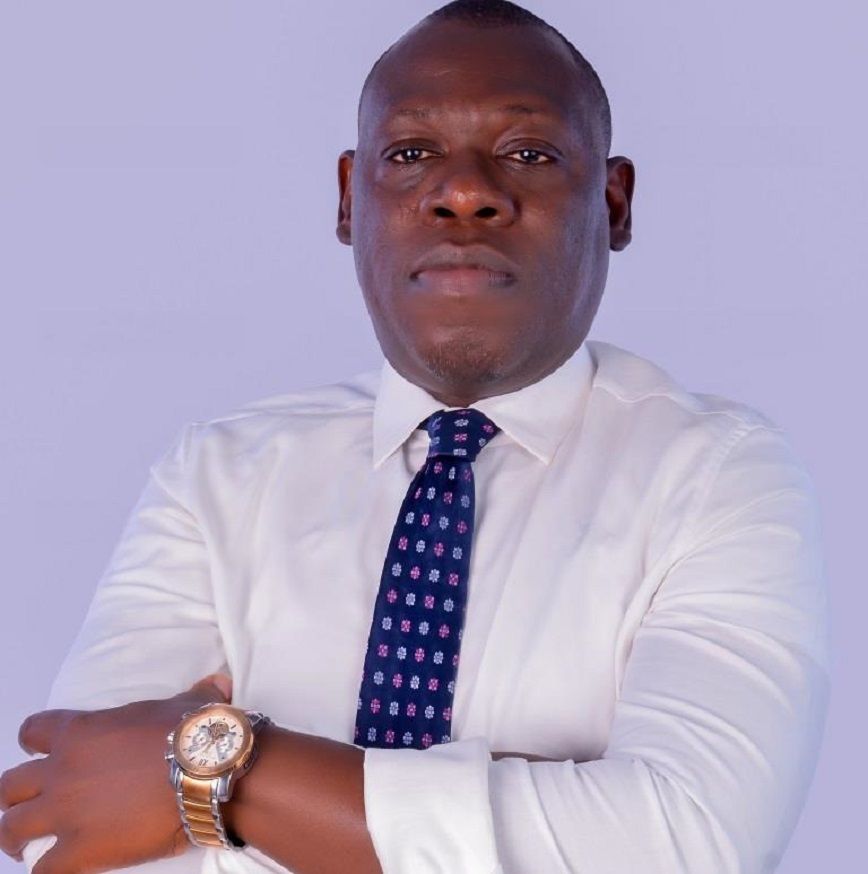
By Timi Olubiyi, PhD
Wealth has so many connotations, however, in the context of this piece, wealth is described as the abundance of items of economic value and freedom.
For many, it is mainly about money, but that is only partly true, wealth is different from riches and riches are a part of wealth.
There are different constructs of wealth: financial, health, social network, intellectual, cultural, and influence. Being wealthy is not about money alone; being wealthy is majorly about value and essence.
When you create wealth, it benefits the people around you, and the people who will be there after you are gone. Many people confuse getting rich with being wealthy because often the two words are used interchangeably. They don’t mean the same thing, getting rich simply means having a high income and that could be short-lived, especially without corresponding assets. It simply means having more spending power than the average person.
A distinctive explanation of riches is the proceeds from winning a lottery — you would be rich because there will be access to fund than most other people (hence more spending power), but you could just spend it all on luxuries and have none left at the end, stripping away the status of “rich”.
One of the stereotypes about rich people is that they drive flashy cars and use the latest gadgets. Buying a brand-new car or the latest mobile phone from savings is nearly always a poor financial decision.
According to experts, the minute you drive a car off the lot, it loses 11 per cent or more of its value. That cannot translate to being wealthy, the habits of rich people are very different from those of wealthy people.
To be wealthy, savings must go into investing and the returns on the investment can then be utilised on luxury items. Consequently, building wealth requires sustainability and perseverance.
That said, wealth usually involves the difference between assets and liabilities and even much more. One can be financially stable and yet weak in other wealth constructs mentioned above.
I agree that financial independence is about money, but living a wealthy life is actually not, it particularly involves freedom and enjoying good health (emotional, physical, spiritual and mental).
However, true wealth is when the passive income from assets and financial instruments such as property investment, bonds, securities, stocks, share, and other investment opportunities generate enough income to provide financial security.
More so, the income is high enough to cover costs of living that you no longer need to work to survive. Therefore, wealth is the foundation for financial health and freedom for a lifetime and even for your heirs.
To substantiate the above assertion, opinion of some residents of Abuja, the federal capital territory of Nigeria, and Lagos State, the economic nerve centre of the country, was randomly sampled on what wealth signifies.
Here are some key findings in the survey from the respondents, building and owning a house (65 per cent), having millions (Naira) and sufficient fund in the bank account (96 per cent), freedom and spending time with family (42 per cent), and owning the latest cars, phones, and tech gadgets (92 per cent).
The finding of the survey surprisingly indicated that the majority of the respondent cannot distinguish between being rich and wealthy.
Because almost those surveyed felt that sufficient money (Naira) in the bank account and having the latest gadgets signifies wealth.
Truly, wealthy people spend money on assets (like businesses, knowledge acquisition, property, social network, influence and investments) and not liabilities. They spend money on things that improve or enhance wealth, net worth and also give freedom.
Furthermore, wealth is measured in time, not in Naira. That is how many days could you survive if you stopped working today?
The simple approach to survive is to own investments in businesses, assets, and other wealth instruments. More importantly, having a net worth that generates enough income that can sustain you for a long time without having to work for money is key.
In addition, being wealthy instead of being rich means that you have the freedom to spend your time however you want and you also do not have to stress about paying any bills.
Invariably, wealth creation can be defined as the process of building a stable, steady income and the consistent accumulation of assets over time.
Therefore, to create wealth, individuals need to be disciplined with savings and investments including expenses and debt. It is important to state that we are all limited by the number of years we have to be able to run around actively. Because either ready or not, retirement is coming and it will change things.
Therefore, to create wealth, take good care of your health, invest in education and improve your wealth knowledge, spend money on assets that can generate more money continuously and passively.
Make this a culture until the passive income from various assets is higher than your cost of living. Then you achieve some level of freedom and a secure financial future.
Eventually, it is usually not how much fund you make that matters but how much of it is kept and how long that kept fund works for you and provide continuous cash flow.
A big part of building wealth is determined by regular habits, so start investing early, educate yourself to improve your skills, keeping fit, and enjoying good health (emotional, physical, spiritual and mental), be disciplined, avoid debts, maintain and increase assets. Taking an appropriate level of risk is an important step to grow wealth and staying ahead of inflation.
Many people can easily become rich due to hard work, but only financially intelligent people can become wealthy and develop a huge net worth. However, that will take a strong financial education and strong investing culture.
Significantly, it does not matter how much funds you have today in savings or you earn, having wealth creation strategies, being disciplined and continually getting informed can still help build vast wealth.
Remember, not only does wealth creation helps live life more prosperously, but it also helps secure the future of the next generation. The absence of effective wealth creation strategy such as the principle of compounding may result in delay or compromise in one’s financial goals.
Simply put, wealth strategy can involve the accumulation of assets, mindful spending, keeping expenses in check, budgeting, inculcating healthy habits and having a stern focus on investing or building additional sources of income.
To reiterate this includes property investment, bonds, securities, starting up a business, stocks, share and other investment opportunities.
Even after considering all these, adequate measures, according to reviewed large volumes of literature, to protect the wealth is equally important. Both wealth creation and wealth protection contribute to greater financial success and security. It eventually gives these life goals- financial independence, future security and comfortable retirement.
In conclusion, protection of financial future, via a combination of carefully selected life assurance policies, tax planning, and diverse investment portfolio management, is a necessity for an enduring wealth.
A protection strategy can protect you and your loved ones in the event of an injury, illness, disability or, in the worst-case scenario, death. Wealth can be earned as well as lost.
This is why it is important to protect your investment portfolio even while trying to grow it. If you are concern about enhancing or on how to build an effective wealth protection strategy or having an investment plan to create wealth, you may need to urgently reach out to a professional for essential advice. Good luck!
How may you obtain advice or further information on the article?
Dr Timi Olubiyi is an Entrepreneurship and Small Business Management expert with a PhD in Business Administration. He is a prolific investment coach, business engineer, Chartered Member of the Chartered Institute for Securities & Investment (CISI), and a financial literacy specialist. He can be reached on the Twitter handle @drtimiolubiyi and via email: dr***********@***il.com, for any questions, reactions, and comments.
Feature/OPED
The Role of TV in Preserving African Stories and Identity
Scroll through social media today, and you will notice something interesting: everyone is either reacting to a series, quoting a movie line, or debating a character as though they personally know them. Beneath the memes and binge-watch culture, however, lies something deeper. Television remains one of the most powerful tools shaping how Africans see themselves, remember their history, and tell their own stories. In a continent as diverse and expressive as Africa, that matters more than ever.
TV as a Cultural Archive, Not Just Entertainment
Long before streaming algorithms began shaping our viewing habits, television was already preserving African identity. From Nollywood dramas that capture the rhythm of everyday Lagos life to documentaries exploring Maasai traditions and Ghanaian folklore, TV has served as a living archive of the continent’s stories.
It preserves more than entertainment; it preserves language, culture, humour, values, and shared experiences. Unlike fleeting social media content, television allows stories to unfold with depth, exploring the realities of family, tradition, ambition, and modern African life without reducing them to stereotypes. That is the power of TV: preserving not just stories, but perspective.
Why Representation on TV Still Matters
There is a subtle but important truth: if people do not see themselves on screen, they may begin to believe their stories are not worth telling. This is why African TV content is more than entertainment; it is affirmation.
Seeing a character who speaks like you, struggles like you, or celebrates like your community does something powerful. It validates identity and challenges outdated narratives that have historically defined Africa through external lenses.
This is where MultiChoice Group, through platforms such as DStv and GOtv, plays an important role. They do not simply broadcast content; they help distribute cultural memory at scale.
GOtv, DStv, and the Everyday African Viewer
Think about a typical evening in many African homes: the TV is on in the background, someone is laughing at a comedy show, another person is watching a local series, and someone else is catching up on the news. That shared viewing experience remains very real.
Through platforms such as DStv and GOtv, African households are exposed to a blend of local storytelling and global content. More importantly, they have helped amplify African-produced content by bringing Nollywood films, African reality shows, talk shows, and documentaries into mainstream rotation.
It is not just about access. It is about visibility.
A young filmmaker in Lagos today is more likely to believe their story matters because they have seen similar stories broadcast widely. A child in Accra grows up hearing familiar accents and seeing environments that look like their own on screen, not as exceptions, but as the norm.
TV Is Also Shaping Modern African Identity
African identity is not static; it is evolving. Television reflects that evolution in real time.
Today, audiences see:
-
Young Africans balancing tradition and modern dating culture
-
Stories tackling mental health in African households
-
Fashion and music influences spreading through TV series
-
Political satire shaping public conversation
Conversations that were once confined to homes are now being explored on screen, giving audiences the language to discuss issues that were previously unspoken.
In many ways, television is doing what oral tradition has always done: passing stories, values, humour, warnings, and history from one generation to the next. The difference is that today’s griots are writers, directors, and broadcasters.
The Future: From Watching to Owning Our Narratives
The next stage of African storytelling is not just about being seen; it is about ownership.
As more African creators produce content and platforms continue to invest in regional storytelling, television becomes more than a mirror. It becomes a tool for shaping how Africa is represented to itself and to the world.
While streaming continues to grow, television, particularly accessible platforms such as GOtv, remains one of the most effective ways to reach everyday audiences across different income levels and regions. After all, storytelling only matters if people can access it.
African stories are not new. They have always existed in families, on streets, in markets, in history books, and through oral traditions. What television has done, and continues to do, is give those stories a stage wide enough for millions to experience them at once.
The next time you watch a local series or documentary on DStv or GOtv, remember that you are not just being entertained. You are participating in the preservation of African identity itself.
Feature/OPED
The Future of AI in Nigerian SMEs: Overcoming Barriers to Implementation
By Kehinde Ogundare
Ask a tech entrepreneur in San Francisco what AI means for their business, and they are likely to talk about competitive advantage, product differentiation, and scale. Ask a small business owner in Kano or Onitsha the same question, and the conversation shifts entirely.
For many Nigerian SMEs, the priority is keeping the lights on, managing costs, and finding sustainable ways to grow in a challenging economic environment. This difference in perspective explains why the global AI conversation, often shaped by assumptions about stable infrastructure, deep capital, and abundant technical talent, frequently fails to address the realities facing Nigerian SMEs.
This matters because Nigerian SMEs are not a peripheral concern. In 2024 alone, MSMEs contributed 46.32% to Nigeria’s GDP, accounting for 96.9% of businesses and 87.9% of employment. These businesses are the backbone of the Nigerian economy, and if AI is going to mean anything for Nigeria’s development, it has to work for them in the daily conditions they actually operate in.
However, research drawing on empirical data from 144 Nigerian SMEs found that inadequate infrastructure, low digital literacy, skills shortages, and regulatory gaps are collectively preventing them from meaningfully engaging with AI. Awareness of AI is high and growing. What is missing is a clear and honest conversation about what adoption actually requires in this specific context. The barriers are real, but none of them are insurmountable. The question is whether the tools, pricing models, and support structures being offered to Nigerian SMEs are designed with those barriers in mind, or whether they have been built for another market entirely.
Subscription models making AI affordable for small businesses
When most small business owners hear “AI,” they imagine expensive software, specialist consultants, and a hefty upfront bill.
That assumption is not entirely wrong, but it describes a particular way of buying technology, not AI itself. The shift that makes AI genuinely accessible at the SME level is the move away from large, one-time capital purchases towards tools that charge a predictable monthly subscription. Businesses can pay for what they use, scale back when necessary, and avoid the debt that a major technology investment can create.
The deeper opportunity here is consolidation. Many SMEs are already spending money across multiple disconnected tools—one for invoicing, another for customer records, another for stock tracking—none of which talk to each other. An integrated platform that handles several of these functions together, with AI built in, can actually cost less than the sum of those separate subscriptions while giving business owners a clearer picture of their operations.
With margins already under pressure, any technology a business adopts needs to visibly show an increase in productivity or bottom line. Subscription-based, integrated platforms, priced transparently and honestly, are the model that best fits this reality.
Infrastructure challenges demand a mobile-first approach
No conversation about technology in Nigeria is complete without confronting the infrastructure problem, and AI is no exception. Nigeria continues to face major infrastructure barriers, including limited broadband access, unreliable power supply, and high data costs, all of which constrain deeper AI adoption. These are structural features of the operating environment that any sensible technology strategy must account for today.
The electricity situation alone is significant. The World Bank estimates that the lack of stable electricity costs Nigeria’s economy approximately $26.2 billion annually, equivalent to about 2% of GDP, forcing many businesses to run on expensive diesel generators. That cost ripples outward.
In practical terms, AI tools built for Nigeria cannot assume a stable broadband connection or a computer that is always powered on. The tools that will actually get used are the ones that work on a smartphone, consume minimal data, and can function offline when connectivity drops, syncing back up when it returns. The mobile phone is already how many Nigerian SME owners run their businesses. AI that meets them there, rather than demanding infrastructure they do not have, is AI that has a genuine future in this market.
The direction is clear: build capability from within, using tools that make that possible. Recent AI performance research reveals that 64% of African workers are already actively using AI at work, signalling massive grassroots readiness and driving forward-thinking organisations across Nigeria, Kenya, and South Africa to aggressively prioritise internal upskilling frameworks to bridge the talent gap.
As the policy groundwork is being laid, the commercial ecosystem is beginning to respond. What remains is a clear-eyed acceptance that AI tools built for this market need to look different from those built for markets with different realities. Low cost, low bandwidth, and usability for non-technical people are not modest ambitions; they are the actual requirements. Build for those realities, and AI has a real future in Nigeria’s SME economy.
Feature/OPED
When Leaders THRIVE: Yetunde B. Oni’s Candid Counsel to Lateef Jakande Leadership Academy
Union Bank’s Managing Director and Chief Executive Officer sat with 30 of Nigeria’s most promising young leaders for a frank conversation on character, relationships and the discipline of growth.
Out of 25,000 applicants, only 30 earned a place. That single figure tells you how rare the room was when Yetunde B. Oni, Managing Director and Chief Executive Officer of Union Bank of Nigeria, recently sat down with a cohort of the Lateef Jakande Leadership Academy.
The Academy, a Lagos State Government initiative established in honour of Alhaji Lateef Kayode Jakande, the state’s first civilian governor, exists to raise a generation of ethical and capable young leaders. Its fellows are drawn from across professions, sectors and ethnicities, and shaped through a fellowship facilitated by the Africa Leadership Initiative, West Africa (ALI WA), whose work on values and principled leadership has become a quiet engine behind some of the country’s most thoughtful emerging talent.
It was into this gathering that Mrs Oni brought not a corporate address, but a conversation. Honest, personal and at times disarming, she spoke about the philosophies that have carried her through a career spanning more than three decades, the setbacks she has had to surmount, and the values that opened doors she never expected to walk through.
She gave them a framework to hold on to. She called it THRIVE.
The six principles
T — Take ownership of your relationships. Leadership, she argued, begins with the deliberate stewardship of the people around you. Relationships are not incidental to a career. They are infrastructure.
H — Honour God. She spoke openly about faith as a steadying force, an anchor that keeps ambition tethered to something larger than the self.
R — Recharge and refresh. Mental and physical health, she insisted, are not luxuries to be deferred until the work is done. Leaders who neglect their well-being eventually have less to give.
I — Invest in your growth. Continuous and heavy investment in personal development is, in her telling, the price of staying relevant. The learning never ends.
V — Value your work. She pressed the fellows on identity and brand. What do you stand for? Do you create value? Who, in truth, are you? The questions were not rhetorical.
E — Embrace setbacks. Failure, she said, is not the opposite of progress but a part of it. The leaders who endure are the ones who learn to metabolise disappointment rather than be defeated by it.
The people behind the leader
If one theme threaded the entire conversation, it was relationships. Mrs Oni was candid that she did not arrive at the top of Nigerian banking alone. She credited the steady support of family, her parents and her husband, alongside the mentors, friends, coaches and sponsors who shaped her at different stages.
She drew a sharp and useful distinction between a mentor and a coach, two roles often conflated and rarely understood, and she traced much of her progress back to a foundation of Nigerian cultural values: hard work, honesty and integrity, courtesy and respect. These, she told the fellows, are not relics. They are the very qualities that have earned her trust and opened doors throughout her journey.
“You need people,” was the message, delivered without sentiment. Relationships, she explained, must be managed and nurtured with the same seriousness one brings to any other discipline. Time must be managed with equal care.
On believing, and risking
Perhaps the most resonant moment came when Mrs Oni spoke about self-belief. She admitted that becoming the MD/CEO of Standard Chartered Bank, Sierra Leone, did not cross her mind – not because she was unqualified, but because she didn’t think she would get it. Encouraged by her husband, she applied anyway, and she got it!
That appointment would later see her make history as the first woman to lead a Standard Chartered Bank operation in her market.
The Union Bank of Nigeria appointment told a similar story. She had not even known the position existed after the CBN’s intervention. It came to her through relationships; through the quiet networks of people who knew her work and recommended her name while she was unaware in faraway Sierra Leone.
The lesson she left with the fellows was unambiguous. Believe in yourself. Take the risk. Put in for the thing you are not yet certain you deserve, because the opportunity you are waiting for may be one you cannot see, reaching you through someone you have not yet met.
Why this matters
Engagements of this kind are easy to underestimate. They produce no headlines about balance sheets and no immediate line on a financial statement. Yet they speak to something Union Bank has long understood: that institutions endure when they invest in people, and that leadership is built one honest conversation at a time.
Credit is due to the Africa Leadership Initiative, West Africa, whose facilitation of the Lateef Jakande Leadership Academy continues to shape young Nigerians of real promise, and to the Academy itself for the rigour of a process that turned 25,000 hopefuls into 30 fellows ready to lead.
For Yetunde B. Oni, the afternoon was less about what she had achieved than about what she was willing to give: her time, her story and her counsel, offered freely to those coming after her. It is, in the end, what the best leaders do. They light the path for the next generation, and they THRIVE.
-
Feature/OPED6 years agoDavos was Different this year
-
Travel/Tourism10 years ago
Lagos Seals Western Lodge Hotel In Ikorodu
-
Showbiz3 years agoEstranged Lover Releases Videos of Empress Njamah Bathing
-
Banking8 years agoSort Codes of GTBank Branches in Nigeria
-
Economy3 years agoSubsidy Removal: CNG at N130 Per Litre Cheaper Than Petrol—IPMAN
-
Banking3 years agoSort Codes of UBA Branches in Nigeria
-
Banking3 years agoFirst Bank Announces Planned Downtime
-
Sports3 years agoHighest Paid Nigerian Footballer – How Much Do Nigerian Footballers Earn