Feature/OPED
The North-South Political Alliance and the Unending Intrigues of Power
By Wole Arisekola
Frantically, I have never been desperate for anything all my life. Never! And how I wish everyone can honestly say so about themselves.
Most Nigerians are very desperate to acquire money, fame and political power.
I think the idea of getting something at all cost can drive one crazy, leading someone to make decisions that can stop him or her from making heaven and drive out all the rational thoughts from a person’s brain.
I appreciate the word ‘consistency’ and I am conscious of the word ‘loyalty’.
But to be frank, the politics of alliance with our brothers in the Northern part of Nigeria always comes with a price.
Let me take you down memory lane; when Chief S.L Akintola formed an alliance with the Northern Party, National Council of Nigeria and the Cameroons (NCNC) against Chief Awolowo’s Action Group, majority of the people in Awolowo’s camp incited the Yorubas against him. They turned his people against him.
All the good things he was known for were forgotten. He was assassinated in the coup that followed that election.
Another example was Alhaji Lateef Jakande; he was the most popular among the governors elected on the platform of the Unity Party of Nigeria in the Second Republic. He was referred to as Baba Kekere, meaning second in command to Chief Obafemi Awolowo.
When the military took over and he was nominated as a Minister, many Yoruba people went against it. He was told not to have anything to do with the military government. He went against the opinion of the Yorubas and his political career was destroyed till today. He lost his relevance in Yoruba politics.
Chief Moshood Kashimawo Olawale Abiola will serve as my third example.
Late MKO Abiola was a successful businessman and a detribalised Nigerian. As a philanthropist, he was unrivalled. He was generous to a fault. His sin in Yorubaland before he died was that he associated himself with the National Party of Nigeria (NPN) which was seen by many in the South West as a Northern party against their beloved UPN.
Chief Abiola was not accepted politically in the South West before the military annulled his election.
National Democratic Coalition (NADECO) was formed after Chief Abiola’s election was annulled by the General Babangida regime.
Chief Abiola eventually died in military custody in 1998 while fighting for both his freedom and the actualisation of his mandate.
Aare Abdulazeez Arisekola Alao makes the fourth example and what actually happened to Asiwaju Ahmed Tinubu last week is like child’s play compared to what Arisekola went through during his lifetime for being in support of Northerners in the South West.
Late Aare Arisekola was nearly killed at the University of Ibadan by the well-organised political thugs who infiltrated the students on the campus of the University of Ibadan.
About 23 of his exotic cars were burnt to ashes. Despite being guarded by the best security operatives in the world, he sustained a deep cut on his head.
Not satisfied, the mob went to his companies in Ibadan and Lagos and burned them down.
A month before that incident, Aare had sent a message to Akolad, his contractor and father of former Commissioner of Finance under Senator Ajimobi, Bimbo Adekanbi.
He asked Akolad to go and renovate and fortify his office.
It was as if he knew that something of that nature would happen. He travelled abroad and over 100 exotic cars were parked inside his office. His business partner, Mr Tribute, was around and some cash were kept in the office for the day to day activities of running the business. All these were burnt down to nothing.
Arisekola Alao lost over 150 cars and property worth billions of Naira as his properties were torched.
When his friend realised this monumental loss, he ordered the federal government to pay him a compensation of N100 million. The money was paid and lodged in United Bank for Africa.
Trust Aare Arisekola Alao, he did not touch it. He kept it with the bank. When Chief Obasanjo came to power and he was investigating the Sani Abacha regime, he sent security agents to Arisekola in Ibadan to demand the N100 million the federal government paid him when his properties were burnt.
Aare instructed me (Wole) to follow his brother, Akeem to UBA at Dugbe in Ibadan to prepare a N100 million draft in the name of the federal government and give it to the security agents who came from Abuja.
Not yet satisfied, they told Aare that they have instruction from the Presidency to bring his international passport and all his travel documents, he went inside and when Aare came out, he handed them over.
It will be in history that President Obasanjo kept Aare’s travelling documents with him all through his eight years in office.
When he left office as President, he brought it back to him and he told Aare jokingly that “I just want you to be in Nigeria with me throughout my stay in power. I kept your passport inside my drawer for eight years!”
Till today, no one has thought of returning this money to Arisekola Alao’s family. Strange, isn’t it?
There is always a price to pay if you are a Yoruba politician associating with Northern politicians.
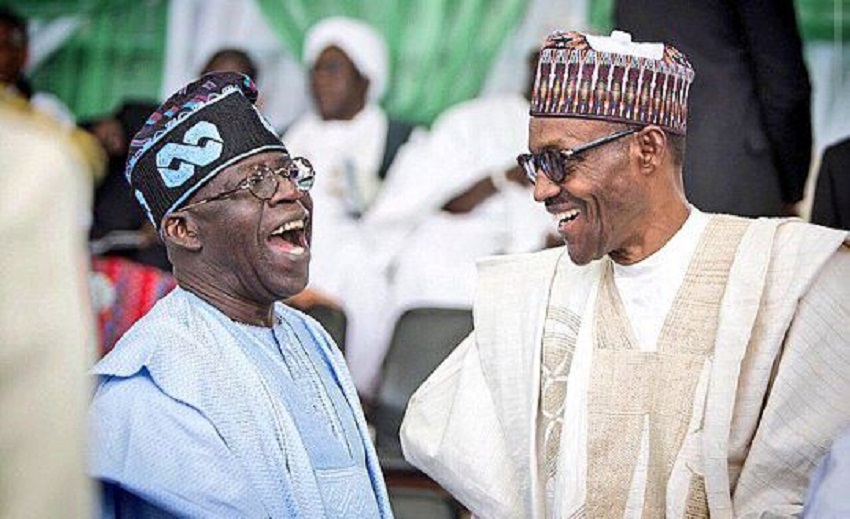
But now that, Asiwaju Ahmed Tinubu is on the hot seat. He is the one who sold Buhari to Yorubas. Some Yorubas don’t like that idea. The Afenifere didn’t want to hear anything about Buhari because of his past record. How Asiwaju muscled down this group and gained trust among Yorubas to support Buhari is still a mystery to me.
The well-fortified Yoruba regional party, Alliance for Democracy (AD), was annihilated to pave way for a smooth alliance with Buhari’s party.
The progressives were not happy. They didn’t like to join a Northern party. They saw Asiwaju Bola Tinubu as a traitor and they have been waiting for the day they would take their pound of flesh from him.
The opportunity came when there was a crack among the new political family of Asiwaju Tinubu. They watched, arms folded, faces turned to the other side as Tinubu faced his fate alone. No single press release from Afenifere and Yoruba elders. They simply maintained their “we warned him” stand.
To them, he drove himself to the belly of vultures and he must pay the price like his past leaders who dared to against their will.
What happened last week was more than a protest. It was a repeat of history.
If you are a Yoruba man and you are into politics, be careful. Read Yoruba politics before you jump into any alliance. And if you are to do so, consult widely.
Asiwaju Bola Ahmed Tinubu has entered the political ocean of the South-West-North. He is in the middle now, only God knows where it will lead him to.
As for me, and my family, we will continue and continue to pray for him; for turning boys to men, for bringing some development to our region. Although to many of us, he is not perfect, neither is any of us.
But I am pleading with our fathers and brothers to please forgive him of any sin – big or small – he might have committed as a person in the name politics.
We should please follow our fathers’ proverb; ti a ba fi owo otun ba omo wi, a ma nfi isi fa mo ra ni (if we reprimand a child with the right hand, we should embrace him with the left).
Ire ooo, emi ni omo yin ni tooto.
Wole Arisekola is a journalist and the publisher of Streetjournal.com
Feature/OPED
In Nigeria… One Day Monkey Go Go Market
By Prince Charles Dickson PhD
In Nigeria, the road has become a stage where power performs its most absurd theatre. The siren—once a tool of emergency—now plays the soundtrack of ego. The convoys, longer than a bride’s procession, louder than a market quarrel, move through our streets like small invading armies. And every time that blaring, violent sound slices through the air, a simple truth echoes behind it: one day monkey go go market… and e no go return.
Because power, especially Nigerian power, has a short memory. And even shorter patience.
These leaders who move as though the sun itself must pause when they pass were once ordinary Nigerians. They once queued at bus stops, once waited under the rain for taxis, once navigated potholed streets with the same caution as every other citizen trying not to die by negligence. But somewhere between election and inauguration, ambition and arrogance, something snapped. Their feet left the ground. Their humanity blurred. And their ears, now accustomed to sirens; forgot how silence feels.
The bizarre culture of convoys in Nigeria has metastasized into something theatrical, violent, and deeply offensive. What began as protocol has become performance. Sirens scream not just to clear the road, but to announce hierarchy. Vehicles speed not just to meet schedules but to demonstrate superiority. And the citizens, the people in whose name this power is supposedly held, scatter like startled chickens. Or worse, end up dead under tires that never brake.
The irony is painful. The same leaders who demand absolute obedience from citizens once walked among those same citizens unnoticed. Once upon a time they lived without outriders, without black-tinted SUVs, without pickup vans carrying heavily armed security men who point guns at commuters as though Lagos traffic is a battlefield. They were once people. Now they behave like a species apart.
But the road remembers. The people remember. And power always forgets that it is a tenant, never a landlord.
Escorts in Nigeria don’t just move with urgency; they move with intimidation. They shove, push, threaten, and roar through roads where ordinary Nigerians are merely trying to survive the day. The siren becomes a weapon, the convoy a declaration of dominance. The message is clear: “Your life must move aside. My importance is passing.”
In what country should this be normal?
Even emergency vehicles; ambulances carrying dying patients, fire trucks racing to burning buildings, sometimes cannot pass because a government official’s convoy has occupied the road with the entitlement of royalty.
This isn’t governance; it’s theater of the absurd.
And the casualties are not metaphorical. Nigerians have died—pregnant women hit by convoys, okada riders knocked off the road, children flung away like debris. Drivers in these convoys behave like warhorses let loose, sworn not to slow down regardless of what or who is ahead.
But who will hold them accountable? Who dares question power that sees questions as disrespect and disrespect as rebellion?
The institutions meant to regulate these excesses are the same institutions that created them. Protocol offices treat speed like divinity. Security details mistake aggression for duty. Schedules are treated as holy commandments. Every meeting becomes urgent. Every movement becomes life-or-death. Every road must clear.
But the truth sits quietly behind all this noise: no meeting is that important, no leader is that indispensable, and no road should require blood to make way.
Somewhere, a child grows up believing public office means public intimidation. A young man sees the behavior of convoys and dreams not of service but of dominance. A young woman imagines that leadership means never waiting in traffic like the rest of society. And so, the cycle of arrogance reproduces itself. A country becomes a laboratory where entitlement multiplies.
In Nigeria, the convoy culture reveals a deeper sickness: a leadership class that has disconnected from the lived realities of the people they claim to govern.
When did proximity to power become justification for violence?
When did schedules become more sacred than lives?
When did we normalize leaders who move like emperors, not elected representatives?
But more importantly: how do these leaders forget so quickly where they came from?
Many of them grew up in the same chaos their convoys now worsen. They once asked why leaders were insensitive. Now they have inherited the same insensitivity and advanced it.
The convoy is more than metal and noise. It is a metaphor. It illustrates how Nigerian governance often operates: pushing the people aside, demanding unquestioned obedience, prioritizing position over responsibility.
And yet, the proverb whispers:
One day monkey go go market… e no go return.
Not because we wish harm on anyone, but because history has its own logic. Power that forgets compassion eventually forgets itself. Leadership that drives recklessly, morally, politically, and literally—will one day crash against the boundaries of public patience.
This metaphor is a quiet mirror for every leader who believes their current status is divine permanence. One day, the sirens will go silent. The tinted windows will roll down. The outriders will be reassigned. The road will no longer clear itself. Reality will return like harmattan dust.
And then the question will confront them plainly:
When your power fades, what remains of your humanity?
The tragedy of Nigeria’s convoy culture is that it makes leadership look like tyranny and renders citizens powerless in their own country. It fosters a climate where ordinary people live in perpetual startle. It deepens distrust. It fuels resentment. It reinforces the perception that leadership is designed to intimidate rather than serve.
And what does it say about us as a nation that we accept this?
We accept the absurdity because we assume it cannot be overturned. We accept arrogance because we assume it is the price of power. We step aside because we assume there is no alternative.
But nations are not built on assumptions. They are built on accountability.
The temporary nature of political power should humble leaders, not inflate them. Four or eight years or whatever time they spend clinging to office cannot compare to the lifetime they will spend as private citizens once the convoys disappear.
When the noise stops, will they walk among us head high or with their face hidden?
When the sirens lose their voice, will they find their own?
What if true leadership was measured not by how loudly you move through society but by how gently you walk among the people?
Imagine a Nigeria where power travels quietly. Where convoys move with the dignity of service, not the violence of entitlement. Where leaders move with humility, not hysteria. Where the streets do not tremble at the approach of authority. Where citizens do not shrink to the roadside, waiting to survive the thunder of tinted SUVs.
It is possible. It is necessary. It begins with leaders remembering that every journey through Nigeria’s roads is a reminder of their accountability, not their dominion.
Because one day, and it will come—monkey go go market.
The convoy will stop.
The siren will fade.
The power will dissolve into yesterday.
And the road will ask the only question that matters:
While you passed through, did you honor the people… or terrorize them?
History will remember the answer.
And so will we—May Nigeria win!
Feature/OPED
If Capital is the Answer, What Exactly is the Problem with First Holdco?
By Blaise Udunze
The Olayemi Cardoso-led Central Bank of Nigeria’s 24-month compliance timeline for the recapitalization of Nigeria’s banking system is about to conclude on March 31, 2026, which is framed as an unavoidable solution to systemic fragility, weak balance sheets, and the demands of a larger, more complex economy. Bigger capital, regulators argue, will produce stronger banks. Though First Bank may have met the CBN’s N500 billion minimum requirement, the latest financials from Femi Otedola-led First HoldCo Plc, which is the parent of Nigeria’s oldest commercial bank, offer a sobering counterpoint, revealing that capital alone cannot cure structural weakness, governance failure, or deep-rooted risk management flaws. If capital is the answer, what exactly is the problem?
What is truly astonishing to many is that beneath the headline growth in earnings lies a financial institution struggling with collapsing earnings quality, surging credit impairments, volatile fair-value exposures, and rising operating inefficiencies. First HoldCo’s numbers are not merely a company-specific disappointment; they are a mirror reflecting the deeper fault lines within Nigeria’s financial system and a warning that recapitalisation, in its current form, risks becoming another cosmetic reset rather than a genuine reform.
On the surface, the topline appears encouraging. The figures showed that gross earnings rose by 17.1 percent to N2.64 trillion in the nine months to 2025, while interest income surged by over 40 percent to N2.29 trillion. Figuring it out, investors, depositors, and analysts understand that these figures, however, are largely the product of a high-interest-rate environment driven by aggressive monetary tightening. They reflect repricing, not necessarily improved lending quality or superior balance-sheet strength. In an economy under strain, rising interest income often signals the transfer of macroeconomic stress from borrowers to banks, rather than sustainable growth.
This becomes evident once attention shifts from revenues to profitability. The performance disclosed that profit before tax declined by 7.3 percent to N566.5 billion, while profit after tax fell nearly 13 percent to N458 billion. Earnings per share dropped by a steep 27.7 percent, a sharper decline than headline profit suggests, pointing to dilution pressures and reduced value accruing to shareholders. More striking still is the full-year picture, where profit after tax from continuing operations collapsed by about 92 percent, plunging to N52.7 billion from N663.5 billion in the prior year. Such a dramatic fall cannot be explained by temporary volatility; it is the consequence of long-suppressed risks finally surfacing.
The most damaging of these risks is asset quality. The most critical figure is the impairment charges that rose by nearly 69 percent in the nine months to N288.9 billion, and by over 75 percent on a full-year basis to N748 billion, and invariably, these numbers tell a story of borrowers buckling under FX exposure, weak cash flows, and a deteriorating operating environment. They also raise uncomfortable questions about credit underwriting standards, concentration risk, and the effectiveness of internal risk controls in earlier lending cycles. After impairments, much of the benefit from higher interest income evaporated, exposing the fragility of earnings built on stressed credit.
Compounding this weakness was a sharp reversal in fair-value accounting. First HoldCo recorded a net loss of N87 billion on financial instruments measured at fair value, a stark contrast to the N549 billion gain recorded a year earlier. Due to this outcome, larger chunks of shareholders’ value were wiped out because this single swing accounted for a negative variance of over N636 billion year-on-year.
The episode highlights a dangerous dependence on market revaluations and FX-driven gains to prop up earnings, as seen that the moment conditions turn, paper profits vanish just as quickly, raising questions about the transparency, sustainability and economic substance of reported results.
Non-interest income provided little cushion. In the nine months to 2025, it declined by 44.5 percent, falling from N618.7 billion to N343.7 billion. While net fees and commission income rose by about 25 percent, the increase was too small to offset the collapse in other income lines. The result is a revenue base that is narrow, volatile, and overly exposed to market swings. Recapitalising banks without addressing this lack of income diversification simply amplifies vulnerability.
At the same time, operating costs surged. Operating expenses climbed by nearly 40 percent to N942.7 billion, while other operating expenses jumped over 43 percent on a full-year basis. Inflation, FX depreciation, energy costs, and technology spending all played a role, but the deeper issue is efficiency. Costs are rising far faster than sustainable income, eroding margins and weakening internal capital generation at precisely the moment banks are being asked to shore up capital buffers. Injecting fresh capital into institutions with broken cost structures does not resolve inefficiency; it merely postpones the inevitable days.
These financial stresses revive longstanding concerns about governance and risk culture in Nigeria’s banking system. Large impairment charges and valuation reversals do not emerge overnight. They accumulate through years of weak credit governance, excessive sector and obligor concentration, insider-related exposures, inadequate stress testing, and regulatory forbearance. Recapitalisation does not answer the most important questions: who gets credit, how risks are approved, how boards exercise oversight, and whether management is truly accountable. Without reform in these areas, more capital simply provides a thicker cushion for future losses.
Foreign exchange risk remains the system’s most dangerous and least resolved fault line. Currency devaluation inflates asset values and boosts interest income on paper, while simultaneously crushing borrowers with FX-denominated obligations. Banks may book translation or revaluation gains even as credit quality deteriorates beneath the surface. This contradiction fuels earnings volatility and undermines confidence in financial reporting. A stronger capital base does not neutralise FX mismatch risk; only disciplined risk management, credible macro policy, and transparent reporting can.
Perhaps most troubling is what First HoldCo’s results imply about regulatory credibility. Many of the impairments and valuation losses reflect risks that were visible long before they crystallised in the income statement. When losses arrive suddenly and in clusters, concerns from different quarters are raised and markets begin to question whether supervision is proactive or merely reactive. Recapitalisation without restoring trust in regulatory oversight risks being interpreted as an admission that deeper problems remain unaddressed and by extension, this erodes trust in the system and a stronger banking sector must also be a fairer and more accountable one.
Nigeria has travelled this road before. Bigger banks and higher capital thresholds have previously delivered reassuring headlines, only for familiar weaknesses to resurface in new forms. First HoldCo’s numbers demonstrate that capital adequacy, while necessary, is far from sufficient. Without the CBN confronting governance failures, asset quality deterioration, concentration risk, FX exposure, transparency gaps, and weak risk culture, recapitalisation risks will become another exercise in delay rather than reform.
The uncomfortable truth is that real stability requires more than fresh equity. It demands honest loss recognition, credible financial reporting, disciplined credit practices, diversified income streams, and regulators willing to enforce standards consistently. Until these missing pieces are addressed, recapitalisation will remain what it too often has been in Nigeria’s financial history, as a larger buffer for the same old problems, and a temporary comfort masking unresolved fragilities.
Blaise, a journalist and PR professional, writes from Lagos, can be reached via: [email protected]
Feature/OPED
Why the Future of PR Depends on Healthier Client–Agency Partnerships
By Moliehi Molekoa
The start of a new year often brings optimism, new strategies, and renewed ambition. However, for the public relations and reputation management industry, the past year ended not only with optimism but also with hard-earned clarity.
2025 was more than a challenging year. It was a reckoning and a stress test for operating models, procurement practices, and, most importantly, the foundation of client–agency partnerships. For the C-suite, this is not solely an agency issue.
The year revealed a more fundamental challenge: a partnership problem that, if left unaddressed, can easily erode the very reputations, trust, and resilience agencies are hired to protect. What has emerged is not disillusionment, but the need for a clearer understanding of where established ways of working no longer reflect the reality they are meant to support.
The uncomfortable truth we keep avoiding
Public relations agencies are businesses, not cost centres or expandable resources. They are not informal extensions of internal teams, lacking the protection, stability, or benefits those teams receive. They are businesses.
Yet, across markets, agencies are often expected to operate under conditions that would raise immediate concerns in any boardroom:
-
Unclear and constantly shifting scope
-
Short-term contracts paired with long-term expectations
-
Sixty-, ninety-, even 120-day payment terms
-
Procurement-led pricing pressure divorced from delivery realities
-
Pitch processes that consume months of senior talent time, often with no feedback, timelines, or accountability
If these conditions would concern you within your own organisation, they should also concern you regarding the partner responsible for your reputation.
Growth on paper, pressure in practice
On the surface, the industry appears healthy. Global market valuations continue to rise. Demand for reputation management, stakeholder engagement, crisis preparedness, and strategic counsel has never been higher.
However, beneath this top-line growth lies the uncomfortable reality: fewer than half of agencies expect meaningful profit growth, even as workloads increase and expectations rise.
This disconnect is significant. It indicates an industry being asked to deliver more across additional platforms, at greater speed, with deeper insight, and with higher risk exposure, all while absorbing increased commercial uncertainty.
For African agencies in particular, this pressure is intensified by factors such as volatile currencies, rising talent costs, fragile data infrastructure, and procurement models adopted from economies with fundamentally different conditions. This is not a complaint. It is reality.
This pressure is not one-sided. Many clients face constraints ranging from procurement mandates and short-term cost controls to internal capacity gaps, which increasingly shift responsibility outward. But pressure transfer is not the same as partnership, and left unmanaged, it creates long-term risk for both parties.
The pitching problem no one wants to own
Agencies are not anti-competition. Pitches sharpen thinking and drive excellence. What agencies increasingly challenge is how pitching is done.
Across markets, agencies participate in dozens of pitches each year, with success rates well below 20%. Senior leaders frequently invest unpaid hours, often with limited information, tight timelines, and evaluation criteria that prioritise cost over value.
And then, too often, dead silence, no feedback, no communication about delays, and a lack of decency in providing detailed feedback on the decision drivers.
In any other supplier relationship, this would not meet basic governance standards. In a profession built on intellectual capital, it suggests that expertise is undervalued.
This is also where independent pitch consultants become increasingly important and valuable if clients choose this route to help facilitate their pitch process. Their role in the process is not to advocate for agencies but to act as neutral custodians of fairness, realism, and governance. When used well, they help clients align ambition with timelines, scope, and budget, and ensure transparency and feedback that ultimately lead to better decision-making.
“More for less” is not a strategy
A particularly damaging expectation is the belief that agencies can sustainably deliver enterprise-level outcomes on limited budgets, often while dedicating nearly full-time senior resources. This is not efficiency. It is misalignment.
No executive would expect a business unit to thrive while under-resourced, overexposed, and cash-constrained. Yet agencies are often required to operate under these conditions while remaining accountable for outcomes that affect market confidence, stakeholder trust, and brand equity.
Here is a friendly reminder: reputation management is not a commodity. It is risk management.
It is value creation. It also requires investment that matches its significance.
A necessary reset
As leadership teams plan for growth, resilience, and relevance, there is both an opportunity and a responsibility to reset how agency partnerships are structured.
That reset looks like:
-
Contracts that balance flexibility and sustainability
-
Payment terms that reflect mutual dependency
-
Pitch processes that respect time, talent, and transparency for all parties
-
Scopes that align ambition with available budgets
-
Relationships based on professional parity rather than power imbalance
This reset also requires discipline on the agency side – clearer articulation of value, sharper scoping, and greater transparency about how senior expertise is deployed. Partnership is not protectionism; it is mutual accountability.
The Leadership Question That Matters
The question for the C-suite is quite simple:
If your agency mirrored your internal standards of governance, fairness, and accountability, would you still be comfortable with how the relationship is structured?
If the answer is no, then change is not only necessary but also strategic. Because strong brands are built on strong partnerships. Strong partnerships endure only when both sides are recognised, respected, and resourced as businesses in their own right.
The agencies that succeed and the brands that truly thrive will be those that recognise this early and act deliberately.
Moliehi Molekoa is the Managing Director of Magna Carta Reputation Management Consultants and PRISA Board Member
-
Feature/OPED6 years agoDavos was Different this year
-
Travel/Tourism9 years ago
Lagos Seals Western Lodge Hotel In Ikorodu
-
Showbiz3 years agoEstranged Lover Releases Videos of Empress Njamah Bathing
-
Banking8 years agoSort Codes of GTBank Branches in Nigeria
-
Economy3 years agoSubsidy Removal: CNG at N130 Per Litre Cheaper Than Petrol—IPMAN
-
Banking3 years agoSort Codes of UBA Branches in Nigeria
-
Banking3 years agoFirst Bank Announces Planned Downtime
-
Sports3 years agoHighest Paid Nigerian Footballer – How Much Do Nigerian Footballers Earn