Connect with us

General

Lagos Unveils 10-Year Smart City Plan

Published

on

10-Year Smart City Plan

By Ahmed Rahma

The Lagos State Governor, Mr Babajide Sanwo-Olu, on Tuesday, outlined the key infrastructural deliverables being undertaken by his administration for the achievement of the Smart City agenda.

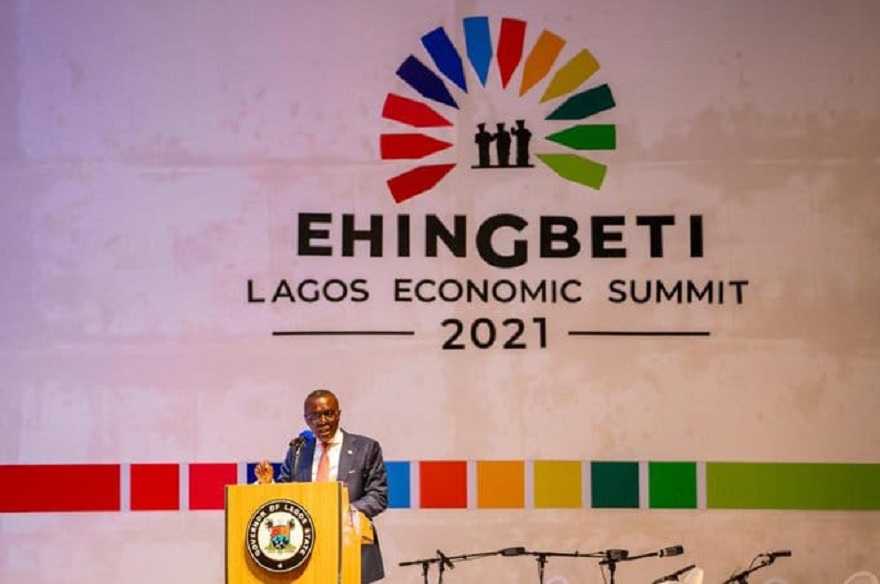
The Governor shared his vision for the state at the 8th Lagos Economic Summit, known as Ehingbeti and themed Greater Lagos: Setting the Tone for the Next Decade.  The event was facilitated by the organised private sector in support of the state government.

In his address, Mr Sanwo-Olu disclosed that the race to digitise every community in Lagos has begun with the ongoing laying of 6,000-kilometre fibre optic infrastructure across the city, stressing that the Smart City plan would fully materialise by 2030 when the entire landscape of Lagos would have been covered by a network of several thousands of kilometres of fibre optic carrying broadband internet into all homes, offices and schools.

According to him, the move is to leverage technology to revolutionise business culture in Lagos by energising Micro, Small and Medium Enterprises (MSMEs) that form the backbone of the State economy.

He said, “I invite every well-meaning Nigerian to join me to look ahead at the next decade, and the possibilities that lie ahead for Lagos.

“What will Lagos State look like by 2030? There will be a city-wide network of colour-coded Metro Lines, the first two of which – Red and Blue lines – will move over 34.5 million people monthly, cutting travel time by over 250 per cent.

“In 2030, Lagos will proudly stand beside every other megacity in the world, in terms of its capacity to transport its people efficiently and responsively.”

Speaking further, he noted that “Water transportation infrastructure being put in place will make waterway transport systems a central element of life in the metropolis.

“The Fourth Mainland Bridge will come to define the cityscape of the 2020s in the same way the Lekki-Ikoyi Link Bridge defined it a decade earlier.

“By 2030, Lagos will be a Smart City, fully covered by a network of several thousands of kilometres of fibre optic infrastructure that will carry broadband internet into homes, offices and schools.”

Additionally, Mr Sanwo-Olu said, “The Smart City that is unfolding will also be home to a network of intelligent cameras that will support not only security and policing across the State, but also traffic management and data collection for urban planning.

“By 2030, Lagos will be home to one of the largest Rice Mills in the world, after we deliver our 32 metric tons per hour rice factory in Imota, which will produce 2.8 million bags of 50kg bags of rice per annum.”

The Governor said the implementation of the plan would not only create millions of direct jobs for skilled youths, but it would also empower women, who own substantial MSMEs in Lagos, adding that plans were underway in the state to reverse the tide of billions lost nationally to medical tourism.

He disclosed that Lagos was pushing ahead with a move to develop a Medical Park in Ikoyi in partnership with the private sector, which is expected to offer world-class medical and diagnostic services stating that his administration’s development blueprint, known as Project THEMES, was designed to build on the achievements of previous administrations and lay foundations for future growth.

Mr Sanwo-Olu, having reviewed the progress recorded within the past decade, said there was so much to be celebrated in the State, but added that so much was needed to be done in expanding the frontiers of growth in Lagos.

The Ehingbeti summit, which is largely virtual, has some sessions to be held physically at the Eko Hotels and Suites, Victoria Island. It is co-chaired by the chairman of Citi Bank, Mr Yemi Cardoso.

It is an initiative introduced in 2000 as a biennial event aimed at creating a credible forum to discuss and formulate policies for accelerating infrastructural development and stimulating economic growth for Lagos.

The event was virtually attended by President Muhammadu Buhari; the newly appointed Director-General of World Trade Organisation (WTO), Dr Ngozi Okonjo-Iweala; President of Africa Development Bank, Dr Akinwunmi Adesina; and founder of Mo Ibrahim Foundation, Mr Mohammed Ibrahim, among others.

The WTO Director-General made a case for the creation of massive industrial hubs to harness the potential of the youth and women in artificial intelligence and the digital economy.

She commended the Lagos Government’s action to build digital infrastructure around the city, noting that the fibre optic programme makes the state a new manufacturing hub of digital products that will shape the global economy in the next decade.


Ahmed Rahma is a journalist with great interest in arts and craft. She is also a foodie who loves new ideas. She loves to travel and would love to visit other African countries someday. She is a sucker for historical movies and afrobeat.

Click to comment

Leave a Reply

Your email address will not be published. Required fields are marked *

General

Movement Not Restricted During Monthly Environmental Sanitation—Wahab

Published

on

tokunbo wahab environmental sanitation

By Modupe Gbadeyanka

The Lagos State Commissioner for the Environment and Water Resources, Mr Tokunbo Wahab, has disclosed that the state government has not restricted the movement of people during the re-introduced monthly environmental sanitation exercise.

Responding to an enquiry by an X user, Faveo Autos, on Saturday, he said the exercise was not brought back to restrict the movement of residents, noting that arresting anyone during the sanitation was unlawful and not backed by law.

However, he encouraged Lagosians to use the period to keep their surroundings clean.

“What is the fine for movement during environmental [sanitation]?” Mr Wahab was asked by Faveo Autos today.

In his response, the Commissioner said, “For clarity, there is no restriction on movement during the monthly environmental sanitation exercise. Consequently, arresting anyone on the basis of movement during the exercise is unlawful and does not represent the position or policy of the Lagos State Government.

“The monthly environmental sanitation exercise was reintroduced primarily to restore and strengthen the culture of environmental cleanliness across the state.

“The initiative is backed by the Lagos State Environmental Management and Protection Law, 2017. However, the law does not provide for any restriction on movement during the exercise.

“Our focus is on encouraging Lagosians to embrace environmental sanitation as a civic responsibility and a shared commitment to maintaining a cleaner, healthier, and more sustainable Lagos, rather than relying on enforcement measures.”

Continue Reading

General

Finding a Way Forward Through Life’s Challenges

Published

on

bbpolska

Life is full of unexpected moments that test our patience, strength, and perspective. Everyone experiences setbacks, disappointments, and periods of uncertainty. While these moments can feel overwhelming, they also provide opportunities for personal growth and self-discovery.

One of the most valuable lessons we learn is that difficult situations rarely last forever. Time, reflection, and a willingness to adapt often help us move beyond even the toughest circumstances. Maintaining a positive outlook and focusing on practical solutions can make a significant difference.

Relationships also play an important role in overcoming hardships. Support from family, friends, or mentors reminds us that we are not alone. At the same time, learning to let go of anger and resentment can free us from emotional burdens that prevent us from moving forward.

The only way out of the labyrinth of suffering is to forgive. It is nothing to die. It is frightful not to live. Everything was beautiful and nothing hurt.

Personal growth is not about avoiding challenges but about responding to them with resilience and wisdom. Every experience, whether positive or negative, contributes to the person we become. By embracing change and practicing gratitude, we can create a more meaningful and fulfilling life.

In the end, moving forward requires courage, forgiveness, and hope. When we choose to focus on what we can control instead of dwelling on the past, we open ourselves to new opportunities and a brighter future.

Continue Reading

General

Tinubu Okays Four New Army Divisions, Recruitment of 28,000 Personnel

Published

on

nigerian army

By Modupe Gbadeyanka

The establishment of four new army divisions has been approved by President Bola Tinubu, bringing the total to 12.

In a statement on Thursday by the Special Adviser to the President on Information and Strategy, Mr Bayo Onanuga, it was stated that the President also authorised the recruitment of 28,000 additional personnel to strengthen national security.

The new divisions created include 5 Division, with the headquarters in Makurdi covering Benue, Nasarawa and Kogi States; 9 Division, with the headquarters in Ilorin covering Kwara and Niger States; 10 Division, with the headquarters in Jalingo covering Taraba and Adamawa States; and 83 Division, with the headquarters in Benin City covering Edo, Delta and Bayelsa States.

It was disclosed that the establishment of the new Divisions in Makurdi, Ilorin, Jalingo and Benin City will significantly improve command and control, decentralise operational decision-making, strengthen border security, enhance the protection of critical national infrastructure, improve counter-insurgency and internal security operations, and ensure faster military response to emerging threats nationwide.

Implementation of the new force structure will be done in two phases. The first phase, covering the establishment of the 5, 9, and 10 Divisions and the reorganisation of existing formations, will be completed by September 2026. The second phase, involving the establishment of the 83 Division and further reorganisation, is expected to be completed by December 2026.

The statement said the expansion of the Nigerian Army’s structure from eight to twelve divisions will improve the operational effectiveness of the security agency and strengthen national defence capabilities further.

Before now, the Nigerian Army operated 1 Division, with the headquarters in Kaduna covering Kaduna, Kano, Katsina and Jigawa States; 2 Division, with the headquarters in Ibadan covering Oyo, Osun, Ekiti and Ondo States; 3 Division, with the headquarters in Jos covering Plateau, Bauchi and Gombe States; 6 Division, with the headquarters in Port Harcourt covering Rivers, Akwa Ibom and Cross River States; 7 Division, with the headquarters in Maiduguri covering Borno and Yobe States; 8 Division, with the headquarters in Sokoto covering Sokoto, Kebbi and Zamfara States; 81 Division, with the headquarters in Lagos covering Lagos and Ogun States; and 82 Division, with the headquarters in Enugu covering Enugu, Anambra, Abia, Ebonyi and Imo States.

Mr Tinubu reaffirmed his administration’s determination to continue investing in the Armed Forces, ensuring they remain adequately equipped, highly motivated, and fully capable of protecting the nation and guaranteeing the safety and security of all Nigerians.

He lauded the Chief of Army Staff, Lieutenant General Waidi Ibrahim Shuaibu, and all officers and soldiers of the Nigerian Army for their dedication, professionalism, and steadfast commitment to defending Nigeria’s sovereignty and territorial integrity.

Continue Reading