Connect with us

Auto

Uber Faces Huge Compensation Claims in UK

Published

on

Uber drivers

By Adedapo Adesanya

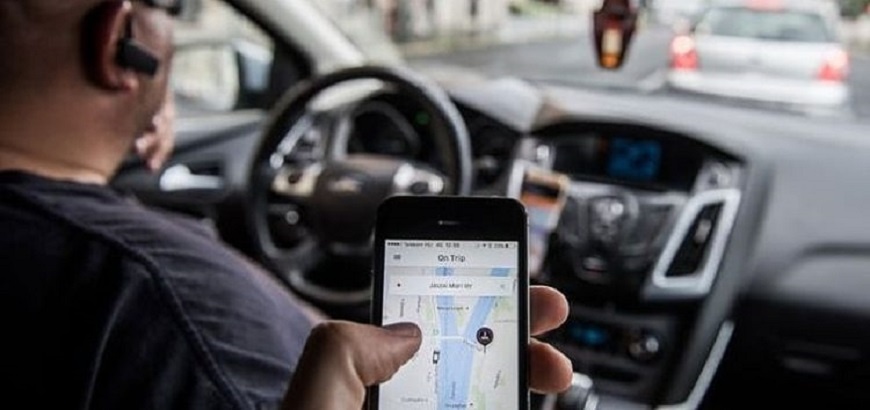
Uber is set to face a deluge of compensation claims as the United Kingdom’s Supreme Court ruled on Friday that drivers must be treated as workers rather than self-employed.

The decision could mean thousands of Uber drivers are entitled to minimum wage and holiday pay, a move that could hurt its business model in one of its biggest markets.

The ruling from the apex court means the ride-hailing giant will start seeing a deluge of compensation claims, which analysts have said would have serious impacts on the gig economy.

The Supreme Court disagreed with Uber’s stance that it is a technology provider and was a booking agent for drivers who are approved by Uber London. It also ruled that drivers were deemed to be working when they were looking for passengers and not just driving them.

According to court documents, “The Supreme Court also holds that the employment tribunal was entitled to find that time spent by the claimants working for Uber was not limited (as Uber argued) to periods when they were actually driving passengers to their destinations, but included any period when the driver was logged into the Uber app within the territory in which the driver was licensed to operate and was ready and willing to accept trips.”

The long-running case was originally brought in 2016 by drivers James Farrar and Yaseen Aslam in an employment tribunal.

The court considered several elements in its judgement. It stated that Uber set the fare which meant that they dictated how much drivers could earn and sets the contract terms and drivers had no say in them.

It added that request for rides is constrained by Uber, which can penalise drivers if they reject too many rides.

It also considered that Uber monitors a driver’s service through the star rating and has the capacity to terminate the relationship if after repeated warnings this does not improve.

Speaking on the decision, Mr Jamie Heywood, Uber’s regional general manager for Northern and Eastern Europe, said: “We respect the court’s decision which focused on a small number of drivers who used the Uber app in 2016. Since then, we have made some significant changes to our business, guided by drivers every step of the way.

“These include giving even more control over how they earn and providing new protections like free insurance in case of sickness or injury.

“We are committed to doing more and will now consult with every active driver across the UK to understand the changes they want to see.”

The establishment added that the verdict does not reclassify all UK drivers as workers. The judgement only focused on the group of drivers who brought the claim at a 2016 employment tribunal, many of whom no longer drive on the app.

It also said a worker is not an employee. Employee status was not claimed in the litigation and so this ruling does not find the claimants to be employees.

This comes just months after Uber won an appeal allowing it to continue to operate in London over concerns about its safety practices.


Adedapo Adesanya is a journalist, polymath, and connoisseur of everything art. When he is not writing, he has his nose buried in one of the many books or articles he has bookmarked or simply listening to good music with a bottle of beer or wine. He supports the greatest club in the world, Manchester United F.C.

Auto

inDrive Backs Smart Mobility Innovation With AOT Lagos 7.0 Sponsorship

Published

on

inDrive The Heart That Drives Us

By Modupe Gbadeyanka

The 2025 edition of the Art of Technology (AOT) Lagos is going to be bigger and better with the inclusion of inDrive as its official sponsor.

The AOT Lagos 7.0, themed Future Technologies and a Sustainable Lagos, is scheduled for Thursday, December 4, 2025, at the Landmark Centre, Lagos.

inDrive, a leading global ride-hailing platform operating in nine African countries, is partnering with the Lagos State government to bring together policymakers, innovators, tech founders, investors, and global industry leaders to shape the future of technology and digital transformation in Lagos.

Through this collaboration, inDrive aims to contribute to high-level conversations on driver empowerment, sustainable transport models, safety, and affordability, key challenges affecting millions of daily commuters and mobility service providers in the state.

According to the Country Representative of inDrive Nigeria, Mr Timothy Oladimeji, the sponsorship underscores the company’s deep commitment to advancing equitable mobility systems and supporting conversations that drive long-term impact across the transportation ecosystem.

He noted that inDrive sees AOT Lagos as a critical platform for addressing mobility challenges and accelerating innovation within the state.

During the event, inDrive will be participating in one of the key sessions, discussing the topic From fuel to future: the rise of e-mobility in Lagos.

Aside from this, inDrive will also be hosting a side workshop themed The Market Share Victory – How inDrive Became Nigeria’s Second-Largest Ride-Hailing Player.

“We are proud to sponsor AOT Lagos 7.0 because it aligns perfectly with our vision to democratise mobility and ensure fairness for both drivers and riders.

“As Lagos moves toward a smarter, more sustainable mobility future, inDrive is committed to supporting solutions that prioritise affordability, safety, driver empowerment, and technological readiness.

“Through this partnership, we hope to contribute meaningfully to shaping policies and ideas that will redefine how millions of people move across the state,” he said.

Now in its seventh edition, AOT Lagos has evolved into a premier platform for advancing smart-city innovation, showcasing emerging technologies, and influencing the policy frameworks that shape the digital economy in Africa’s largest city.

Continue Reading

Auto

FG to Open Section of Lagos-Calabar Coastal Highway December 12

Published

on

Lagos-Calabar Coastal Highway

By Adedapo Adesanya

The federal government is set to open Section 1 of the 700 km Lagos-Calabar Coastal Highway for public use from December 12 to 17, 2025.

The Minister of Works, Mr Dave Umahi, gave the assurance on Sunday in Lagos during a review of outstanding works on Section 1 of the highway project.

The section 1 is 47.47km long and has six lanes and two carriageways.

Mr Umahi said: “We also set aside April next year to have Section 1 and half of Section 2 fully completed and commissioned,” adding that the contractor handling the project, Hitech Construction Company Limited, had achieved more than 80 per cent of the reinforced concrete pavement.

“We are very grateful to God Almighty for his mercies, and to the President and to the contractor.

“If we are to pay for everything they have done, it will be very difficult to have this job done because there are places we didn’t envisage that we were going to be removing pits up to a depth of 20 metres.

“They had to do that because they are partners in progress for the development of the country.

“We have just about three kilometres to complete the entire sand filling from Ahmadu Bello Way to Eleko Junction, and we are excited at the work and the quality of what has been done,” the former Governor of Ebonyi State, said.

The new Controller of Works in Lagos, Mr Olufemi Dare, told the minister that a lot of settling was ongoing at Chainage 33 of the highway project, praising the contractor for high quality of work.

“Sir, it may interest you to know that the building standing is the palace of this community, and you saved this building, and they are extremely happy,” he said.

On his part, the Managing Director of Hitech Construction Company Limited, Mr Dany Abboud, said that the company would still backfill from Chainage 34 to Chainage 37.

“Dredging is ongoing, we are on track to deliver.

“We are monitoring the settlement in the swampy areas and the water body areas due to the change of alignment,” he said.

The highway, which commenced construction in March 2024, has generated a lot of controversy, with critics raising concern around cost and procurement structure.

Continue Reading

Auto

Nord Vehicle Owner Accuses Nigerian Bank of Economic Sabotage

Published

on

nord motion owner oluwatobi ajayi

By Modupe Gbadeyanka

A Nigerian lender has been accused of frustrating local business owners by not financing Made-in-Nigeria vehicles but promoting the purchase of foreign vehicles.

This allegation was made by the owner of a local vehicle assembly firm, Nord Motion, Mr Oluwatobi Ajayi, in a post on X, formerly known as Twitter.

He described this as an economic sabotage, stressing that this action does not encourage local investors.

“A business owner in the oil and gas sector approached us that he would like to buy two units of the @nordmotion Max pickup for his company. Apparently, he was impressed with the vehicle after some rides with his peers in the sector.

“To my shock, yesterday, my team told me that the bank, a bank operating in Nigeria told him that they do not finance Made-in-Nigeria vehicles, and they even suggested to our customer that he should go for foreign brands instead.

“The most provocative part of this is that all of the brands they suggested to him identified as Made-in-Nigeria brands in their filings with the Bureau of Public Procurement (BPP), which means they decide who they want to be whenever it suits them.

“This is yet another example of the needless sabotage and institutional bias against Nigerian manufacturers and assemblers that we experience in this sector.

“The President aims to grow us into a $1 trillion economy. Nigerians want to buy Made-in-Nigeria products, we are working very hard to produce world-class vehicles, but some banks, who should play the role of credit facilitators, are displaying open prejudice against locally made vehicles.

“What sort of economic sabotage is this?

“Many of us who continue to assemble and manufacture vehicles here do so not just for profit, but out of patriotism and belief in the long game. We see this as a marathon, not a sprint.

“We cannot continue using Nigerian resources to strengthen foreign factories while starving our own indigenous companies of opportunities.

“If we truly want this country to be better, then we must support goods and services made in Nigeria, especially those of us who have shown we can deliver world-class standards. The support has to be real, not just in words, but in policy, in finance, and in action.

“Every time we deny support for local production, we export jobs, skills, and economic growth that should belong here,” he narrated.

Continue Reading

Trending