Connect with us

Technology

Opera Launches ‘Hype’ Inbuilt Mobile Browser Chat

Published

on

Opera Hype

By Adedapo Adesanya

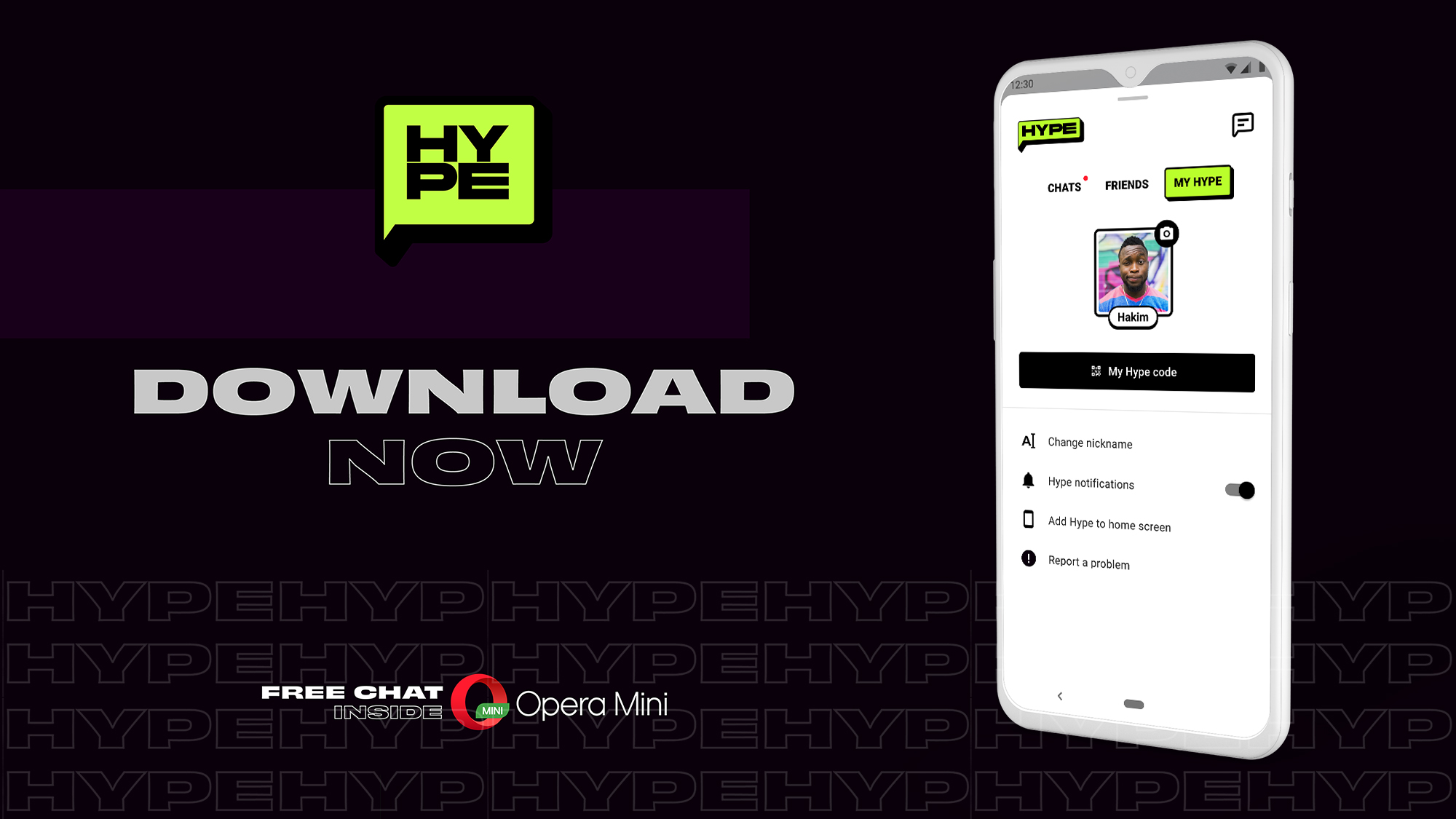
Norwegian app giant, Opera, has launched Hype, its new dedicated chat service built into the popular Opera Mini browser in Africa.

Set in the pilot market of Kenya, Hype is the first African inspired chat service built into a mobile browser.

With Hype, Opera reimagines the chat experience, with content sharing as a key feature; Opera Mini, with more than 100 million users worldwide, becomes the world’s first mobile browser with an integrated chat service.

With the introduction of Hype in the Opera Mini browser, Opera is rethinking the concept of mobile browsers providing its users with a personalized, engaging browsing experience that enables seamless surfing, chatting and sharing content– without compromising speed or driving increased data consumption.

Speaking on this, the Product Lead for Hype Mr Charles Hamel said, “Chat services and browsers are apps people use every day and feel very personal about.

“With the integration of Hype in Opera Mini, we are not only rethinking what a chat service should be like in 2021 but also changing the very definition of what a mobile browser should be.”

Hype is launching first in Kenya as a pilot market and starting today, users will be able to easily set up their Hype account and begin chatting with secure end-to-end encryption.

This launch is a facet of Opera’s emphasis on investing and growing its digital ecosystem in Africa, with the goal of bringing more people online; since 2018, Opera has grown its user base in Africa by 40 per cent.

Speaking further, Mr Hamel explained that, “Hype was developed first and foremost with African consumers in mind. Today, 40 per cent of the Kenyan population has access to smartphones, with younger generations dominating as 75 per cent of their 47 million inhabitants are under 30 years old.

“With such early adopter demographics at play, there is massive potential for the growth of Hype in Kenya. On top of that, we are also partnering with the leading telecommunication carriers in the country, offering daily free browsing to all Opera Mini users. We believe the combination of these factors will lead to the rapid adoption of Hype in the country.”

This announcement follows similar browser innovation from Opera, which was the first to integrate messenger services as part of their PC browser, in 2019.

Today, its more than 80 million users enjoy the integration of services such as Facebook messenger, Telegram, Whatsapp, Instagram and Twitter.

Looking further into the features, Hype infuses new formats like memes and stickers for users to express themselves, often relating to pop culture references and internet content they find. To make this easier and fun, Hype also adds WebSnap, a feature previously known from the Opera desktop browser, that allows users to take snapshots from the web.

Once a websnap is captured, users can edit it by adding colours, text, and emojis, making it fun and entertaining before sharing with others.

It also offers its users a series of stickers created by Kenyan artists Brian Omolo and Lulu Kitololo. These unique collections of stickers reflect everyday expressions used by Kenyans to provide users with a more engaging experience when communicating with others.

“This comes in handy as users no longer need to copy links from websites and switch between apps to share the content they want.

“We are extremely happy to celebrate African culture with Hype and we are very excited with the end result and the collaboration we had with Brian and Lulu.” added Mr Hamel.

“These unique stickers with original designs are something we are very proud of at Opera as we become the first major browser to integrate real African art and pop culture into our products.”

The introduction of Hype in Kenya is part of Opera’s Africa First business strategy, adopted three years ago by the Norwegian company. This strategy consists of four main pillars: 1) Develop products with African consumers in mind; 2) Invest and grow Opera’s digital ecosystem in the African region to bring more people online; 3) Partner with leading global and regional companies; and 4) Employ and collaborate with African colleagues and stakeholders.

The latest population census in Kenya, published in 2019, reported that the country is strongly youthful. Of Kenya’s 47 million inhabitants, 75 per cent are under 30 years old, with children and adolescents representing 63 per cent of the total population.

To this, Mr Hamel said, “Hype was developed first and foremost with African consumers in mind. Today, 40% of the Kenyan population has access to smartphones, with younger generations becoming early adopters of technology.

“With such demographics, there is massive potential for the growth of Hype in Kenya. On top of that, we are also partnering with Safaricom and Airtel, the leading carriers in the country, offering free daily browsing to all Opera Mini users.

“We believe the combination of these factors will lead to the rapid adoption of Hype in the country.”

In the fourth quarter of 2020, the Opera user base reached 380 million monthly active users worldwide, with nearly 150 million monthly active users (MAUs) based in Africa. Since the announcement of Opera’s Africa First strategy in Q1-2018, Opera has grown its user base by 40 per cent in the African region.

This rapid growth in the region gives Opera a unique position to scale its digital ecosystem infrastructure and leverage its brand awareness and recognition. Opera also gives more value to its users by introducing new products and features that truly address the needs of its users locally.


Adedapo Adesanya is a journalist, polymath, and connoisseur of everything art. When he is not writing, he has his nose buried in one of the many books or articles he has bookmarked or simply listening to good music with a bottle of beer or wine. He supports the greatest club in the world, Manchester United F.C.

Advertisement
Click to comment

Leave a Reply

Your email address will not be published. Required fields are marked *

Technology

OPay, Coinbase, Others Crash as Cloudflare Suffers Another Glitch

Published

on

Daudu Gotring OPay

By Adedapo Adesanya

Cloudflare Incorporated, a business providing cloud-based services to various enterprises, said in a note on Friday it is investigating issues with its Dashboard and related Application Programming Interfaces (APIs).

Numerous companies and services, including payments platform like OPay as well as Canva, Coinbase Global Incorporated, Investing.com , Shopify Incorporated, and Zoom Video Communications Incorporated, all appeared to crash, with some seeing “500 internal server error” and “Please check your internet connection and try again”.

The global outage has left many users unable to access these key services as this disruption has not only affected individuals but also businesses relying on these platforms for their operations.

Customers using the Dashboard or Cloudflare APIs are impacted as requests might fail and errors may be displayed, the company said on its status page.

In its latest update, Cloudflare added that “a fix has been implemented,” with the firm monitoring the results.

Users from all over the world have taken to social media platform X (formerly Twitter) to voice their frustrations over the issue.

This is Cloudflare’s second major disruption in nearly a month, following another incident in November that affected services like Spotify and ChatGPT.

At the last outage, Cloudflare’s services were largely restored within three hours, and fully restored after approximately five hours.

Continue Reading

Technology

Google Unveils AI Skilling Blueprint for Africa

Published

on

Google AI Skilling Blueprint for Africa

By Modupe Gbadeyanka

As part of broader Africa-focused Artificial Intelligence (AI) initiatives, Google has launched the AI Skilling Blueprint for Africa, designed to help governments build a future-proof workforce.

The programme provides governments with a comprehensive, step-by-step guide to formulate national skilling strategies. It focuses on developing three critical cohorts: AI Learners, who will gain foundational AI literacy; AI Implementers, professionals upskilled to integrate AI tools into their work; and AI Innovators, deep technical experts dedicated to building the next generation of AI solutions.

Africa is home to the world’s youngest and fastest-growing population. The continent shows immense potential for AI-driven economic growth.

However, new research highlights a significant challenge: while optimism for AI is exceptionally high, reaching 95 per cent in Nigeria and 76 per cent in South Africa, 55 per cent of firms across the continent report needing AI talent more than financing. Closing this skills gap is key to unlocking Africa’s opportunity.

Google’s Vice President of Government Affairs and Public Policy, Doron Avni, explained that, “The AI Skilling Blueprint provides a clear roadmap for governments to build the workforce of the future.

“By also investing in AI-ready data and expert local organisations and partners, we are helping build the interconnected ecosystem needed for a prosperous, AI-driven future for the continent.”

As part of its broader initiatives, Google also announced $2.25 million to support projects building trustworthy public data sets for AI by the UN Economic Commission for Africa (UNECA), the UN Department of Economic and Social Affairs (UN DESA) and PARIS21.

This contribution will help national statistical offices modernize their infrastructure and empower decision-makers with the reliable data they need to address challenges from food security to economic growth.

“For Africa to drive sustainable development, evidence-based policymaking is indispensable. This requires accessible, reliable, and AI-ready data.

“This effort is a crucial step forward. By building a Regional Data Commons, we can empower African institutions with the data and tools they need to make strategic choices that will drive growth and prosperity,” the Executive Secretary of the UN Economic Commission for Africa, Claver Gatete, said.

Finally, building on its $7.5 million Google.org Skilling Fund commitment, Google announced the first set of expert social impact organizations who will receive funding to execute on projects consistent with its skilling mission, including FATE Foundation and the African Institute for Mathematical Sciences (AIMS), which will embed advanced AI curricula into universities; and JA Africa and CyberSafe Foundation, which will advance crucial work in online safety and digital literacy.

“We are incredibly proud to partner with the African Institute of Management Sciences on the Advanced AI UpSkilling Project, with support from Google.org. This groundbreaking initiative is a direct response to the urgent need for deep AI competencies in Africa, empowering tertiary institutions, lecturers, and students in Nigeria, Ghana, Kenya, and South Africa.

“This strategic support aligns perfectly with FATE Foundation’s mission to foster innovation and sustainable economic growth across the continent, ensuring Africa is fully equipped to lead in the global technological future,” the Executive Director for FATE Foundation, Adenike Adeyemi, stated.

“We live in an age defined by rapid technological change and our mission at JA Africa is to ensure that African youth are not left behind. However, even as we engage our youth in more digital programs and encourage AI literacy, we are fully aware of the harmful effects of unchecked online exposure and, therefore, invest equally in protecting their data, physical safety and mental wellbeing.

“Through this support from Google.org, we will give young people the tools, knowledge, and confidence they need to navigate the digital world safely and responsibly,” the chief executive of Junior Achievement Africa, Simi Nwogugu, remarked.

Continue Reading

Technology

Zoho Updates All-in-One Business Software Platform Zoho One

Published

on

Zoho One Update

By Modupe Gbadeyanka

Global technology firm, Zoho, has enhanced its all-in-one business software platform known as Zoho One with improve security, and deeper intelligence across all over 50 applications.

The company improved the user interface, placing context at the centre of the user journey and removes traditional boundaries between applications.

Spaces now organise tools by purpose—such as Personal, Organisation, and Department-specific groups—enabling employees to access what they need without switching between apps. A centralised search bar spans the entire ecosystem, allowing users to find information or trigger workflows instantly.

An enhanced Action Panel provides a full view of upcoming meetings, unread messages, pending tasks, and other key updates, helping employees remain informed regardless of which app they are using.

The updated Dashboard consolidates data from Zoho and third-party apps into one central hub that can be customised using pre-existing or bespoke widgets.

The platform also introduced Vani, a new visual-first collaboration space that supports brainstorming, planning, and creation through diagrams, whiteboards, mind maps, and integrated video calling.

A central integrations panel enables administrators to monitor and configure all connections. Foundational integrations bring application-specific portals—Zoho or third-party—into a single unified portal. Practical tasks such as domain verification and authentication can now be configured more easily.

The new Smart Offboarding feature introduces outcome-based integrations, allowing organisations to transfer department ownership, manage employee device data, and determine data access rights within a single workflow, ensuring smooth transitions.

Also, Zia, Zoho’s AI assistant, is now accessible throughout Zoho One, providing unified intelligence that supports decision-making and improves productivity. Zia can aggregate and contextualise information from various platforms, including third-party systems such as Google Workspace, and present it as clear, actionable insight.

Zia Hubs, the platform’s intelligent content management system, now has a dedicated space where contracts, meeting recordings, and other important assets are automatically organised. Through Zia Search, employees can quickly surface relevant information without navigating multiple locations.

In addition, Ask Zia, available from the bottom toolbar, enables prompt-based searches across Zoho One, providing quick visibility into schedules, tasks, recent interactions, and other key details.

Commenting on the changes, the Country Head for Zoho Nigeria, Mr Kehinde Ogundare, said, “The Zoho One update reflects how work has evolved from using individual applications to operating within a unified platform.

“Zoho One customers are not simply licensing apps; they are choosing a solution that allows Zoho to handle the technology while they focus on productivity. The enhancements announced today deliver a cohesive experience built on unified integrations, context, and data.”

Continue Reading

Trending