Connect with us

Technology

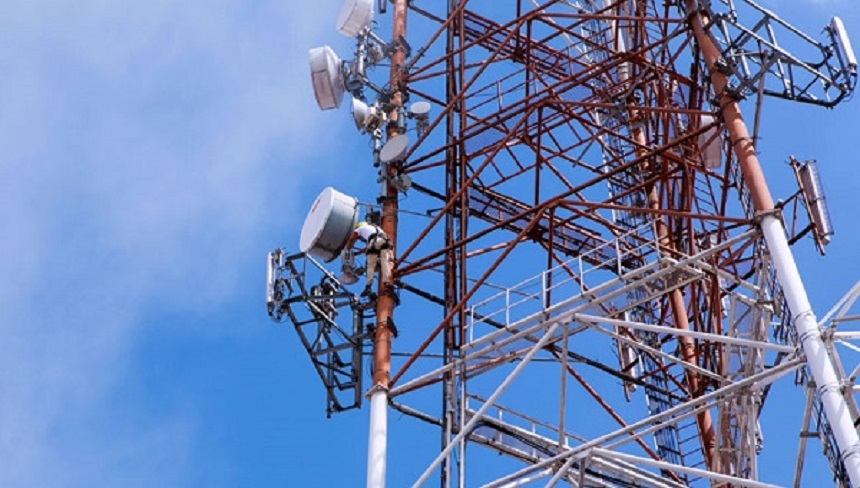
Airtel Africa Sells Tower Assets to Helios for $108m

Published

on

Tower Assets

By Dipo Olowookere

A leading provider of telecommunications and mobile money service, Airtel Africa Plc, says it has sold its tower assets in Madagascar and Malawi to Helios Towers Plc.

In a statement issued on Tuesday, the GSM network provider said the foremost independent telecommunications infrastructure company on the continent is expected to cough out approximately $108 million for the deal.

Airtel Africa operates in 14 African countries and the CEO of the firm, Mr Raghunath Mandava, the sale of the assets is aimed at using what it has to generate more funds for the smooth operations of the organisation.

“With these latest tower transactions, we continue to demonstrate strong execution of our asset monetisation programme.

“Helios Towers has been a partner to our business in some of the OPCOs for many years and we look forward to further expanding this partnership with these new leases as we together seek to improve mobile connectivity and infrastructure across Africa.

“These transactions will also help to improve the mix of our debt and increase its tenor through long term leases, which are largely payable in local currency by our operating entities while reducing foreign currency debt of the group,” he said.

Business Post gathered that the tower portfolios of Airtel Africa in Madagascar and Malawi are 1,229, forming part of the firm’s wireless telecommunications infrastructure network.

The sales, expected to be concluded in the fourth quarter of 2021, are subject to the regulatory approvals of the respective countries, the notice disclosed.

However, Airtel Africa explained that under the terms of the transactions, its subsidiaries will “continue to develop, maintain and operate their equipment on the towers under separate lease arrangements, largely made in local currencies, with [Helios].”

It was added that as part of the deal, Airtel Africa has “agreed to build to suit commitments with the purchaser for an additional 195 sites across Madagascar and Malawi over the three years following completion, for which a further $11 million of consideration is payable.”

Meanwhile, Airtel Africa also said it plans to sell its tower assets (nearly 1,000) in Chad and Gabon to Helios with proceeds to be “used to reduce the group external debt and to invest in network and sales infrastructure in the respective operating countries.” The deal is expected to be finalised before the end of its 2022 fiscal year.

According to Airtel Africa, “The value of the gross assets the subject of the transactions at March 31, 2020, was $93.7 million and the profits before tax for the year to March 31, 2020, attributable to the assets the subject of the transactions are $3.3 million.”


Dipo Olowookere is a journalist based in Nigeria that has passion for reporting business news stories. At his leisure time, he watches football and supports 3SC of Ibadan. Mr Olowookere can be reached via [email protected]

Click to comment

Leave a Reply

Your email address will not be published. Required fields are marked *

Technology

Airtel Nigeria CEO Urges Adoption of Intelligent Technology Platforms

Published

on

Dinesh Balsingh Airtel Nigeria CEO

By Modupe Gbadeyanka

To accelerate Nigeria’s digital future, the chief executive of Airtel Nigeria, Mr Dinesh Balsingh, has advocated the adoption of intelligent technology platforms that drive innovation, productivity, and sustainable economic growth.

According to him, the future lies in intelligent ecosystems powered by artificial intelligence (AI), the Internet of Things (IoT), satellite connectivity, and integrated enterprise solutions.

He submitted that the telecommunications industry is evolving beyond connectivity to become the foundation for enterprise transformation and the country’s digital economy.

“The role of telecommunications has fundamentally changed. Businesses are no longer asking only for connectivity; they want solutions that improve productivity, strengthen security, and accelerate digital transformation. That is the journey Airtel is leading.

“We are evolving from a telecommunications company into a technology partner that helps organisations unlock growth and create long-term value,” Mr Balsingh said at the Lagos Business School (LBS) Breakfast Club on the theme, From Telco to Techno.

Noting that value is no longer measured by the volume of data consumed but by the business outcomes technology delivers, he highlighted a key shift in telecommunications to AI-powered customer protections, industry-specific digital solutions, IoT platforms, and hybrid satellite-terrestrial networks that extend reliable connectivity to underserved communities and remote business locations.

“Technology should do more than connect people. It should protect them, simplify operations, and help businesses make better decisions. Investments are now focused on building smarter, more resilient digital infrastructure that supports organisations across every sector of the economy,” he further stated, adding that sectors, including retail, education, healthcare, government, manufacturing, and oil and gas, increasingly require integrated digital solutions that combine connectivity with cloud services, intelligent networking, surveillance, automation, and data analytics.

Mr Balsingh also urged business leaders to rethink their digital priorities, noting that future competitiveness will depend on how connected, intelligent, secure, automated, and resilient their organisations become.

“The organisations that will lead the next decade are those that invest today in intelligent digital infrastructure. Our customers are no longer buying connectivity alone. They are investing in productivity, intelligence, and digital transformation,” the Airtel Nigeria chief said.

The session, which also featured the IMF Resident Representative for Nigeria, Mr Christian Ebeke, formed part of the Lagos Business School Breakfast Club, a platform that brings together business executives and industry leaders to examine emerging trends shaping the future of enterprise and economic development.

Airtel Nigeria’s participation reinforced its commitment to supporting Nigeria’s digital transformation by enabling businesses with innovative technologies that improve efficiency, strengthen resilience, and unlock new opportunities for growth across the country’s rapidly evolving digital economy.

Continue Reading

Technology

Google Unveils New Agentic AI, Infrastructure Investments

Published

on

Google Cloud Summit in Africa

By Modupe Gbadeyanka

Five major new initiatives focused on bridging the digital divide, expanding subsea connectivity, and positioning Africa to lead in the Agentic Era of Artificial Intelligence (AI) have been unveiled by Google.

These initiatives were introduced by the firm at its inaugural Cloud Summit in Africa at the Sandton Convention Centre in South Africa.

The event, which was opened by South African President Cyril Ramaphosa, was attended by about 3,000 business leaders, developers, public sector leaders, and partners.

Anchored by the central theme, Building for Africa with Google Cloud, the summit builds upon Google’s 2025 launch of its Johannesburg Cloud Region.

“By building robust infrastructure to harness this technology, we are doing more than modernising our economy; we are taking a quantum leap into the future,” Mr Ramaphosa said.

Also speaking, Google’s Senior Vice President for Research, Labs, Technology & Society, Mr James Manyika, said, “The AI opportunity for Africa is significant, and Google is committed to doing our part working with Africans to help Africa realise it. Building on our past commitments, we’re making new investments in critical areas: infrastructure, African-led innovation, and education and skill building.”

On her part, Google Cloud’s Vice President for the UK, Ireland, and Sub-Saharan Africa, Ms Maureen Costello, said, “African enterprises have moved decisively past the initial phases of AI experimentation. Powered by our Johannesburg Cloud Region, which is estimated to contribute $90.6 billion in additional gross economic output and support 314,900 jobs by 2030, leading organisations like Vodacom, Discovery, Pepkor, and Naspers are establishing the essential framework to build and deploy autonomous agents that solve uniquely African challenges in real-world environments.”

It was gathered that the five new initiatives build on Google’s existing $1 billion investment commitment, its recent $37 million AI skills and research funding, and the launch of the AI Community Centre in Accra last year to advance AI in Africa.

Google announced a new connectivity hub (Digital Exchange Port) located in the Eastern Cape, South Africa. It will anchor the country as a strategic international switching point, directly connecting the continent to Australia via the Umoja subsea cable, as well as a new subsea route to India, to support African internet connectivity.

In Ghana, Google AI Futures Fund, Google Research, and leading VC partners are launching Africa’s first applied AI lab. The Google Africa Applied AI Lab pairs African founders with Google researchers and provides early access to Google’s latest AI models. Based at the Accra AI Community Centre (AICC), the Lab supports founders from across the continent in using the latest AI research to address real-world, uniquely African challenges across work, knowledge, creativity, entertainment, and software development – and, in turn, helps support Africa’s first generation of AI-native unicorn startups. Applications are open now and will close on August 31, 2026.

Google is partnering with The Akuna Group to empower underrepresented creators in Africa. Backed by more than $1 million in Google.org funding, the program delivers AI creative education alongside advanced digital tools. The program’s goal is to equip African creators to tell locally rooted stories in new ways and forge professional advancement pathways.

To ensure the next generation is equipped to lead in the AI era, Google’s Economic and Community Development programme and WeThinkCode have committed to building a R3 million digital innovation centre at the George Tabor Campus of South West Gauteng TVET College in Soweto. Once complete, the centre will serve as a scalable skills platform built to reach talent the industry usually overlooks.

On July 21, 2026, Google will open applications for the 2026 South African cohort of its Google for Startups Accelerator. The program will select 15 local startups for an AI-focused curriculum, hands-on mentorship, and non-dilutive, equity-free funding. This fulfils part of Google’s pledge to back 50 African ventures between 2024 and 2028.

Continue Reading

Technology

WhatsApp Introduces Username Feature, Ends Need to Share Phone Numbers

Published

on

WhatsApp privacy

By Adedapo Adesanya

WhatsApp will allow global users to select a username for their account, letting people connect on the platform without having to share their phone number.

WhatsApp, which is owned by Meta Platforms Incorporated, said people can now start reserving a unique username, which should be operational later this year.

WhatsApp, which normally works with phone numbers, is introducing this new feature to allow for some level of privacy when it comes to sharing phone numbers.

Usernames will be launching later this year, in a move to make the communications platform “even more private,” allowing users to keep their phone number concealed from people who are not already in their contacts.

The username launch will be rolling out gradually over the coming months, and users will be notified when the feature is available in their country.

“With over three billion people on WhatsApp, a lot of names overlap, which is why we’re opening reservations early so everyone has the opportunity to select the username that matters to them,” WhatsApp said in its announcement on Monday.

Users can reserve their username by heading to Settings > Account > Username in the latest version of WhatsApp.

Individuals and organisations will have the option to claim their existing Instagram or Facebook handles to help prevent WhatsApp impersonators.

It was reported that usernames for famous figures like celebrities and politicians have already been reserved to prevent them from being claimed. This means that if a person shares a name with a recognised public figure, they will have to create an alternative handle.

To avoid any issues, users can’t browse for people using their usernames, so they will need to know the exact username of a new contact before they can reach out to them.

Business Post understands that if a user already shared their phone number with WhatsApp contacts or group chats, the number will still be visible to them after they’ve enabled the username feature, so these privacy protections only apply to new conversations going forward.

WhatsApp is also introducing an “optional username key” that others will need to know before they can send a message. This is to help users control who can reach them with a WhatsApp username if it’s made public without their consent.

Continue Reading

Trending