

General
Wheat Development Programme Yield Underscores Role of Research and Trials

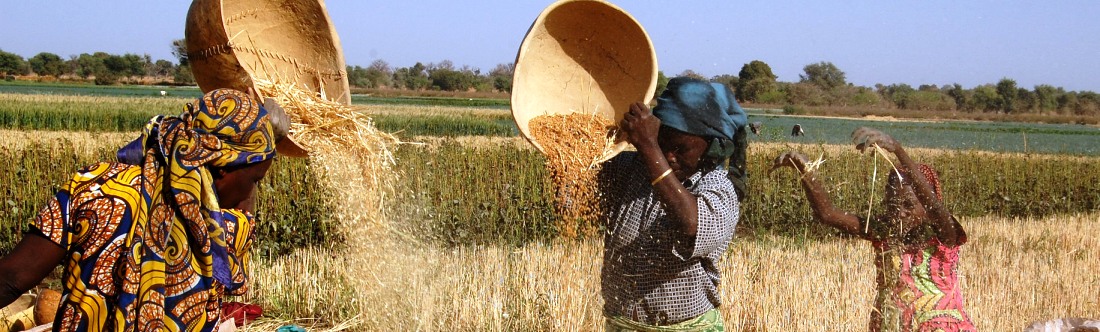
Nigeria’s aspiration for wheat production self-sufficiency is being pursued on diverse fronts by stakeholders in the value chain including government, policymakers, farmers, researchers, scientists, institutions, millers, etc. under different aegis and initiatives.
For the Flour Milling Association of Nigeria (FMAN), that initiative would be its Wheat Development Programme (WDP). Under the auspices of the FMAN WDP, millers have continued to invest over N500 million annually to support local smallholder wheat farmers amongst other activities aimed at boosting local wheat production in Nigeria.
This intervention included a scaled out-grower programme that provided the high-yielding seed for smallholder wheat farmers in the wheat-producing belts of Kano, Jigawa, Bauchi, Borno, Yobe and Zamfara States. It also included a sustained working relationship with the Wheat Farmers Association of Nigeria (WFAN), funding of the Lake Chad Research Institute (LCRI) located in Maiduguri and the expansion of the seed varietal testing and multiplication sites in Kano, Sokoto, Kaduna, and Jigawa States.
The outcome of all of these efforts underscores the efficacy of research and trials, which today is glaring for all to see. According to the latest wheat harvest yield data released for the 2021 harvest season, the average wheat harvest yield across the Wheat Farmer Service Centres established under the WDP in Jigawa, Kebbi and Kano rose from 1 ton to an average of 4 ton per hectare.
Going by the harvest yield data, the aggregate total yield derived from the 15 wheat collection centres located in the wheat farming belts of Northern Nigeria stood at over 800 tons. The leap in wheat yield per hectare in the current harvest season is expected to rise even more to a remarkable aggregate sum when the harvest season rounds off this June 2021.
The current improved harvest yield is in stark contrast to the previous experience recorded in the wheat production value chain in previous years. This is hugely because the tendency of achieving wheat sufficiency in Nigeria has been marred by disinterest and apathy by stakeholders in the agro value chain in the past 3 decades.
Although the country recorded some feat in its wheat development drive between 1987 and 1991, the departure from the programme in the subsequent years wiped off most of the gains derived from the previous development efforts.
However, the pivot to wheat derivative food consumption by Nigeria’s teeming population since 2016, and the oil shock of the same year stimulated renewed interest in developing the wheat production value chain to tap the export potential of the crop and meet the demand for quality, nutritious and affordable foods by the masses.
From inception, there are quite a number of hurdles to sale to be able to raise the local wheat production levels. The hurdles include a traumatizing security issue across the wheat-producing belts, the low access to high-yielding wheat seeds and critical farming inputs, and the dearth of mechanized and modernized farming practices along the wheat farming segment. These hurdles impact the quality, quantity and price of the little wheat produce delivered locally. They have also led to sub-par performance on regional wheat production levels.
The landscape is gradually shifting though. This is because the Federal Ministry of Agriculture and Rural Development (FMARD) and FMAN rose to the challenge to push the country forward in its goal of achieving wheat production self-sufficiency.
Through the quality partnership with various wheat development experts such as the International Center for Agricultural Research in the Dry Areas (ICARDA), the Lake Chad Research Institute (LCRI), the International Maize and Wheat Improvement Centre (CIMMYT), Tractor on the Go and the Wheat Farmers Association of Nigeria (WFAN) amongst others, priority was given to deepening agronomic practices in the wheat production segment.
Smallholder wheat farmers were supplied with quality input to enhance their harvest yields, the level of research was scaled to ensure high-yielding seeds were experimented with and released at improved frequency. Relevant modern infrastructural facilities were also made available on the farmlands. An out-grower scheme was introduced to extend timely loan resources to the wheat smallholders.
The intervention data has been outstanding. In the 2020 and 2021 wheat cultivation and harvesting seasons alone, over 800 wheat farmers benefited from the FMAN’s out-grower scheme. Mechanized harvesting and threshing support were extended to 493 farmers. Wheat seed production has been significantly raised to 80 tons. The scaled seed tonnage would adequately cover 800 hectares when the next cultivation season begins.
Although the financial cost of these huge intervention efforts may be massive, the result is turning out to be impressive, encouraging and makes it worthwhile. The notable outcome and growth in the wheat harvest yield was announced and applauded during an event organized by FMAN to celebrate the smallholder wheat farmers who put in so much effort to deliver the bountiful wheat yield.
Tagged the Wheat Farmers Yield Championship, the event was held in Jigawa State on Wednesday, May 2021. While giving the welcome address at the event, Sarah Huber, the Head of FMAN, said, “Our wheat development efforts at FMAN are beginning to yield remarkable results. A larger percentage of the wheat farmers that participated in our 2020/ 2021 Out-grower programme has been able to increase their wheat yield from 1 ton to 4 ton per hectare”.
She added, “The improved wheat harvest yields can be attributed to the sheer level of hard work put in by wheat farmers and we are proud of their commitment to the goals of achieving local wheat production sufficiency in Nigeria. This new achievement foreshadows what we will be able to achieve together in the next 4 years, considering our scaled level of investment into research, distribution of high yielding seeds, provision of crucial farming inputs and training for the farmers”.
She thanked the farmers for their contributions to the success of the FMAN’s Wheat Development Programme. As part of the wheat post-harvest event, FMAN awarded branded products, fertilizer and lots more to the three best performing farmers from 3 states in the wheat farming belts. Hassan Usaini, a wheat farmer from Jigawa state, was announced as the best wheat farmer for the 2021 harvest season. Nalami Abdulmuminu, a wheat farmer from Kano came second. He was followed by Samaila Hassan, also from Kano.
For his outstanding wheat harvest yield, Hassan Usaini was given an excellence award. A female farmer was also awarded for being the only woman that participated in the 2021 wheat harvest season.
While receiving his award, Hassan Usaini extended gratitude to FMAN for the investment efforts put into ensuring that farmers improve in farming practices and can access high-yielding seeds and quality inputs when due. He remarked that he had acquired enough agronomic training and advice that he would build upon to raise his wheat harvest yields to a better level in subsequent years.
Meanwhile, Ashish Pande, Managing Director of Crown Flour Mill Limited, a subsidiary of Olam, which is a major contributor and key member of FMAN, also spoke about the impressive wheat harvest yield.
He said, “The outstanding 2020/ 2021 wheat harvest yield has further deepened our local wheat sufficiency drive and reinforced our support for a research-based development approach in order to raise the level of local wheat production and achieve the local wheat production sufficiency goal of the government. CFM is committed to scaling the wheat harvest yield results in the coming years and will be unfolding other development initiatives to drive local production levels higher as part of efforts to ensure that Nigerian households continue to have access to more nutritious and affordable wheat derivative food brands such as our Mama Gold semolina brand and the non-sticky Crown Premium Pasta to nourish their families.”
Among the dignitaries that attended the FMAN Wheat Harvest Yield event were Alhaji Rabiu Ali Taura, District Head of Taura in Kano state, Alhaji Abbas Yau, the Permanent Secretary of the Ministry of Agriculture in Jigawa state and Alhaji Rabiu Gwarzo, Vice Chairman of Northern Nigeria Flour Mills Plc.
Given the improved 2021 wheat harvest yield, it can be said that Nigeria is on track to attaining its wheat self-sufficiency target. When fully attained, the coveted non-dependence on imported wheat will significantly reduce the nation’s trade deficit and ensure Nigerians continue to access the highly nutritious semolina, pasta, noodles and pastries products at their preferred prices.
The WDP is a research-based development approach to help raise the level of local wheat production and ultimately achieve the local wheat production sufficiency goal of the government.


