General
Ika Weekly Newspaper and a Catalyst for New Order
By Jerome-Mario Utomi
In the words of Ben Carson, a retired Director of Pediatrics Neurosurgery at John Hopkins Hospital and now a Washington Times Columnist and Fox News contributor, many people use the terms wisdom and knowledge interchangeably.
They are, however, quite different, and have in no way confers the other. Knowledge is familiarity with facts. The more knowledge one has, the more things one is capable of doing, but only with wisdom is one able to discern which of the many things they are capable of doing should be pursued and in what order.
Certainly, the above words/description fittingly captures the clarity of vision and singleness of purpose that set the stage for the advent of Ika Weekly Newspaper, a weekly tabloid published at Agbor in Delta State.
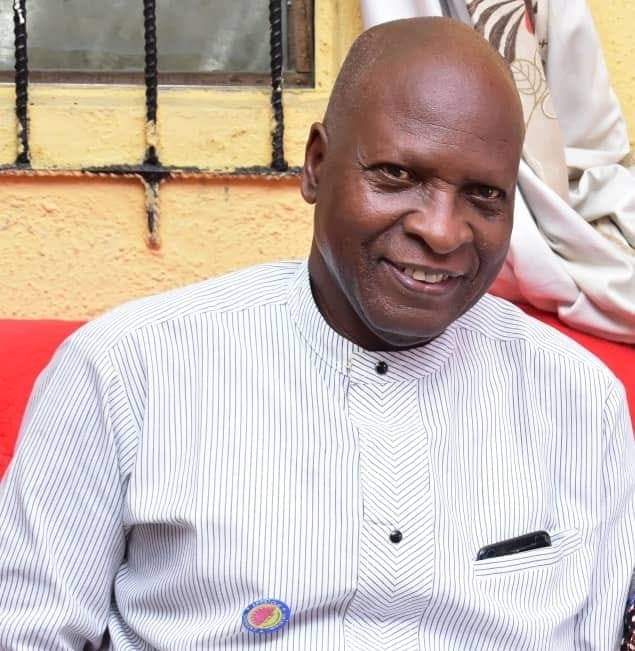
Established in 1989, the Ika Weekly Newspaper which currently operates both print and online, is, for the purpose of clarity, a community newspaper based in Agbor, owned by the Ewuru, Ika South Local Government Area, born publisher, Steven Ekiri-Mekiriuwa Ashien, a former newspaper vendor/bookseller.
Among other objectives, the newspaper was birthed to disseminate across the world news/ information that is Ika nation-specific, act as a vehicle for the propagation and promotion of Ika culture and tradition while recognizing/celebrating Ika sons and daughters that demonstrate uncommon talent in their various fields of endeavours. The newspaper’s interest/attention/focus was neither at war nor in conflict with any state, regional/provisional, or nationally owned newspapers.
While the above information is important as it provides relevant direction for understanding the origin of the newspaper, readers with critical minds may be tempted to put forward the following question; what is the kernel of this piece/ intervention?
Why is the author fixated with a community newspaper and not even a national one, at this critical time when Nigeria as a country is going through the pangs of insecurity and the masses weakened by economic crunch?
One possible answer to the above questions is that aside from the fact that the newspaper’s progress is a reflection of a leader’s search for new fields to increase the wealth, culture and socioeconomic wellbeing of his people, Ika Weekly Newspaper’s odyssey is laced with profound lessons to draw by the generality of mankind.
Media professionals/industry on their part has enough insight to gain from how Ashien’s grappled with the problems of self-reinvention in order to keep the news organization afloat.
Most superficially, similar to the knowledge of history which is useful to the scientist, the economist, or the student of literature or philosophy on the grounds that no science or art is static, the piece in a synoptic manner x-rays the account of problems faced by the publisher in his resolve to build the newspaper house and how he set about solving those problems after pondering on them and the limited options available. To ignore or misstate this account could lead one to wonder in a dilemma.
Let’s take a detailed look at the particulars of the above claim.
Very fundamental is Ashien’s early consciousness/understanding that economic principles of wealth development is very important for the oppressed communities and will go a very long way towards liberating them from the influence of the elite class, even more, is education, he set out to use the media as a vehicle to educate, enlighten and socially influence his people.
Now, this is the first lesson arising from the ‘self-inflicted responsibility’ of educating the people. The task came in double folds. As he (the publisher) bothers to educate the people, he seizes the opportunity to educate himself and exit being educationally disadvantaged.
Says a commentator, the amazing contradiction is that, with little formal education, the man now embodies what it means to be educated. He has read more than the self-acclaimed educated people. His fascination with philosophy has guided his reading habit well. You can be forgiven for doubting his claim of lack of proper education when you consider his proven editing skill and publishing track records. For a man who claims as I remember it, to have started his career as a newspaper vendor in Warri, he has totally reinvented himself and has made his mark in the world of letters.
Before you hastily conclude that things became rosy from this point, wait till you cast a glance at the next paragraph.
But as it is a trademark of many media organizations across the world, 16 weeks of initial publications the newspaper left the newsstand- a factor attributable to macro and uncontrollable reasons.
With the collapse of this effort which Mr Ashien had invested heavily, life again started to become very rough for him. Like many Nigerians at that time, the more he tried his hands on other ventures, the worst it became.
However, as a determined man who always thinks positively coupled with his love for education, he fell back on selling second-hand books, to the extent that he started travelling to Ghana to buy second-hand books which he was hawking from one higher institution in Nigeria to another.
The harder he tried, the more difficult things became.
At this time, Mr Steve Ashien became virtually housebound, lonely, and desolate because finding money to travel out of Agbor became extremely difficult.
But as someone that understands that courage faces fear and masters it while cowardice represses fear, and is thereby mastered by it, he neither allowed himself to be overwhelmed by the uncertainties of life nor lost the will to live.
Rather, on one particular day in 2007, he did something theatrical.
He suddenly decided to go back to Ika Weekly Newspaper publishing. The surprising things about this decision were that at that time, Mr Steve Ashien did not have any money to invest in his dream newspaper publishing.
Though a faith-based man who always put God first in all he does and whose habit of giving/generosity, many characterized as legendary. That notwithstanding, people who knew about his intention gave him neither the needed support nor a chance to succeed. They were sceptical about how possible it would be for him to do magic this time around.
But as native wisdom proclaims, ‘the protestation of the innocent chick does not prevent or stall the sacrifice. If anything, the protestations enriched the sacrifice and hasten its value and efficacy.
Likewise, the flood of oppositions did not stop Mr Steve Ashien from plunging into Ika Weekly Newspaper publication.
Rather, such doubt and oppositions acted as a tonic. He prayed to God for direction and held on to honesty as his hardest currency while working night and day, sleeping on the floor of his office in order to ensure that the Newspaper hits the newsstand.
As luck will have it, help however came from a few people who were ready to report, highlight, and analyse the current affairs/events and topical issues happening in Ika land that was of interest to the people, especially in the political and community leadership.
He promoted citizens/community journalism.
Clearly, a bracing account particularly as the newspaper has since then, remained uninterrupted at the newsstand for over years with workers’ salaries promptly and dutifully paid. Not even the dreaded outbreak of the coronavirus pandemic which disrupted millions of businesses across the world could halt its publication.
Also alluring is the awareness that the organization has grown into other areas of interest. For example, it established the St. Steven’s Library of congress- a resource centre for research and documentation of critical information, and study of Ika history, people, culture, and tradition. However, this library is no longer functional but the knowledge impacted on the general public is still cherished to date.
Despite these achievements, Ashien has refused to be seen. Instead, he opts to function like a cameraman who records events/successes without getting noticed.
But there exists a difference, and that is the fact that even in his ‘hiding’, he remains not just a shining star but a source of inspiration to the youths, a good ambassador of the Ika nation, and most importantly, a Catalyst for New Order. For its part, the newspaper has become a leading light reputed for filling the information gap in Ika Land.
Jerome-Mario Utomi is the Programme Coordinator (Media and Public Policy), Social and Economic Justice Advocacy (SEJA), Lagos. He could be reached via [email protected]/08032725374
General
QNET’s Global Reach in 100+ Countries: What International Access Means for Local Distributors
Global scale means market access and international supply chains. For individual distributors in direct selling, it can shape everything from product availability to income stability and long-term opportunity.
QNET, the multinational wellness and lifestyle direct selling company, positions its business model around that idea: connecting locally based independent distributors to an international operating platform. With activity spanning more than 100 countries, the company sits within a direct selling industry that, according to the World Federation of Direct Selling Associations (WFDSA), has stabilized after several relatively volatile post-pandemic years.
Global Reach Within a Stabilizing Industry
The WFDSA’s latest global report estimates worldwide direct selling retail sales at roughly $163.9 billion in 2024, essentially flat year over year. That flat performance, however, masks gradual improvement beneath the surface. Nearly half of reporting markets showed growth in 2024, and average market growth rates rebounded to positive territory.
The report estimates more than 104 million independent sales representatives globally in 2024, a figure that has remained largely stable year over year.
This stabilization sets a backdrop for companies like QNET. A global footprint is no longer about rapid expansion alone; it is increasingly tied to resilience: operating across regions with different economic cycles, consumer behaviors, and growth trajectories.
For distributors, this matters because opportunities extend beyond individual effort. They are often shaped by the health of the company’s broader channel and product reach.
A Platform Designed for Distributed Entrepreneurship
QNET’s model centers on local execution supported by centralized infrastructure. Products—ranging from nutritional supplements and wellness devices to home and lifestyle solutions—are sold through the company’s proprietary e-commerce platform. Independent distributors do not manage warehouses, shipment logistics, or customer service systems.
As Ramya Chandrasekaran, who heads communications at QNET, explained in a recent interview, the company views direct selling as a form of accessible “micro-entrepreneurship.” The idea is to reduce the operational burden typically associated with starting a business, allowing distributors to focus on product education, customer relationships, and market development.
Why Global Scale Changes the Distributor Equation
One practical benefit of international reach is product continuity. WFDSA data shows that wellness products account for roughly 29% of global direct selling sales, making it the largest category worldwide. In the Asia-Pacific region, the largest direct selling region by sales, wellness represents more than 40% of total category share.
QNET’s emphasis on wellness and lifestyle products places distributors in line with the strongest demand segments globally. Instead of relying on narrow local trends, distributors operate within product categories that have shown consistent global interest.
International scale also supports consistency in training, compensation structures, and digital tools. Distributors in different countries access identical back-end systems, tracking referrals, commissions, and orders through the same platform. This standardization reduces friction and uncertainty, particularly for individuals operating in markets where informal commerce is common.
Workforce Shifts
The WFDSA’s report highlights notable shifts in the global direct selling workforce. Women continue to make up more than 70% of participants worldwide, and representation among individuals aged 35 to 54 remains the largest cohort.
Independent Distributors increasingly value flexibility, long-term viability, and support systems that allow them to operate sustainably rather than aggressively scale. QNET’s emphasis on digital access, centralized operations, and gradual business building reflects those priorities.
For many participants, especially those balancing work with caregiving or other responsibilities, direct selling infrastructure offers a way to stay engaged at their own pace.
Training, Exposure, and Cross-Market Learning
QNET’s international conventions and training programs connect distributors across regions, creating informal networks for peer learning. Events that draw participants from dozens of countries expose distributors to varied approaches to sales, customer engagement, and market adaptation.
This mirrors one of WFDSA’s broader conclusions: direct selling increasingly functions as a global learning ecosystem, with companies providing tools and education that help individuals navigate uncertain economic conditions.
For distributors, exposure to cross-border experiences can recalibrate expectations, reinforcing that success often comes from steady engagement rather than rapid recruitment or short-term activity.
International Access, Interpreted Locally
Despite its global scale, QNET’s business ultimately plays out in local communities. Distributors adapt messaging around wellness, home quality, and lifestyle enhancement to cultural norms and household priorities. The international platform provides reach and structure, but relevance is built locally.
That balance, global systems supporting local relationships, defines much of modern direct selling. The WFDSA describes the industry not as a single growth story, but as a framework that can scale proportionally with economic conditions across regions.
For QNET distributors, international presence does not guarantee income or uniform outcomes. What it offers is access: to resilient product categories, standardized systems, training resources, and a global marketplace that extends beyond any single region. For local distributors navigating today’s uncertain global economic environment, that is an important foundation to maintain.
General
FCCPC Unseals Ikeja Electric Headquarters
By Adedapo Adesanya
The Federal Competition and Consumer Protection Commission (FCCPC) has unsealed the headquarters of Ikeja Electric Plc in the Lagos State capital after a week under lock and key.
According to a statement on Friday, the electricity distribution company committed to a binding undertaking to comply with the remedial process following consumer rights violations.
The statement signed by Mr Ondaje Ijagwu, Director of Corporate Affairs at the commission, Ikeja Electric undertook to resolve all consumer complaints referred to it by the FCCPC within agreed timelines
The headquarters was earlier sealed on December 11, 2025, because Ikeja Electric allegedly failed to comply with a directive by the Nigerian Electricity Regulatory Commission (NERC) to unbundle a Maximum Demand account into 20 individual accounts for a customer who had been without power for over two and half years.
The FCCPC noted that following the resolution, any breach of the undertaking would expose it to renewed and escalated enforcement action under the Federal Competition and Consumer Protection Act.
Reacting, the Executive Vice Chairman and Chief Executive Officer of the FCCPC, Mr Tunji Bello, said the Commission’s intervention was necessary to enforce the provisions of the FCCPA (2018).
“Our responsibility is to ensure that consumers are treated fairly and that service providers comply with lawful decisions and directives. Enforcement is not an end in itself. Where compliance is achieved and credible commitments are made, the Commission will respond appropriately,” he said.
Clarifying further, Mr Bello said the outcome reflects the commission’s balanced approach to regulation.
“We intervene decisively where consumer harm persists, and we de-escalate where enforceable compliance is secured. What remains constant is our duty to protect consumers and uphold regulatory accountability,” he said.
General
All On’s Clean Energy Access Transforms Over One Million Lives
By Modupe Gbadeyanka
The decision by a leading impact investment company focused on expanding clean energy access, All On, to support over 50 clean energy businesses and provide grants and technical assistance to more than 80 enterprises in Nigeria is already yielding positive results.
This is because the organisation’s Impact Evaluation Report indicated that more than one million lives have been transformed through clean energy access.
The report covered from 2018 t0 2024 and it was discovered that the interventions of All On enabled the connection of over 230,000 households, businesses, and public facilities to reliable energy solutions, while strengthening the operational capacity of energy providers and improving affordability and service reliability for end users.
Prior to the commencement of All On’s operations in 2016, nearly half of Nigeria’s population lacked access to electricity, and the sector faced an estimated 92 per cent annual funding gap.
In response, the group adopted a bold, risk-tolerant strategy—deploying catalytic capital, innovative financing instruments, and ecosystem-building initiatives to unlock private sector participation and drive progress toward universal energy access.
Central to these achievements is All On’s holistic support model, which combines rigorous, tailored due diligence, deep sector expertise, and active ecosystem engagement.
This approach has positioned All On as a trusted partner capable of delivering both commercial viability and systemic impact.
Flagship initiatives such as the Demand Aggregation for Renewable Technology (DART) programme have further amplified results by reducing procurement costs for supported businesses by up to 50 per cent, enabling developers to scale faster and pass cost savings on to consumers due to access to reliable, affordable, and sustainable energy solutions.
In the report, it was revealed that half of supported households reported improved air quality, enhanced safety, and reduced noise pollution, contributing to better health outcomes and improved quality of life, alongside measurable environmental benefits.
“This report confirms that our approach is delivering real results. By combining patient capital, technical assistance, and ecosystem support, we are enabling scalable and sustainable energy solutions for Nigeria’s unserved and underserved communities,” the chief executive of All On, Ms Caroline Eboumbou.
The company plans plans to scale proven models, strengthen local capacity, and expand its reach—particularly in underserved regions such as the Niger Delta.
“While the progress to date is encouraging, our work is far from done. As we look toward 2030, we remain committed to deepening our impact and creating even more meaningful connections across Nigeria,” Ms Eboumbou added.
-
Feature/OPED6 years agoDavos was Different this year
-
Travel/Tourism9 years ago
Lagos Seals Western Lodge Hotel In Ikorodu
-
Showbiz3 years agoEstranged Lover Releases Videos of Empress Njamah Bathing
-
Banking7 years agoSort Codes of GTBank Branches in Nigeria
-
Economy3 years agoSubsidy Removal: CNG at N130 Per Litre Cheaper Than Petrol—IPMAN
-
Banking3 years agoFirst Bank Announces Planned Downtime
-
Banking3 years agoSort Codes of UBA Branches in Nigeria
-
Sports3 years agoHighest Paid Nigerian Footballer – How Much Do Nigerian Footballers Earn