Connect with us

Economy

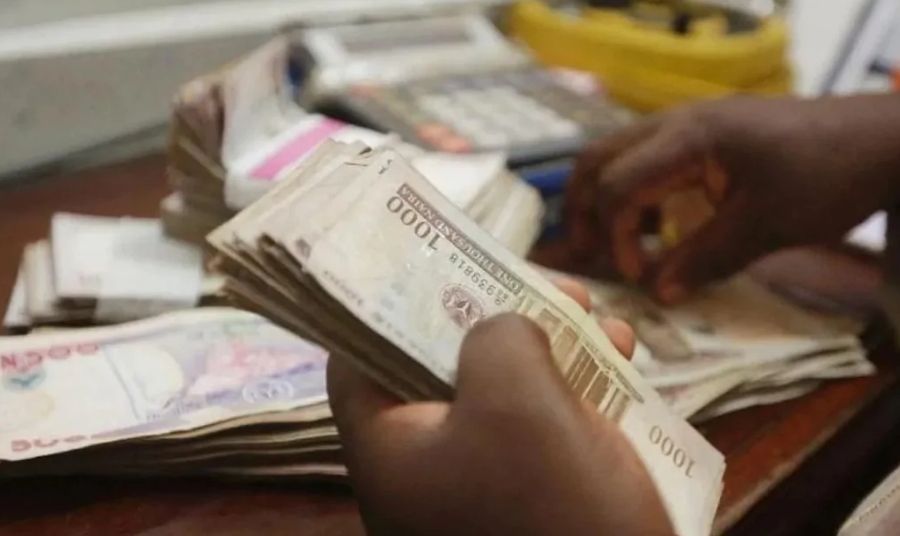
Naira Falls to N505/$1 at Black Market After CBN Action

Published

on

30-Day Treasury Bills Yield

By Adedapo Adesanya

The unregulated segment of the foreign exchange (forex) market reacted to the decision of the Central Bank of Nigeria (CBN) to discontinue the sale of FX to Bureaux De Change (BDC) operators from Tuesday.

At the end of its two-day Monetary Policy Committee (MPC) meeting in Abuja yesterday, the CBN Governor, Mr Godwin Emefiele, surprisingly announced this action.

This put pressure on the Naira as fresh worries about the disruption of supplies to the market weighed in, causing the Nigerian currency to depreciate against the US Dollar at the black market by N1 to N505/$1 compared with the previous day’s N504/$1.

When a similar action was carried out five years ago, the Naira faced a huge depreciation and this move by the lender has heightened the possibility of history repeating itself.

According to Mr Emefiele, the central bank would only supply forex to banks henceforth, a decision that only balances the supply side and could see demand pressure push the exchange rate higher. This is because many will have to shift to other unregulated channels to source for forex.

Analysts had predicted that this scenario will play out for a while until the apex bank is able to normalise the situation through regular FX liquidity to the official channels it wants customers to access the hard currencies.

At the same parallel market yesterday, the local currency, however, remained flat against the Pound Sterling and the Euro, trading at N703/£1 and N592/€1 respectively.

A look at the Investors and Exchange (I&E) window showed that the Naira also depreciated against the greenback by 17 kobo or 0.04 per cent to sell for N411.67/$1 in contrast to the preceding session’s N411.50/$1.

Though the turnover remained slightly high, the value of transactions during the session depreciated by 17.1 per cent or $23.82 million to $115.67 million from $139.49 million recorded on Monday.

But at the interbank segment of the market, which is the official exchange rate window for the country, the value of the Naira to the Dollar remained flat at N410.16/$1 at the close of business on Tuesday.

As for the digital currency market, investors are beginning to show confidence in the assets as four of the seven tokens tracked by Business Post closed positive.

This followed the positive comments by an influential investor, Mr Elon Musk of Tesla, about one of the cryptocurrencies, Bitcoin (BTC), which gained 8.5 per cent during the session to trade at N20,212,265.85.

Ripple (XRP) appreciated by 3.2 per cent to trade at N324.99, Dash (DASH) went up by 2.3 per cent to sell at N76,000.00, while Tron (TRX) improved by 0.9 per cent to N30.52.

On the flip side, Ethereum (ETH) went down by 2.5 per cent to close at N1,136,380.00, Litecoin (LTC) dropped 0.9 per cent to trade at N67,438.98, while the US Dollar Tether (USDT) slumped by 0.7 per cent to N513.99.


Adedapo Adesanya is a journalist, polymath, and connoisseur of everything art. When he is not writing, he has his nose buried in one of the many books or articles he has bookmarked or simply listening to good music with a bottle of beer or wine. He supports the greatest club in the world, Manchester United F.C.

1 Comment

Leave a Reply

Your email address will not be published. Required fields are marked *

Economy

Crude Oil Plunges 7% as Trump Pauses Attack on Iran

Published

on

crude oil wells

By Adedapo Adesanya

Crude oil declined by about 7 per cent on Monday after US President Donald ​Trump held off on a fresh attack on Iran in the hope of sealing a quick deal that could boost oil supplies from the ‌Gulf.

Brent futures fell by $6.35 or 7.0 per cent to settle at $83.77 a barrel, while the US West Texas Intermediate (WTI) crude depreciated by $4.33 or 5.1 per cent to trade at $80.34 per barrel.

Over the weekend, President Trump repeated a pattern that has ⁠emerged throughout the past five months: announcing plans for “massive attacks” on Iran, only to cancel them at the last minute.

The US President on Monday said talks with Iran “are going on ​right now”, adding that Iran faced “decapitation” if Tehran did not agree to a pact to end the conflict.

However, Iran said there were no talks underway with the US and no plans for any meetings, contradicting the American leader who had cited ​talks he said would take place that afternoon as justification for calling off attacks.

Iran’s Foreign Ministry said it also had no plans to host foreign delegations or send negotiators abroad in the coming days.

Despite this, the renewed hopes for diplomacy in the US-Iran conflict eased some concerns.

Six Saudi-flagged supertankers have changed course in the Gulf of Aden in recent days and are heading to southern Africa following threats by the Iran-backed Houthi movement in Yemen to target Saudi shipping.

However, over the weekend, two tankers laden with Saudi oil crossed the Bab el-Mandeb Strait between the Red Sea and the Gulf of Aden, while traffic in the Strait of Hormuz between Iran and Oman slowed following reports of vessel ​attacks.

Russia said on Monday it was stepping up protection of ships in the Azov-Black ​Sea basin while also ⁠developing alternative cargo routes, in a move that follows a sharp escalation of attacks at sea by both sides in the war in Ukraine.

The Organisation of the Petroleum Exporting Countries and its allies (OPEC) approved an oil production quota increase on Sunday of around 188,000 barrels per day from September.

This means Saudi ⁠Arabia, Russia, Iraq, Kuwait, Algeria, Kazakhstan and Oman have finished the phased rollback of a 1.65 million barrels per day supply cut ​originally agreed in 2023, when the group still included the United Arab Emirates (UAE).

Due to export disruptions from the Gulf, Russia ​and Kazakhstan caused by the Iran and Ukraine wars, successive monthly OPEC+ hikes over most of this year have remained largely ​on paper with little impact on the market.

Continue Reading

Economy

Nigerian Private Sector’s Stanbic IBTC PMI for July Eases to 52.5 Points

Published

on

Nigerian Private Sector Stanbic IBTC PMI

By Aduragbemi Omiyale

The Stanbic IBTC Bank Nigeria Purchasing Managers’ Index (PMI) for the Nigerian private sector in July 2026 contracted to 52.5 points from 53.4 points in June 2026, a statement made available to Business Post has shown.

This occurred despite the business environment sustaining its growth last month, with an increase in new orders experienced, as inflationary pressures softened, and output and employment modestly rising.

The Head of Equity Research West Africa at Stanbic IBTC Bank, Mr Muyiwa Oni, said the PMI indicated that the private sector recorded its slowest since March 2026, as businesses also increased their input purchasing activity to keep up with current demand requirements and prepare for future workloads.

“Nigerian businesses reported improved customer demand in July while better pricing and new product launches also helped them to capture new orders arising from the increase in demand. These factors helped to keep the private sector activity in an expansionary territory, although this moderated when compared to June,” he was quoted as saying.

It was stated that while input costs increased at their slowest pace in five months, panellists reported higher costs for fuel and raw materials. Selling prices also softened in line with the picture for input costs in July.

Headline inflation eased slightly to 15.91 per cent y/y in June from 15.93 per cent y/y in May, snapping three consecutive months of price increases.

Although July inflation is likely to be higher m/m, it is expected to print lower, likely at 15.72 per cent y/y, primarily driven by favourable base effects from the corresponding period of last year, because there are no expectations of the magnitude of m/m inflation witnessed in July 2025 (1.99 per cent) to materialise this year.

“We retain our 2026 growth forecasts at 4.1 per cent as we see the oil sector growing by 3.45 per cent y/y in 2026, from 8.50 per cent y/y in 2025, while the non-oil sector is likely to grow by 4.11 per cent y/y, from 3.71 per cent y/y in 2025.

“The risks to our outlook include country-wide insecurity which may constrain food production, exchange rate pressures resurfacing, extreme-weather related conditions and higher fertiliser prices impacting crop yield, and a volatile global environment which may affect sentiment and constrain capital flows,” Mr Oni noted.

Continue Reading

Economy

Sahara Upstream Ramps Up OML 18 Exports with New Tanker

Published

on

Sahara Upstream

By Adedapo Adesanya

Sahara Upstream, a Nigeria-focused crude producer, has deployed a new 380,000-barrel tanker to boost exports from the OML 18 block as part of a wider push by domestic operators to invest in infrastructure and lift output and exports for Africa’s biggest oil producer.

The MT D ​Adesanya, which can hold more than 62,000 ​cubic metres of crude, will operate alongside ⁠the MT D Bayero, receiving crude from ​shuttle vessels at Bonny Anchorage, one of Nigeria’s main ​crude export hubs, before transferring it to the FSO Cawthorne storage facility.

Sahara said the tanker would help cut turnaround ​times, currently about 30 to 48 hours, ​and support a planned 50 per cent increase in exports from the ‌block’s current level of about 950,000 barrels per month.

The block currently produces about 36,000 barrels per day, according to data from the Nigerian Upstream Petroleum Regulatory Commission (NUPRC), ​with Sahara targeting ​output of ⁠60,000 barrels per day.

OML 18 is one of the Niger Delta’s oldest producing assets. ​It began production in 1970 and ​contains ⁠an estimated 1.5 billion barrels of oil equivalent in reserves.

Shell, Total and Eni sold their combined ⁠interests ​to Eroton in 2015 as ​part of a broader shift toward domestic ownership in Nigeria’s ​upstream sector.

This development comes as Sahara Upstream is deepening its exploration and production footprint through Asharami Energy Limited (AEL), its upstream E&P business, which says it is targeting 350,000 barrels of oil per day by 2030 through its subsidiary, Enageed Resources Limited (ERL).

The growth target comes as AEL also marks a major safety milestone, achieving 6 million Lost Time Injury (LTI)-free man-hours in its OML-148 operations — reinforcing the company’s commitment to operational excellence and safety leadership.

According to Asharami Energy, the milestone reflects its ability to execute complex operations safely, in line with Sahara’s Beyond XXX vision, which builds on the group’s 30-year legacy of responsible enterprise while marking its next chapter of impact, innovation, and sustainable growth.

The developments position Sahara Upstream and its subsidiaries among the domestic operators driving increased investment in Nigeria’s oil and gas infrastructure, as the group works to scale up production and exports for Africa’s biggest oil producer.

Continue Reading