

General
Nigeria’s Security, Economic Problems Self-Inflicted—General Ayoola

By Aduragbemi Omiyale
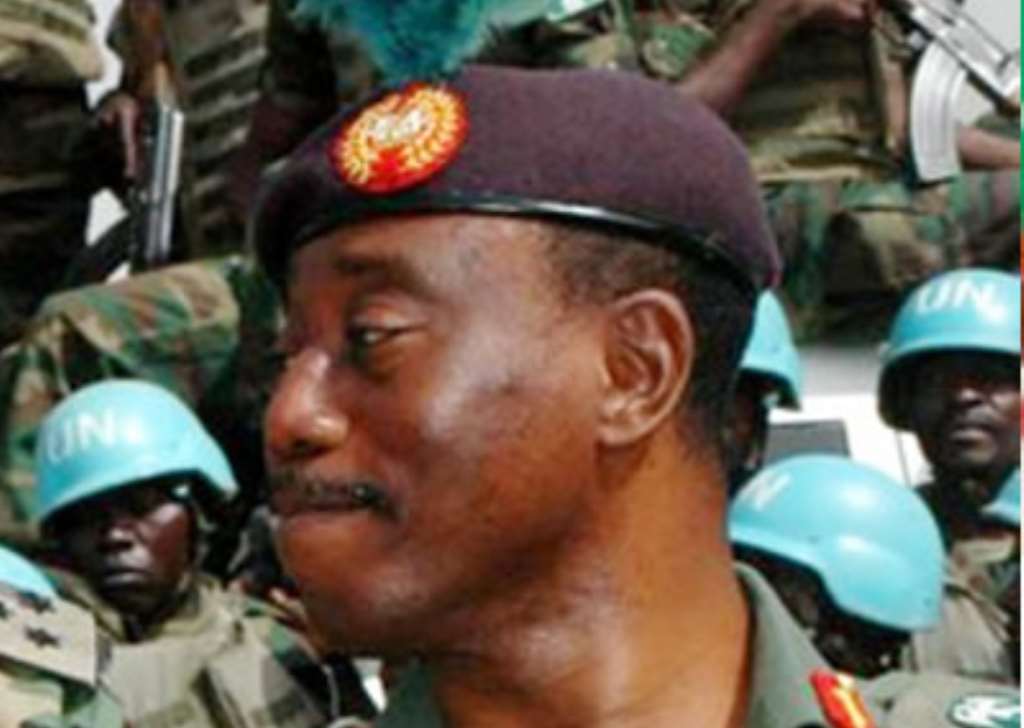
A retired Major-General in the Nigerian Army, Mr Henry Ayoola, has said the security and economic problems facing Nigeria are purely self-inflicted, noting that it was time the citizens took action rather than depending on prayers alone.
In his keynote address at the inauguration of the Africa Kingdom Business Forum Institute (AKBF-I), he recommended an “all citizens approach” to end insecurity, urging Nigerians to explore their rights to self-defence.
Mr Ayoola, while in active service, was the Chief of Defence Research and Development of the Nigerian Army and the commander of Special Task Force (STF) Operation Safe Haven in Plateau State.
At the event held in Abuja over the weekend, he said, “Yes, the security challenges! Well, one thing to say upfront is that our problems, not only security, simply put, are self-inflicted.
“We have been living like nobody is really interested in solving the problems because it’s not for lack of what to do. It’s not for lack of what to do, advice, ideas, or strategies, it just appears as this is the Eldorado some people know for Nigeria. This is our golden era, so we should allow it last.
“That’s what I see. I don’t see any palpable attempt to solve a problem. Like I said, one can easily conclude that it is self-inflicted problem.
“Not only because I know the genesis of those problems, having been a player in it myself but I think Nigerians themselves are too timid, too docile that we will just allow anything goes.
“We take everything and anything. At what point are we going to get sufficiently aroused as to rise up and solve our problems ourselves?
“I don’t know. What else do we want? Until half of us are dead or what?
“For me, self-defence, like I said, is a divine right, it’s a universal right – Article 51 of the UN charter talks about the inherent right of the individual and the collective self-defence. So, if somebody is threatening my life, I don’t have to wait until he has killed me before I respond.
“There is pre-emptive defence, which is part of self-defence. So, the ball is in our court really. Even the government is overwhelmed. So, it’s gone beyond them. It should be an all-citizens approach when everybody is ready to put an end to this nonsense we’re going through.”
Another speaker at the programme, Mr Sam Amadi, a former Chairman of the Nigerian Electricity Regulatory Commission (NERC), said the major issue facing the country was the leadership crisis.
The former Head of the Department of International Law and Jurisprudence at the Baze University, Abuja harped on the need to redefine the process through which leaders emerge in the country.
“Leadership presupposes a common vision. That means people have a vision of where they are going; they have a common understanding of the problems of Nigeria.
“Unfortunately, we have never had a common vision and a common understanding of our problem.
“Even before colonialism, our people were disparate people, different people and the colonial authorities put us together and never cared about our well-being. They put us together for their own good.
“When they left, our leaders were trapped into ethnic competition and that also led to why they didn’t build a common consensus.
“Today in America they talk of the American dream because different immigrants came together and had some degree of what America represents for them. That is the first problem of leadership in Nigeria.
“The second is: how do you recruit leaders? How do your leaders come up?
“They don’t need to be first class people but they are leaders, people who have gone through a process. If you look at countries all over the world: China, America, or Britain or any other places in the world, you see that leaders rise through a process that give those leaders some common vision about their country and some have some experience about solving problems.
“In Nigerian democracy today, leadership can emerge from anywhere. A mechanic who is doing his work can this year become Senator because the Governor likes him. So, the tide changes and people just emerge from nowhere. That’s another problem.
“The third issue is a leadership task, what should leaders be doing? So, leaders diagnose the problem, they pay attention. Why is there unemployment? In paying attention, they find solutions,” he said.
Speaking further, the visiting Professor at the Emerald Energy Institute at the University of Port Harcourt noted that, “The fourth become implementation of that solution. If it’s a leadership that is looking for ethnicism, you won’t implement it well because some of the solutions may require you disrupting some dominance if you take some actions.
“For example, when we were building the power sector, we knew that the best thing was for us to take the power to Niger Delta where we have all the gas. But because we are a country that is consumed by geographical competition, they can’t take it to the South-South.
“We have to take some to the North Central and so on. But those ones don’t have glass again. We have to spend a lot of money to carry the gas to those places.
“That’s a simple story that tells you that there is a dysfunction in leadership because leaders are not solving problems based on the based ways of solving them. They are solving problems in a way that will align with their own strategic ethnic geopolitical needs.
“So, the Nigerian crisis is a crisis of leadership. But we should start first with a vision – what we want to be as a people, understanding our problems – where are we in history? Where are we now? Why are we trapped?
“That is why we talk about restructuring; people don’t want to hear about restructuring. It is not about changing geography or changing who collects what money. It is about changing the underlying factors that are creating the problems we want to deal with.
“So, if you don’t want to solve those underlying structural problems and you keep preaching “we’re going to be a great nation” we have been preaching before you became President, the present President is doing his best preaching. Later, another person will come and start preaching.
“They blame the Nigerian people, the youths are not working hard, the Nigerian people are divided. That’s what they are answering because we don’t have leaders who have knowledge about the problem and the process of solving those problems and have the will to execute.
“Like I said today, you need humility to say that you don’t know and seek for answers to “why is this happening? Why is the economy like this?
“Look at Nigeria, a country that is spending 89% of its revenue serving debts, not paying for them and you keep borrowing. You dedicate 40% of revenue to seek for oil where you know that you may not find oil at a time you know that oil is a wasting asset. The future is to invest in human beings to create wealth.
“So, how can such self-deception lead to leadership growth? How can it lead to country prosperity?
“We’re trapped because we leaders who not even leaders because they neither have the priestly profile of humility and compassion nor the kingly profile of effective execution. They don’t know the problem, they don’t care about the people and they cannot even execute the solutions well.”
However, Mr Amadi expressed optimism that their strategic principles will change the direction of leadership in the country, pointing out that the birth of the institute “is a right intervention and that is what I have been saying that for years.
“They are now going about, bringing people together to show them why things are not working and should them patterns that can work and building in their understanding, knowledge and ethics of leadership.
“So, we’re not talking about governors. We’re are talking about leaders in ministries, parastatals, agencies, the private sector, youth platforms, and so on.
“Leadership is diverse. What they are doing now is the right way; it’s to solve a problem by identifying the problem and providing tailor-made solutions that deal with that problem.
“And that is what this platform is doing and it’s long overdue and the people behind it are people who have built experience over the years trying to solve problems. So, we have hope that it will succeed.”
Other speakers at the occasion like the Continental Chairman Africa Kingdom Business Forum (AKBF), Mr Steve Olumuyina as well as Mr Emeka Nwankpa, agreed that prayers were not enough in dealing with the several challenges of Nigeria.


