Connect with us

General

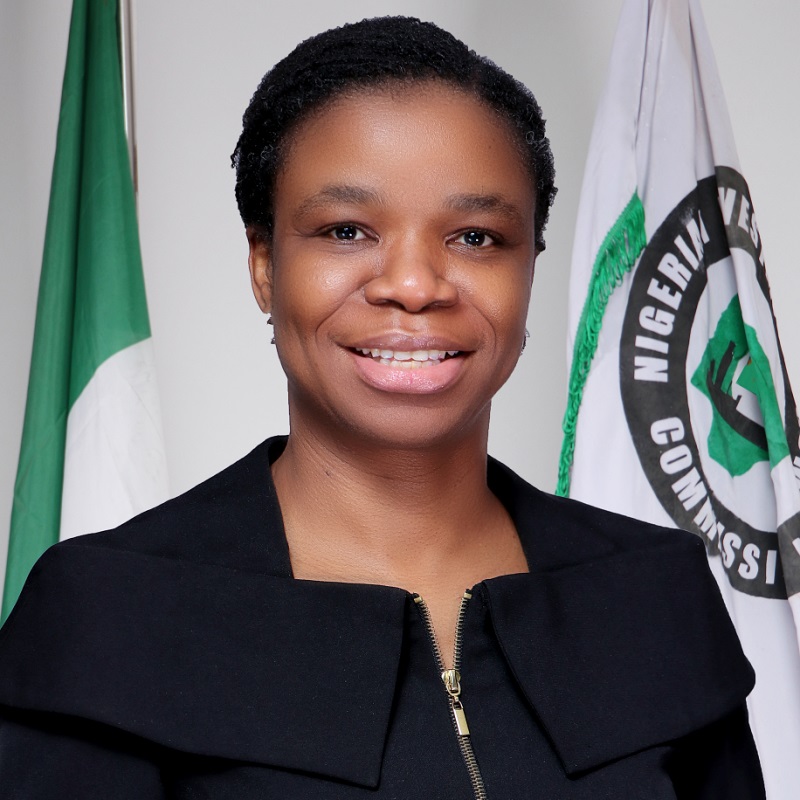
Sadiku Hails NIPC Performance, Transparency in Five Years

Published

on

Yewande Sadiku NIPC

By Adedapo Adesanya

The Chief Executive Officer (CEO) of the Nigerian Investment Promotion Commission (NIPC), Ms Yewande Sadiku, has said the commission in the last five years performed beyond expectation just as it was more accountable to Nigerians than at any other period as reflected in its publishing of quarterly reports and regular investment announcements.

Ms Sadiku disclosed this while featuring on the Arise TV Xchange program, where she stated that her administration had laid down the foundation of investment promotion in Nigeria which she expects will be sustained.

She stressed that the NIPC under her watch entrenched transparency in the pioneer status incentive process for the country.

The outgoing NIPC chief said the Ministries, Departments, and Agencies (MDAs) ensured public disclosure of financial, legal procurement and operational information.

In terms of revenue generation, she said the internally generated revenue of the NIPC increased from N296 million in 2016 to N3 billion in 2020.

The actual IGR realized in the country within the period 2016 to the first half of 2021 was a total of N11.9 billion, while N5.8 billion (49 per cent of the total IGR) has been paid by the NIPC to the consolidated revenue fund of the federation.

Speaking on reforms, she highlighted that the NIPC had reviewed the country’s bilateral investment treaties to focus on responsible, inclusive, balanced and sustainable investments.

She also added that the NIPC encouraged proactive subnational investment promotion across the 36 states of the Federation.

Speaking further, she observed that there were significant improvements in the NIPC, in the following areas: capacity building for NIPC staff which improved significantly; leveraging technology to improve the accessibility to NIPC and its activities; and engaging quality experts as consultants in achieving key investment deals.

She noted that the NIPC serves the public good and should not be regarded as a revenue-generating agency.

Ms Sadiku will be stepping down as Executive Secretary/CEO of the Nigeria Investment Promotion Commission (NIPC) later this month and has been hailed for her reforms and advocacy for collaboration between MDAs to attract investments in Nigeria.

Her tenure was recently faced with an alleged scandal as she was said to have been invited by the Economic and Financial Crimes Commission (EFCC) on August 9, 2021, over issues that have been investigated by other anti-corruption agencies, none of whom has so far indicated that she has any case to answer.


Adedapo Adesanya is a journalist, polymath, and connoisseur of everything art. When he is not writing, he has his nose buried in one of the many books or articles he has bookmarked or simply listening to good music with a bottle of beer or wine. He supports the greatest club in the world, Manchester United F.C.

Click to comment

Leave a Reply

Your email address will not be published. Required fields are marked *

General

NERC Inaugurates KAEDC Interim Board

Published

on

KAEDC Interim board

By Modupe Gbadeyanka

The new interim board of the Kaduna Electricity Distribution Company (KAEDC) has been inaugurated by the Nigerian Electricity Regulatory Commission (NERC).

The body was inaugurated by the regulator on Wednesday, August 19, 2026, pursuant to its intervention order issued recently.

NERC had, through Order No. NERC/2026/08, dissolved the board of directors of KAEDC following repeated failures to meet market obligations and other prescribed performance indices.

It subsequently constituted a five-member interim board of Special Directors, chaired by Mr Abdullahi Garba, for an initial period of one year, alongside an interim administrator, Mr Abubakar Umar Hashidu, appointed for an initial six-month period, to drive the reset of the distribution company.

The new team has been tasked to restore sanity into the energy distribution firm and deliver quality service to consumers within its franchise area.

It was gathered that shortly after the inauguration at midweek, a joint delegation of NERC, the newly inaugurated board, KAEDC’s management and staff paid a courtesy visit to the headquarters of One Division of the Nigerian Army in Kaduna.

At the military facility, the delegation was received by the General Officer Commanding and senior officers of the Division.

Thereafter, the team visited the Nigerian Defence Academy in Kaduna, where the Commandant and principal officers of the military institution received them with open arms.

At both visits, discussions centred on ways to collaborate for better efficiency.

Continue Reading

General

Eyesan Laments Decline in Nigeria’s Technical Talent Pool in Energy Sector

Published

on

oritsemeyiwa Eyesan

By Adedapo Adesanya

The chief executive of the Nigerian Upstream Petroleum Regulatory Commission (NUPRC), Mrs Oritsemeyiwa Eyesan, has lamented the decline in Nigeria’s technical and commercial talent pipeline.

She canvassed for the rebuilding of the critical talent needs as renewed investment returns to the country’s energy sector after years of underinvestment.

According to her, Nigeria is facing a depleted pool of geoscientists, petroleum engineers and other critical technical professionals, largely as a result of a drop in investments that saw many capable hands jump ship.

She emphasised that Nigeria’s annual oil and gas investment, which stood at about $24 billion in 2014, had fallen to roughly $2 billion by 2023, representing a decline of more than 90 per cent over the period.

Mrs Eyesan, therefore, warned that the country could face a new constraint if investment accelerates faster than the development of the technical workforce required to execute complex upstream projects.

She said the prolonged investment contraction did not only affect capital spending and exploration activity but also triggered a corresponding erosion of human capital, with geoscientists among the first professionals to leave the industry when companies began cutting budgets.

Mrs Eyesan made the remarks during a panel session on Local Content & Human Capital under PIA 2021 & NOGICD, held on the second day of the Oil and Gas Trainers Association of Nigeria (OGTAN) Human Capacity Development Conference and Expo at the Petroleum Training Institute, Effurun, Delta State.

According to her, petroleum engineers were subsequently affected as the downturn deepened, with some made redundant while others were increasingly restricted to maintenance functions as operators moved from expansion to survival.

The official said the industry is now moving in the positive direction, with renewed investment and project development creating an urgent requirement for a new generation of highly specialised professionals.

The shift on her part is particularly significant following President Bola Tinubu’s Deep Offshore Oil and Gas Projects Incentives (Tax Remission) Order, 2026, signed on August 6, providing production tax credits for qualifying deep offshore project developments and is designed to improve the economics of projects reaching Final Investment Decision (FID) within the specified window.

Mrs Eyesan therefore warned that the country could face a new constraint if investment accelerates faster than the development of the technical workforce required to execute complex upstream projects.

The NUPRC boss had previously identified the skills deficit as a major consequence of the prolonged reduction in exploration activity, particularly affecting geologists.

She said renewed investment following the Petroleum Industry Act and business-oriented initiatives of the Tinubu administration was beginning to revive exploration, but warned that human capacity remained a major challenge.

Mrs Eyesan said Nigeria could no longer prepare oil and gas professionals using curricula designed primarily for an earlier generation of petroleum operations.

She identified digitised operations, advanced geoscience, digital twins and digital drilling technologies among the competencies that should now form part of the industry’s core workforce development strategy.

She disclosed that the transformation is significant because modern upstream projects increasingly depend on the ability to integrate subsurface data, real-time field information, automation, modelling and advanced analytics into investment and operational decisions.

For Nigeria, she said, the implication is that training institutions, operators, regulators and academia must move beyond simply replacing workers lost during the downturn.

They must build a workforce capable of operating the digital oilfield of the next investment cycle.

She said, “Training curricula need to evolve,” cautioning that Nigeria was still behind where it needed to be in developing the competencies required by a rapidly changing industry.

Mrs Eyesan also linked human capital development directly to Nigeria’s competitiveness for investment.

Using the analogy that capital behaves like water and flows towards areas of least resistance, she argued that Nigeria’s workforce must become more commercially oriented if the country is to capture greater value from the next wave of oil and gas investment.

She further explained that technical professionals increasingly need to understand the commercial consequences of their decisions, while commercial professionals need sufficient technical understanding to operate effectively within increasingly complex energy projects.

Mrs Eyesan further called for a fundamental change in how Nigeria approaches human capacity development, urging operators, regulators and training institutions to work more closely with universities and other academic institutions to establish a clear pathway for closing the existing skills gap.

Continue Reading

General

Elumelu Rebukes UBA Graduate Trainee for Addressing Him as Tony

Published

on

tony elumelu UBA graduate trainee

By Modupe Gbadeyanka

The chairman of United Bank for Africa (UBA), Mr Tony Elumelu, expressed his displeasure over the way he was addressed by one of the company’s graduate trainees at an interactive session in a viral video.

The financial institution organised a Graduate Management Accelerated Programme graduation ceremony on Thursday, and the former banker was in attendance.

During a question-and-answer session, one of the graduating trainees stood and called Mr Elumelu by his first name, Tony.

“Good morning, Tony,” she said.

Mr Elumelu initially thought the lady meant to say Toyin, but she repeated “Good morning, Tony,” a development the UBA chairman was not happy about.

He quickly responded by saying, “No, you won’t call me Tony. You’ll call me Mr Elumelu or TOE. You won’t call me Tony, or Chairman. I don’t subscribe to that kind of… Oyinbo life, okay?”

Though without offering any apology for the error, the female graduate trainee subsequently corrected herself, saying, “Good morning, Mr Elumelu,” before proceeding with her question.

The video clip from the event has already generated mixed reactions, with many happy that the business mogul quickly rebuffed the lady.

They described her as rude, fearing she could lose her job for being disrespectful to the chairman of the organisation.

However, some others said calling colleagues by their first names in a corporate ecosystem is not new, as such happens in the banking sector.

Continue Reading