Connect with us

Technology

Phishing Attacks in Nigeria Drop 13% in H1 2021

Published

on

Phishing Attacks

By Adedapo Adesanya

Nigeria recorded a 13 per cent decline in the number of phishing attacks recorded and blocked by Kaspersky for the first half of this year when compared to the same period of 2020.

The country emerged third behind first-place Kenya (48 per cent decline) and second-place South Africa (17 per cent decline).

The number of phishing attacks recorded in South Africa for the first half of 2021 stood at 1,031,006, while Kenya recorded 601,557, with Nigeria reporting 393,569.

According to the cybersecurity firm, while the decline does suggest and support research trends – that cybercriminals have become more targeted, focusing their efforts on advanced persistent threat (APT) campaigns in Africa – the phishing threat is still very prevalent.

With over two million attacks combined in the three countries, it highlights that phishing is still a significant threat in Africa and illustrates the importance of ensuring cybersecurity solutions are installed on all connected devices.

“This decrease is in line with global trends and supports the decline that Kaspersky research identified happening through the course of last year already.

“Of course, this does not mean that organisations and consumers can ignore the risk of traditional cybercrime attacks or that phishing, as well as spam, are still not of significant concern across Africa.

“Instead, people need to become even more aware of cybersecurity best practices and remain vigilant to protect their personal and business systems from the risk of compromise,” Mr Bethwel Opil, Enterprise Sales Manager at Kaspersky in Africa noted

“Phishing and spam remain some of the most effective ways of targeting unsuspecting users and gaining access into corporate systems or compromising personal financial and other information that can be used to perpetrate identity theft,” Mr Opil further said.

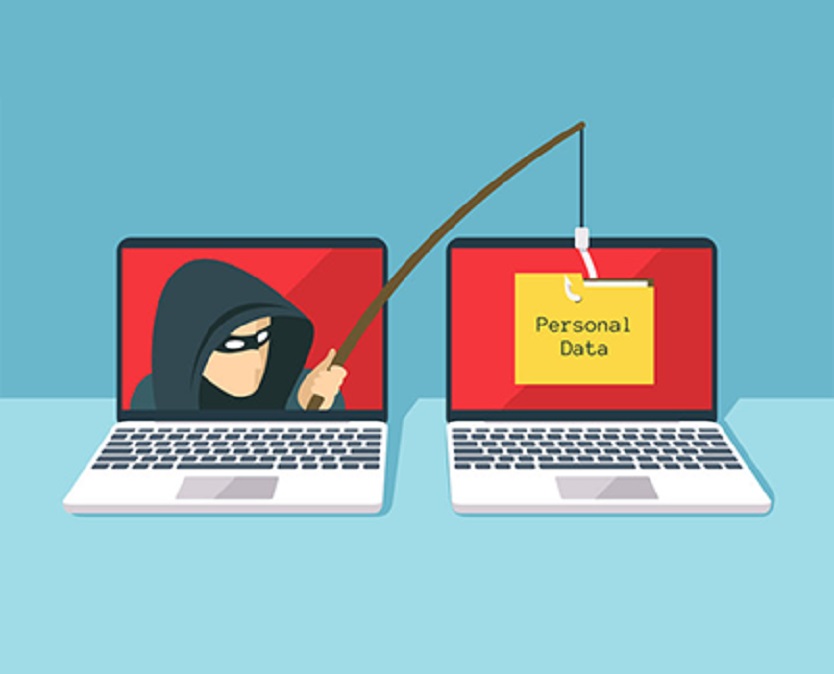
Phishing attacks across the continent have baited unsuspecting victims into handing over bank information, ID numbers, and more.

Cybercriminals have become even savvier with their tactics, embracing more sophisticated technology to lure people into clicking on things they should not. For instance, the COVID-19 vaccine rollout throughout Africa has given rise to ample opportunity for cybercriminals to carry out several attacks that are hidden in what, at first glance, may appear to be relevant information.

In addition to installing relevant cybersecurity solutions, individuals and businesses must consider use multiple email addresses. One can be for personal correspondence while another can be used for online shopping or social media.

Kaspersky also warned users to never respond to any spam as malicious users verify receipt and log responses of active email addresses.

In addition, users were instructed to always check the link and ensure the links start with HTTPS:// and not HTTP://.

They also warned against rush or panicking as scammers use such tactics to pressure users into clicking links or opening attachments.

Users were also advised to keep browser and operating system software up to date with the latest patches and use anti-spam filters in addition to antivirus and Internet security solutions.


Adedapo Adesanya is a journalist, polymath, and connoisseur of everything art. When he is not writing, he has his nose buried in one of the many books or articles he has bookmarked or simply listening to good music with a bottle of beer or wine. He supports the greatest club in the world, Manchester United F.C.

Technology

Leticia Otomewo Becomes Secure Electronic Technology’s Acting Secretary

Published

on

Secure Electronic Technology

By Aduragbemi Omiyale

One of the players in the Nigerian gaming industry, Secure Electronic Technology (SET) Plc, has appointed Ms Leticia Otomewo as its acting secretary.

This followed the expiration of the company’s service contract with the former occupier of the seat, Ms Irene Attoe, on January 31, 2026.

A statement to the Nigerian Exchange (NGX) Limited on Thursday said Ms Otomewo would remain the organisation’s scribe in an acting capacity, pending the ratification and appointment of a substantive company secretary at the next board meeting.

She was described in the notice signed by the Managing Director of the firm, Mr Oyeyemi Olusoji, as “a results-driven executive with 22 years of experience in driving business growth, leading high-performing teams, and delivering innovative solutions.”

The acting secretary is also said to be “a collaborative leader with a passion for mentoring and developing talent.”

“The company assures the investing public that all Company Secretariat responsibilities and regulatory obligations will continue to be discharged in full compliance with the Companies and Allied Matters Act, applicable regulations, and the Nigerian Exchange Limited Listing Rules,” the disclosure assured.

Meanwhile, the board thanked Ms Attoe “for professionalism and contributions to the Company during the period of her engagement and wishes her well in her future endeavours.”

Continue Reading

Technology

Russia Blocks WhatsApp Messaging Service

Published

on

WhatsApp Self Messaging Feature

By Adedapo Adesanya

The Russian government on Thursday confirmed it has blocked the WhatsApp messaging service, as it moves to further control information flow in the country.

It urged Russians to use a new state-backed platform called Max instead of the Meta-owned service.

WhatsApp issued a statement earlier saying Russia had attempted to “fully block” its messaging service in the country to force people toward Max, which it described as a “surveillance app.”

“Today the Russian government attempted to fully block WhatsApp in an effort to drive people to a state-owned surveillance app,” WhatsApp posted on social media platform X.

“Trying to isolate over 100 million users from private and secure communication is a backwards step and can only lead to less safety for people in Russia,” it said, adding: “We continue to do everything we can to keep users connected.”

Russia’s latest move against social media platforms and messaging services like WhatsApp, Signal and Telegram comes amid a wider attempt to drive users toward domestic and more easily controlled and monitored services, such as Max.

Russia’s telecoms watchdog, Roskomnadzor, has accused messaging apps Telegram and WhatsApp of failing to comply with Russian legislation requiring companies to store Russian users’ data inside the country, and of failing to introduce measures to stop their platforms from being used for allegedly criminal or terrorist purposes.

It has used this as a basis for slowing down or blocking their operations, with restrictions coming into force since last year.

For Telegram, it may be next, but so far the Russian government has been admittedly slowing down its operations “due to the fact that the company isn’t complying with the requirements of Russian legislation.”

The chat service, founded by Russian developers but headquartered in Dubai, has been a principal target for Roskomnadzor’s scrutiny and increasing restrictions, with users reporting sluggish performance on the app since January.

Continue Reading

Technology

Nigerian AI Startup Decide Ranks Fourth Globally for Spreadsheet Accuracy

Published

on

Nigerian AI Startup Decide

By Adedapo Adesanya

Nigerian startup, Decide, has emerged as the fourth most accurate Artificial Intelligence (AI) agent for spreadsheet tasks globally, according to results from SpreadsheetBench, a widely referenced benchmark for evaluating AI performance on real-world spreadsheet problems.

According to the founder, Mr Abiodun Adetona, the ranking places Decide alongside well-funded global AI startups, including Microsoft, OpenAI, and Anthropic.

Mr Adetona, an ex-Flutterwave developer, also revealed that Decide now has over 3,000 users, including some who are paying customers, a signal to the ability of the startup to scale in the near future.

SpreadsheetBench is a comprehensive evaluation framework designed to push Large Language Models (LLMs) to their limits in understanding and manipulating spreadsheet data. While many benchmarks focus on simple table QA, SpreadsheetBench treats a spreadsheet as a complex ecosystem involving spatial layouts, formulas, and multi-step reasoning. So far, only three agents rank higher than Decide, namely Nobie Agent, Shortcut.ai, and Qingqiu Agent.

Mr Adetona said SpreadsheetBench measures how well AI agents can handle practical spreadsheet tasks such as writing formulas, cleaning messy data, working across multiple sheets, and reasoning through complex Excel workflows. Decide recorded an 82.5% accuracy score, solving 330 out of 400 verified tasks.

“The result reflects sustained investment in applied research, product iteration, and learning from real-world spreadsheet workloads across a wide range of use cases,” Mr Adetona told Business Post.

For Mr Adetona, who built Decide out of frustration with how much time professionals spend manually cleaning data, debugging formulas, and moving between sheets, “This milestone highlights how focused engineering and domain-specific AI development can deliver frontier-level performance outside of large research organisations. By concentrating on practical business data problems and building systems grounded in real user environments, we believe smaller teams can contribute meaningfully to advancing applied AI.”

“For Decide, this is a foundation for continued progress in intelligent spreadsheet and analytics automation,” he added.

Continue Reading

Trending