

Economy
Guide on How to Establish Barbing Salon Business in Nigeria

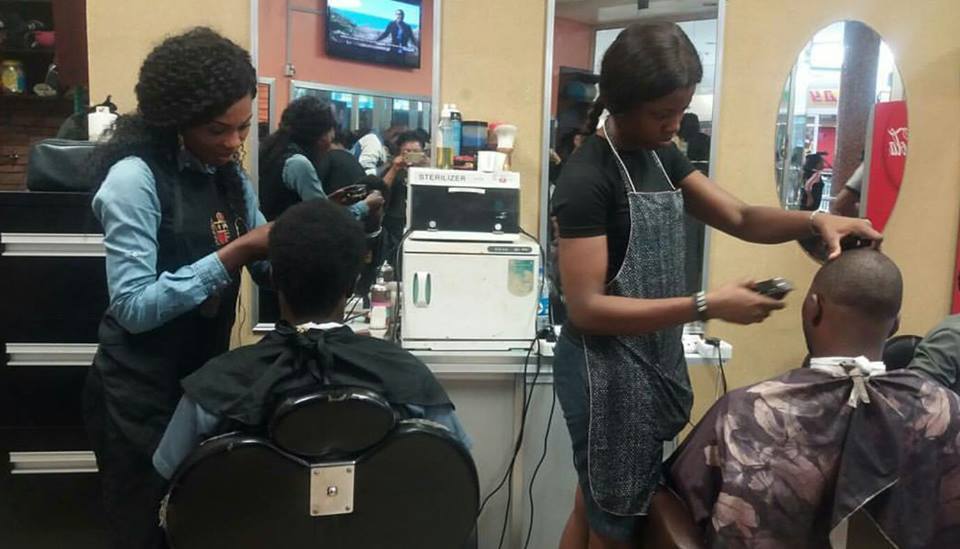
By Ashemiriogwa Emmanuel
Amid economic instability and the high unemployment rate in Nigeria, one of the smartest ways you can stay financially independent is by venturing into an entrepreneurship business that requires vocational skills.
Even when operated as a side hustle, this can fetch more money than imagined, especially when it is an often-required product or service that is offered to people in your immediate community.
Barbing salon business is one of the most lucrative ideas one can think about, especially when it is properly managed. And interestingly, it does not cost an arm and leg to keep the business running. In fact, the business is not limited to males as women have become interested in this line of work.
However, as with other jobs, breaking into the venture here in Nigeria, especially from scratch, is not as easy as it seems. Whether one plans to operate on a small, medium, or large scale, the nitty-gritty of starting a barbing business must not be ignored.
Hence, Business Post conducted a survey, interviewing well-established barbershops owners in Lagos who are raking in impressive profits from the venture and how they scaled from scratch.
One of those was Mr Haruna Oladele Jimoh, owner of Ijoba Last Born Haircut in Alimosho Local Government Area in Lagos, as well as Son Of Mercy Haircut (SOM) CEO, Mr Sunday Akinosun who is the founder of the establishment.
Learning the Skill
If one is looking to start a profitable barbing salon business, it all begins with learning the craft hands-on. Barbing, in itself, is a delicate art that commands expertise from the practitioner if he wants to have customers return for another haircut.
Thankfully, with the internet, one can learn almost anything in this world. A look at YouTube can provide a basic guide to barbing practices, techniques, and maintenance.
However, speaking on this with Mr Jimoh, he noted that learning this special skill online is not as effective as acquiring the skill through training, and will reflect in the long run.
“For instance, while I teach my apprentice, they are not just learning the barbing aspect, I teach them the business aspect; how our customers are uniquely treated, how to maximize profits and pay required bills, and how to manage the business overall,” he explained.
In addition, learning the skills from an already established personnel will give you leverage on certification, qualification, and smooth referrals when you finally cut out.
From what was gathered from a cross-section of barbershops owners, it can take five months of training in hair cutting, hair styling, and hair treatment, and the cost for this can vary depending on the establishment you choose to learn in.
Location, Renting a Shop, & Home service
In the view of SOM Haircut’s CEO, Mr Akinosun, “The business is very competitive, every corner you go around here, you will see a barbershop. That is why it is good to know your work very well and have your set of customers that you can even deliver home service.”
Observing most of the barbing salons that are doing outstandingly well, it was noticed that their location strategically ticks the boxes of clean, accessible, commercialised, and serene environments which attract ideal customers.
The location will also influence how much it will cost you to rent/buy your first barbershop. Fortunately, you will not need to rent a huge shop as you are just starting. Mr Akinosun hinted that, depending on how big one intends to start, one can expect to pay anywhere from N200,000 to N2 million for this.
Basic Salon Kits & Equipment needed and their cost
What you will be able to buy at the early stage of the business depends on your budget. But since you are just starting, it is important to get hold of the necessary kits, tools, and equipment first, then you can get others as time goes on.
Most of the barbers interviewed for this publication roughly highlighted these necessary kits needed for a start below – along with the average price you can get them in the market (as at the time of writing):
Hair clippers: It is good to have two or three clippers for a start and the cost is influenced by the brand and type. A new and quality hair clipper in the market costs between N14,000 and N16,000.
Cover clothes: Professional Baber cape is necessary to cover the customer while you do your work to prevent hairs or debris from ruining their cloth look. Three or four will be enough for a start, and each can cost you N2,500 at most.
Sterilizing and Disinfectant Supplies: This is to ensure the safety of your barbing tools, especially sharp equipment to keep them sterilized. The machine can be quite pricey but expect to pay anywhere between N15,000 and N60,000 depending on the brand, type, and size.
Mirrors & Fans: A barbershop is not complete without a mirror. The cost of a single large wall mirror can range from N20,000 to N25,000, and there should be at least two mirrors for your barbing salon. Fans are also necessary, but over time, can be replaced with air conditioners.
Hair products and cosmetics: These include hair creams, hair sprays, dyes, powder, aftershave, relaxers, conditioners, and so on, and the prices will be determined by the quantity you buy for a start and N10,000 should be enough for these items.
Standby generator: Most importantly, you will need a durable, standby generator to power electricity, since the power supply cannot be relied upon at all times, especially here in Nigeria and you might need about N65,000 for a 1.3Kva or N100,000 for a 2.5Kva.
Other miscellaneous tools are combs, hairbrush, scissors, blades, and tissue papers, barbers duster brush, and neck strap.
Other important furnishing areas which can make your barbershop stand out and more appealing to your new customers are:
A very good and comfortable revolving chair (two is ideal for a start and the cost is between N30,000 and N60,000 each)
An ergonomic, waiting chair/couch for customers for N45,000
Paint the shop to create your own unique style. This should about N25,000
Paste barbing salon pictures & wallpapers, which should cost about N500 each
TV or music player to entertain customers. A new 32-inch television costs about N80,000
“[By and large], you should be putting aside between N350,000 to N500,000 (for accessories) to successfully establish your first barbing salon. Afterwards, you can get other necessary resources,” Mr Akinosun of SOM haircut pointed out.
Getting Registered, Licensed & Joining Association
As with other businesses, it is very important in Nigeria to get your barbing salon business registered. In addition to the certification from your trainer, you should also register with a government authority like the Corporate Affairs Commission (CAC). Sadly, not all barbershop owners pay attention to this, but the sooner you get it done, the better.
Also, you will need to know what license you need to get for your business as applied to your location to avoid unnecessary embarrassment from government or union officials in the long run.
“As a new player in the business, it is beneficial to make inquiries and join the association [Lagos State Berbers Association (LASBA)]. For instance, to join, you go to the head office, and will usually be required to pay about N15,000 as a registration fee to become a member,” Mr Jimoh told our correspondent.
Hiring Employees Vs Accepting Apprentice
If you have an investor mindset towards the barbing salon business, then you will consider employing barbers that are ready to deliver the best quality services to your customers. This is, however, only feasible when you have enough financial resources to back this up.
But if it is the other way, then you might consider accepting apprentices to train them, and see that they handle your business anytime you are not around.
It was learned that most barbers prefer to accept apprentices, especially at the early stage, not only because it brings in more money (apprentice will be paying [between N20,000 and N50,000 or above] for the training and exposure), but also because it gives the barbershop owners the medium to unlearn and relearn their skill when passing down the knowledge.
Keep in mind the challenges
Gathering the responses from the few barbershop owners interviewed, it was observed that a total income of N300,000 can be potentially realized within a month from the barbing salon business if well operated.
Now, this may sound rosy for a starter, but it is important to also keep in mind the potential challenges such as the really saturated market, the fact that most people already have a steady barber, coupled with unfaithful and fraudulent apprentice/employees.
In addition, according to Mr Jimoh, “Power supply is a major challenge. Not just because it is not stable, we are used to that already and that is why we have our generators, but also because the bills for power supply are always increasing, especially for us without the prepaid meter yet.”
Conclusion
Of truth, barbing salon business is still a lucrative venture in Nigeria, despite the high competition. Being a newbie in the business, keep in mind that the first impression matters a lot.
Once you are able to get these basic resources outlined above to begin your business, make sure that you give the best to your new customers within the first few weeks, then leave the publicity/awareness for your new, happy customers.
Over time, you will eventually see the need to invest in add-ons to plush up your salon with videos games, table tennis or snooker board, or even subtle selling of food and drinks.
Starting and Managing a Profitable Catfish Farming Business in Nigeria



3 Comments